Create Studio
São Paulo , 2024
Progetto di
Mariane Rios Studio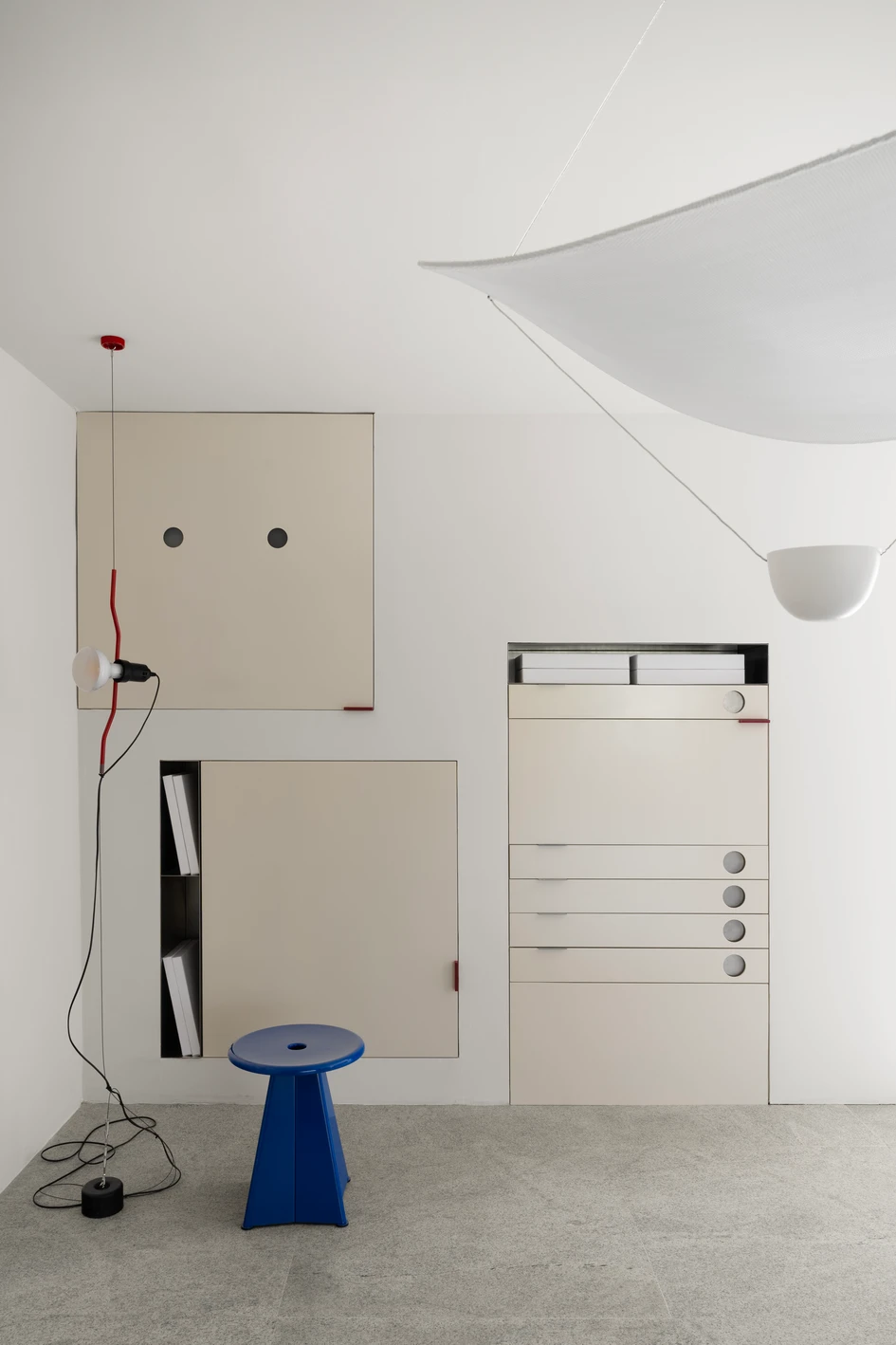


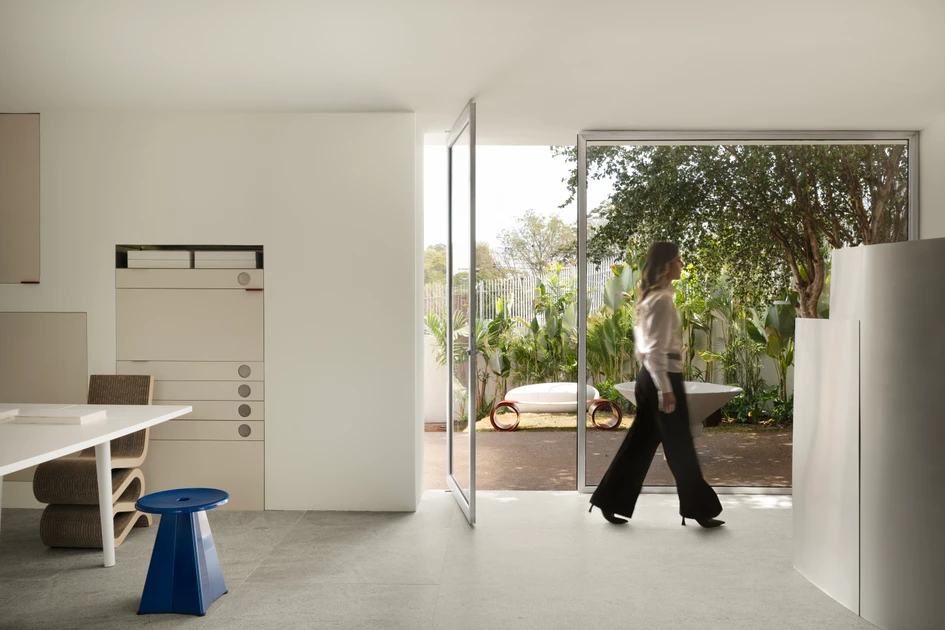
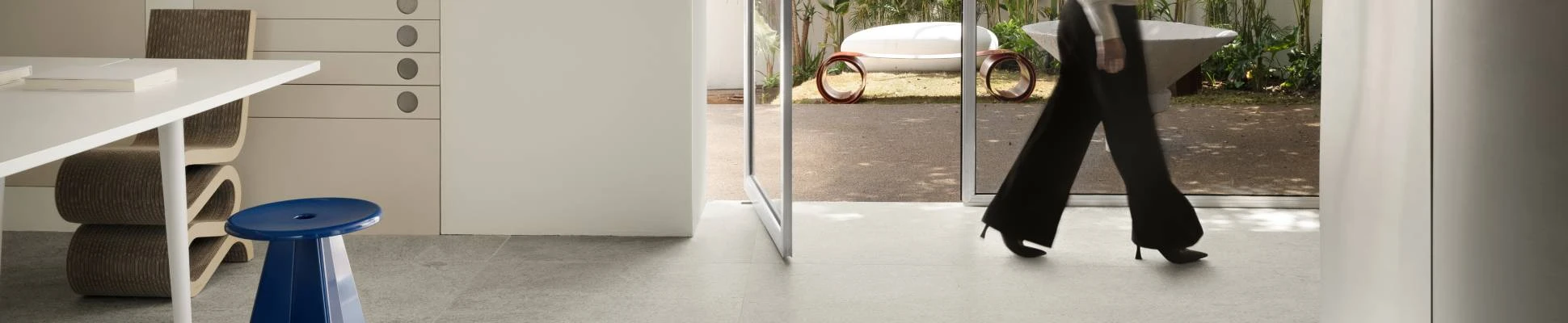
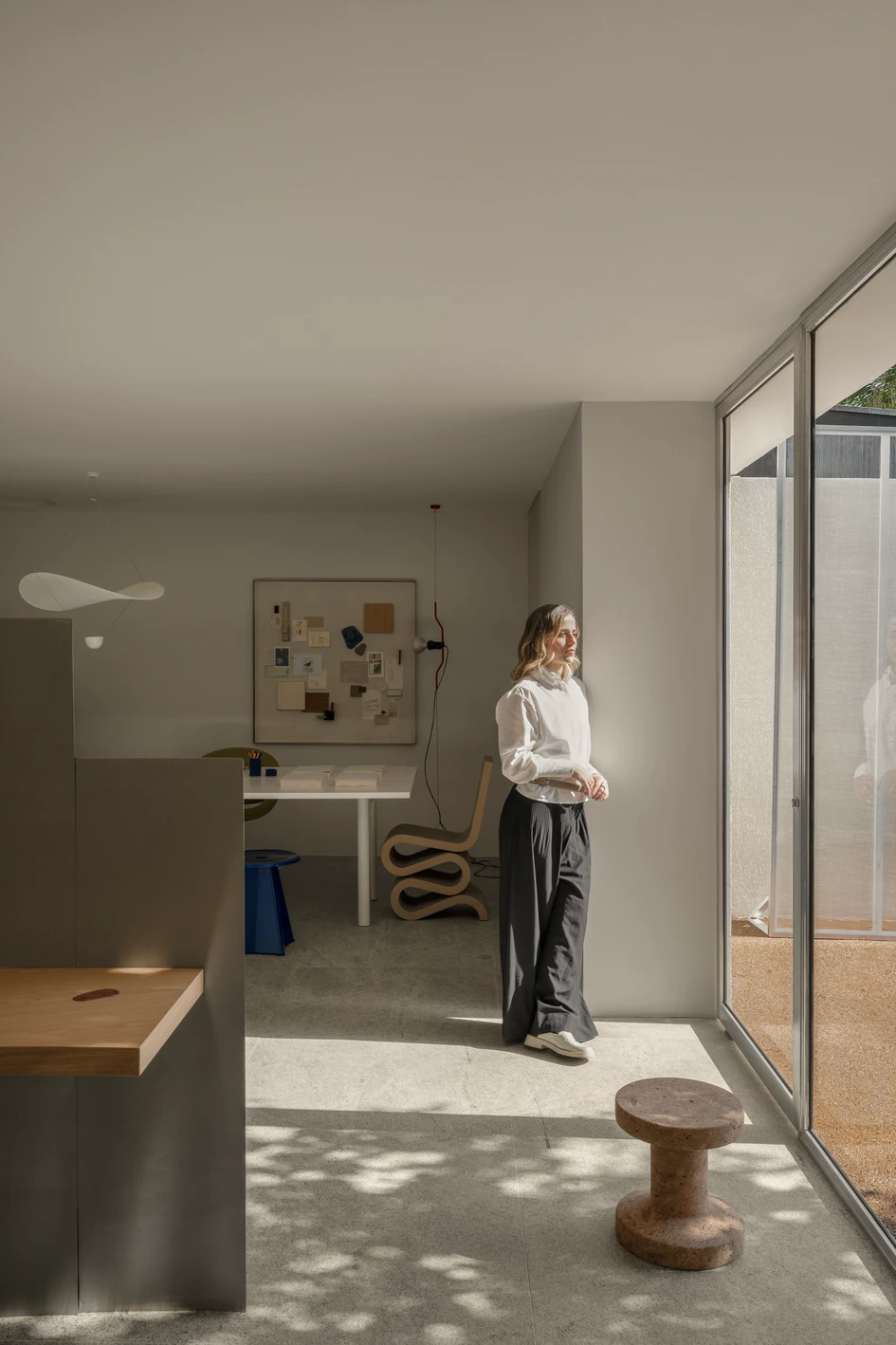
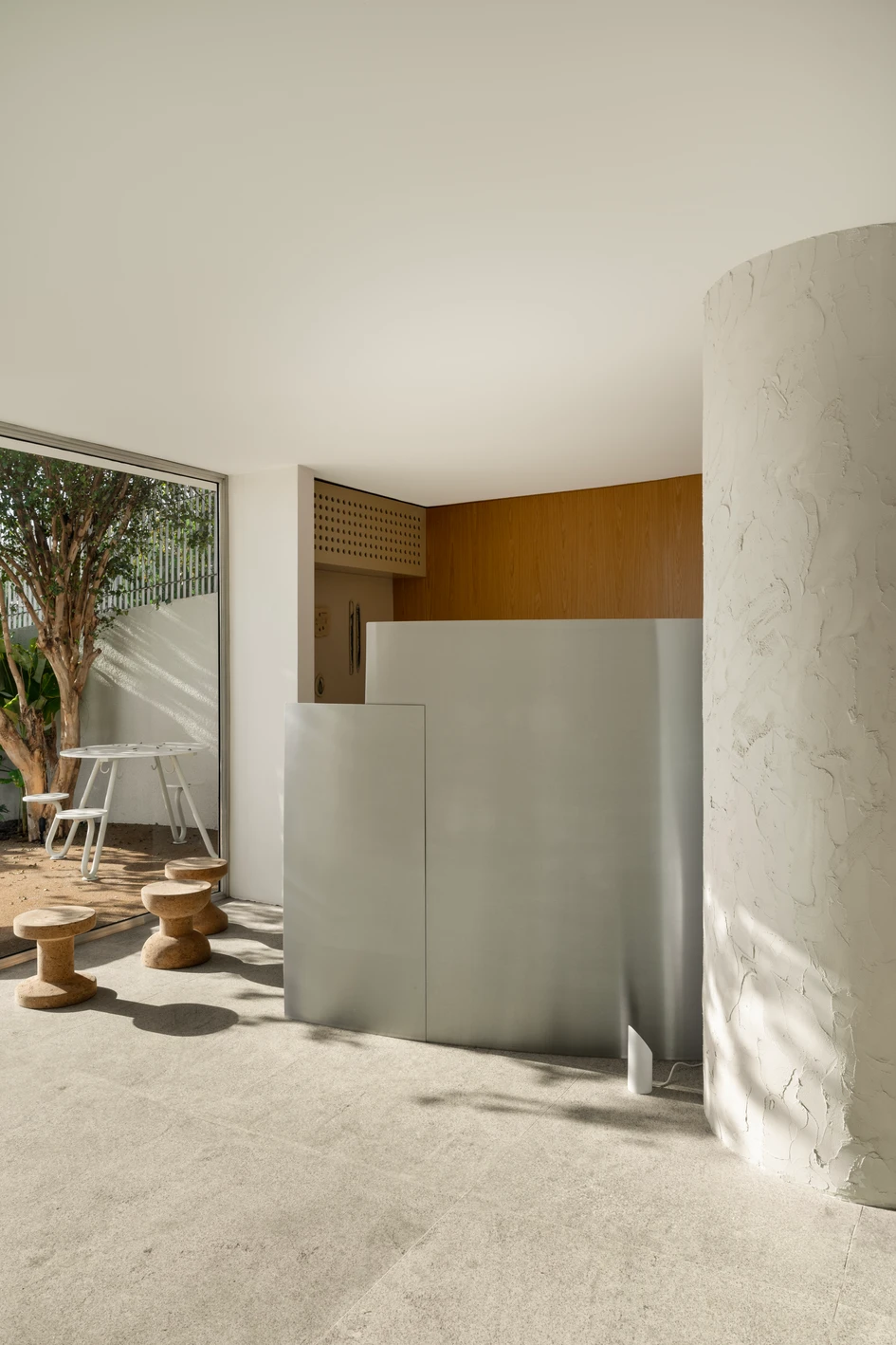
Located in one of the first modernist houses in Ribeirão Preto, built in the 1970s, the greatest challenge of this project was working with the low ceiling height and exposed structural columns. The largest column, which is centrally located and square - previously "trapped" in the wall by one of its faces - now integrated into the space, takes on a circular shape and handcrafted texture, bringing lightness and art to the project.
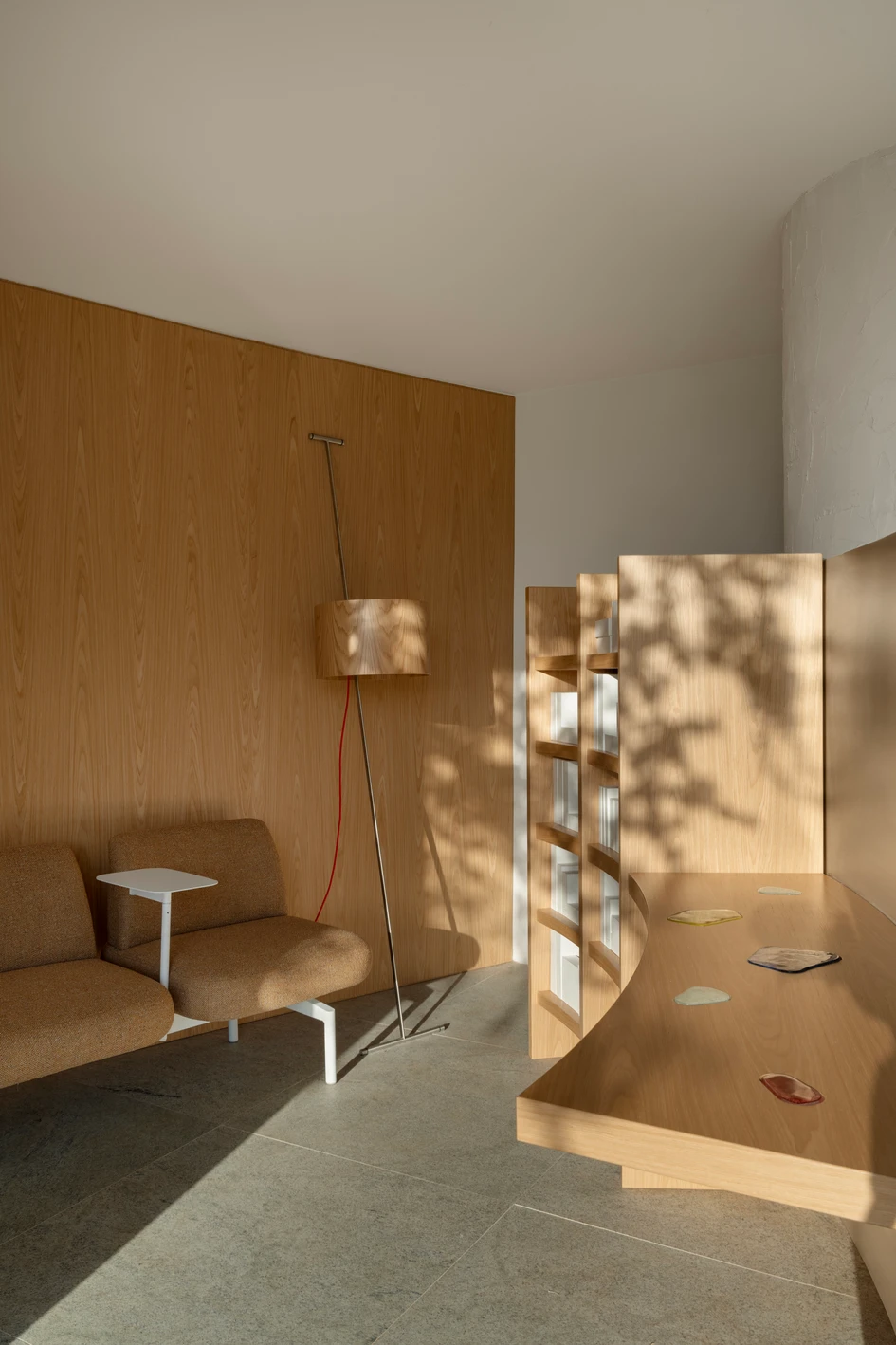
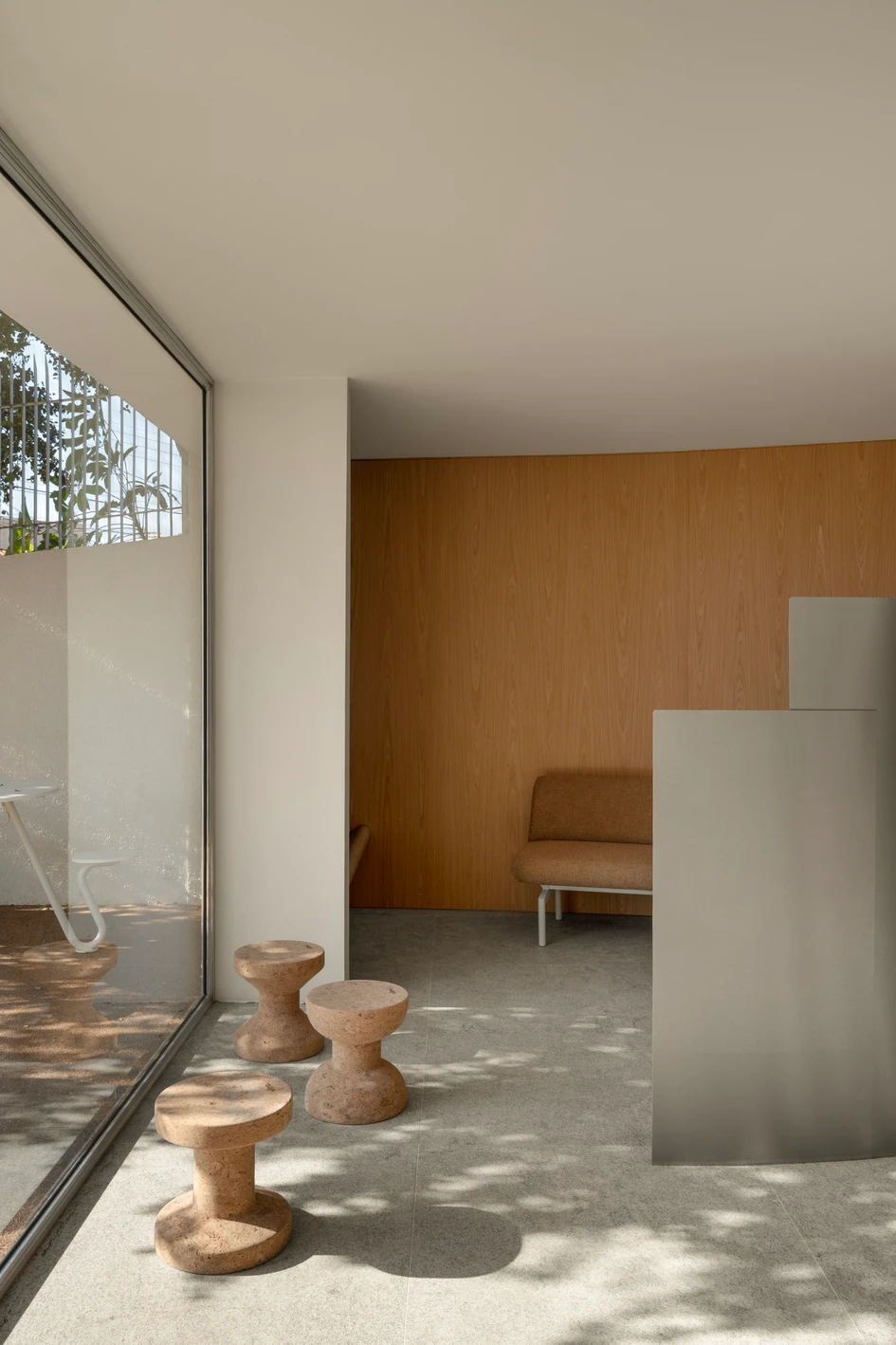
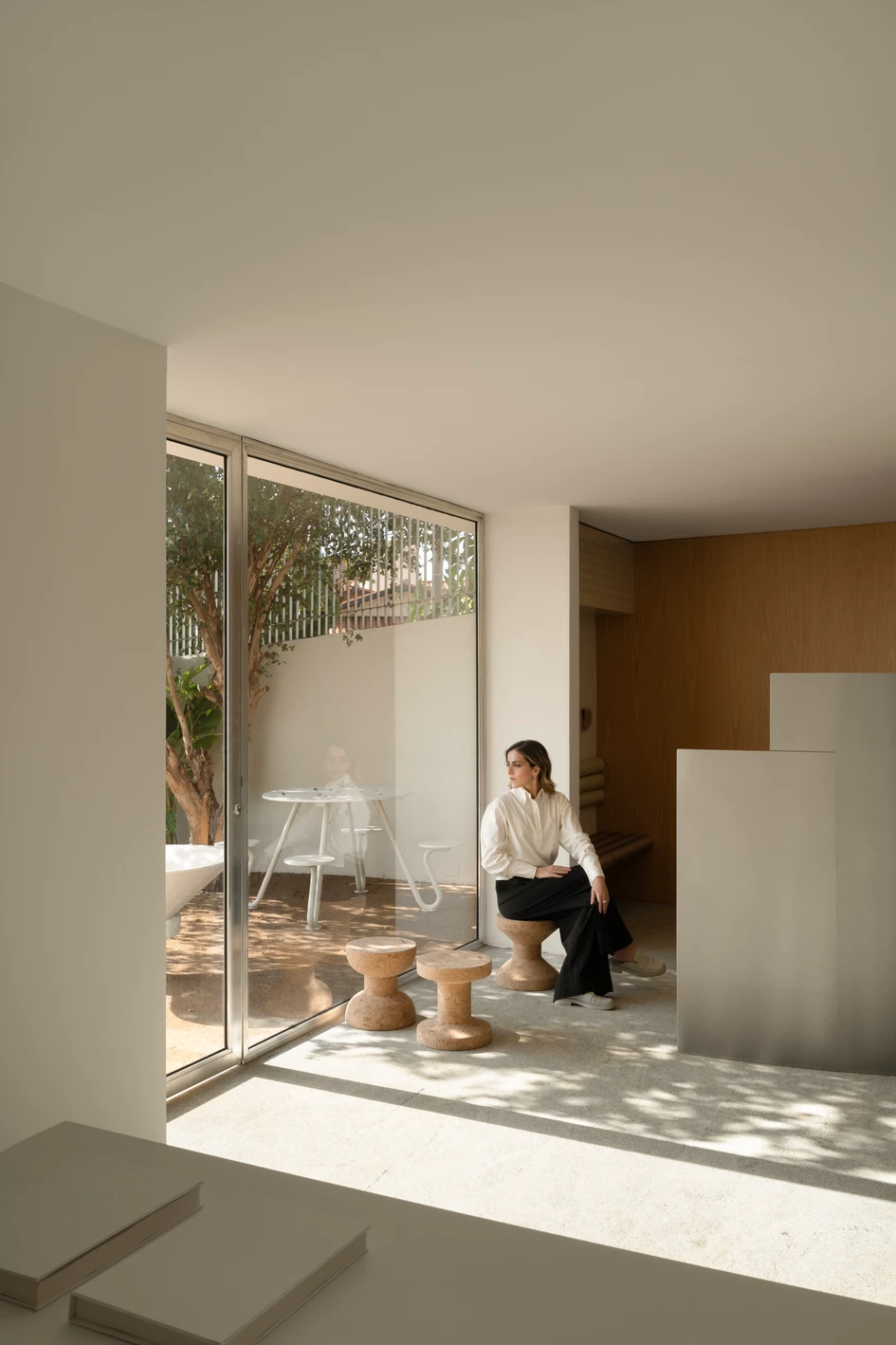
Starting from the column, an independent curved line tangles the pillar, and proposes through a partition a more reserved and comfortable space, for when it is necessary to work informally and intimately. Its stainless steel enclosure preserves the initial concept of a sinuous line, due to its thickness. Internally, the wood involves the movement, which unfolds from a bookcase to a cantilevered countertop, providing a sensory experience through the stained glass windows.
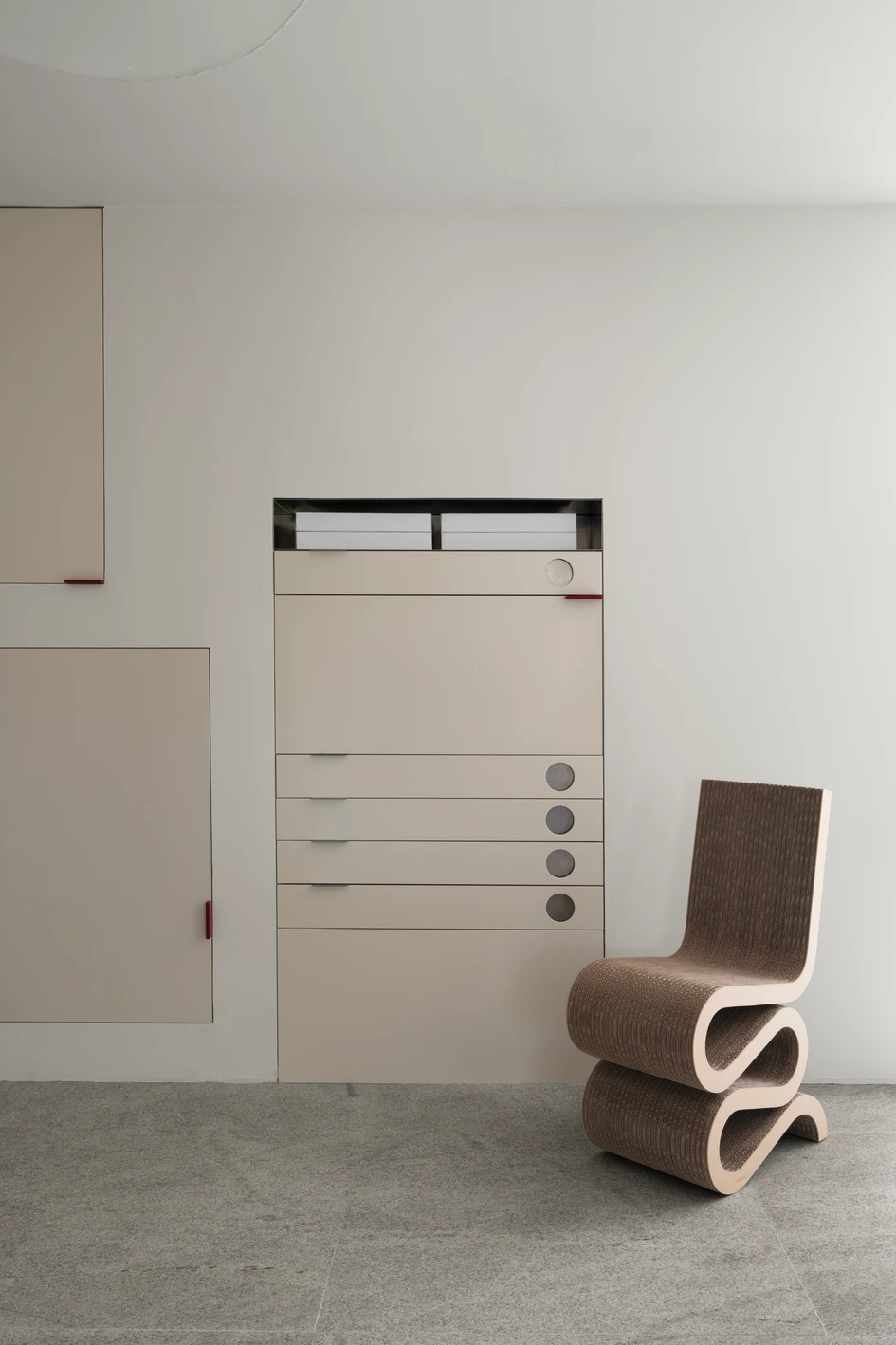
Starting from another column, this one rectangular, a drywall enclosure was created which allowed the installation of the invisible sound system and received asymmetrical volumes with the function of storage. The volumes vary in shape and opening mechanism as needed. Here the chest of drawers dissolves into the joinery and has its drawers in steel to achieve identity and charge. The stainless steel niches complement the dense volumetry as voids and receive handmade folders.
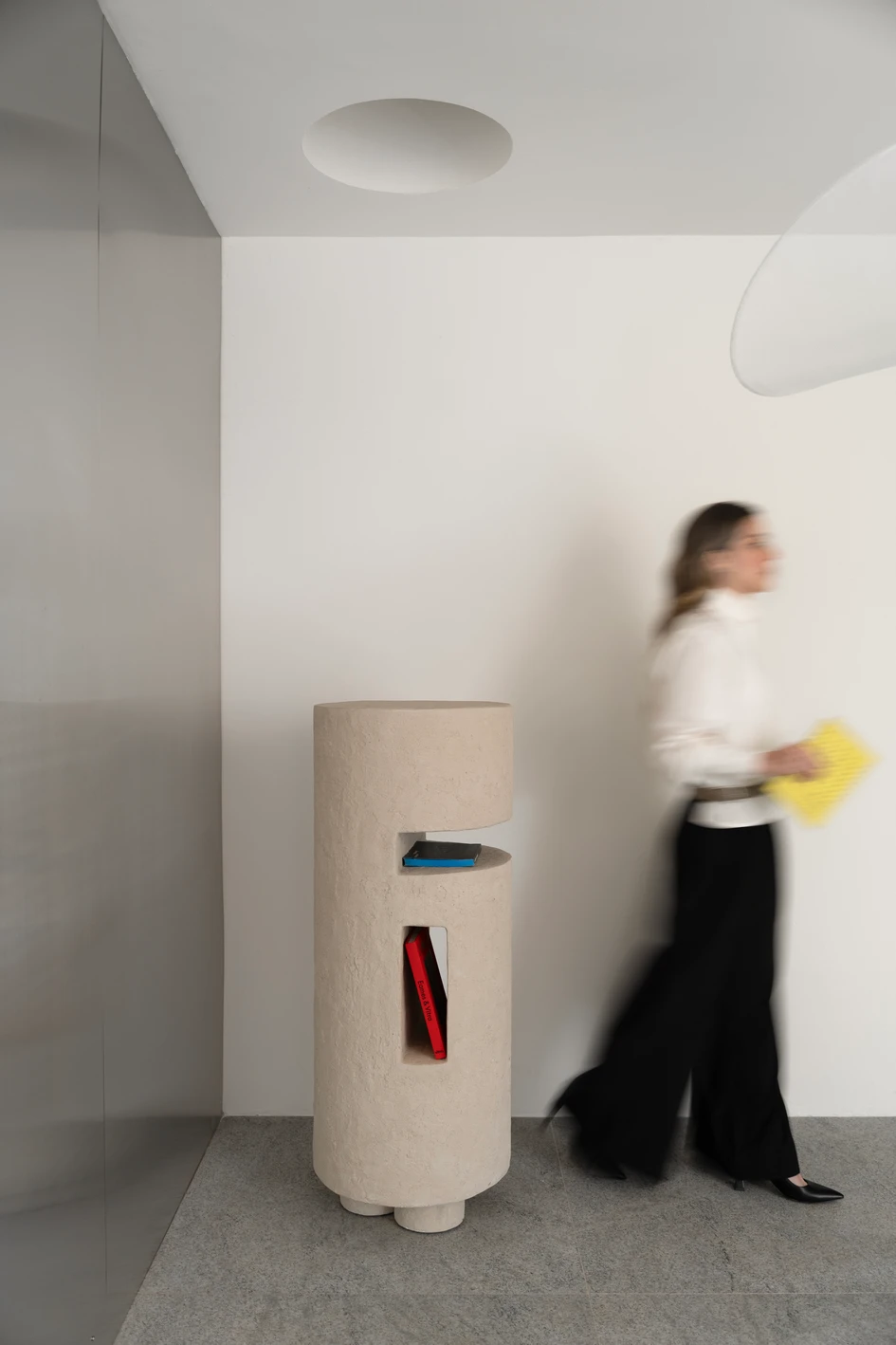
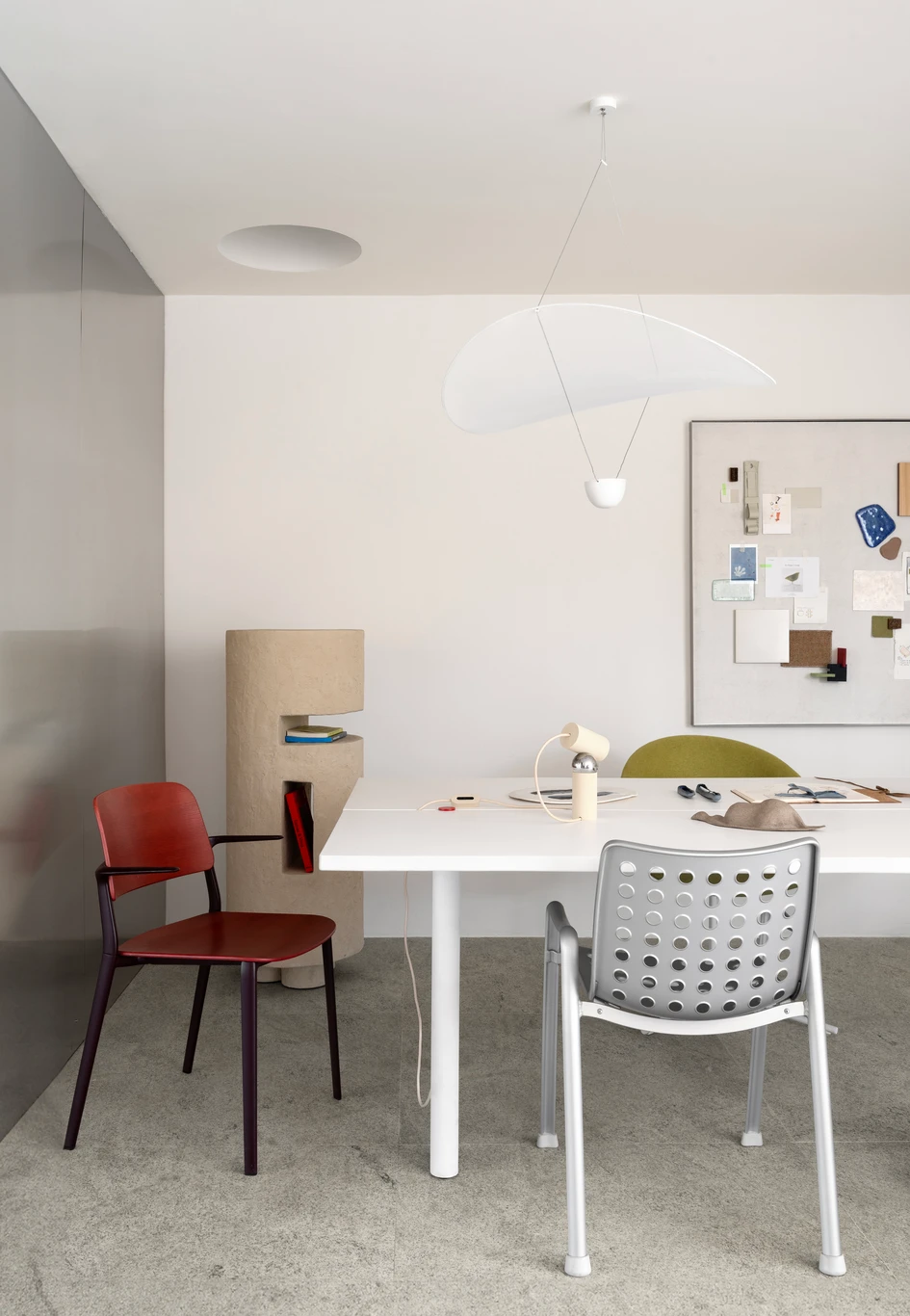
The sculpture of the office's original design integrates art and function. A piece that in addition to beauty and unity, achieved by its shape and material, also brings property. With a cement finish and niches that store books, it stands out under an infinite molding of the same diameter, creating a play of proportion, balance, volume and light effect.
The moodboard panel, developed on site by the architect Mariane Rios during the construction, expresses the creative process. Made on an acoustic panel and finished with the same paint as the walls, it symbolizes a "blank panel" for new ideas, representing the essence and originality of the project.
The toilet follows the same concept as the studio, explores diverse volumetry and materials such as glass and stainless steel, which appear in niches, drawers and on the countertop, where they were incorporated as a dispenser and paper holder.
The Criar Studio was designed to interact with users in a curious, experimental and interactive way. That's why the project is conceptual and combines different materials, shapes and colors. Designed in a dynamic and functional way, it was developed with care and unity: from the work space to the toilet, from the balcony to the garden, a living and interactive space, with the proposal of an open-air gallery.
Design Team:
Lead and creative architect: Mariane RiosExecutive project architect: Laura Marques




Galleria del progetto


