


Detalles de contacto
Enviar un mensaje
Llámanos
Distribuidores


Architonic ID: 20772800
SKU: hw645
Año de Lanzamiento: 1994
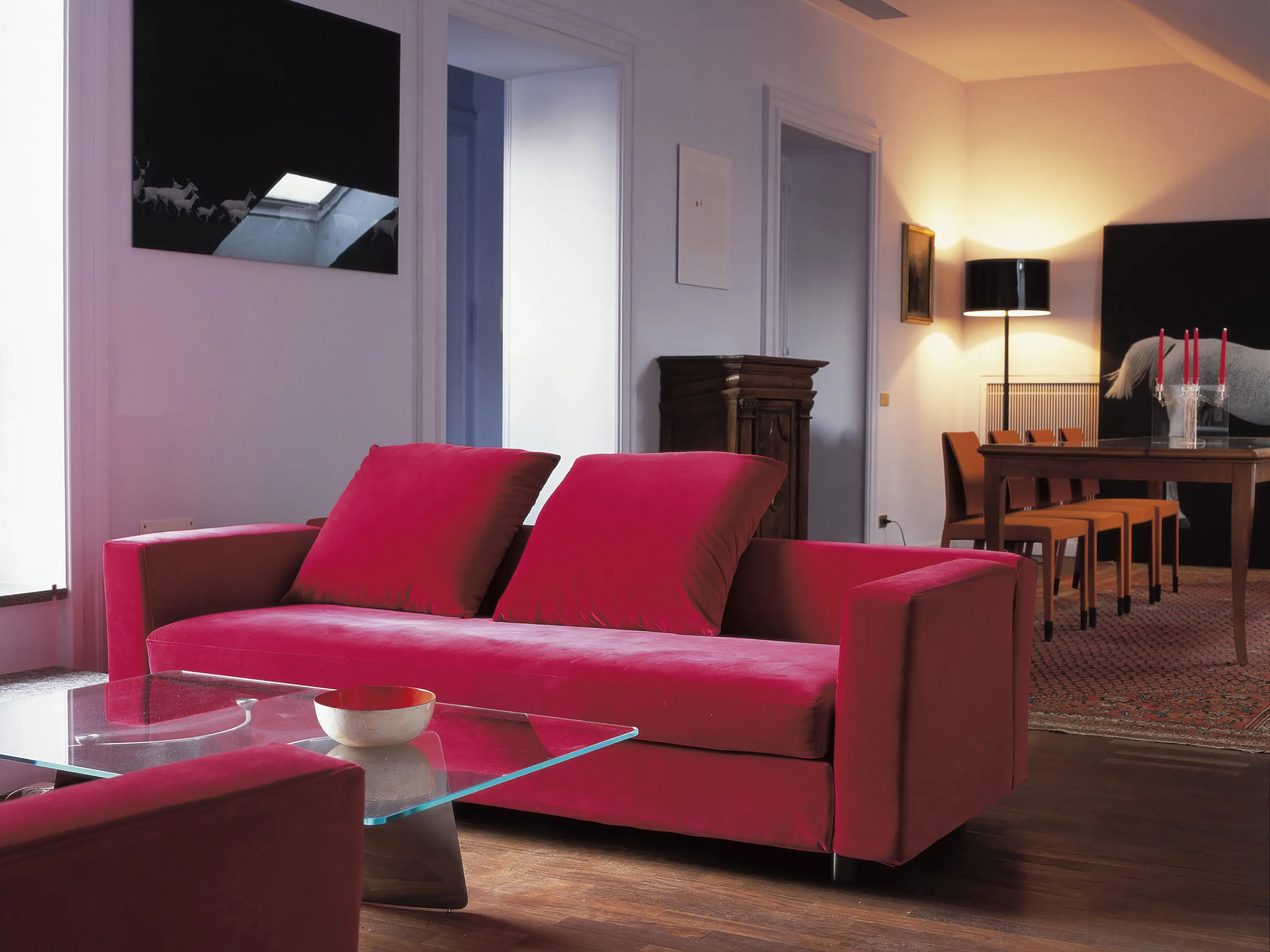
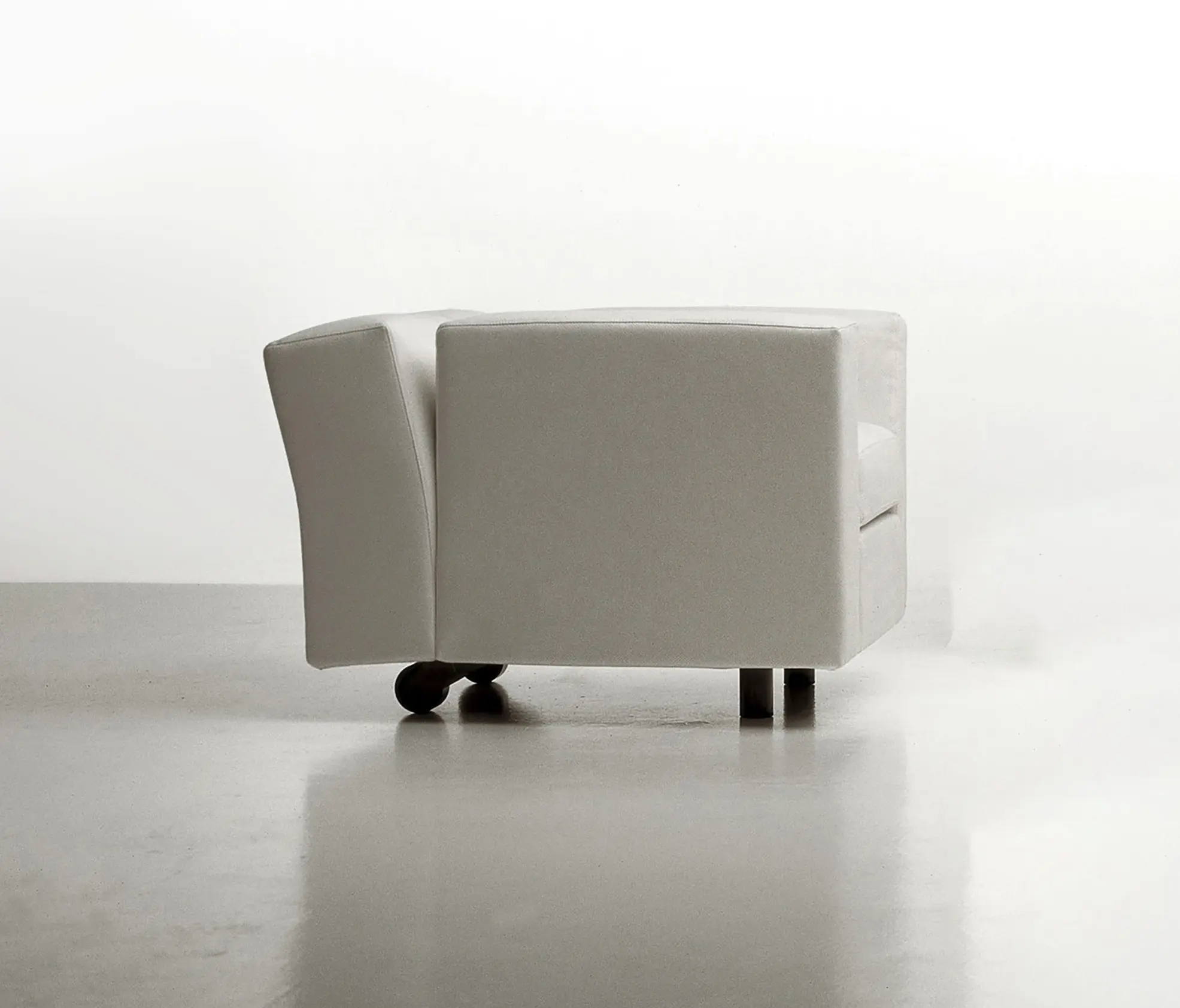
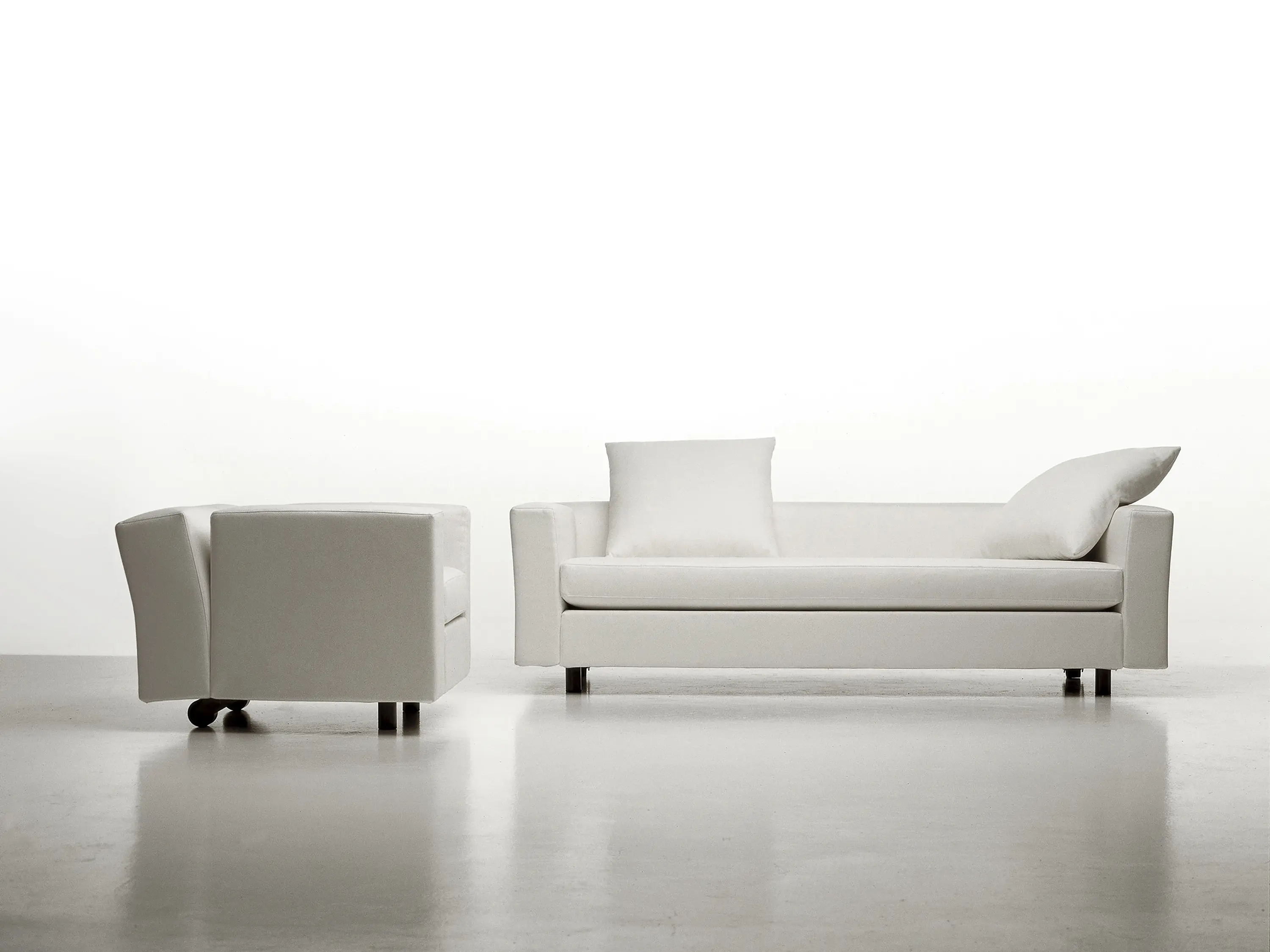
Setting off into a challenging territory, between elegance and practicality. Wettstein manages to avoid taking radical hazards and creates a sofa, understated and sober in its look, to complete the Capri series. Recovering the idea of the low-slung American sofa, the design explores both its limits and potentialities. The final result is a sofa that suggests a huge freedom of use, that does not interfere with the space, domestic or public, but rather returns the pleasure of a casual ease. Internal structure in steel tubing. Front steel feet powder coated anthracite grey RAL 7021 semi-gloss (gn), the rear is supported by castors. Filler in flexible polyurethane, cold-processed without CFC. Seat cushion in elastic expanded polyurethane. Dimension: 85 x 88 x h 61- seat h 41 cm
Concepto
Setting off into a challenging territory, between
elegance and practicality. Wettstein manages
to avoid taking radical hazards and creates
a sofa, understated and sober in its look, to
complete the Capri series. Recovering the idea
of the low-slung American sofa, the design
explores both its limits and potentialities. The
final result is a sofa that suggests a huge
freedom of use, that does not interfere with the
space, domestic or public, but rather returns
the pleasure of a casual ease.
Este producto pertenece a la colección:
Base cuatro patas, Base abierta
Asiento y respaldo tapizados, Con apoyabrazos
Residencial

Switzerland
Hannes Wettstein (1958-2008) Hannes Wettstein was one of the most influential Swiss designers. Even his career path corresponded to someone who didn’t go by the rule book: Wettstein, born in 1958 in Ascona, first completed studies in building draughtsmanship; his further training as designer and architect was autodidactic. He was as fascinated by technological developments as he was by art history and architecture and his manner of developing ideas always had a touch of alchemy or invention. He continually questioned norms, be they societal, industrial, cultural or ritual, in order to be able to reinvent, explained Wettstein. This comprehensiveness was not an attitude but a method. His openness to continually re-thinking all that defines design – daily routines, spatial organisation and the purposes of things – led him to surprisingly simple solutions that stand the test of time. Hannes Wettstein designed functional objects with such elegance and perfection that they took on their own identities, something that momentary fashions can never achieve. In spatial design he also created architypes: site-specific and sensitive overall solutions, interior designs or set designs. Highlights: 1980 Belux, Snodo 1982 Belux, Metro 1987 Baleri Italia, Juliette 1990 Baleri Italia, Caprichair 1994 Ventura, v-matic 1995 - 1998 Berlin Grand Hyatt 1997 - 2002 EST, Bikes 1999 - 2008 horgenglarus, Art Direction 2000 Lamy, Scribble 2000 Cassina, Globe 2000 Molteni, Alfa 2000 - 2008 Carl Zeiss, Optical Instruments 2002 Ventura, v-tec Alpha 2002 Bulo, Double You 2002 Dada, Nomis 2002 - 2006 Swiss Embassy, Washington D. C. 2003 Cassina, Hola 2003 Molteni, Reversi 2004 horgenglarus, Lyra 2004 - 2008 Juwelier Kurz, Zürich & Basel 2005 - 2008 SF, TV Studios 2005 Lamy, Studio 2005 Accademia, Vela 2007 Max Design, Tototo