hplace cafeteria
Dubai, 2024
Projekt von
Atelier Prototipi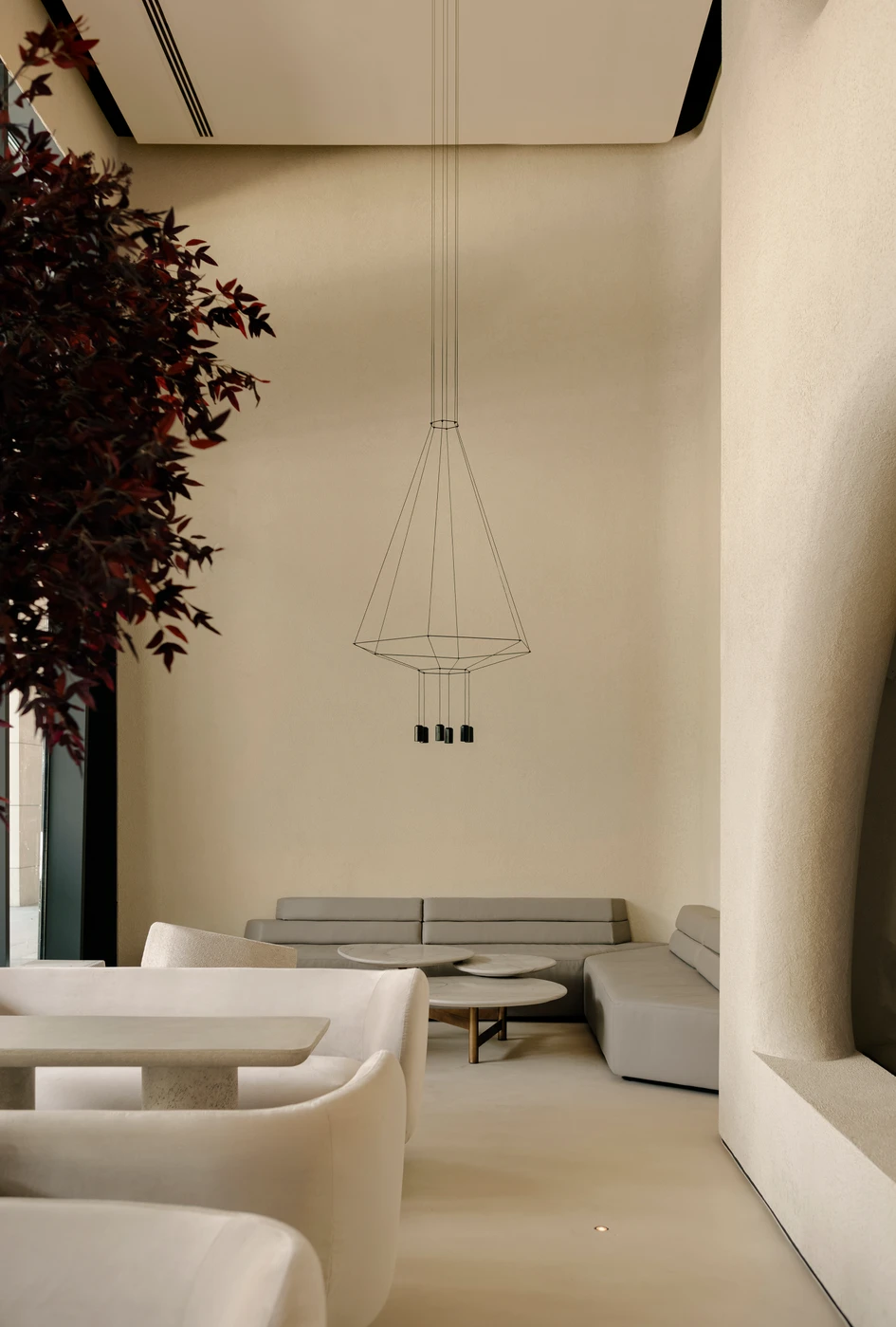



PROJECT CONCEPT
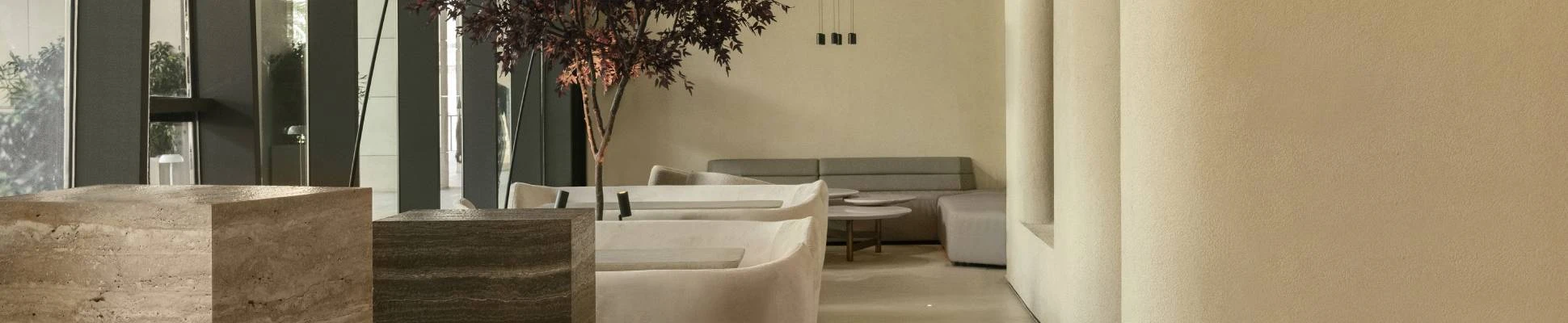
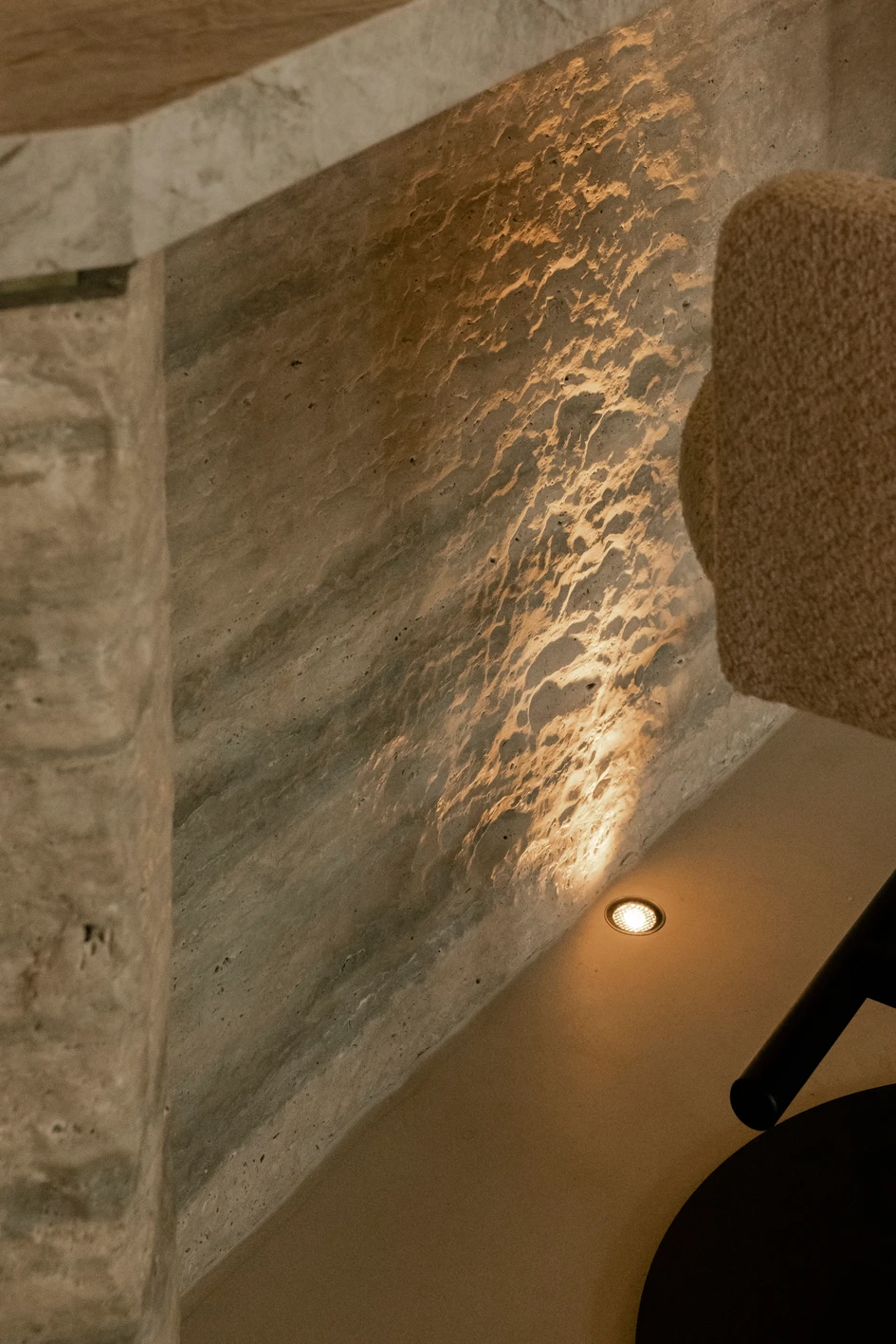
Exploring the idea of the desert as a place of cultural interaction and dialogue, we came up with the concept of an organic space, absorbing the motifs of nature, tradition, and craftsmanship. The smooth oval contours of the rooms resemble the structures that people have been carving in desert lands with hot climates since ancient times. The fluidity of architectural elements and structures refers to natural forms carved by wind and time itself. The light sliding over them gathers whimsical shadows that recede into the depth of space. The image of the desert as an elusive everchanging matter is reflected and imprinted in the wall finish. The palette of mineral plaster, both in raw and smooth finishes, is close to the natural color of sand.
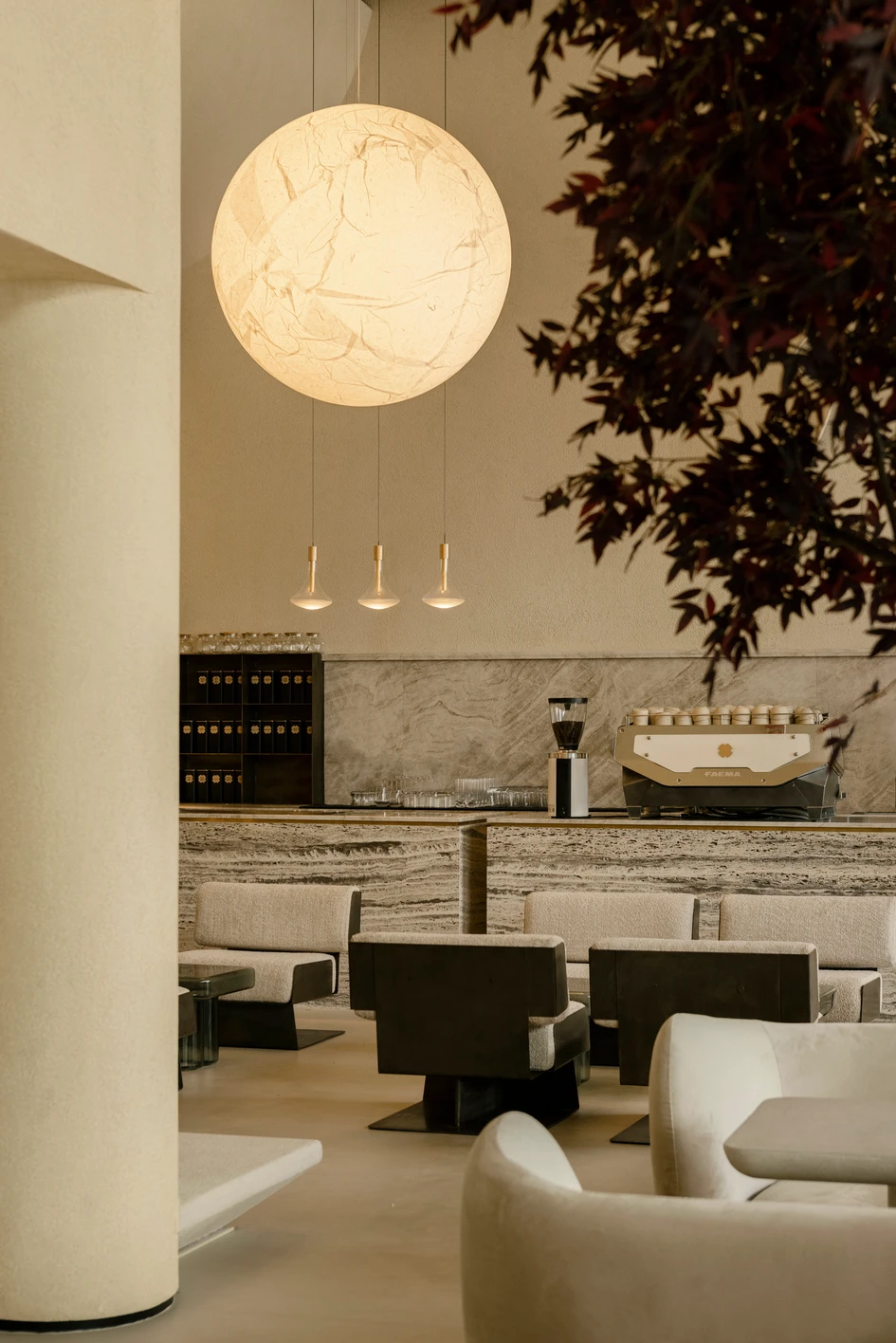
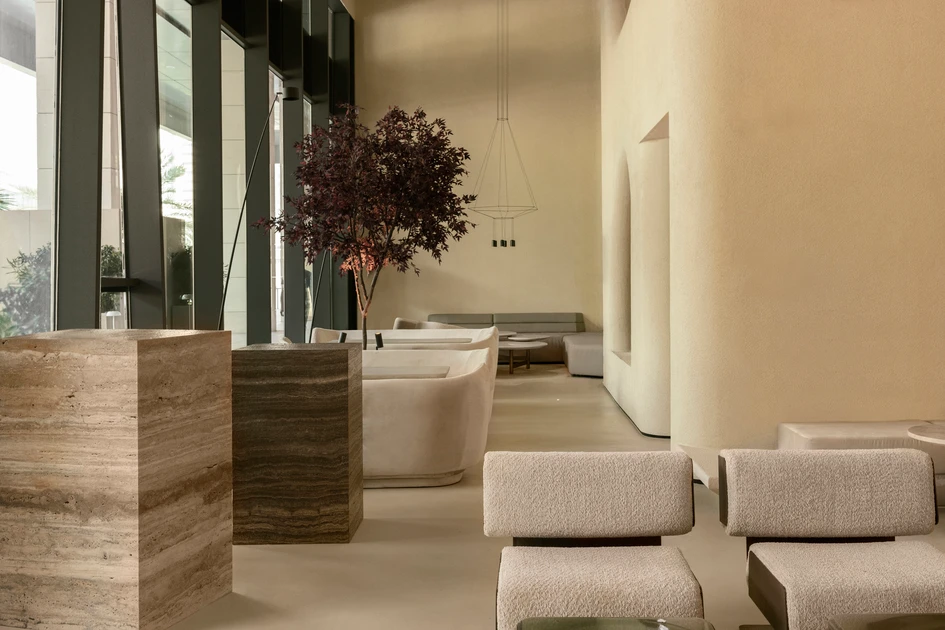
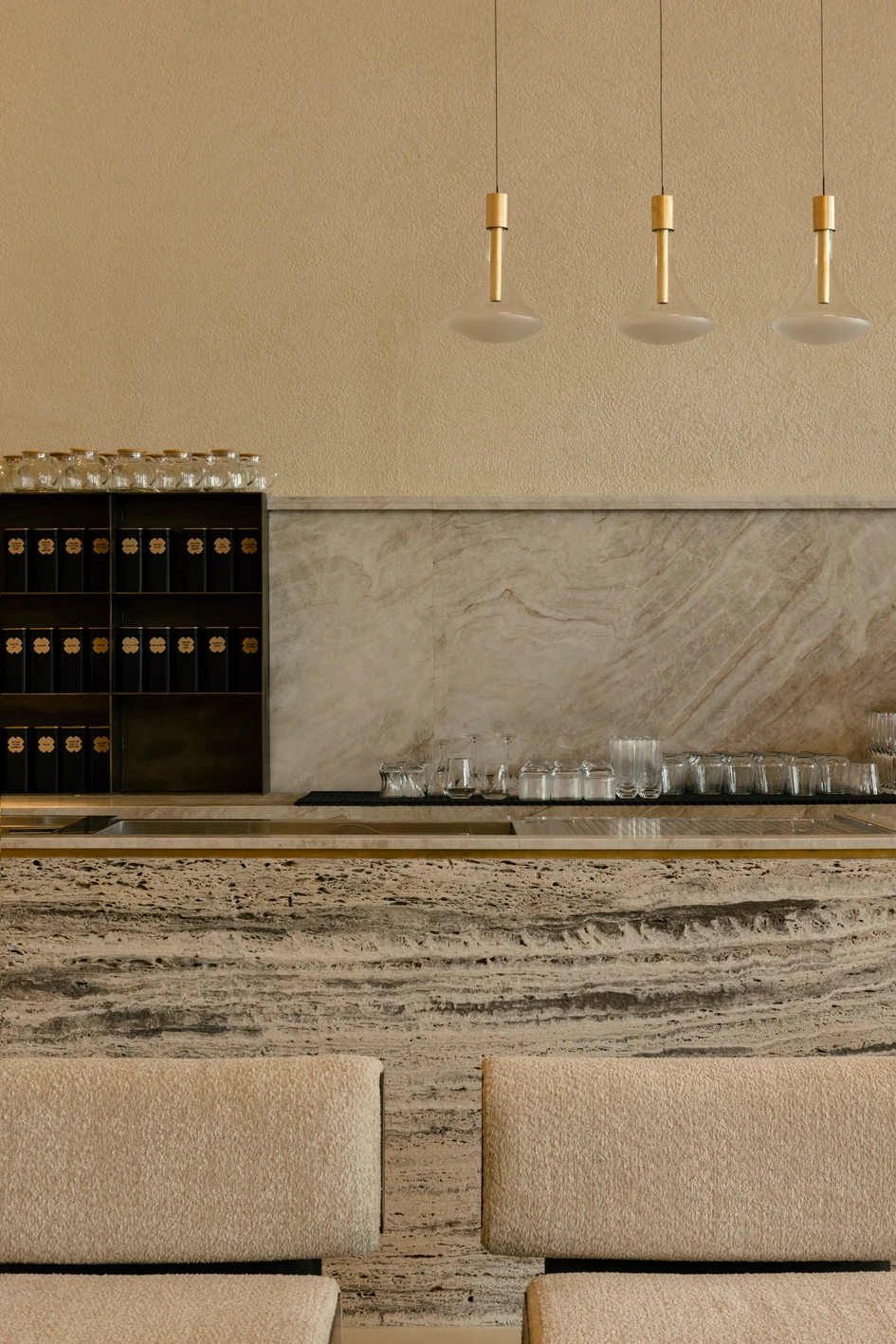
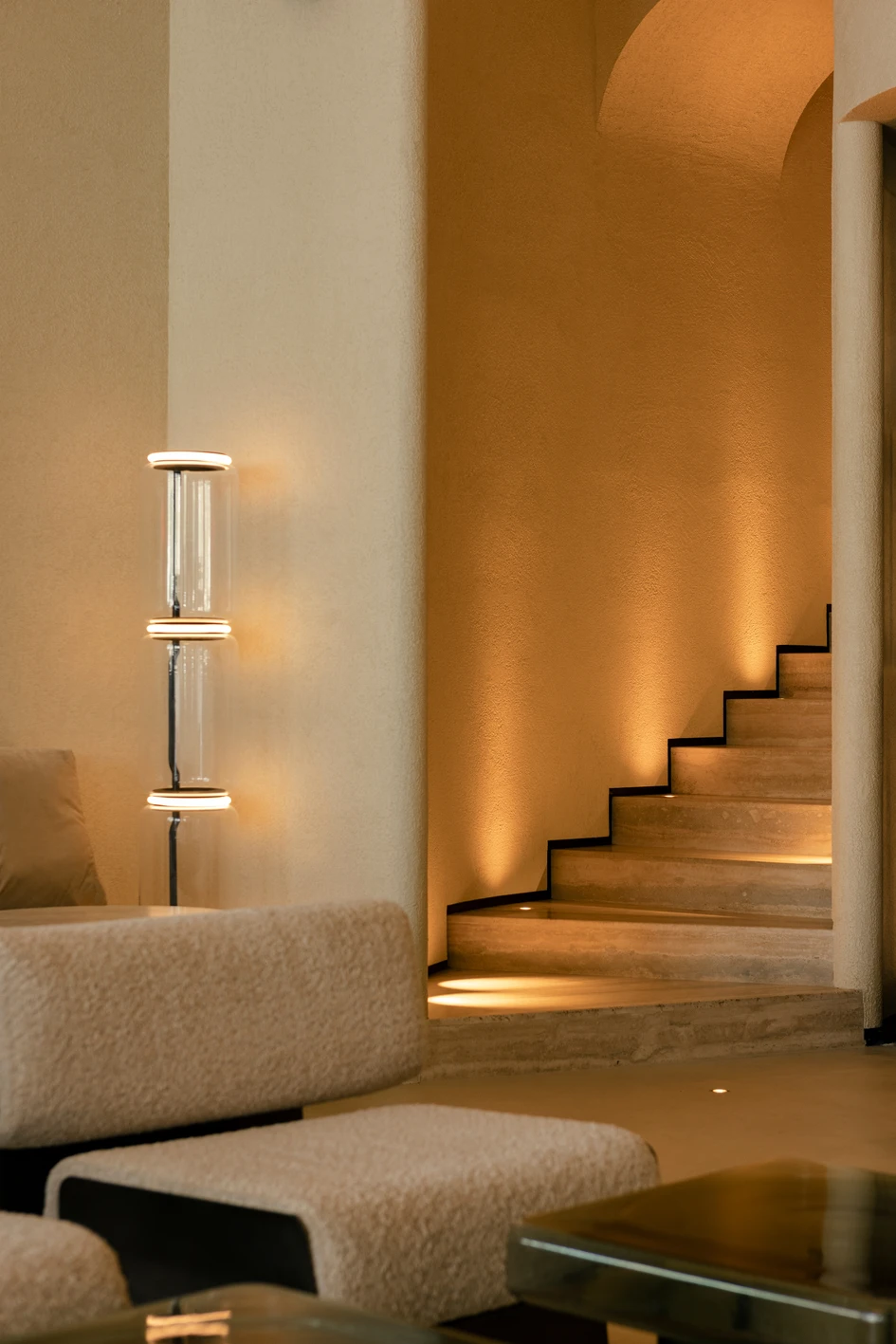
Not only the intriguing view opening to the peak of Burj Khalifa, but also the location of the new project, which is in a niche of the building, as if in an alcove, suggested the idea of how the internal structure should be created. Its tiered division dominates as one moves inward from the panoramic glazing, where the main entrance is located. The space of the first level is functionally divided by stone blocks of different types of travertine, the free visual arrangement of which organizes the hospitality zone and the area of two bars. The stone forms are created in smooth and rough processing, the latter mimicking the natural uneven surface of the stone, which gives the objects a pleasant self-finished appearance, like a thread reflecting human craftsmanship. The main hall branches out into private areas on two levels, hidden behind sculptural walls, and tunnels leading to auxiliary technical rooms. To get to the second level, to a secluded space, one needs to climb the stairs going up, following the curve of the wall. The upper level offers relaxed lounging: cocktail stone tables, subdued warm light, and a soft perimeter sofa on a podium, visually growing out of the volume of the walls. Through a sculptural opening, as if it were carved in the body of a rock, an extensive view of the terrace opens up.
DECORATION
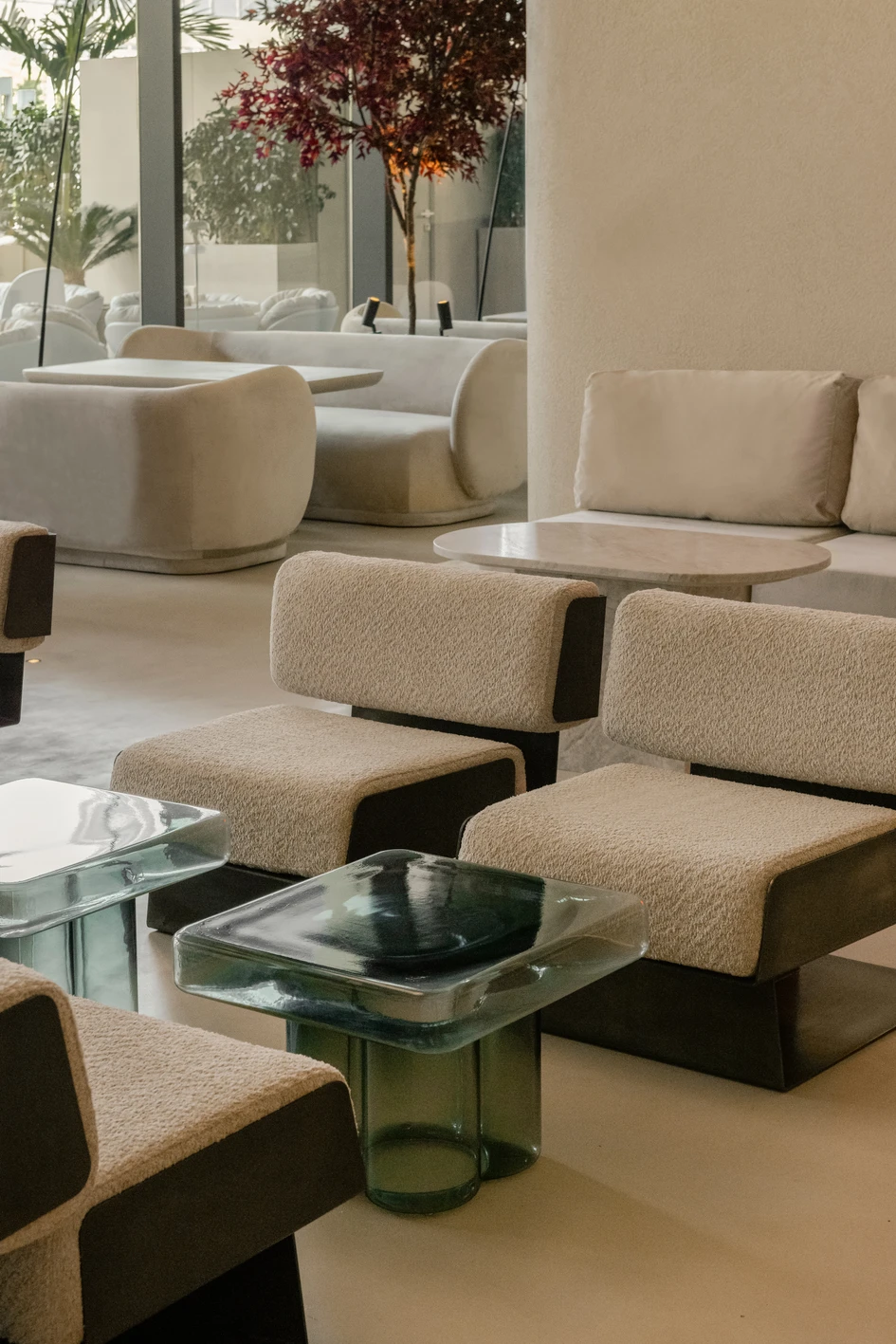
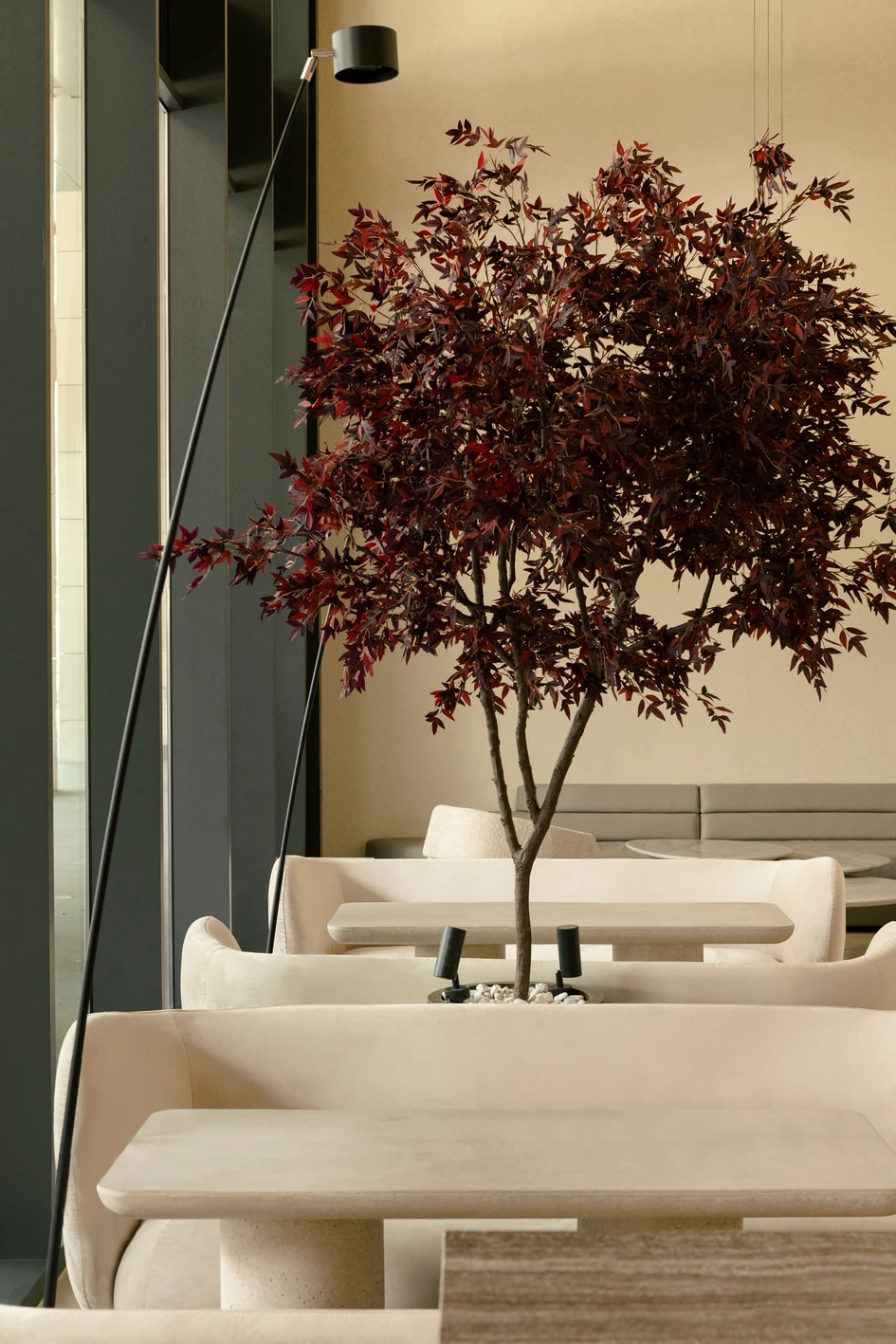
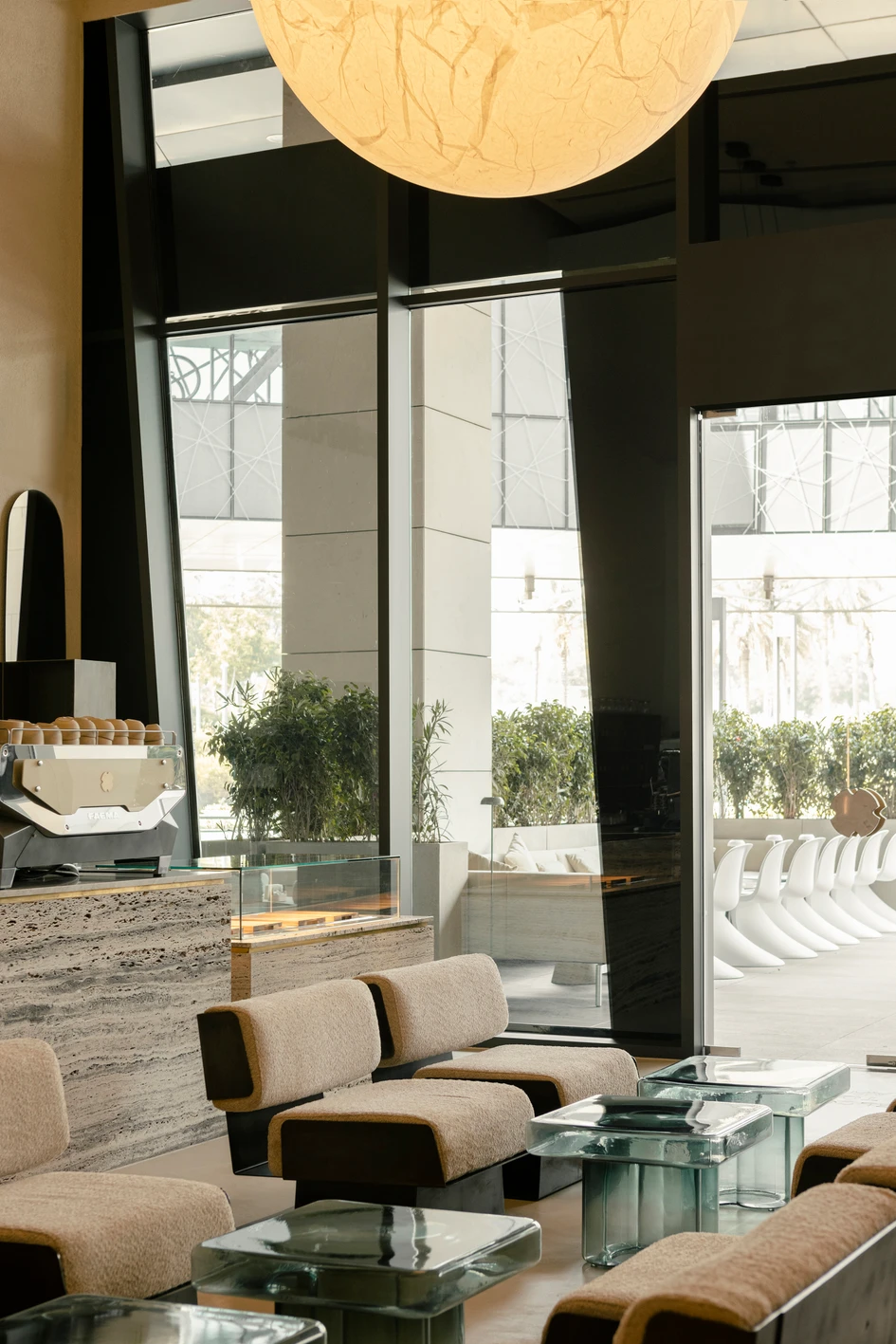
Highlights and decorative lighting are created as an extension of the conceptual idea. It is tuned to an atmospheric rhythm that flows through openings into every corner of the space. As evening falls, the Moon appears in the space, that is a light fixture with the same name created by the Davide Groppi group. Its light envelops the interior like the Earth's satellite, slowly immersing it in a nocturnal cradle. But this doesn't mean that life in the establishment stops: during this time, the guests are invited to enjoy the most comfortable, cozy atmosphere and refreshing cocktails. The tonal solution of furniture materials is positioned as part of a holistic color space: creamy bouclé, sandy quartz stone, natural oak veneer, and honey travertine interact organically in the landscape interior environment. Glass tables made by Miniforms refresh the sandy palette; natural light passing through them, makes them glow from the inside, changing them into vessels filled with transparent water.
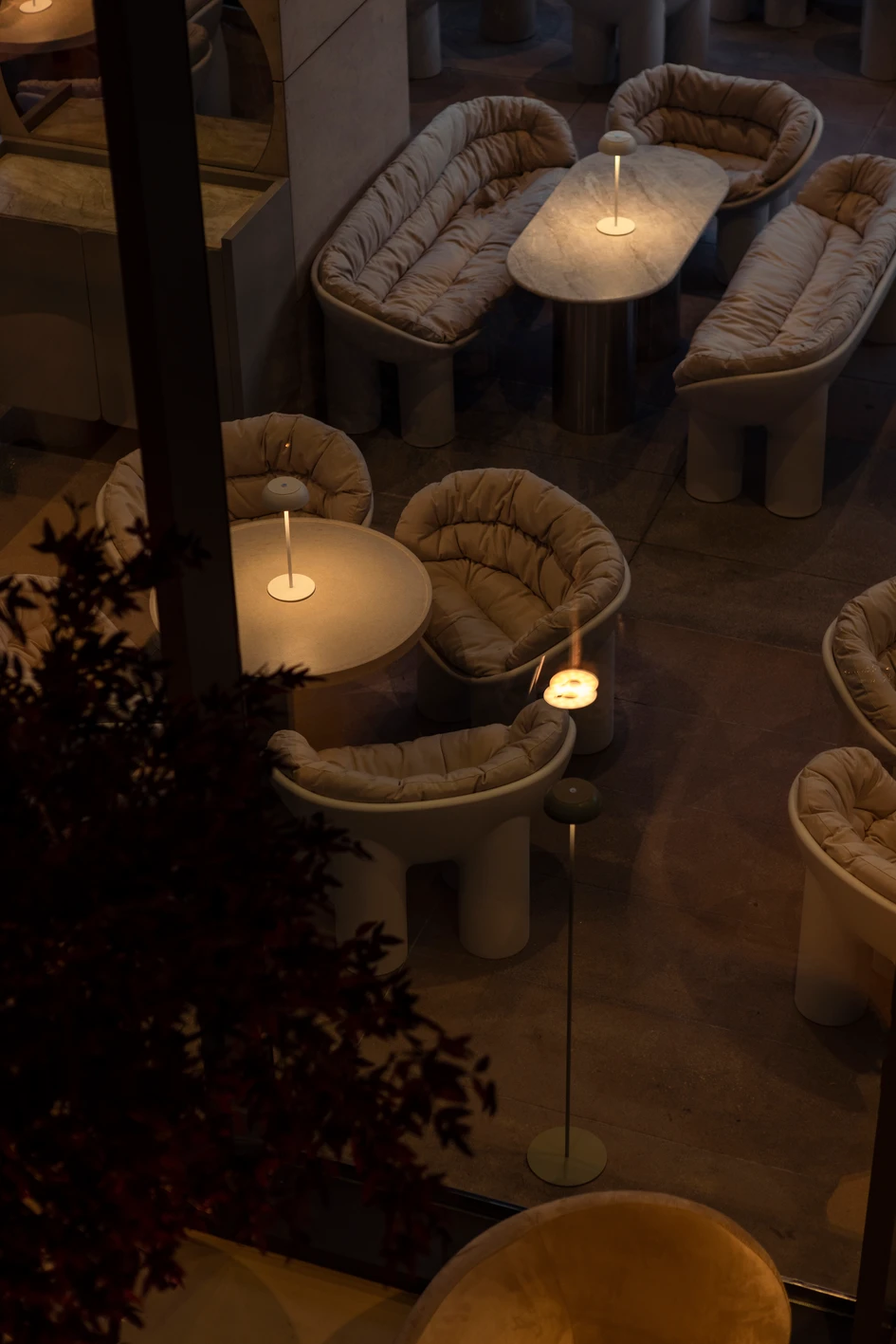
During the day, the terrace in front of the entrance refers to an oasis filled with greenery, which creates a desired shade curtain to protect the guests from the scorching sun. Nightfall makes the panoramic glazing gradually dissolve, while the interior and terrace unite into one single space, and now a sculptural landscape structure in a natural green environment opens up before us.
Design Team:
Aleksei Klimov, Eugene Cherkas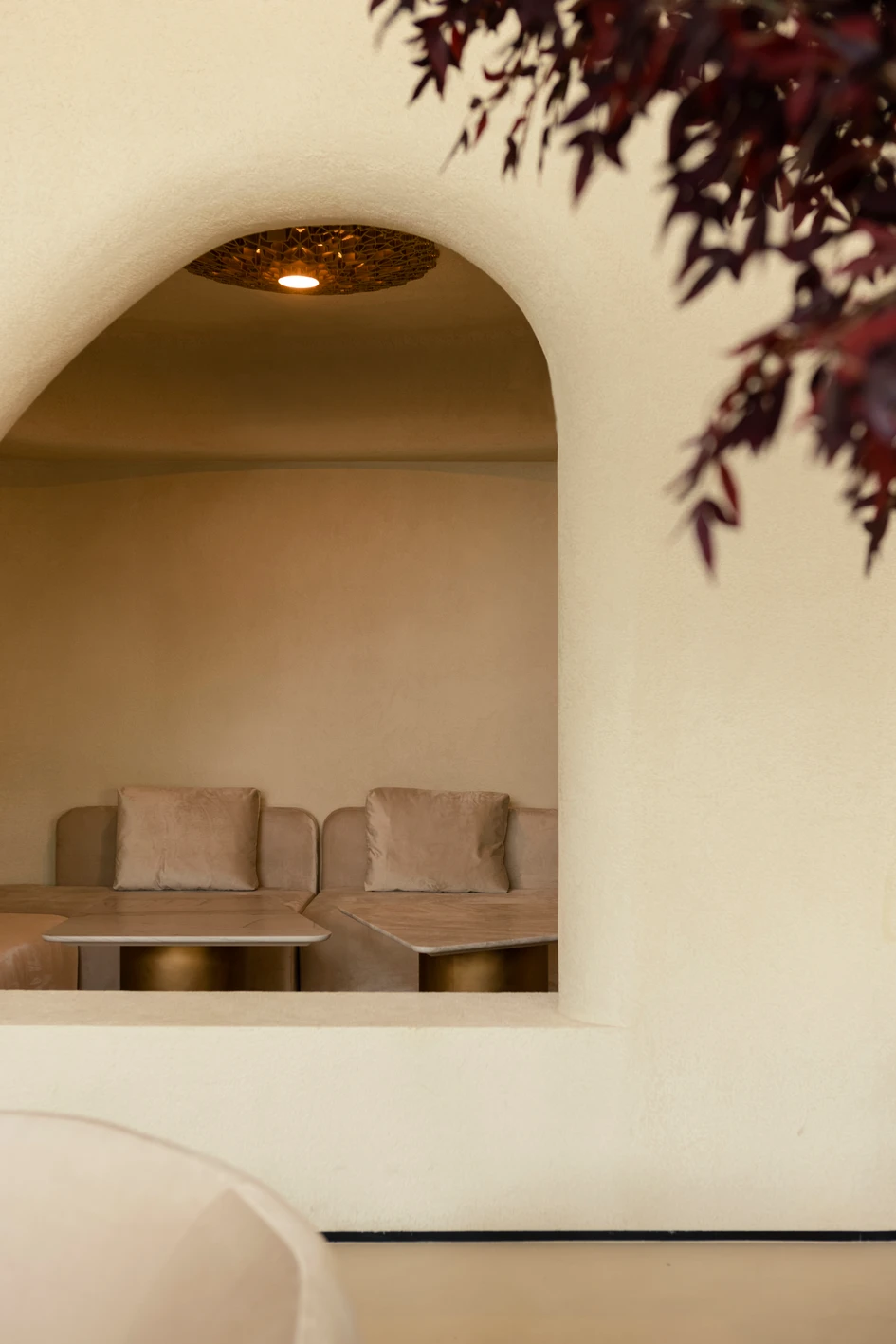




Projekt Gallerie


