Teilen
1/4


ID Trim
Geschätzter Preis
Nicht verfügbar in CHF
Preis anzeigen in
- Startseite/Bürodrehstühle/
ID Trim
Über dieses Produkt
Architonic ID: 1145482
Einführungsjahr: 2010
Konzept
Der Bürodrehstuhl ist das wichtigste Möbel des Büroarbeiters: Ein in Funktion, Komfort und Ästhetik individuell auf einzelne Nutzer, Teams oder Situationen abgestimmter Bürodrehstuhl beeinflusst nicht nur die Gesundheit, sondern auch die Produktivität und das Wohlbefinden am Arbeitsplatz.
Im Gegensatz dazu suchen viele Unternehmen die Vorteile der Standardisierung: Facility Management und Beschaffung rationalisieren so Einkauf und Unterhalt.
Ein Bürostuhlmodell alleine reichte aber bisher meist nicht aus, um diese schwer miteinander zu vereinenden Anforderungen zu erfüllen. Darum hat Vitra mit Antonio Citterio das ID Chair Concept entwickelt.
Das ID Chair Concept geht auf die vielfältigen Bedürfnisse im Büro ein: Aufbauend auf der neu entwickelten FlowMotion-Mechanikplattform bietet das System mehr als 8000 Möglichkeiten der Individualisierung für den einzelnen Nutzer – und doch bleibt der Bürostuhl ästhetisch und konstruktiv immer der gleiche Stuhl, mit allen damit verbundenen Vorteilen für das Unternehmen bei Ästhetik, Unterhalt und Service.
Die FlowMotion-Mechanik mit unterschiedlichen Funktionen, verschiedene Armlehnen und Untergestelle sowie ein breites Sortiment an Farben und Bezügen lassen jeden Nutzer und jedes Unternehmen «seinen» ID Chair finden – sei es für das Open Space Office, für Einzel- oder Teambüros, für Konferenzbereiche oder für Management Offices.
Das ID Chair Concept bietet auch viele Konfigurationsmöglichkeiten und Einstellungen für ein bequemes Sitzen. Der weiche Sitz und die stützenden Rückenlehnen mit den verschiedenen Bezügen oder dem Polster sorgen für einen aussergewöhnlichen Komfort. Das optional in den Sitz integrierte Vlies Clima Seat ist darüber hinaus dafür verantwortlich, dass sich das Sitzklima bis zu achtmal länger in einem angenehmen Bereich bewegt, als dies bei herkömmlichen Sitzoberflächen der Fall ist.
Die drei Grundtypen des ID Chair Concept
Das ID Chair Concept besteht aus den drei Grundtypen ID Mesh, ID Soft und ID Trim mit jeweils unterschiedlichen Rückenlehnen. Die Rückenlehnen sind in mehreren Höhen erhältlich und können um Kopf- oder Lumbalstützen ergänzt werden. Die mit unterschiedlichen Funktionen ausstattbare Synchronmechanik FlowMotion, verschiedene Armlehnen und Untergestelle sowie ein breites Sortiment an Farben und Bezügen lassen jeden Nutzer «seinen» ID Chair finden.
ID Mesh
ID Mesh verkörpert technische Transparenz und Leichtigkeit: Das auf einen schlanken Rahmen aufgebrachte, innovative Abstandsgewirke ist durchscheinend und offen wie ein Netz – und gleichzeitig weich wie ein dünnes Polster. Der Bezug Diamond Mesh erlaubt die Luftzirkulation und bietet so auch bei warmen Temperaturen einen langanhaltend angenehmen Sitzkomfort. ID Mesh kann optional mit einem Kleiderbügel oder einer Kopfstütze versehen werden.
ID Soft
Die voll gepolsterte Rückenlehne bietet hohen Komfort und gibt ID Soft mit ihren klaren Linien einen formal reduzierten, zurückhaltenden Auftritt. So fügt sich ID Soft in die unterschiedlichsten architektonischen Umgebungen ein. Der Rücken von ID Soft ist in der Höhe verstellbar und stützt so auch gross gewachsene Benutzer im oberen Schulterbereich.
ID Trim und ID Trim L
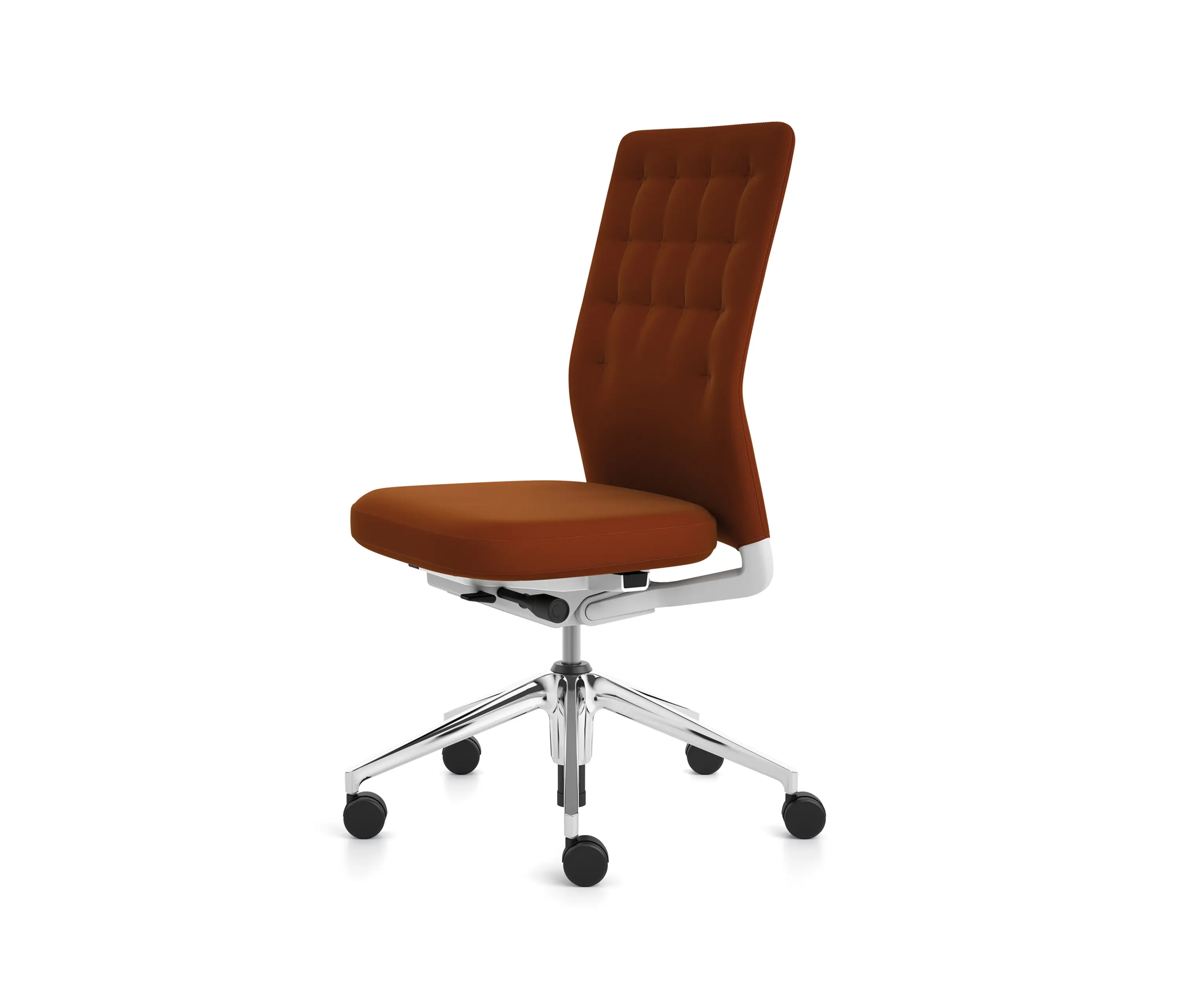
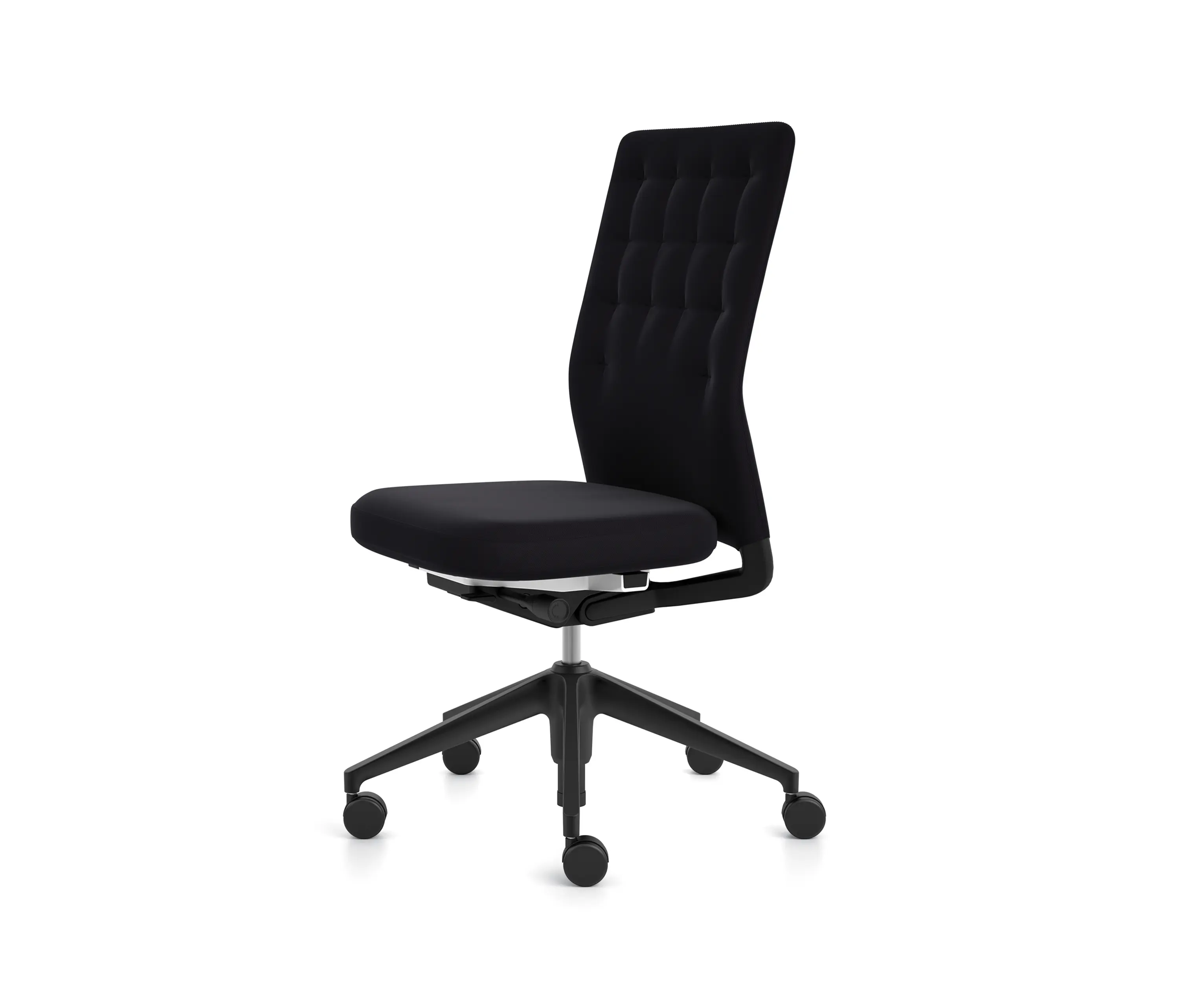
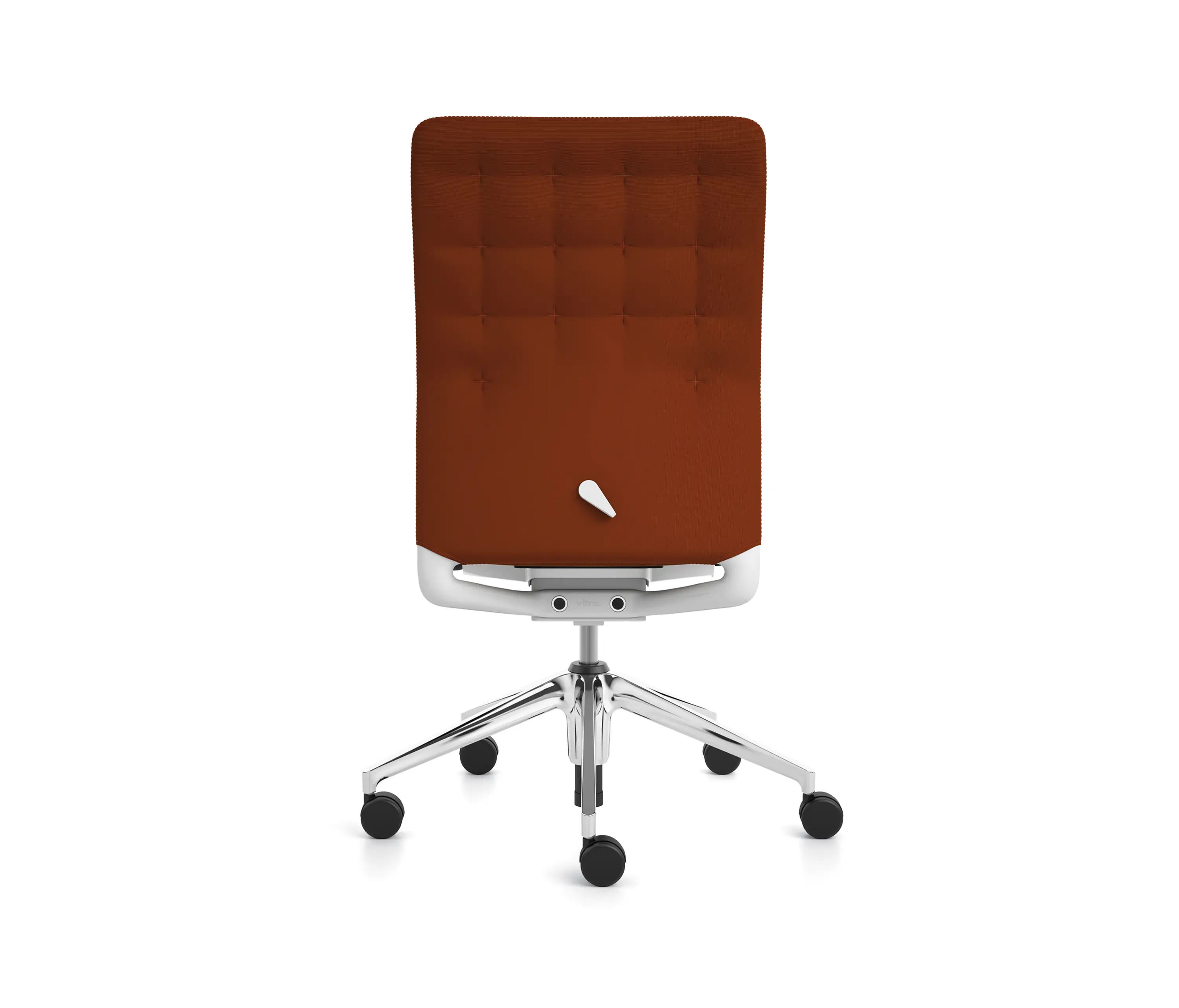
Die Rückenlehne von ID Trim vermittelt mit ihrem kompakten Polster klassische Eleganz und handwerkliche Qualität. Die sogenannte Sandwichkonstruktion mit der integrierten Lumbalstütze bietet den Komfort eines Polsterrückens, ist aber fast so schlank wie ein Netzrücken – und damit die Alternative zu diesen beiden anderen Bauweisen. ID Trim L mit der hohen Rückenlehne ist die Alternative für Managementbereiche und bietet zusätzliche Entspannung der Hals- und Nackenregion.
Dieses Produkt gehört zur Kollektion:

Produktdetails
Base
Spinnenfuß auf Rollen
Certification
Prüfzeichen DIN EN 1335 Teil 1-3, Prüfzeichen Greenguard, Prüfzeichen GS, Prüfzeichen Ergonomie geprüft
Feature
Rückenlehne höhenverstellbar, Rückenlehne neigbar, Lordosenstütze höhenverstellbar, Sitz und Rücken gepolstert, Sitztiefenverstellung, Sitzhöhenverstellung (Gasfeder), Sitzneigeverstellung, Synchronmechanik, Ohne Armlehnen
Usage
Objektbereich, Büro
Zertifizierungen & Nachhaltigkeit

IDC Concept Ergonomie

Certificate 13464 GG IDChair

IDC Concept Bürostuhl GS

BIFMA IDC

IDC Concept Ergonomie

Certificate 13464 GG IDChair

BIFMA IDC
Design-Dateien
53
Vertriebspartner
Designer

Antonio Citterio
Italy
Antonio Citterio was born in Meda in 1950. He graduated in architecture from Milan Polytechnic and opened his studio in 1972 where he started his architectural and interior design business. Between 1987 and 1996 he worked in association with Terry Dwan and, together, they created buildings in Europe and Japan. Among his most significant works: the restyling of a block in the historical centre of Seregno, Esprit headquarters in Amsterdam, Antwerp and Milan, industrial plants for Vitra, in Germany, and for Antonio Fusco, in Milan. In 1999 “Antonio Citterio and Partners” was founded by Citterio and Patricia Viel, a multidisciplinary practice for architectural design, industrial design and graphics. Patricia Viel was born in Milano in 1962. She graduated in architecture from Milan Polytechnic in 1987 and she started her collaboration with Antonio Citterio in 1986. From 2005 she is member of the National Institute of Architecture IN/ARCH. The firm develops projects for residential complexes, apartment buildings, hotels, trade centres, industrial sites, restructuring of public buildings, planning of workspace, offices and showrooms; it is also operational in the field of corporate communication - implementing corporate image projects, fittings, graphics. From January 2007 the firm is UNI EN ISO 9001:2000 certified. In the field of industrial design Antonio Citterio works for Italian and foreign companies such as Ansorg, Arclinea, Axor-Hansgrohe, Aubrilam, B&B Italia, Flexform, Flos, Fusital, Guzzini, Iittala, Inda, Kartell, Maxalto, Sanitec Group - Pozzi Ginori, Simon Urmet, Technogym, Tre Più, Vitra. In 2000 the new headquarters opened in Milan, Via Cerva 4, and in May of that same year new offices were opened in Hamburg, 75b Wrangelstrasse. In 2002 the construction of the building where the headquarters of the Edel Company are located, along the Elba river, was completed as well as an office building in Neuerwall, two constructions for offices and textile manufacturing in Legnano and Lecco and the headquarters of the CR&S Centre completed with showroom and offices for B&B Italia in Novedrate. Between 2003 and 2004, a corporate image project was implemented for De Beers (London and Tokyo) and, in May 2004, the Bulgari Hotel was inaugurated in Milan, the first of a chain of luxury hotels known as “Bulgari Hotels and Resorts”. In 2005 the restructuring of the historical Town Hall of Clusone, the project for the headquarters and nursery of the drug company GlaxoSmithKline in Verona, the project for a law firm in Sondrio, Italy were completed; added to this two projects for private house, one in Basel, Switzerland, the other in Sardinia, Italy and the jewellery De Beers in Los Angeles. In September 2006 has been inaugurated the Bulgari Resort in Bali, the Aspesi showroom in Milan and the pedestrian square “Michele Alboreto” in Rozzano. In 2007 the Bulgari restaurant and cafè opened in Tokyo, Ginza district. In January 2008 was completed the building for the New Ermenegildo Zegna Headquarters. The project for the new “Technogym Village” in Cesena (production site, offices and trade centre), a new square in Busto Arsizio; the functional restructuring, furniture and security of the Southern Pier in Marina di Ravenna, the renovation of the urban ex-Martinelli area in Morbegno, all in Italy, master planning and private houses are underway. Antonio Citterio and Partners took part in a great number of international competitions. In 2004: project in cooperation with other architects to change the historical centre of Fiera Milano into a new urban centre; project for the building of the “Brooktorhafen” bridge in the new “Hafencity” district in Hamburg; project to enlarge a new multifunctional school building and a kindergarten for the Deutsche School in Milan. In the same year, together with other architects, he won the competition for the functional arrangement, street furniture and security systems of Molo Guardiano sud / Marina di Ravenna, which was presented on the occasion of the 9th International Exhibition of Architecture of the Biennale of Venice, section “Towns on Water”. In the year 2004, publishing company Electa launched the monography “Antonio Citterio Industrial design”. In 2005, Antonio Citterio and Partners won the competition for the project of an hotel in the Hafencity district in Hamburg and received the 2nd prize at the international design competition for the hotel facilities in the new exhibition grounds of Rho-Pero. In the same year the Neumühlen project receives the 2nd prize from the Hamburg Architektur Preis and a special mention from the Deutscher Architektur Preis. Still in 2005, written by Luigi Prestinenza Pugliesi and published by Edilstampa, the monography “Antonio Citterio” has been issued. In the same year, he received 2nd prize at the design competition for Parco Levante Cesenatico and wins the international architectural competition for the renovation of the Ferrante Aporti building (former Italian post office) in Milan. In 2007: the Mies van der Rohe Award jury selects the project for the GlaxoSmithKline day nursery in Verona; the Italian publishing house Skira issued the monograph “Antonio Citterio. Architettura e Design”; 2nd prize at the international design competition for the Diocesano Museum in Milan. From 2006, Antonio Citterio is professor at the Accademia di Architettura dell’Università della Svizzera Italiana and from 2007 he is member of the Italian Design Council. In 2007 he received the “Royal Designer for Industry” award from the “Royal Society for the encouragement of Arts, Manufactures & Commerce” in London.


