The art of working from home: MENU
MENU’s new Fred Rigby Studio-designed The Eclipse Desk fulfils the highest demands in terms of work functionality, but also makes a powerful sculptural statement.


Di Audo Copenhagen e Emma Moore per

Audo Copenhagen
giugno 21, 2021 | 10:00 pm CUT
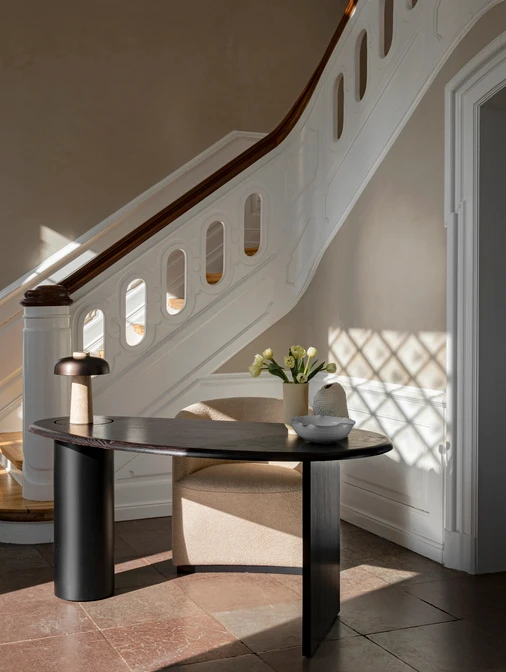
Desks are de rigueur these days. We need them in our offices, we need them in our homes, we need them in our shared spaces and hotels. Work-from-anywhere culture has put the spotlight on the environments we find ourselves shuffling our virtual documents in, and it means the humble table of tasks has never had so much attention.
"
'The Eclipse Desk is ambidextrous: it can stand in the middle of a room as a centrepiece or up against a wall as a more conventional piece of furniture'
Designing work functionality into homes is in fact opening up the potential of the desk to be more than just an easily sanitised surface with handy storage solutions attached. The emotional impact of the furniture piece can be considered more when it has to integrate into a home environment or ease the transition from home to workplace.
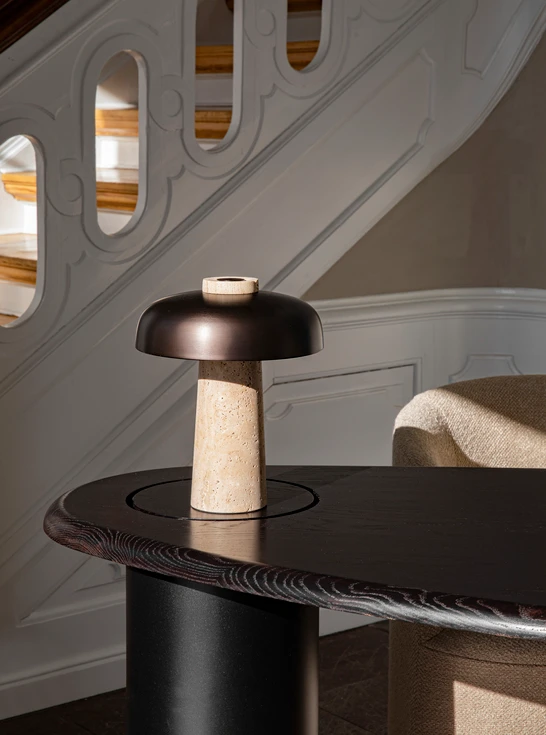
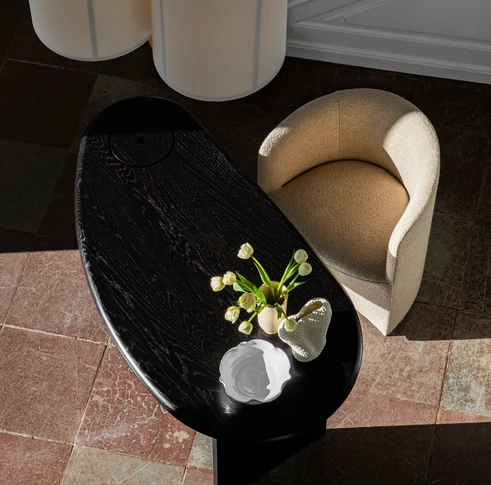
It’s something that Danish design house MENU is addressing in one of its latest furniture commissions, The Eclipse Desk. MENU was founded with the very nordic intention of crafting furniture, lighting and interior accessories shaped by purposeful details that are both functional and a joy to wake up to. So far, its desk designs have followed the straight lines and clean finishes we expect from modern Scandinavian design and are indeed a pleasure to behold. The Eclipse Desk, however, brings another dimension, which speaks to the lockdown-weary home worker who has drawn all the inspiration they can get from linearity. ‘The Eclipse Desk is sculptural, functional and tactile,’ says its designer, Fred Rigby. ‘I want people to feel inspired when they sit at it. To lean back and touch the curved edge; to find a calmness within to focus on work.’
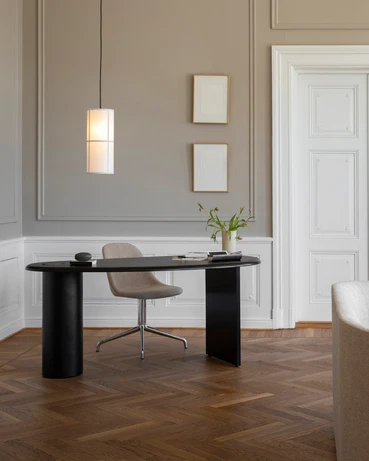
MENU’s very act of bringing Rigby into its design fold is to embrace a more organic approach to silhouettes and texture. Rigby is an English designer who grew up in the undulating coastal countryside of Dorset in the west of the country, drawing inspiration from the area's sea-chamfered stones and limestone headlands that feed his forms. His thoughtful object design unites new techniques and old craft and, for the most part, the pieces are handbuilt in his London studio. He also designs interiors and what distinguishes both practices is that there is barely a line to be had that doesn’t swoop or swerve.
Eclipse carries all Rigby’s signature touches. Based on a hand-drawn line, its curvilinear top is cut from solid, dark oiled oak and polished to a lustrous finish. It sits on one flat leg and a steel column.
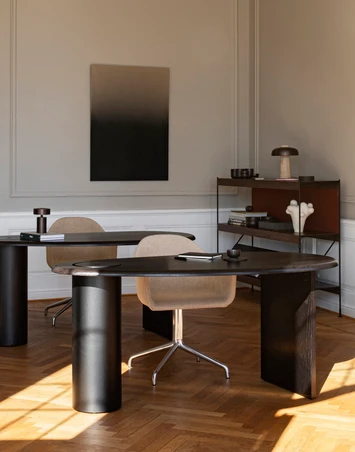
‘I found inspiration for the piece by looking to the shapes and forms of pebbles I collected on a beach,’ says the designer. ‘I wanted to create a design that wasn’t static, and one which was bold in colour yet tactile in form. The Eclipse Desk is ambidextrous: it can stand in the middle of a room as a centrepiece or up against a wall as a more conventional piece of furniture. Its solid oak top and intriguing form draw the eye and invite to touch.’
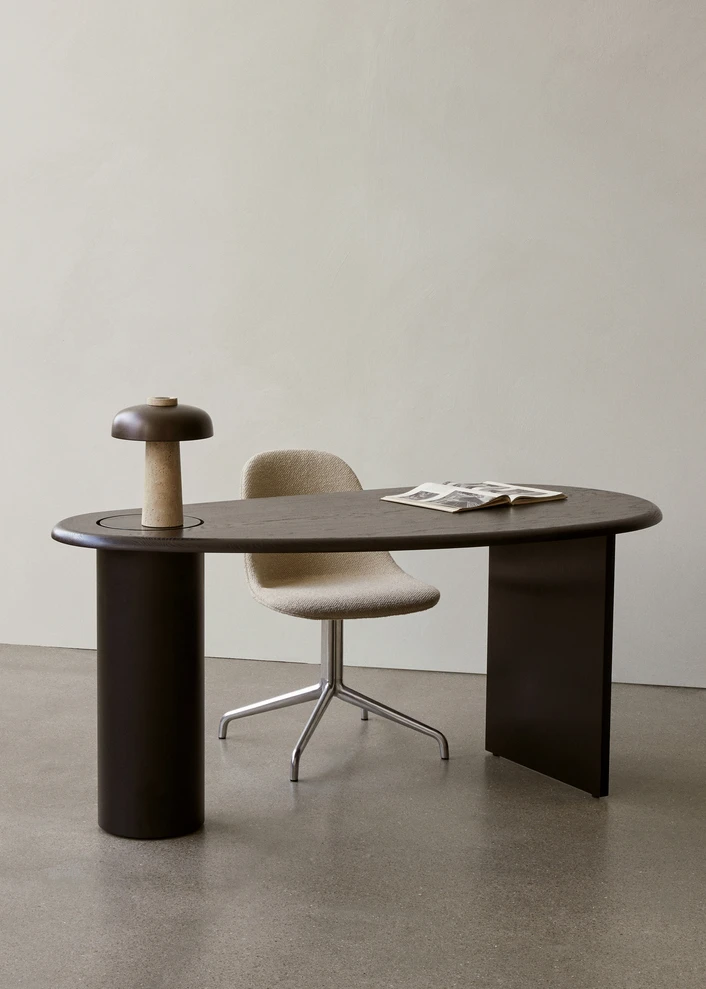
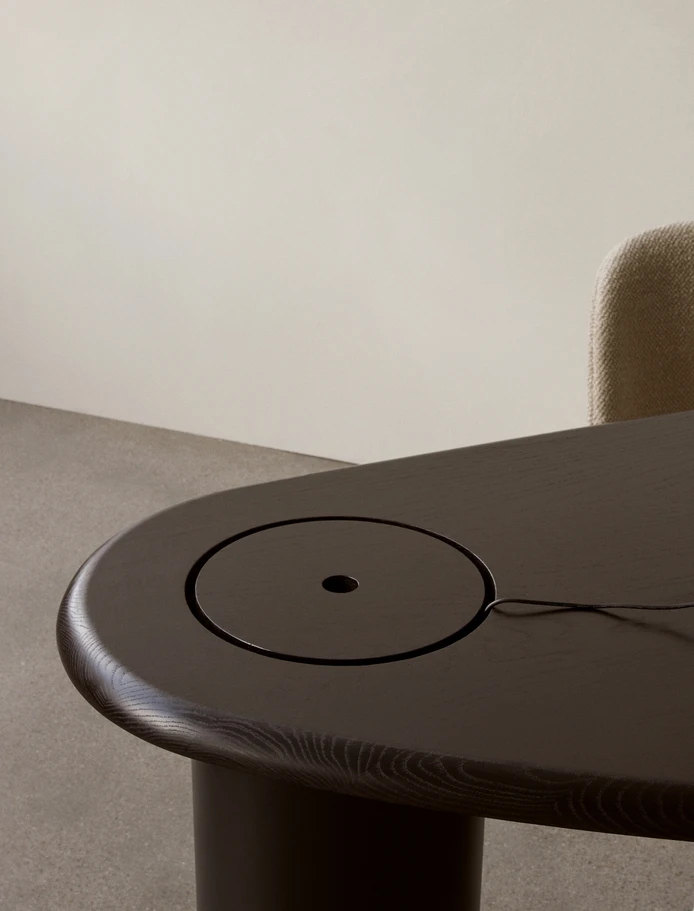
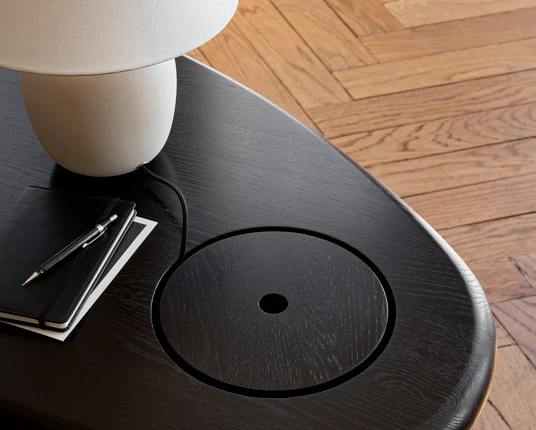
Inspired by an emotional reaction to nature, the desks own curves and textures are in turn intended to elicit an emotional reaction – one that comforts and eases the user. But the desk is not without a practical side too. ‘I always look to the end-user when developing an initial project brief. I think about how a design will be used, where it will be placed. Ultimately, the most important thing is how it will look and function in a space. Pairing the two is key,’ explains Rigby. The cylindrical leg incorporates storage and has space to stow cables out of sight so that the rest of the piece can get on with doing the job of supporting workers in a more joyful way. ‘It leaves behind a beautiful, clutter-free sculptural object in an office or space commandeered as a work-from-home station.’
By initiating a more emotive design for work environments, MENU seems to have sussed the new hybrid approach to getting the job done.
© Architonic
Galleria del progetto


