Condividere
Stampa

Condividere
Stampa
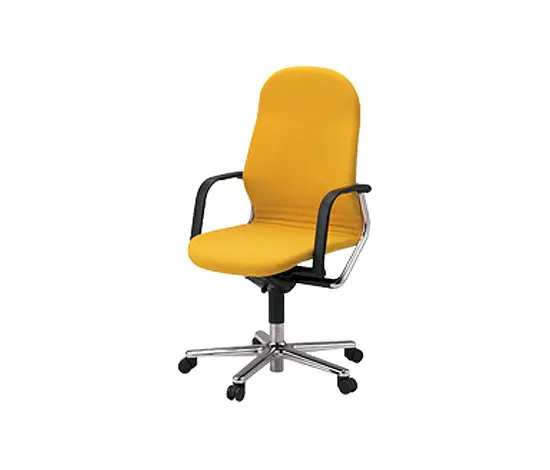
FS-Line 213/8
Architonic ID: 1012433
SKU: 213/8
Anno di Lancio: 1980
Concetto
The FS-line swivel chair is a classic in the world of office chairs. The epitome of dynamic seating for almost 30 years, its ease of use is its key to success. Over two million chairs sold worldwide are testimony to the ingenuity and modern appeal of the FS concept.
Three swivel axes are designed to allow the seat, backrest and armrests to follow any movement and change in posture. The combination of flexible swing plates and extremely elastic shell provides support and options for adjustment in any posture. The mechanism is infinitely adjustable, fully automatic and includes sideways torsion elasticity in the backrest.
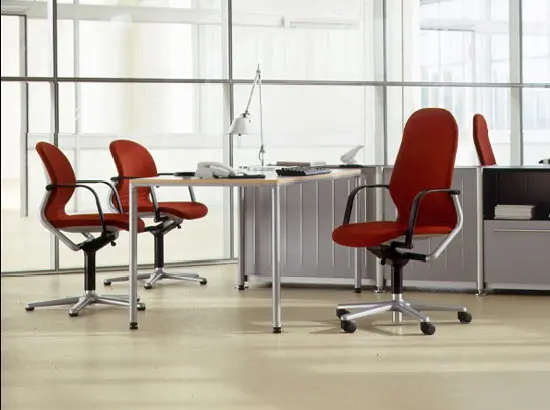
The FS line is designed as a broad product family for equipping all areas in a company. As a result, furnishings are coherent and enhance corporate identity.
The modular structure of the shell and frame makes repair and maintenance simple. Each chair can be upgraded with little effort. The FS-Line is the perfect example for a benchmark in sustainable product design. The durability of the high quality materials, the innovative seating concept and the classical, understated design guarantee the chair will last decades.
FS 211 – 213
The compact 211 – 213 models, with the typical, rounded seat shell, are a perfect choice for work, conference and training environments.
FS 218 – 219
The spacious 218 and 219 models, with the angular design of the fully upholstered seat shells, are suitable for management and conference environments areas that reflect a more formal status.
FS 220
The top of the range FS 220 chairs stand for luxurious comfort and a certain cachet. They feature steel frame upholstered bodies with meshed coverings and moulded in foam, superbly made covers and fully upholstered armrests.
Dimensions:
Overall height: 880 – 1160 mm
Width: 630 mm
Depth: 600 mm
Seat height: 420 – 530 mm
Questo prodotto appartiene alla collezione:
Alluminio, Base metallo, Metallo

Germany
Klaus Franck, born in1932, studied at the Academy of Design in Ulm (HfG). After that, he worked at the Institut für Industrialisiertes Bauen (Institute for Industrialized Building), he was a free-lance architect, graphic designer and author; amongst other projects, he was Head of Lufthansa’s Interior Design Group and lectured at the HfG and the Fachhochschule in Hanover. From 1971 to 1985, he was Head of the Wilkhahn Design Department which was later to become an independent company under the name of wiege. After seven more years as Managing Director of wiege, he left to set up business on his own. Today he lives in Moraira, Spain, and works there as a free-lance designer. As a product designer, interior designer, art director and author, he has constantly retranslated the legacy of the HfG Ulm into a new language and had a formative influence on corporate development at Wilkhahn.
Germany
Werner Sauer, born in 1950, studied industrial design at the Folkwang Hochschule in Essen, and experimental environmental design at the Staatliche Hochschule für Bildende Künste in Brunswick. First on a free-lance basis, then employed from 1978, he started off working in the Design Department and then continued at wiege until 1993 before setting up his own design studio in Springe near Hanover. He began as a lecturer at the Fachhochschule Hildesheim/Holzminden, then advanced to Professor, then Dean in 2000, and since 2003 he has been Executive Dean. Werner Sauer is a Member of the Board of the Deutscher Werkbund Nord.
Contatta direttamente
Contatta direttamente Wilkhahn
Wilkhahn


