Condividere
Stampa

Condividere
Stampa
Luna Verticale
Architonic ID: 1574914
SKU: TLU410-0565
Anno di Lancio: 1957
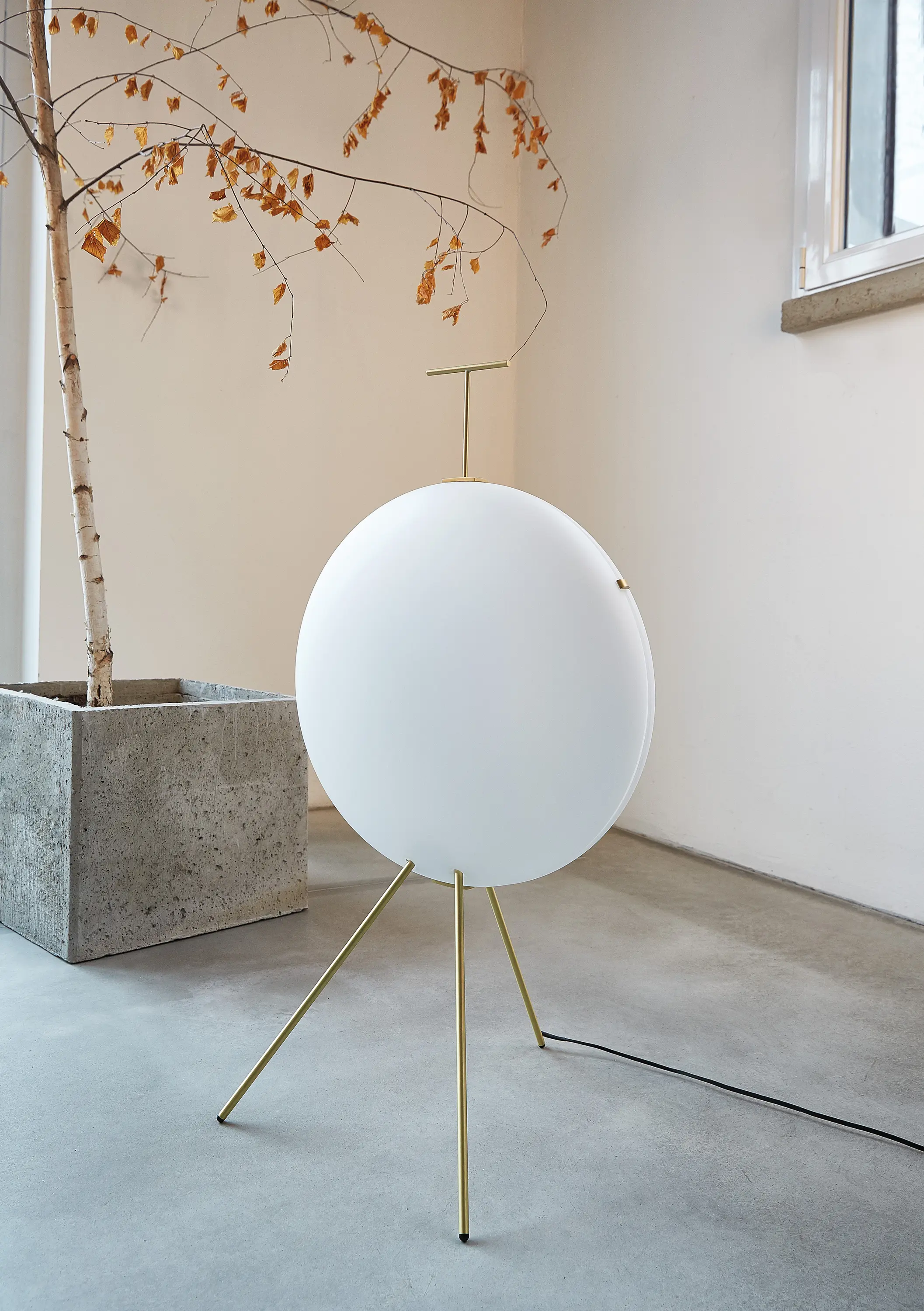
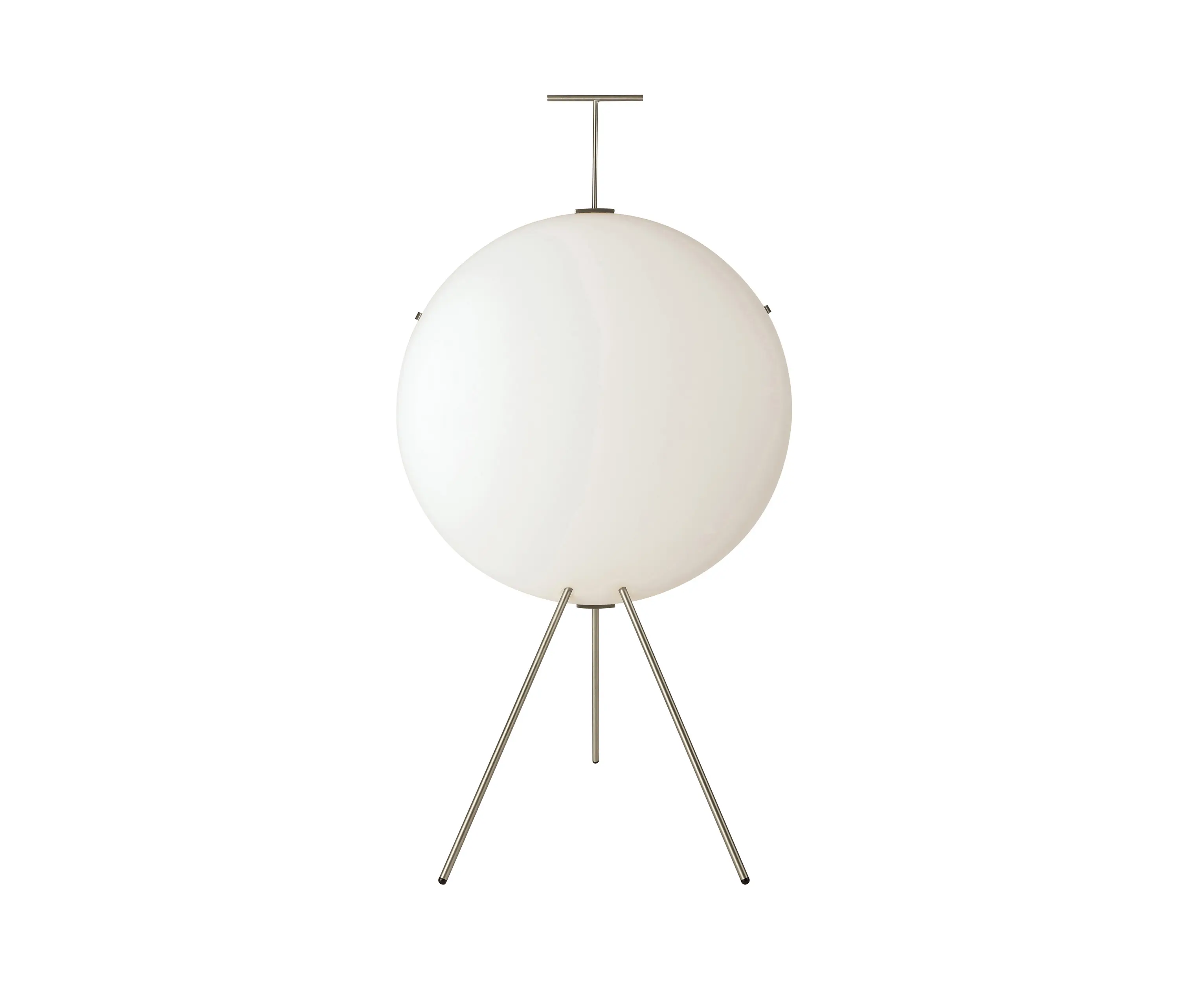
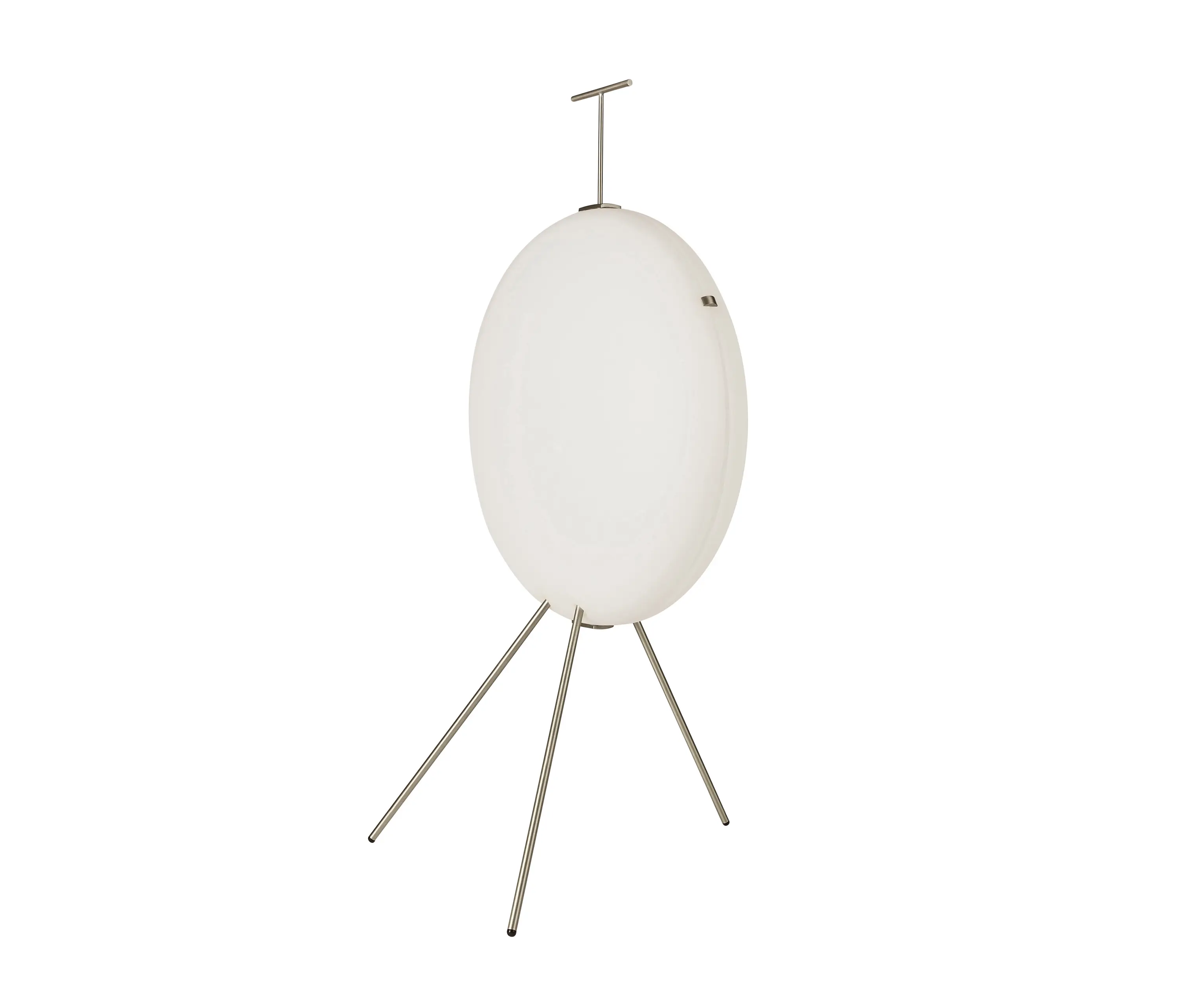
Floor lamp with satin nickel structure and handle, and white plastic body.
4xLED max 5W E14.
l (cm) 50
w (cm) 53
h (cm) 105,00
l (inch) 19,69
w (inch) 20,87
h (inch) 41,34
Concetto
Gio Ponti progettò per tutta la vita, e mise la sua arte in molti settori.
Creò per l’esposizione della Triennale del 1957 una casa prefabbricata e la riempì di oggetti di sua invenzione. Luna era una di quelli... ma rimase solo un prototipo fino al 2017.
La sperimentazione di nuovi materiali era alla base del lavoro di Ponti: la termoformatura della plastica ha permesso di far nascere quest’oggetto dalla forma avveneristica per il tempo.
L’impugnatura permette di spostate Luna per nuove configurazioni casalinghe, caratteristica tanto cara al progettista.
Questo prodotto appartiene alla collezione:
Metallo, Plastica
Puoi visitare la pagina del prodotto per queste varianti: basta cliccarci sopra!

Italy
Gio Ponti was an icon of the modernist movement: the Italian designer, architect, artist and publisher contributed significantly to the worlds of architecture and design with his extensive work in fine furniture and ceramics, education, office and residential buildings, and everything in between. He is considered by many to be the father of modern Italian design. Gio Ponti: a biography Giovanni, known was Gio, Ponti was born in 1891 in Milan. It was there that he spent his childhood, and in 1921 he began to study architecture at the Politecnico di Milano. From 1923 to 1930 he served as the artistic director of the Richard-Ginori porcelain factory. In 1927, Ponti started his first architectural office, together with Emilio Lancia, and in 1928 he started the magazine Domus, which is still regarded as one of the most influential European magazines for architecture and design. He was also very influential during the period as a curator of the Milan Triennale. After his collaboration with Emilio Lancia had come to and end, upon completion of the Torre Rasini, he began to work as an architect together with the engineers Antonio Fornaroli and Eugenio Soncini. It was during this period that Ponti designed many of his most famous buildings, such as the Institute of Mathematics of the University of Rome, the Primo Palazzo Montecatini, the Casa Marmont and Villa Donegani in Bordighera. The most well-known of his architectural works is the Pirelli Tower, which Gio Ponti completed in his hometown of Milan in 1956. He continued to work well into his eighties, completing such impressive works as the Concattedrale Gran Madre di Dio in Taranto and the Denver Art Museum. Gio Ponti died in Milan on 16 September, 1979 having produced countless pieces of furniture, ceramics and thousands of other objects throughout his life. The Superleggera Chair by Gio Ponti In 1957, Gio Ponti designed his most famous piece of furniture, the Superleggera chair, for the manufacturer Cassina. The ‘ultra-light’ chair was an update on the traditional chairs that were produced in the Ligurian factory. They continue to be in great demand due to their simplicity and functionality, and to this day, the Superleggera chair with its sleek, understated shape is one of the most common chairs found in Italian restaurants. Gio Ponti’s Coffee Tables and Other Furniture In 1931, Ponti became artistic director of the design manufacturer FontanaArte, going on to design numerous objects for the company. Among the furniture pieces Ponti created were coffee tables such as the Tavolino 1932 coffee table, as well as many lamps, such as the Pirellone, the Pirellina, and Bilia lamps. Gio Ponti: architecture and design philosophy Ponti’s architecture and design embodied the Italian dolce vita. Influenced by his early work in ceramics, Ponti took responsibility for the design of every aspect of his buildings, including their interior design, lighting, and even glass and silverware. Gio Ponti broke through borders and traditions, choosing instead an interdisciplinary approach which combined design, art, craft and architecture. His fascination for a wide range of styles is evident from his designs for a wide variety of manufacturers, including Cassina and FontanaArte. © by Architonic