Condividere
Stampa


Architonic ID: 20731212
Anno di Lancio: 2023
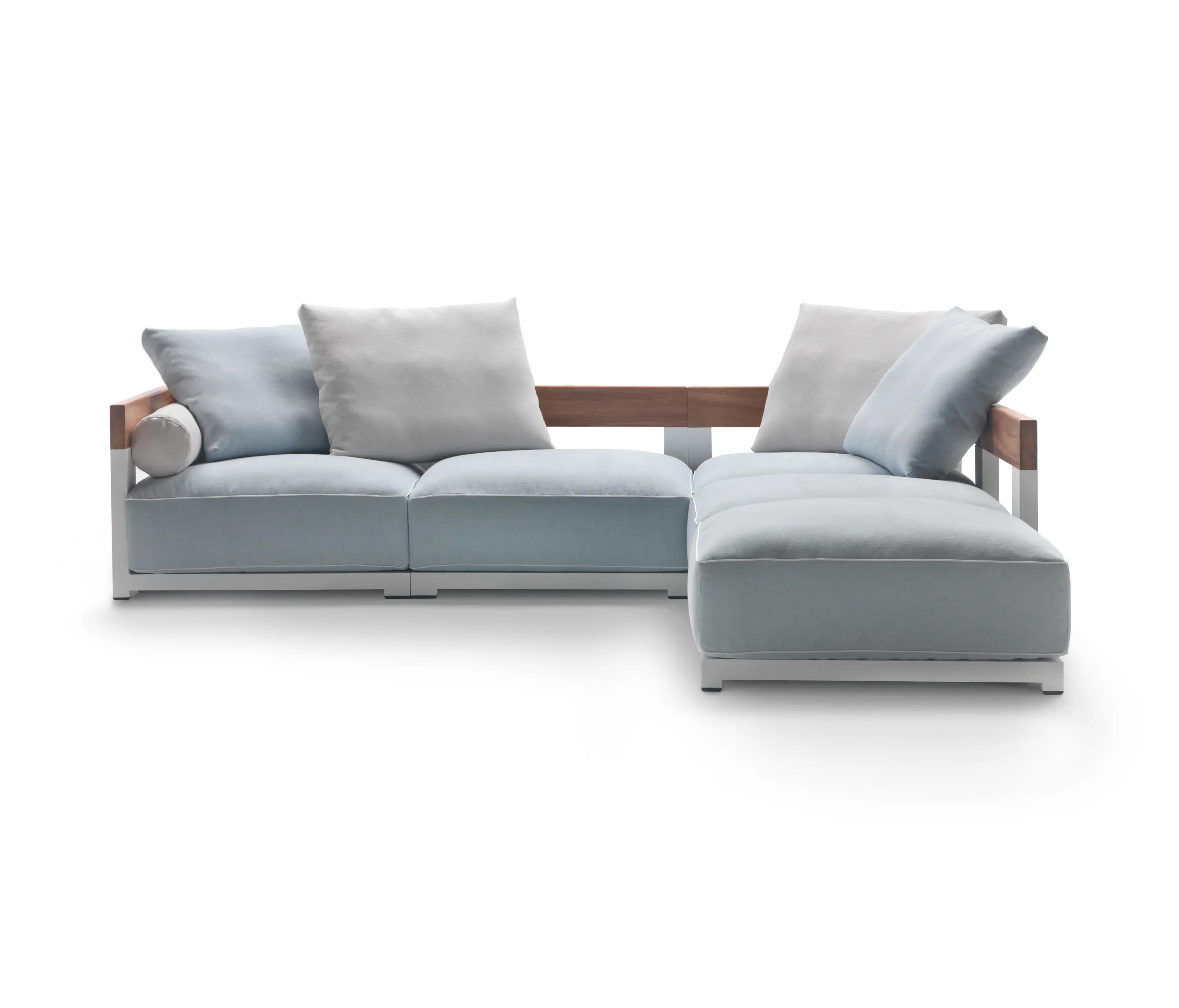
Struttura in alluminio verniciato a forno con polveri epossidiche nei colori bianco 100, rosso vino 405, verde kaki 705, brunito, grigio lucido 715 o nella finitura laccato goffrato nei colori bianco 300, sabbia 310, mattone 320, verde salvia 330, terracotta 325, verde foresta 335, carbone 350. Cinghie elastiche idrorepellenti nei colori sabbia 9001, grigio 9003, antracite 9005, nero 9009, sale e pepe 9017. Tiranti interni in acciaio. Appoggio a terra su piedi in materiale termoplastico. Schienale e bracciolo in legno massello di iroko nelle finiture naturale, tinto grigio, tinto marrone, laccato bianco. Cuscino seduta in poliuretano espanso e fibra di poliestere rivestito in tessuto protettivo accoppiato idrorepellente. Cuscino schienale in fibra di poliestere e fodera idrorepellente. Cuscini optional / cuscini a rullo in fibra di poliestere e fodera idrorepellente. Su richiesta con supplemento di prezzo. Profilo rivestimento la confezione prevede un profilo in gros grain che può essere realizzato in tutti i colori della cartella campioni. Rivestimento in tessuto sfoderabile. Cover in materiale impermeabile. A richiesta e con supplemento di prezzo.
Concetto
Il rigore dell’alluminio incontra il calore del legno di iroko in questo sistema di sedute caratterizzato da un disegno asciutto ed essenziale. La parte inferiore della struttura del divano Milos è realizzata in alluminio, un materiale leggero e robusto, mentre quella superiore è in iroko massello, un’essenza le cui proprietà di elevata resistenza all’azione degli agenti atmosferici la rende particolarmente adatto alla collocazione in ambienti outdoor. Alle linee pulite e squadrate della struttura fanno da contrappunto gli ampi cuscini di seduta e schienale caratterizzati da morbide imbottiture e da eleganti dettagli di confezione quali il profilo in gros grain. Il sistema di sedute Milos comprende anche un lettino reclinabile che può essere utilizzato da solo oppure integrato in composizioni variamente articolate a mezzo di giunti che si possono agganciare e sganciare con facilità. Se non utilizzati per lunghi periodi, si consiglia di coprire i divani Milos con le apposite fodere al fine di mantenerli in buone condizioni e preservarne lo stato originale il più a lungo possibile. La maggior parte dei componenti utilizzati per la realizzazione degli elementi Milos può essere riciclata.
Alluminio, Base metallo, Metallo

Italy
Antonio Citterio was born in Meda in 1950. He graduated in architecture from Milan Polytechnic and opened his studio in 1972 where he started his architectural and interior design business. Between 1987 and 1996 he worked in association with Terry Dwan and, together, they created buildings in Europe and Japan. Among his most significant works: the restyling of a block in the historical centre of Seregno, Esprit headquarters in Amsterdam, Antwerp and Milan, industrial plants for Vitra, in Germany, and for Antonio Fusco, in Milan. In 1999 “Antonio Citterio and Partners” was founded by Citterio and Patricia Viel, a multidisciplinary practice for architectural design, industrial design and graphics. Patricia Viel was born in Milano in 1962. She graduated in architecture from Milan Polytechnic in 1987 and she started her collaboration with Antonio Citterio in 1986. From 2005 she is member of the National Institute of Architecture IN/ARCH. The firm develops projects for residential complexes, apartment buildings, hotels, trade centres, industrial sites, restructuring of public buildings, planning of workspace, offices and showrooms; it is also operational in the field of corporate communication - implementing corporate image projects, fittings, graphics. From January 2007 the firm is UNI EN ISO 9001:2000 certified. In the field of industrial design Antonio Citterio works for Italian and foreign companies such as Ansorg, Arclinea, Axor-Hansgrohe, Aubrilam, B&B Italia, Flexform, Flos, Fusital, Guzzini, Iittala, Inda, Kartell, Maxalto, Sanitec Group - Pozzi Ginori, Simon Urmet, Technogym, Tre Più, Vitra. In 2000 the new headquarters opened in Milan, Via Cerva 4, and in May of that same year new offices were opened in Hamburg, 75b Wrangelstrasse. In 2002 the construction of the building where the headquarters of the Edel Company are located, along the Elba river, was completed as well as an office building in Neuerwall, two constructions for offices and textile manufacturing in Legnano and Lecco and the headquarters of the CR&S Centre completed with showroom and offices for B&B Italia in Novedrate. Between 2003 and 2004, a corporate image project was implemented for De Beers (London and Tokyo) and, in May 2004, the Bulgari Hotel was inaugurated in Milan, the first of a chain of luxury hotels known as “Bulgari Hotels and Resorts”. In 2005 the restructuring of the historical Town Hall of Clusone, the project for the headquarters and nursery of the drug company GlaxoSmithKline in Verona, the project for a law firm in Sondrio, Italy were completed; added to this two projects for private house, one in Basel, Switzerland, the other in Sardinia, Italy and the jewellery De Beers in Los Angeles. In September 2006 has been inaugurated the Bulgari Resort in Bali, the Aspesi showroom in Milan and the pedestrian square “Michele Alboreto” in Rozzano. In 2007 the Bulgari restaurant and cafè opened in Tokyo, Ginza district. In January 2008 was completed the building for the New Ermenegildo Zegna Headquarters. The project for the new “Technogym Village” in Cesena (production site, offices and trade centre), a new square in Busto Arsizio; the functional restructuring, furniture and security of the Southern Pier in Marina di Ravenna, the renovation of the urban ex-Martinelli area in Morbegno, all in Italy, master planning and private houses are underway. Antonio Citterio and Partners took part in a great number of international competitions. In 2004: project in cooperation with other architects to change the historical centre of Fiera Milano into a new urban centre; project for the building of the “Brooktorhafen” bridge in the new “Hafencity” district in Hamburg; project to enlarge a new multifunctional school building and a kindergarten for the Deutsche School in Milan. In the same year, together with other architects, he won the competition for the functional arrangement, street furniture and security systems of Molo Guardiano sud / Marina di Ravenna, which was presented on the occasion of the 9th International Exhibition of Architecture of the Biennale of Venice, section “Towns on Water”. In the year 2004, publishing company Electa launched the monography “Antonio Citterio Industrial design”. In 2005, Antonio Citterio and Partners won the competition for the project of an hotel in the Hafencity district in Hamburg and received the 2nd prize at the international design competition for the hotel facilities in the new exhibition grounds of Rho-Pero. In the same year the Neumühlen project receives the 2nd prize from the Hamburg Architektur Preis and a special mention from the Deutscher Architektur Preis. Still in 2005, written by Luigi Prestinenza Pugliesi and published by Edilstampa, the monography “Antonio Citterio” has been issued. In the same year, he received 2nd prize at the design competition for Parco Levante Cesenatico and wins the international architectural competition for the renovation of the Ferrante Aporti building (former Italian post office) in Milan. In 2007: the Mies van der Rohe Award jury selects the project for the GlaxoSmithKline day nursery in Verona; the Italian publishing house Skira issued the monograph “Antonio Citterio. Architettura e Design”; 2nd prize at the international design competition for the Diocesano Museum in Milan. From 2006, Antonio Citterio is professor at the Accademia di Architettura dell’Università della Svizzera Italiana and from 2007 he is member of the Italian Design Council. In 2007 he received the “Royal Designer for Industry” award from the “Royal Society for the encouragement of Arts, Manufactures & Commerce” in London.


