Condividere
Stampa

Condividere
Stampa
Architonic ID: 1037830
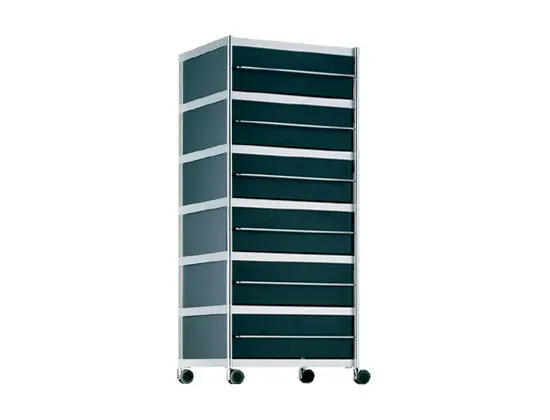
Carrello con struttura in estrusi d'alluminio, ripiano e 6 cassetti in metallo verniciato, pannelli laterali e posteriori in metacrilato. Ruote cromate e maniglie in filo d'acciaio cromato.
Concetto
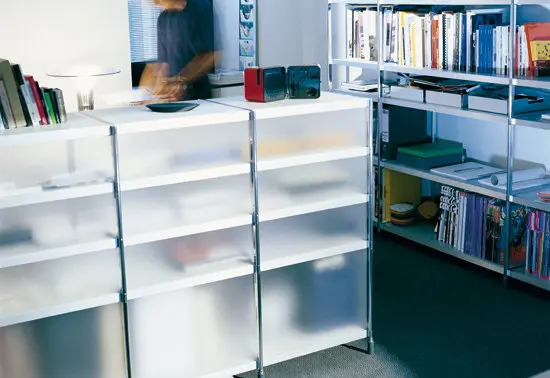
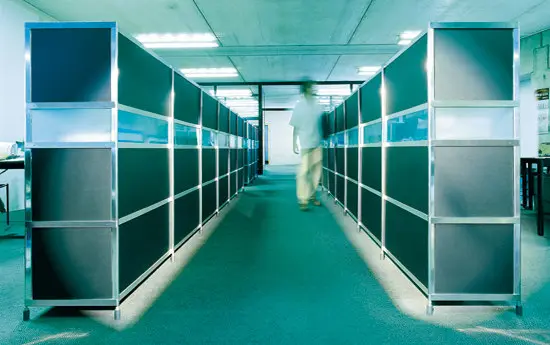
È il sistema di elementi componibili con struttura modulare portante, in profili estrusi di alluminio. Per tutti i suoi componenti, in acciaio, vetro e metacrilato, sono disponibili 4 altezze (160, 255, 350, 540 mm) e 3 profondità (300, 450, 560 mm). Grazie alla varietà delle sue dimensioni, il sistema ha una componibilità infinita. Con SEC, infatti, è possibile realizzare dal più piccolo comodino alla più grande parete contenitore, che può separare ambienti, ma anche lasciarsi attraversare dalla luce, se ha pannelli in metacrilato colorato, che da quest’anno sono disponibili anche nelle nuove varianti: grigio fumé trasparente e nero fumé trasparente. Il catalogo propone varie tipologie di composizione SEC: carrelli, librerie a giorno o con cassetti, sideboard orizzontali o strutture a torre. Il cd-rom Alias SEC contiene il software per progettare per ogni esigenza, casa o contract, altre composizioni per ingressi, reception, punti vendita, uffici e locali pubblici: scaffali, contenitori, carrelli, strutture divisorie, oppure carrelli portavivande, mobili tv e hi-fi, contenitori per il bagno e librerie.
SEC, il sistema di elementi componibili con struttura modulare portante dalla componibilità infinita, si arricchisce della nuova componente angolare. I nuovi estrusi, disponibili in alluminio anodizzato naturale opaco o anodizzato lucido, assieme ai ripiani e pannelli angolari, permettono di realizzare utili configurazioni ad angolo, di diversa profondità.
Pratico e versatile, grazie alla varietà delle sue dimensioni, con SEC è possibile realizzare dal più piccolo comodino alla più grande parete contenitore.
Questo prodotto appartiene alla collezione:
Alluminio, Base metallo, Metallo

Switzerland
Born in 1964 in Buenos Aires, Alfredo Häberli studied industrial design at the Zürcher Hochschule für Gestaltung (which is now the Zurich University of the Arts, ZHdK). After completing his studies, in 1991 he founded his first design studio. Since 1999, he has been trading as Alfredo Häberli Designdevelopment, based in Zurich, and enjoys international success. He is now one of the world's most sought-after designers. His projects include exhibition concepts, interior and furniture design and design drafts, all of which unite tradition, innovation, joy and energy. In 2014 he received the "Grand Prix Design”, a Swiss design award presented by the Federal Office of Culture. In 2019, he was a member of the jury for the Design Prize Switzerland and, in 2020, for the Frame Award. Alfredo Häberli's work and designs have been shown in numerous exhibitions throughout Europe and he has received many awards for his work during the past 16 years. A personal monograph «Alfredo Häberli - Sketching My Own Landscape» was published by Frame Publishers in Amsterdam and in October 2006 he was guest of honour at the 20th Biennale of Design in Kortrijk, Belgium. In this context the book «Alfredo Häberli Design Live» with photos of some of Switzerlands most influential Artists, interpreting Alfredo Häberlis work, was released and published by Birkhäuser. With his own retrospective exhibition «SurroundThings» in 2008 at the Museum für Gestaltung Zürich, for which he was responsible for numerous exhibitions since 1988, a personal dream came true. In 2009 he was awarded by A&W magazine (Architektur & Wohnen) as the «Designer of the Year 2009» and honoured with a monograph exhibition on the occasion of the international furniture fair - imm cologne. Alfredo Häberli has been curating «Atelier Pfister – Neues Schweizer Design» by Pfister AG since 2009. Alfredo Häberli's most extensive project to date, the 25hours Hotel Zurich West, was inaugurated in November 2012. He was responsible for the overall interior decoration and designed more than 60 products for the hotel. In 2014 Alfredo Häberli received the prestigious Swiss Grand Prix of Design from the Swiss Federal Office of Culture.


