Public service: BURRI
PUBLIC SPACE DESIGN WEEK: David Chipperfield’s landmark new Kunsthaus extension in Zurich has an equally imposing new public artwork, created by Swiss contemporary artist Pipilotti Rist. Find out how BURRI public elements, together with numerous project partners, made the bold project a reality.


Par BURRI et Gerrit Terstiege pour

BURRI
février 11, 2021 | 11:00 pm CUT
Amanda Burden, the former city planner of New York, once said: ‘Public spaces are more important than buildings. They bring a city to life.’ And there can be little doubt about it: urban design has become much more important in recent decades, playing a significant role in how comfortable and safe people feel in a city. This development is recognised by Swiss manufacturer BURRI public elements and can be seen in a range of products that are not only flexible, durable and versatile, but also possess the understated elegance of the practical.
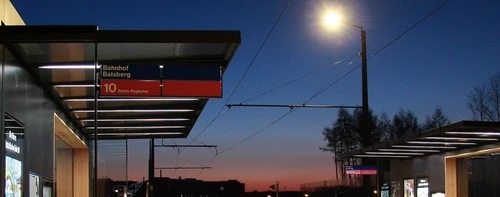
Founded in 1903, the company is today run by a fifth generation of the Burri family and its expertise in the development, manufacture, planning and maintenance of small-scale architectural projects in public spaces is known far beyond the borders of Switzerland. In addition to street furniture, BURRI offers a wide range of products – from information and wayfinding systems to lighting solutions, bus stop infrastructures and traffic technology.
Wherever one may be in the world, It is clear that urban design philosophies differ from place to place, but what many have in common is that robustness and low life-cycle costs are often key criteria when it comes to selection of elements. A visit to BURRI’s website, www.burri.world, however, is all that is required to prove that practical objects can also become real aesthetic assets in urban spaces.
"
A visit to BURRI’s website is all that is required to prove that practical objects can also become real aesthetic assets in urban spaces
And while architects, landscapers and urban planners have long appreciated the often modular and systematically constructed solutions offered by BURRI, it offers much more. The company’s expertise was, for example, recently in demand for a very special, artistic project – the resulting piece being the very opposite of what one might expect to find coming off the end of a conveyor belt.
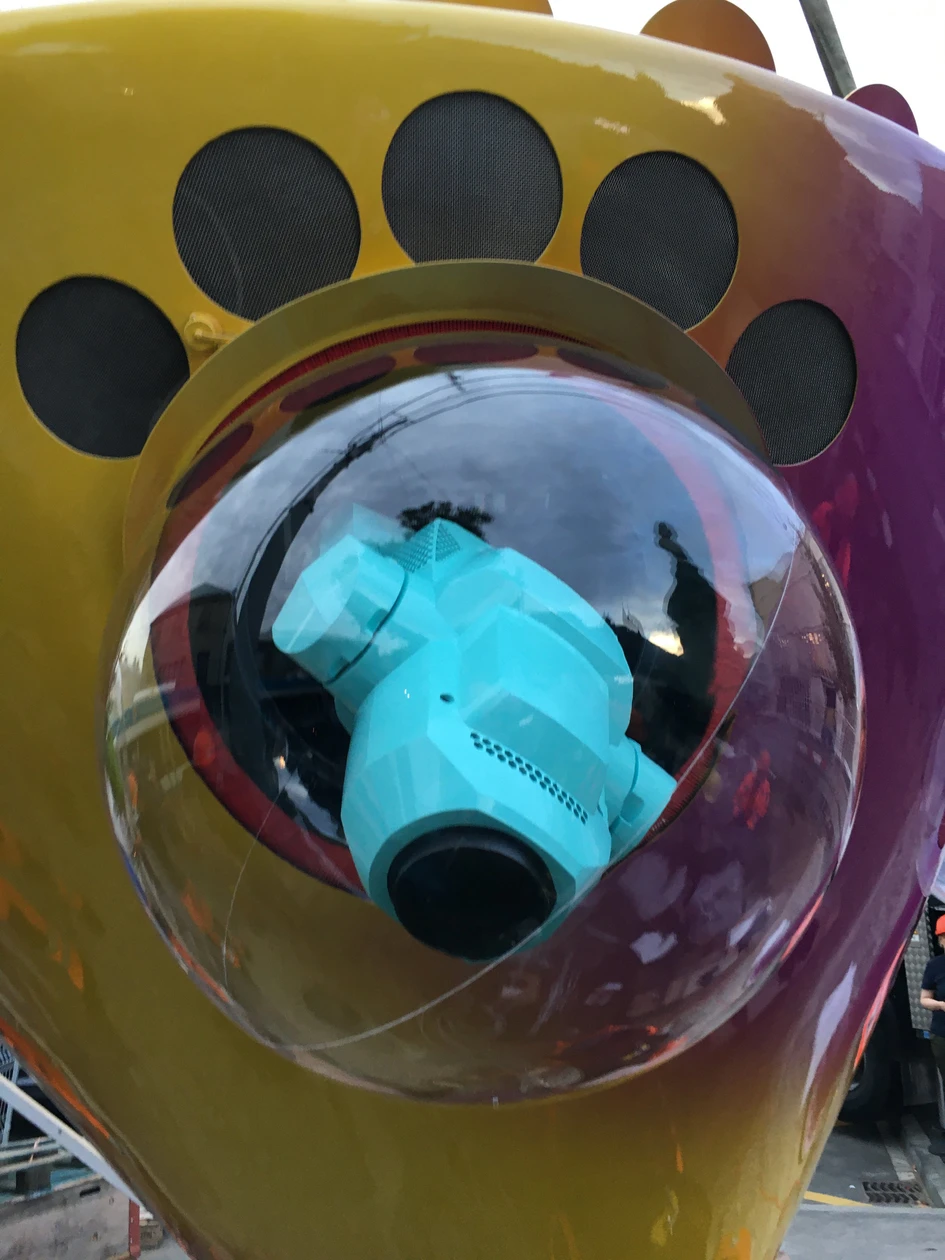
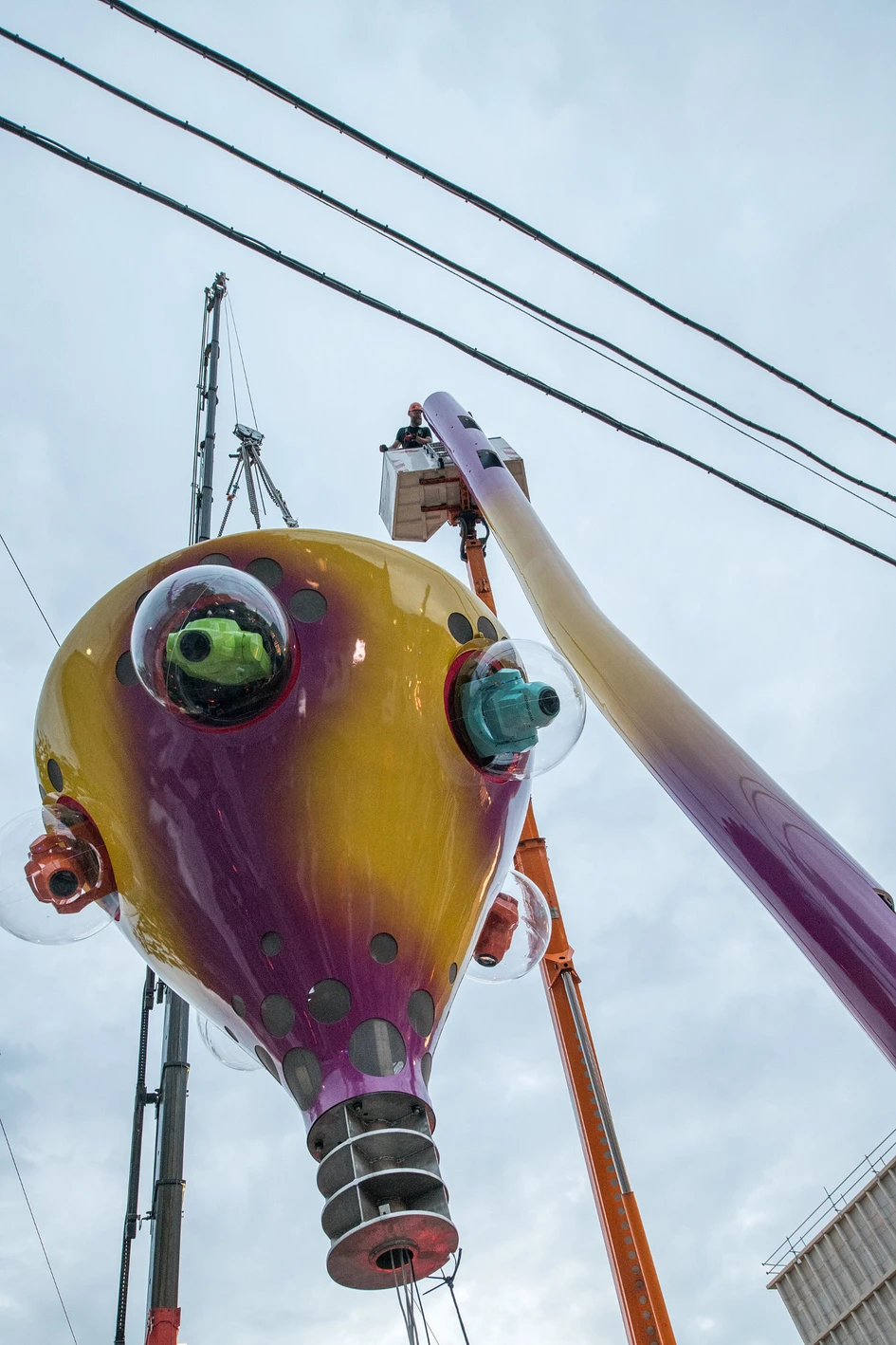
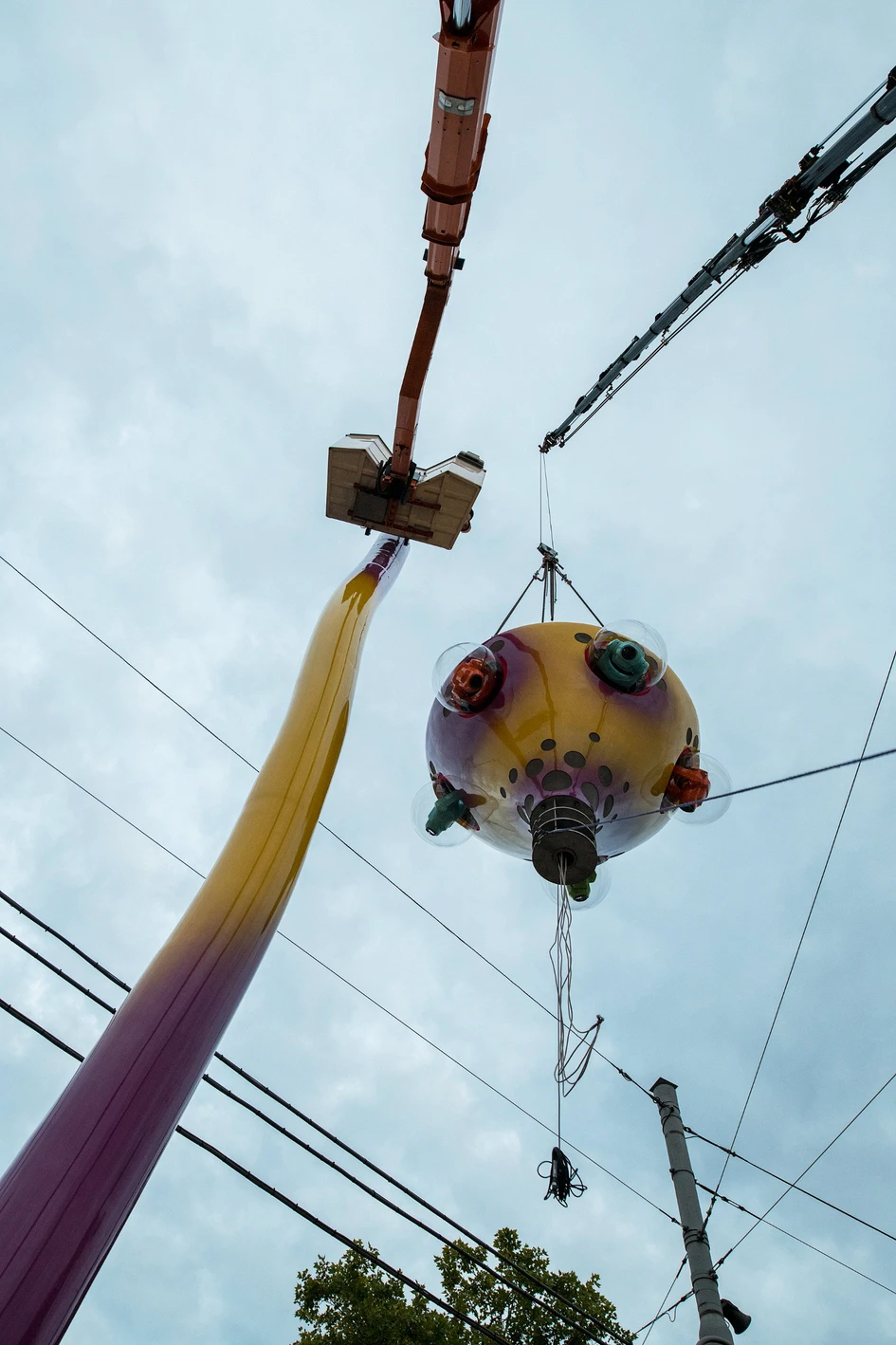
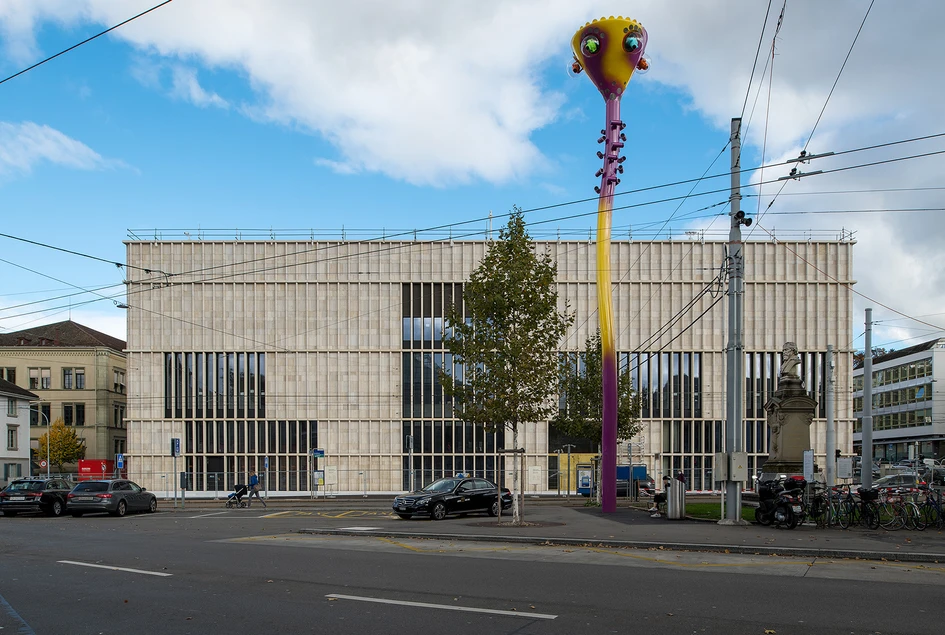
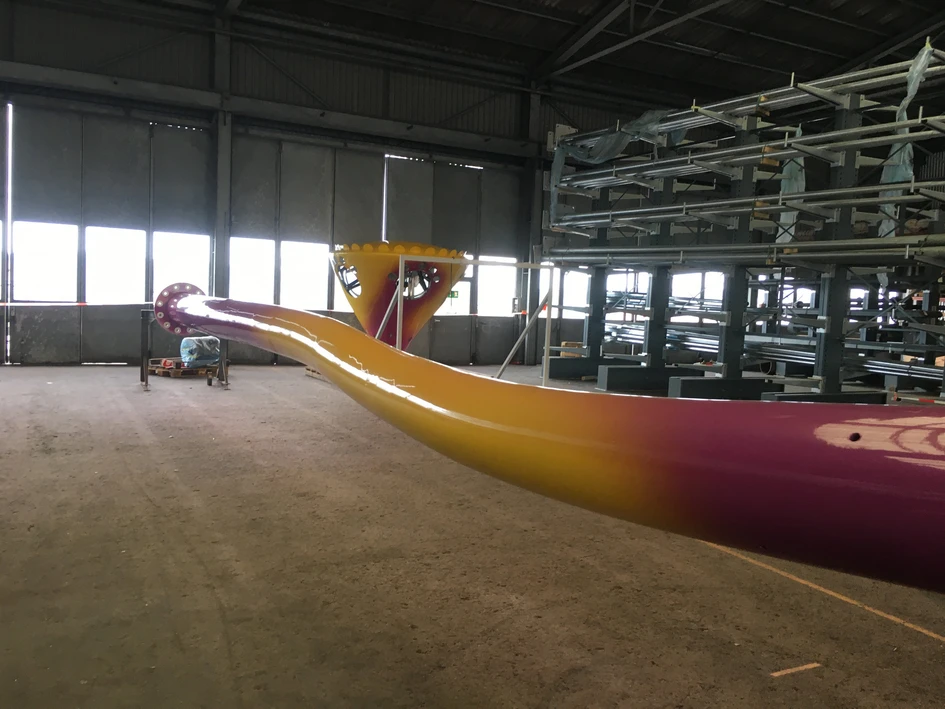
The project involved a unique sculptural light installation designed by Swiss artist Pipilotti Rist for Zurich’s Heimplatz. Rist is one of the most internationally renowned artists of her generation and works with a variety of media, formats and materials. BURRI, in turn, was one of the companies that made a decisive contribution to the realisation of Rist's work ‘Tastende Lichter‘, which translates as ‘Tactile Lights’. Other project partners were the Kunstgiesserei St. Gallen, and metal design companies Tobias Lenggenhager and Kummler+Matter. The subtle, coloured paintwork was implemented by Rolf Pfenniger and the projectors on the mast of the sculpture were made by Opticalight.
"
BURRI’s expertise was recently in demand for a very special, artistic project – the resulting piece being the very opposite of what one might expect to find coming off the end of a conveyor belt
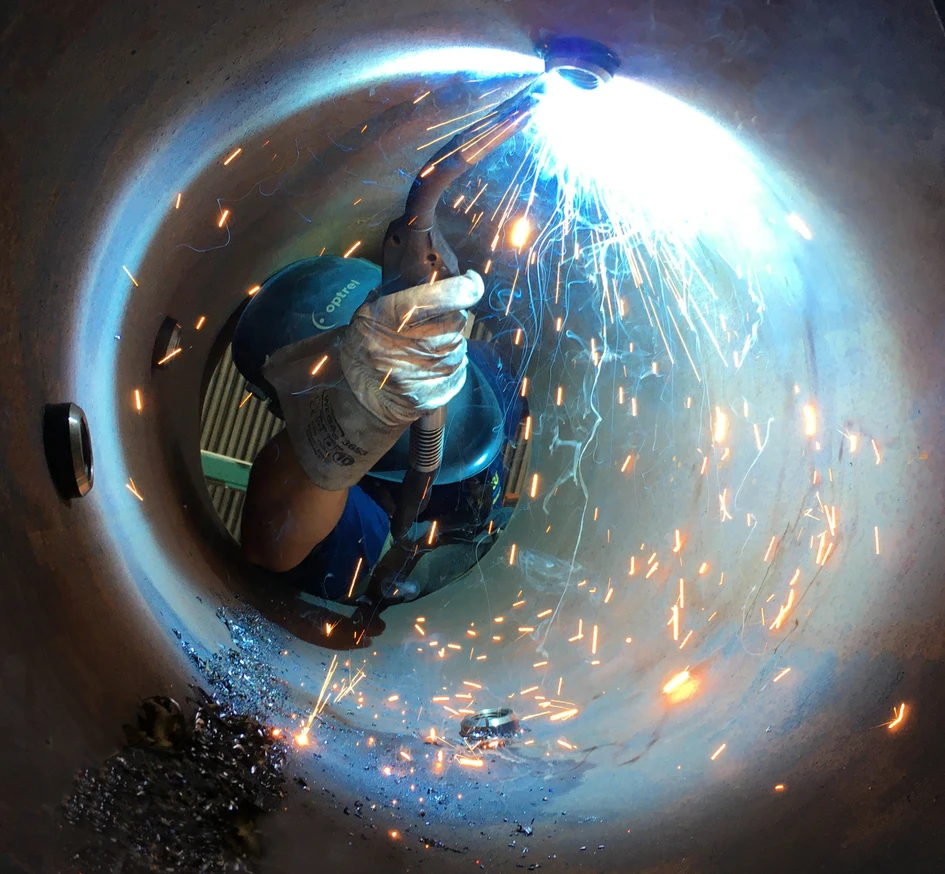
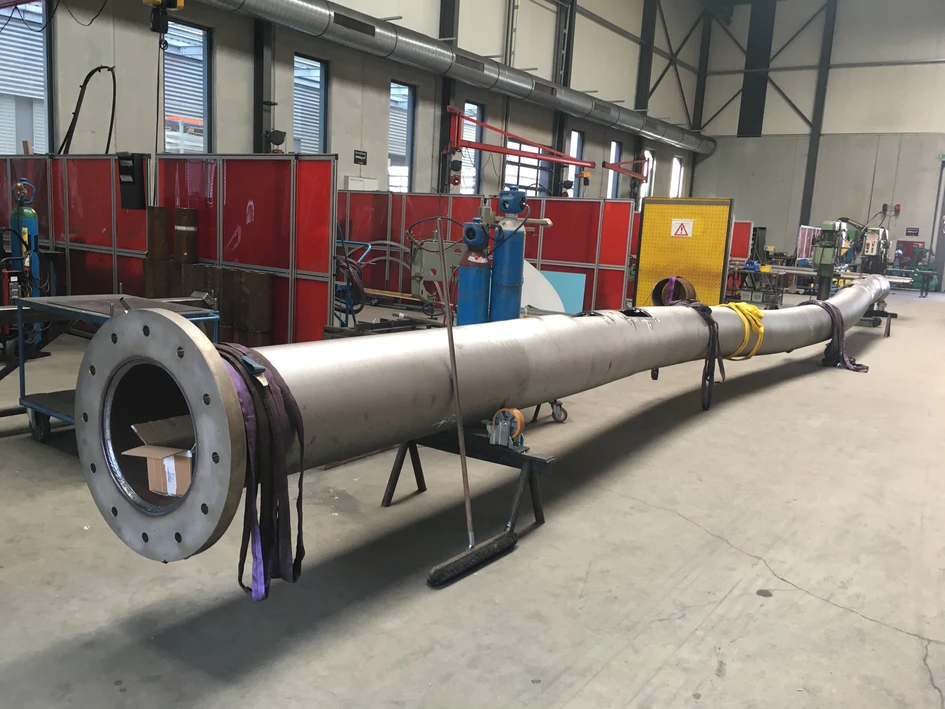
The task was to bring a longitudinally welded tube – 14.5m long and 16mm thick – into an organically curved form. Formally, the sculpture resembles an oversized flower: the steel tube became its stem and supported an abstract flower head into which controllable LED spots were integrated. Under the project management of lighting designer Kaori Kuwabara, Atelier Rist has created an object that, with its special shape and colourfulness, attracts eyes to this cultural square in central Zurich.
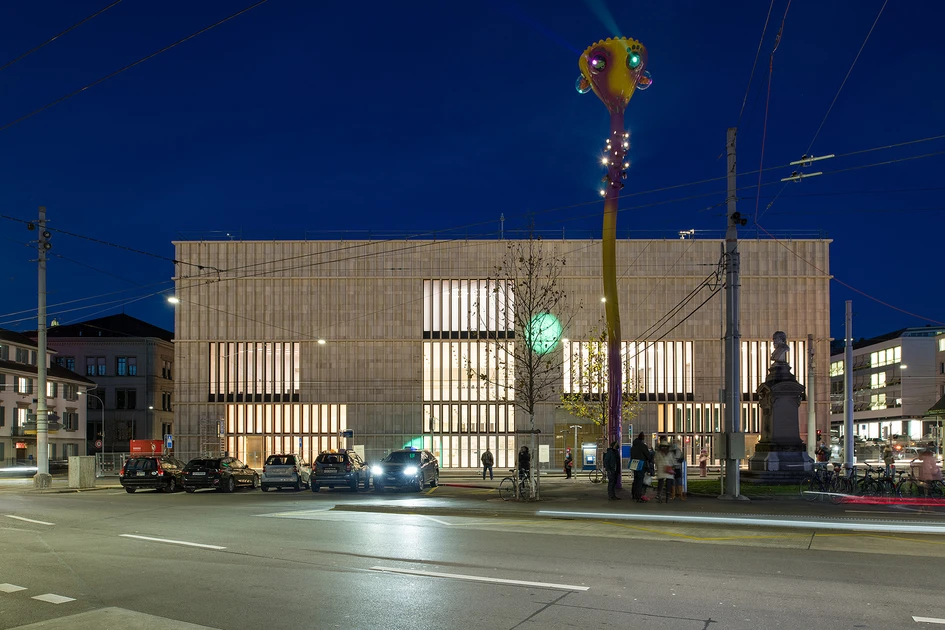
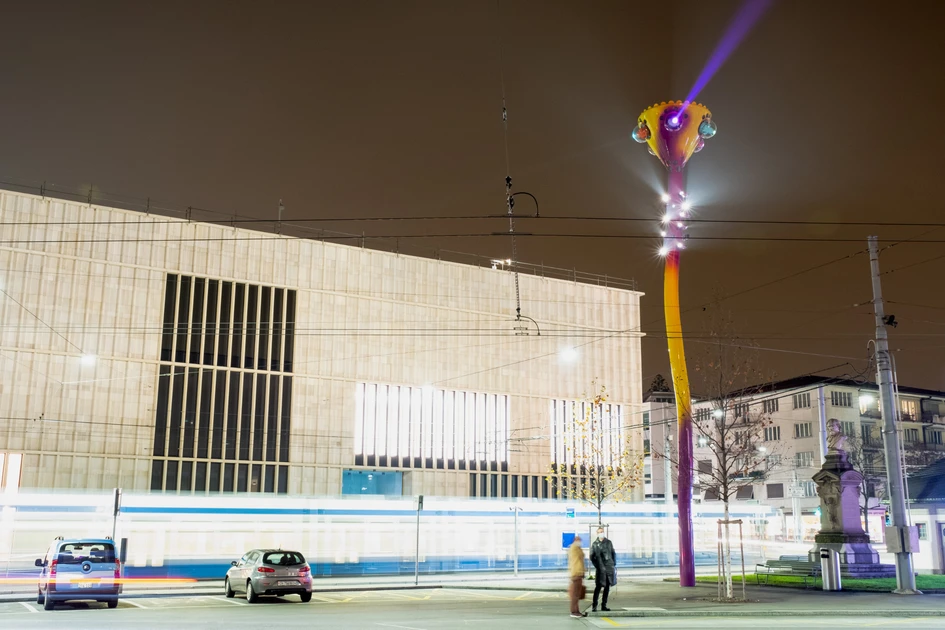
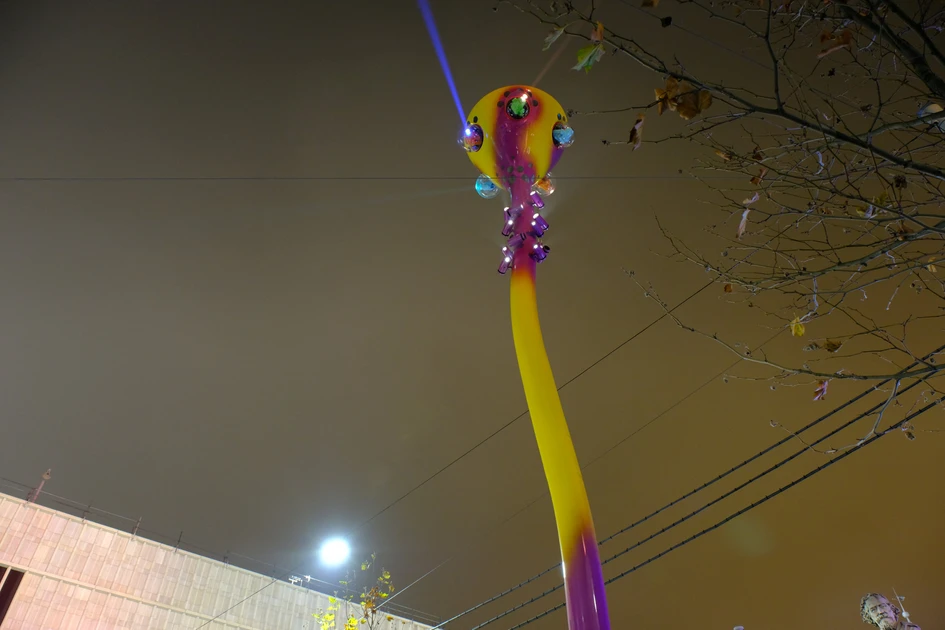
But that is not all. After dark, five ‘moving lights’ which are integrated into the body of the flower, draw attention to the facades of the surrounding buildings, such as those of the Kunsthaus Zürich and its David Chipperfield-designed extension. The points of light slowly scan the details and surfaces of the immediate environment and present them to us in a new way.
‘The public space that we share is extremely important,’ says the artist. ‘One question I asked myself was: how can I dream up all the light poles along the streets? I admire plants because they are so elegant and fragile and yet strong. So the pole is also a reference to the evolutionary intelligence of plant stems.’
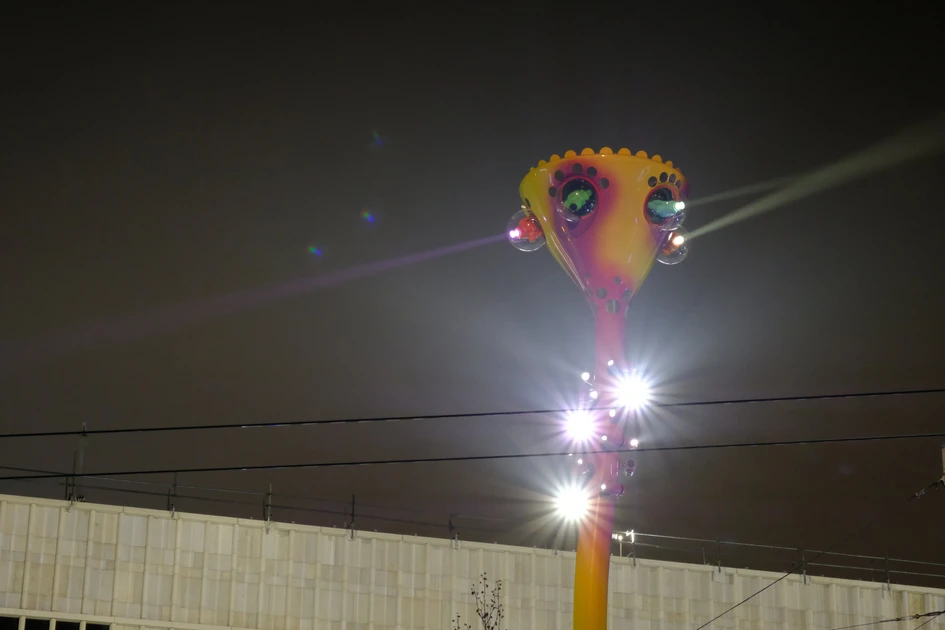
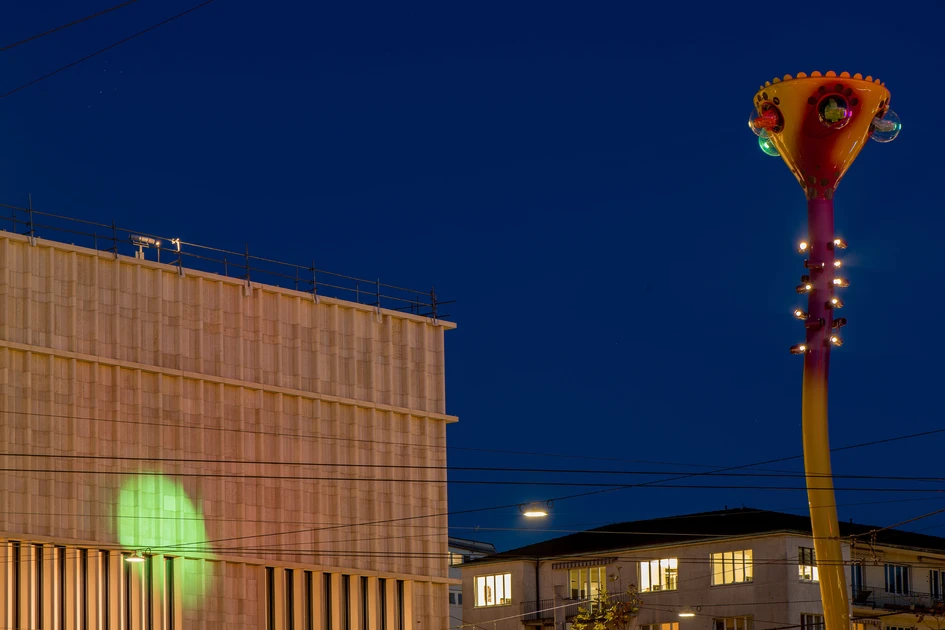
I asked Rist how, in her eyes, Heimplatz has changed as a result of the object. ‘It creates a centre and makes the square more feminine, softer, more fun,’ she answered. ‘It is a science-fiction-maypole, an anchor piece, a totem of hope and a symbol under which people meet. It was important to me that – despite all the technology – it looks very elegant and light, and I copied this versatility from plants.’
BURRI has contributed other elements to the furnishing of Heimplatz, too, such as bollards, bicycle shelters and benches. In combination with the light sculpture, Zurich has thus completely reinterpreted an existing square. And its floral landmark will perhaps one day be as much associated with the Swiss metropolis as Hector Guimard's famous underground entrances are with Paris.
© Architonic
Galerie de projets