Leather Seen
Move aside perfection. Here comes authenticity. ALPHENBERG, premium producer of leather flooring and wall coverings, has become the go-to partner for high-end contract and private projects internationally looking for an injection of warmth, character and individuality.

mars 19, 2016 | 11:00 pm CUT
“If you walk out into the street and ask people to list five different types of flooring, they will mention everything from stone to wood and PVC but will never think of leather,” says Rob Koemans, managing partner of Dutch leather-flooring and wall-covering manufacturer Alphenberg. The company is on a mission to change this perception. In the six years since it was founded, Alphenberg has become highly adept at making high-end customisable leather products for floors and walls that are compelling, resilient and unique.
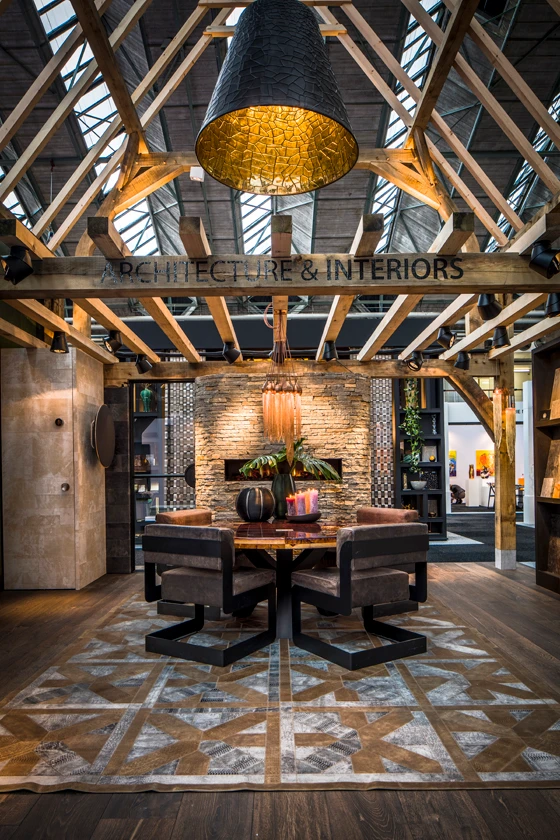
And the offer doesn’t stop at walls and floors. Alphenberg also produces leather for headboards, tabletops and furniture. In fact the company’s expertise also lies in creating something different for each client. “Most people aren’t interested in standard colours and sizes,” says Koemans. “They want a bespoke product.” Accordingly, about 90% of Alphenberg’s clients are interior designers and architects.
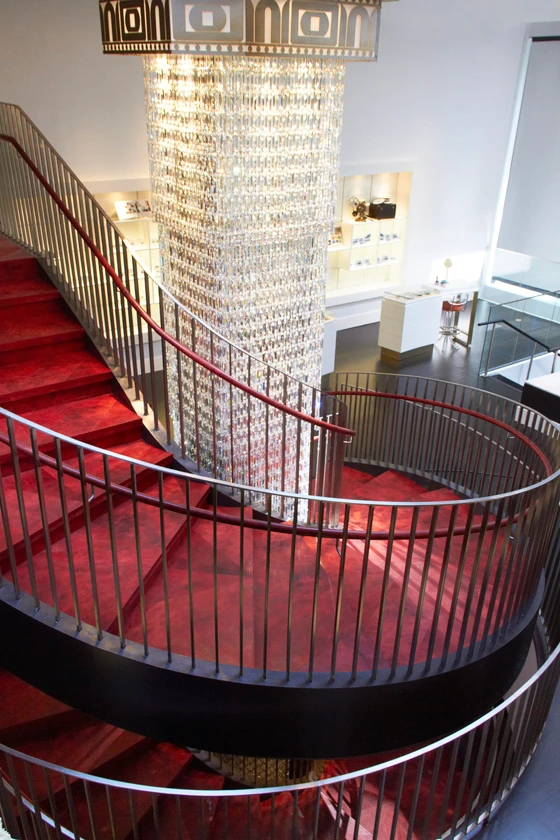
The company’s projects list speaks loud and clear of its growing recognition and design kudos. Past clients include, among others, Christian Louboutin (Alphenberg produced a highly complex pattern for the floors of two stores, one in Dubai and the other Los Angeles), De Librije (a three-Michelin-starred restaurant in Zwolle, Netherlands, for which the company made a herringbone-leather floor in dark and light grey), Porsche (the floors and walls of a simulation room at the company’s headquarters in Amsterdam, where clients experience what it is like to drive one of their cars, are decked out in Alphenberg leather) and Erno Laszlo (its flagship store in New York features deep-crimson treads created by Alphenberg, as well as the handrail of a showcase spiralling central staircase).
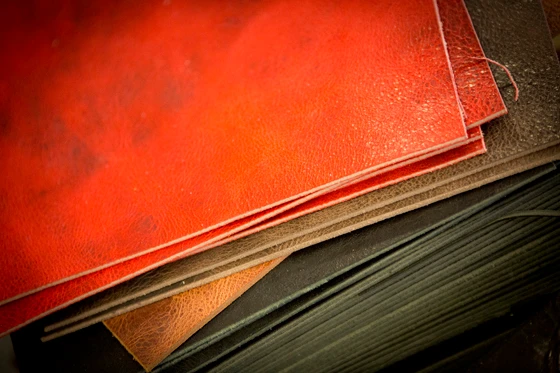
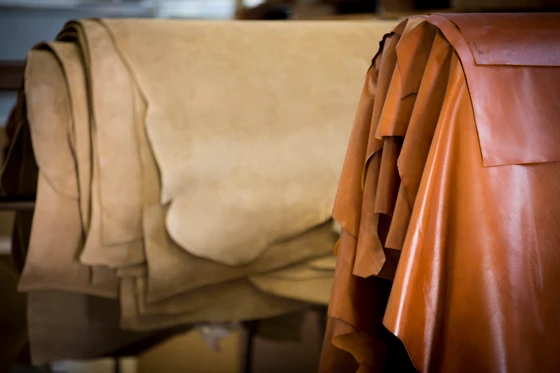
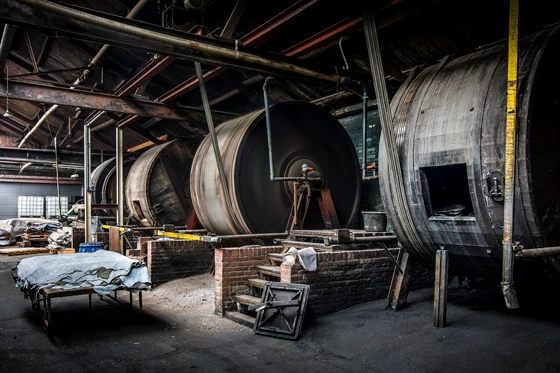
In the beginning, the team was on a continuous quest for scratch-free perfection, explains Koemans, but they soon realised that the appeal of leather lay in its natural texture and finish. The beauty of leather, and what made it unique, was that it told a story and improved with age. The skins are therefore treated using a traditional vegetable tanning process (which makes them 99% biodegradable) and retain the hide's natural grain. The colour and tone varies from hide to hide, and the leather will and should tell the tale of the animal’s life, says Koemans.
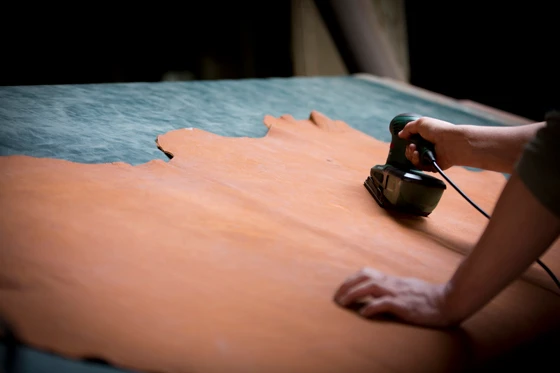
“The Indian water buffalo that we use have been living in the open, so the skins have mosquito bites and marks and scratches from when the animals have had fights or run through fences,” he says. “We don’t cover that up. In fact we accentuate the natural characteristics because we think these ‘scars’ are what make the product beautiful.” The more textured, scuffed or scarred a piece of leather becomes, the more attractive and alluring it looks. “A well-used piece of leather has so much character,” says Koemans. “We now sell a lot of second-hand leather tiles that we have previously used in fairs or shows.”
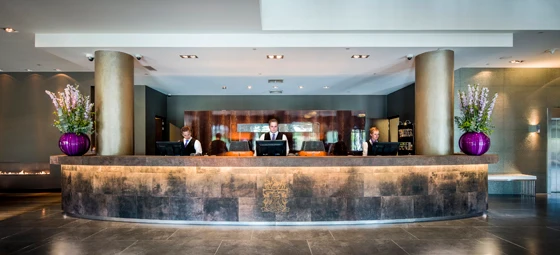
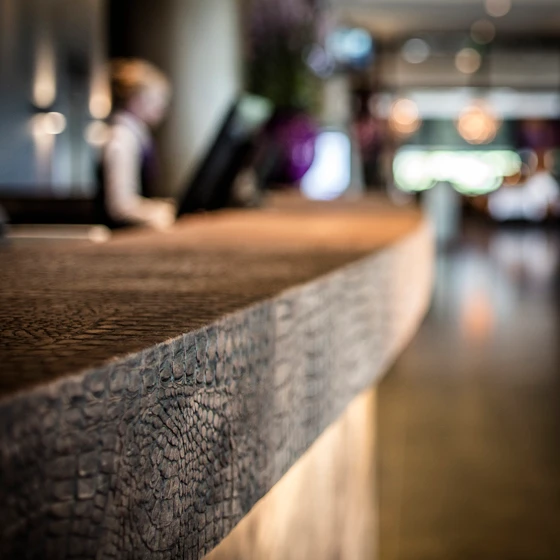
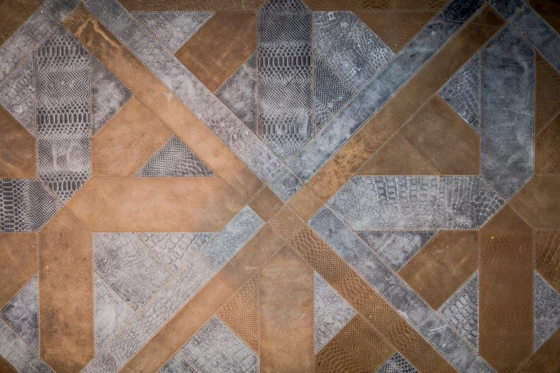
Alphenberg offers several different ranges of leather for walls, floors and upholstery, from the mottled light and dark patina of the Tundra range, through the distressed effects of the Pampas, to the shiny, smooth finish of the Tuscany series. The ranges and collections differ mainly in terms of colour, texture and size or shape of the tile, says Koemans, and can also be produced in different thicknesses depending on whether they are being used for a wall or for a floor.
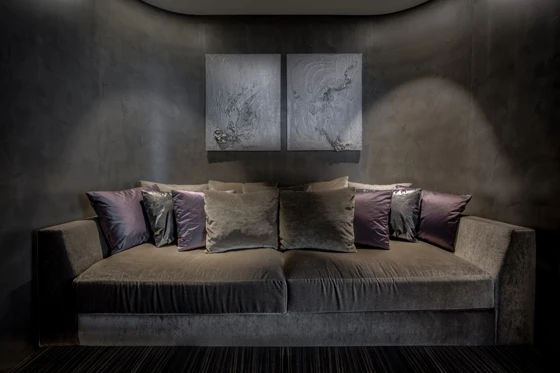
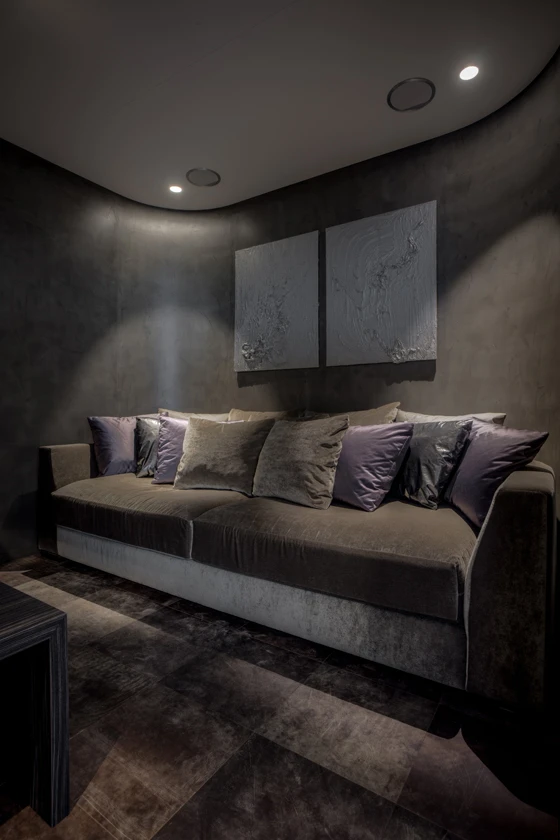
A common misconception about leather is that it can be easily damaged. It is actually very durable and simple to maintain. Residential clients can hoover their floors as normal and clean with a wet cloth. Every six to eight weeks, they use a special nourishing cream that feeds the leather and prevents it from drying or shrinking. “If they pour wine on it, the top layer of paraffin wax will protect the leather for 24 hours,” explains Koemans. “Most people will deal with a stain much quicker than that however!” In more commercial settings, Alphenberg treats the leather with two extra layers of sealant and wax so that the leather floors can be cleaned like any other floor. If there is real damage, the tiles can easily be replaced says Koemans.
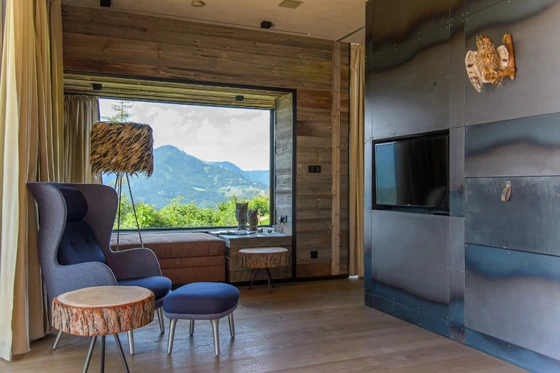
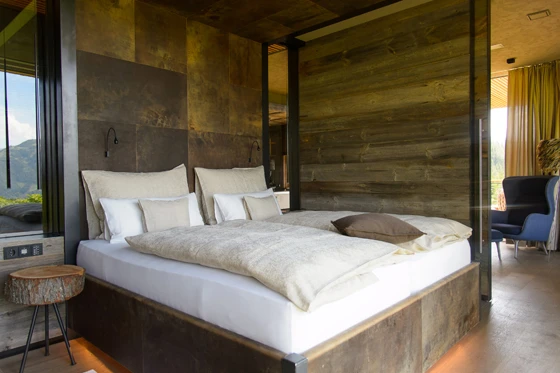
In April, the brand launches a new range of leather designed specifically for upholstery and opens its first own-brand, 150 square-metre showroom and flagship store on Verwersstraat, a famous shopping street in the picturesque, canal-studded Dutch town of Den Bosch. In the UK, Alphenberg leather can now be seen on the walls and floors of the ‘library’ space in the interior-design department of London’s prestigious Harrods department store. Designers and buyers can also come here to see and feel the brand’s entire range of leather wares for floors, walls and upholstery.
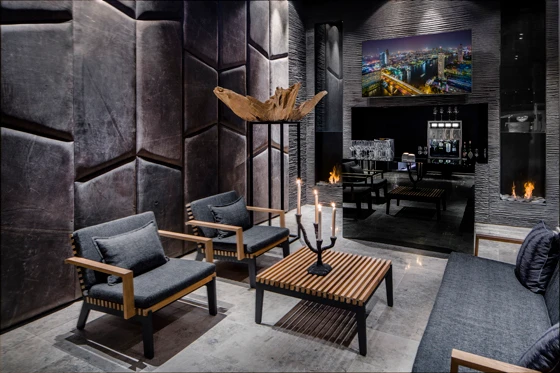
When Alphenberg started, there was no real market for leather flooring. Now the taste for leather flooring and wall coverings is markedly on the rise. “It would be good to have more competitors actually,” says Koemans, refreshingly. “That way, people would be aware about leather floors and walls. At the moment, it sometimes feels like we are the only ones telling the story.” By the looks of it, not for very much longer.
Galerie de projets


