Partager
Imprimer
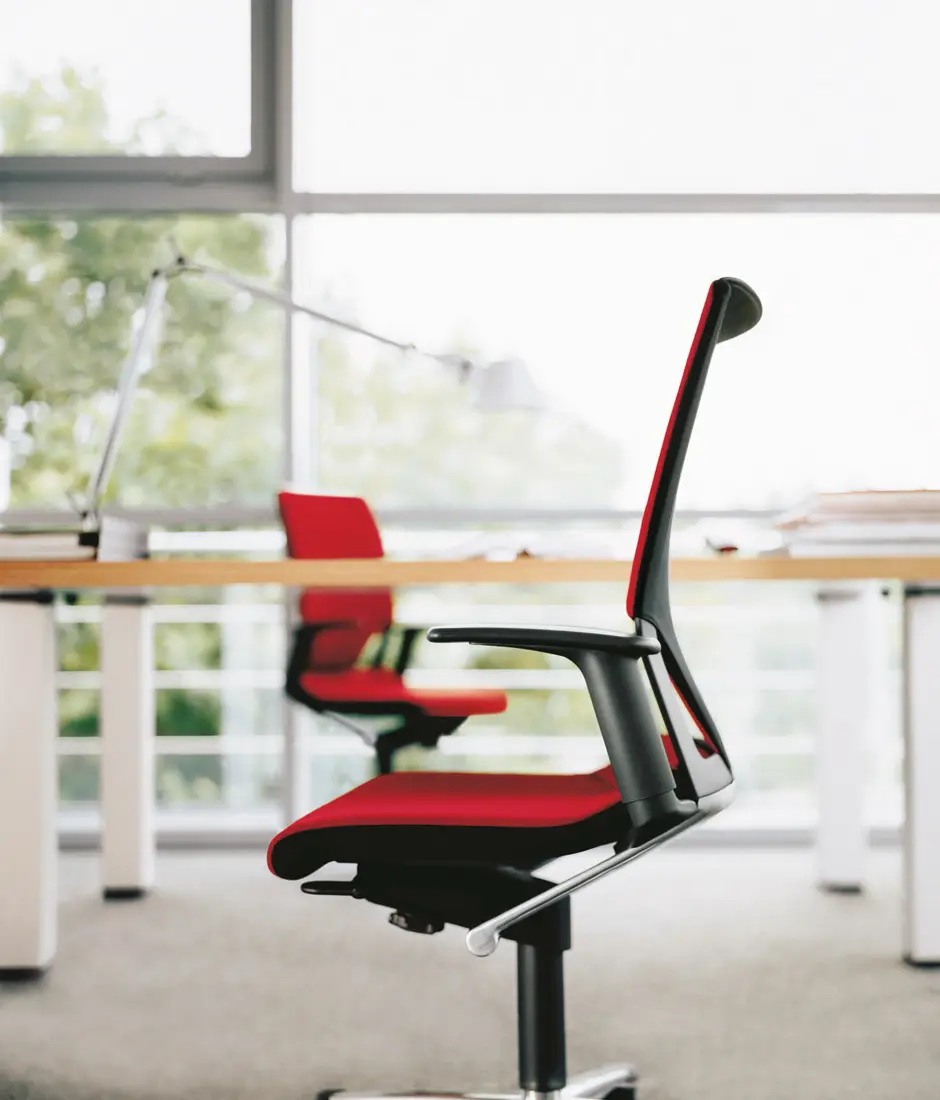
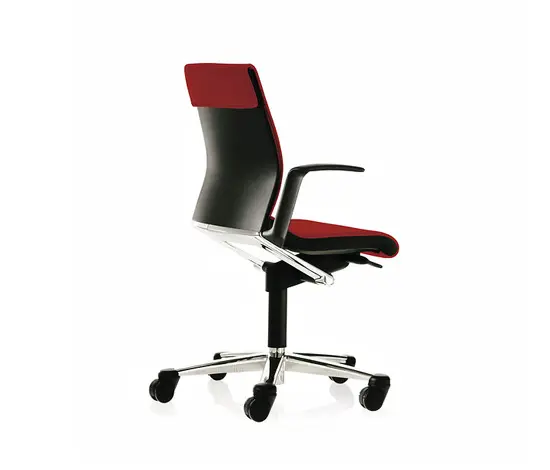
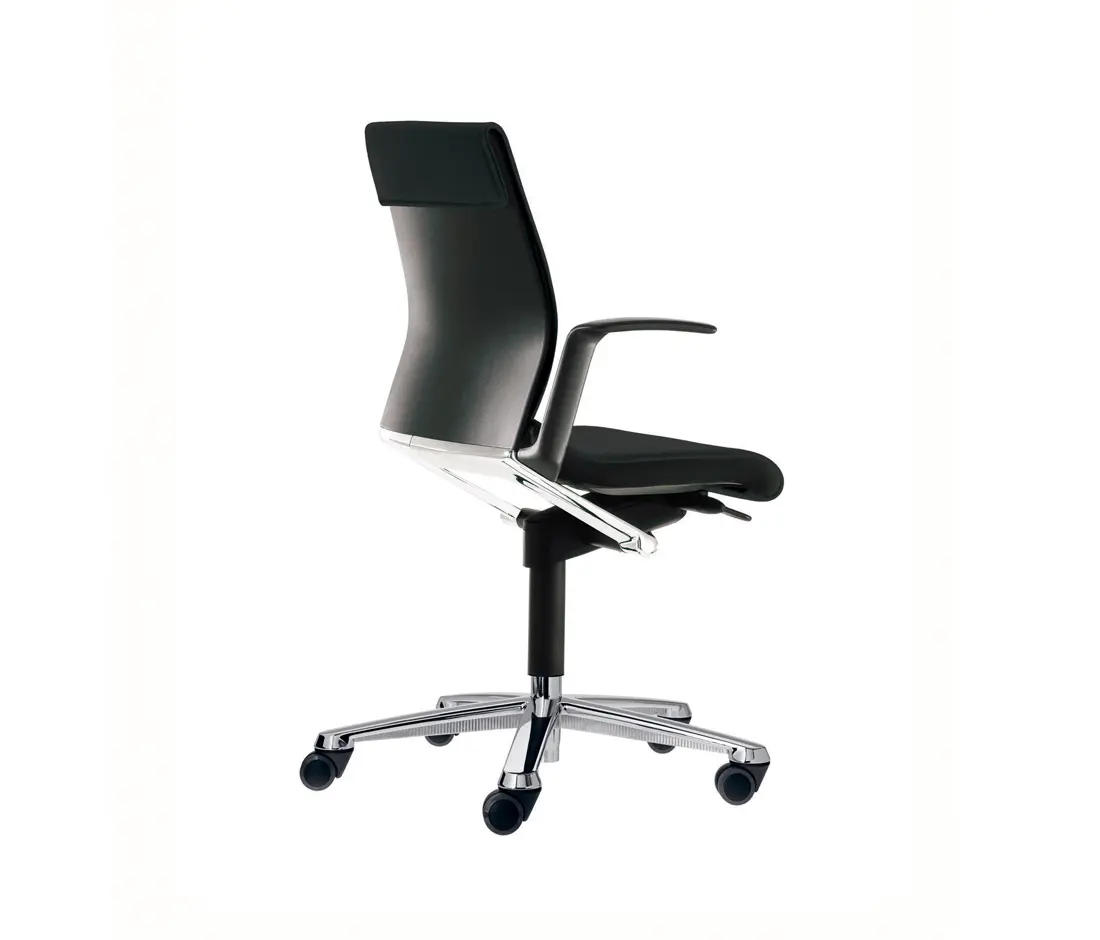


Modus Basic 263/7
Architonic ID: 1040398
SKU: 263/7
Année de Lancement: 1995
Minimalisme. Transparence absolue. Adaptation parfaite. Voici 30 ans déjà, les designers Klaus Franck et Werner Sauer avaient créé la ligne de siège FS, devenue un classique et synonyme d’assise dynamique, sous le principe d’une parfaite liberté de posture. La conception de Modus fut l’opportunité pour ces designers d’incarner ce principe d’assise dynamique dans une esthétique digne du 21ième siècle.
Le dossier est constitué d’un cadre flexible à la forme étudiée, tendu d’une résille tissée high tech, micro-aérée et interchangeable. Il s’adapte en souplesse à chaque mouvement, offre une liberté de posture et épouse la forme du corps comme une seconde peau pour un maintien optimal.
L’assise capitonnée micro-aérée offre un confort d’assise inégalé grâce à ses galbes arrondis. A l’avant, le galbe favorise une bonne circulation et sur l’arrière, il prévient toute bascule du bassin pour une posture parfaite. Un savoir-faire pionnier en matière de revêtements et de capitonnages permet d’en changer aisément, offrant à votre siège une durée de vie pratiquement illimitée.
Le mécanisme synchrone et ses barres de torsion, remarquablement confortable et compact, assure une parfaite inclinaison simultanée du dossier et de l’assise. Les arceaux articulés, finement modelés par un procédé d’injection aluminium de haute technologie, contribuent à doter ce siège à la fois de qualités fonctionnelles et d’une esthétique remarquable.
Ce n’est donc pas étonnant que Modus soit devenu l’icône internationale d’une nouvelle génération de sièges de travail. Souvent copié, il reste inégalé et forme toujours une classe à part : une assise dynamique sublimée par sa perfection formelle.
Dimensions:
Hauteur total: 910 – 1170 mm
Largeur: 640 mm
Profondeur: 610 mm
Hauteur d’assise: 420 – 530 mm
Ce produit appartient à la collection:
Aluminium, Piétement métal, Métal

Germany
Klaus Franck, born in1932, studied at the Academy of Design in Ulm (HfG). After that, he worked at the Institut für Industrialisiertes Bauen (Institute for Industrialized Building), he was a free-lance architect, graphic designer and author; amongst other projects, he was Head of Lufthansa’s Interior Design Group and lectured at the HfG and the Fachhochschule in Hanover. From 1971 to 1985, he was Head of the Wilkhahn Design Department which was later to become an independent company under the name of wiege. After seven more years as Managing Director of wiege, he left to set up business on his own. Today he lives in Moraira, Spain, and works there as a free-lance designer. As a product designer, interior designer, art director and author, he has constantly retranslated the legacy of the HfG Ulm into a new language and had a formative influence on corporate development at Wilkhahn.
Germany
Werner Sauer, born in 1950, studied industrial design at the Folkwang Hochschule in Essen, and experimental environmental design at the Staatliche Hochschule für Bildende Künste in Brunswick. First on a free-lance basis, then employed from 1978, he started off working in the Design Department and then continued at wiege until 1993 before setting up his own design studio in Springe near Hanover. He began as a lecturer at the Fachhochschule Hildesheim/Holzminden, then advanced to Professor, then Dean in 2000, and since 2003 he has been Executive Dean. Werner Sauer is a Member of the Board of the Deutscher Werkbund Nord.
Germany
The wiege Entwicklungsgesellschaft mbH evolved from the design and development division at Wilkhahn, office furniture manufacturer. Today it is a design consultancy which operates on an international level. It not only works for Wilkhahn but also for other clients from various branches of industry and commerce. By founding the wiege Entwicklungsgesellschaft mbH, Fritz Hahne pursued an idea that was both simple and significant: on the one hand, the inhibition threshold for external designers to present their ideas to Wilkhahn was to be lowered. On the other hand, a wide field of activity outside furniture design should serve to widen horizons and give new impetus. Both became true. wiege competes productively with other designers with whom Wilkhahn works, and its field of activity includes clients from quite different branches and areas: ranging from exhibition management, home entertainment products, car manufacturers to public commissions, product design, exhibition platforms and interface design.


