
Partager
Imprimer


Trifidae table
Architonic ID: 20173695
Année de Lancement: 2018
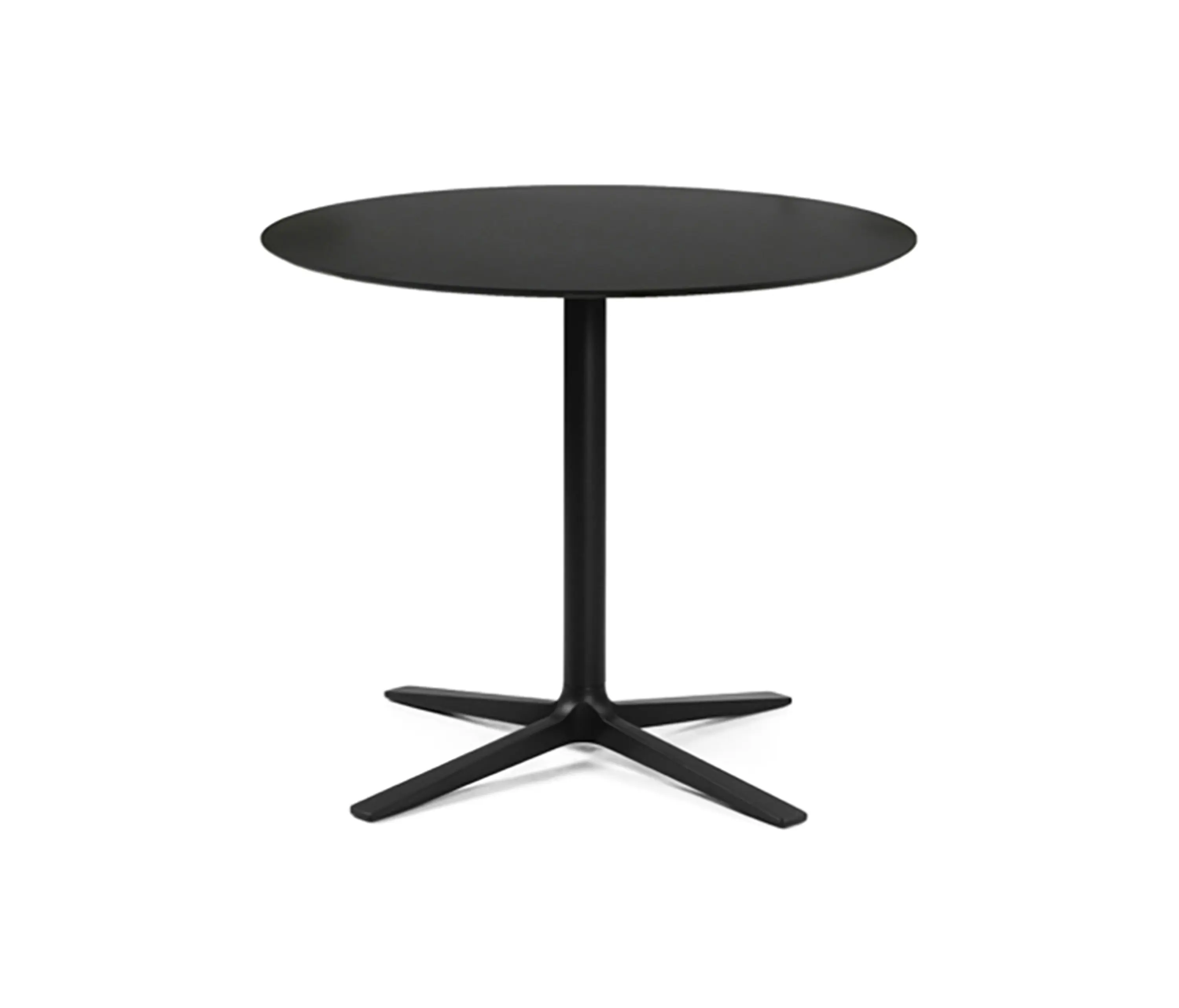
La série Trifidae table est développée à partir de la base Trifidae caractérisée par la transformation de la transaction des tréteaux, en partant du rectangle vertical au centre pour se transformer progressivement en horizontal à son extrémité. Les différentes tailles et hauteurs des plateauxpermettent une gamme de fonctions et d’apparences de la table. La base est en fonte d'aluminium et les plateaux sont faits en bois massif, en MDF avec Fenix, ou en HPL, adapté à une utilisation extérieure.
Concept
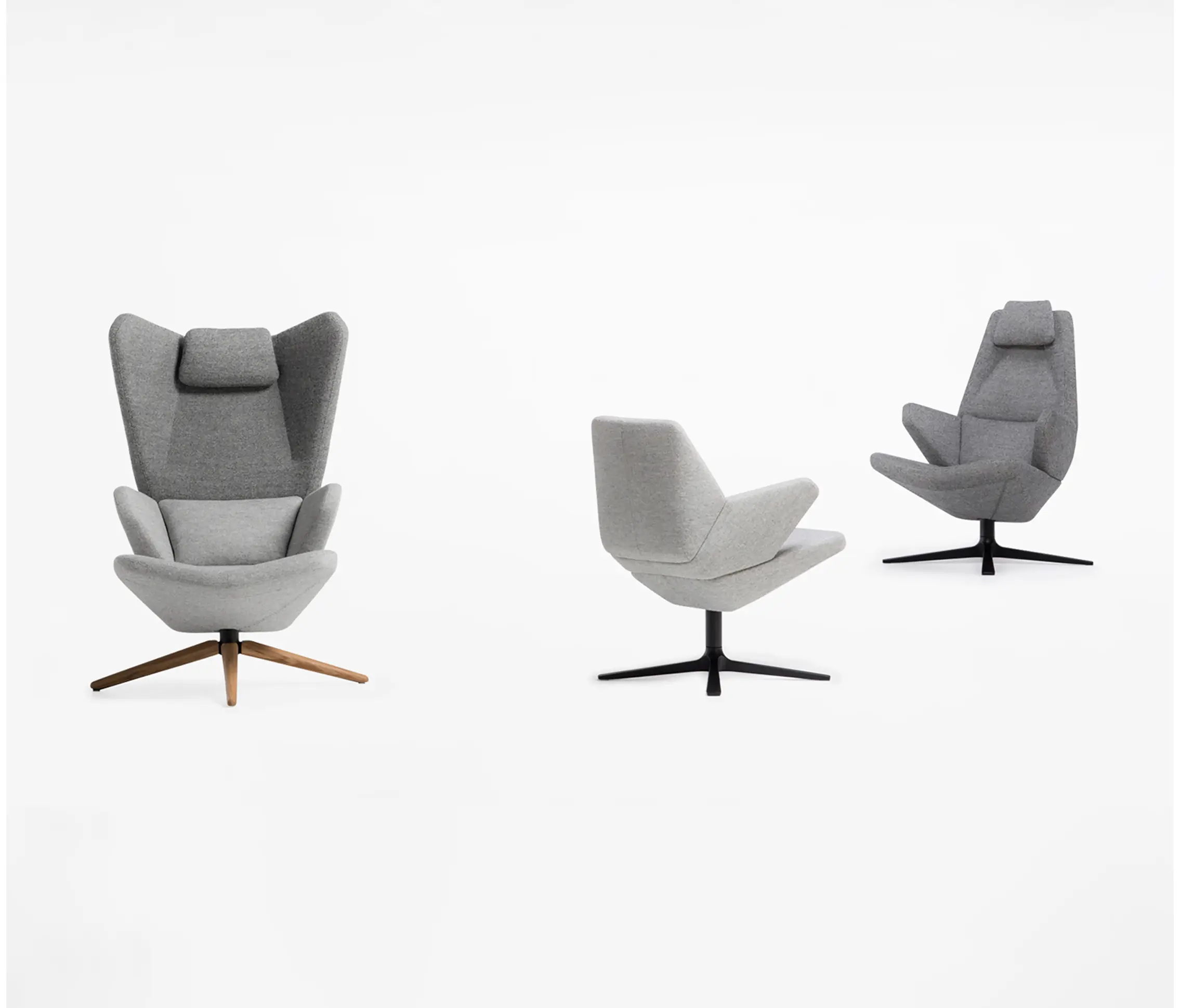
Trifidae est une famille de produits qui comprend trois types différents de fauteuils conçus à la base d'une même source typologique et formelle. Un fauteuil petit, un fauteuil à dossier haut et un grand fauteuil "enveloppant" ont une structure caractéristique, composée en trois parties et ils partagent les mêmes formes angulaires s'élargissant d'un centre imaginaire, ce qui donne au meuble une forme de plante. La rotation de trois éléments structurels de base lors de l'usage, fait penser à la fermeture et à l'éclosion de bourgeons de fleurs. Cette caractéristique, ensemble avec sa forme en trois parties qui ressemble à une étoile, a été l'inspiration pour le nom botanique de la collection. Si le petit fauteuil diffère en dimensions de deux autres sièges, le fauteuil à dossier haut et le fauteuil enveloppant partagent la même base et l'accoudoir, si bien que tous les trois modules sont perçus comme des formes géométriques voisines. Une variation dans le dossier de deux modèles grands résulte en leurs caractères très différents. Le dossier enveloppant produit un fauteuil introverti, fermé, d'une forme expressive qui protège l'usager de son environnement, alors que la forme svelte et allongée de l'autre dossier représenté une variante moins réservée, plus sociable du siège.
Ce produit appartient à la collection:
Aluminium, Piétement métal, Métal
Vous pouvez visiter la page produit de ces variantes : cliquez simplement dessus !

Austria
Product design group For Use was formed through collaboration of Sven Jonke, Christoph Katzler and Nikola Radeljkovic in the year 1998. Two members studied at the School of Design in Zagreb, while Katzler studied at High School for Applied Arts in Vienna. Since then the group designed furniture and objects for companies such as Cappellini, ClassiCon, Desalto, Interlubke, Magis, MDF Italia, Moroso, and Zanotta. In 1999 the group realized several important exhibition design projects and established Numen as a group name for projects realized outside of the field of industrial design. In the initial stage the group worked together with Jelenko Hercog and Toni Uroda, graphic and multimedia designers. The work was characterized by experimenting with rule-based design and radical reduction of form in the tradition of High modernism, mostly applied to total-design projects . In 2004 Jonke, Katzler and Radeljkovic started developing set design projects for various theater companies which led to a major breakthrough in 2005 with set design for Infierno in Centro Dramatico Nacional in Madrid. Since then the group designed sets in Belgrade, Berlin, Istanbul, Ljubljana, Madrid, Merida, Osijek, Rijeka, Skopje and Zagreb, mostly with directors Tomaz Pandur and Aleksandar Popovski with whom they developed a continuous cooperation. In 2005 Numen/ForUse established the first design oriented brand for quality furniture in former Yugoslavia - Element, designing visual identity and initial furniture collection. The group has since managed artistic direction and product development of the company. The group has simultaneously developed interior and exterior design projects, usually working with 3lhd and Imarea architects, the most important of which is the integral design of the waterfront in Split realized in 2007. From 2008 on Numen / For Use has been designing objects and concepts without predefined function, resulting in projects like Numen-light, Tape and NET. Besides these prominent realizations, the group has been awarded several international prizes for their work in the fields of set and industrial design.


