Partager
Imprimer


Variantes disponibles :


Architonic ID: 1526050
Année de Lancement: 2011
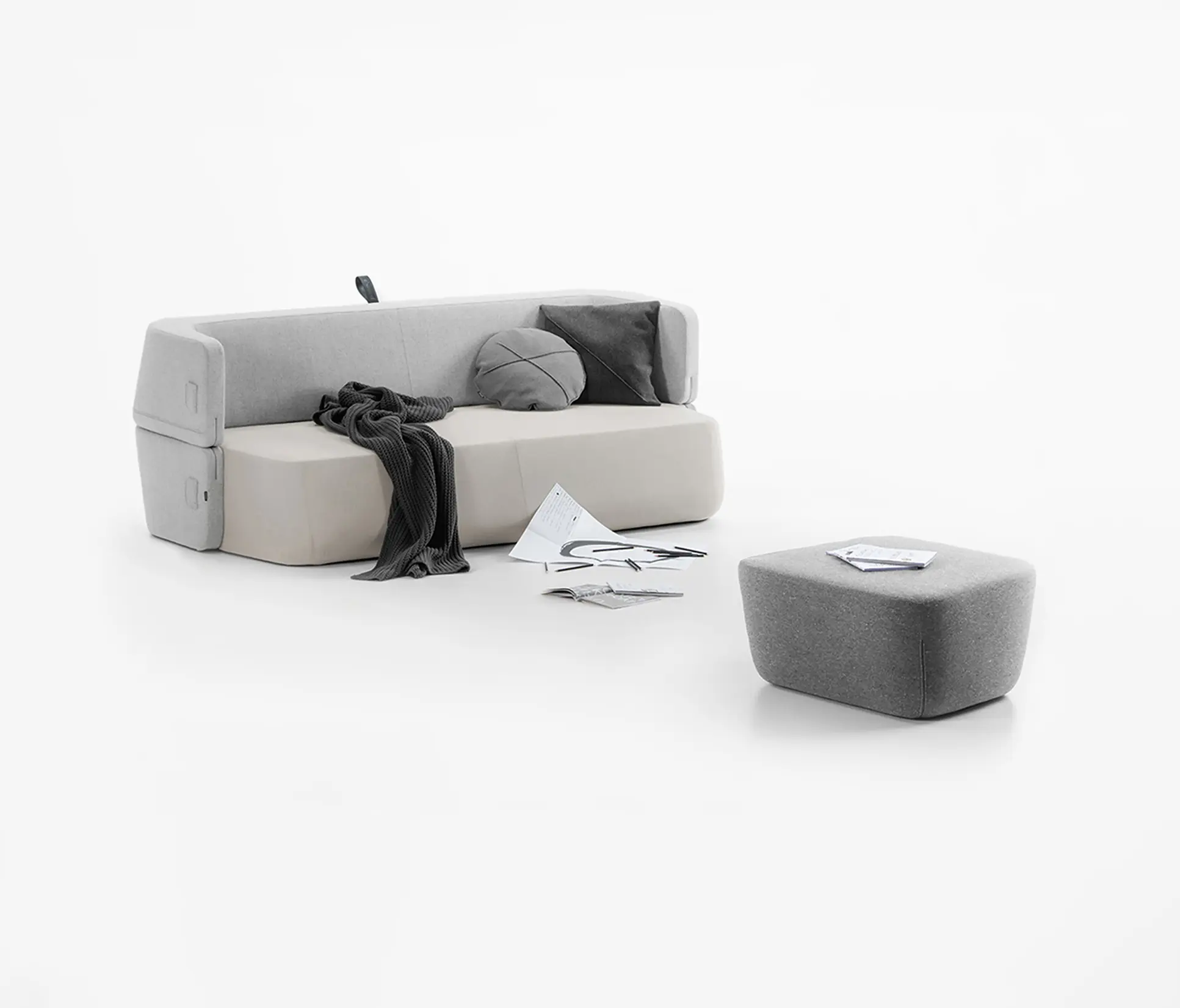
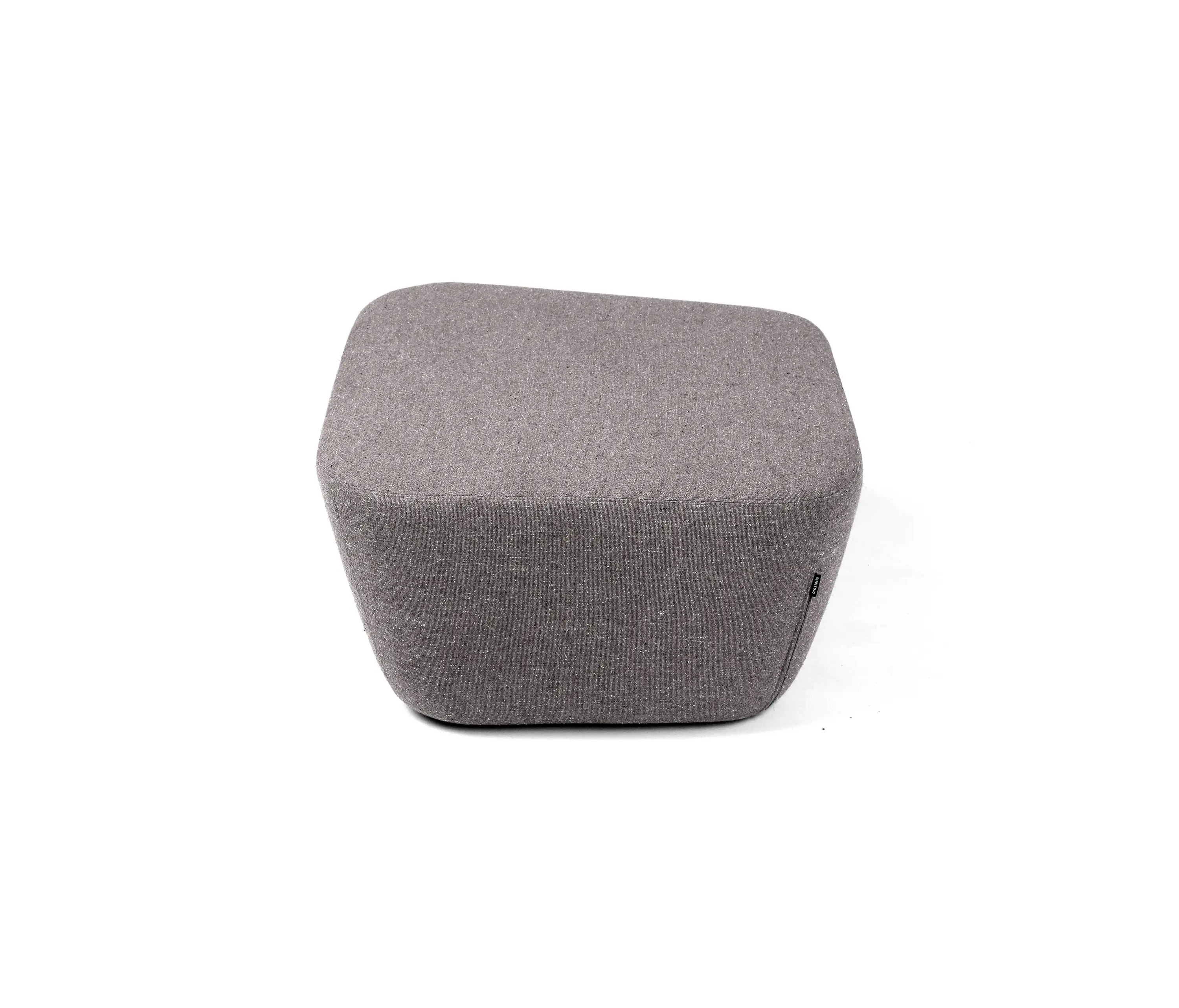
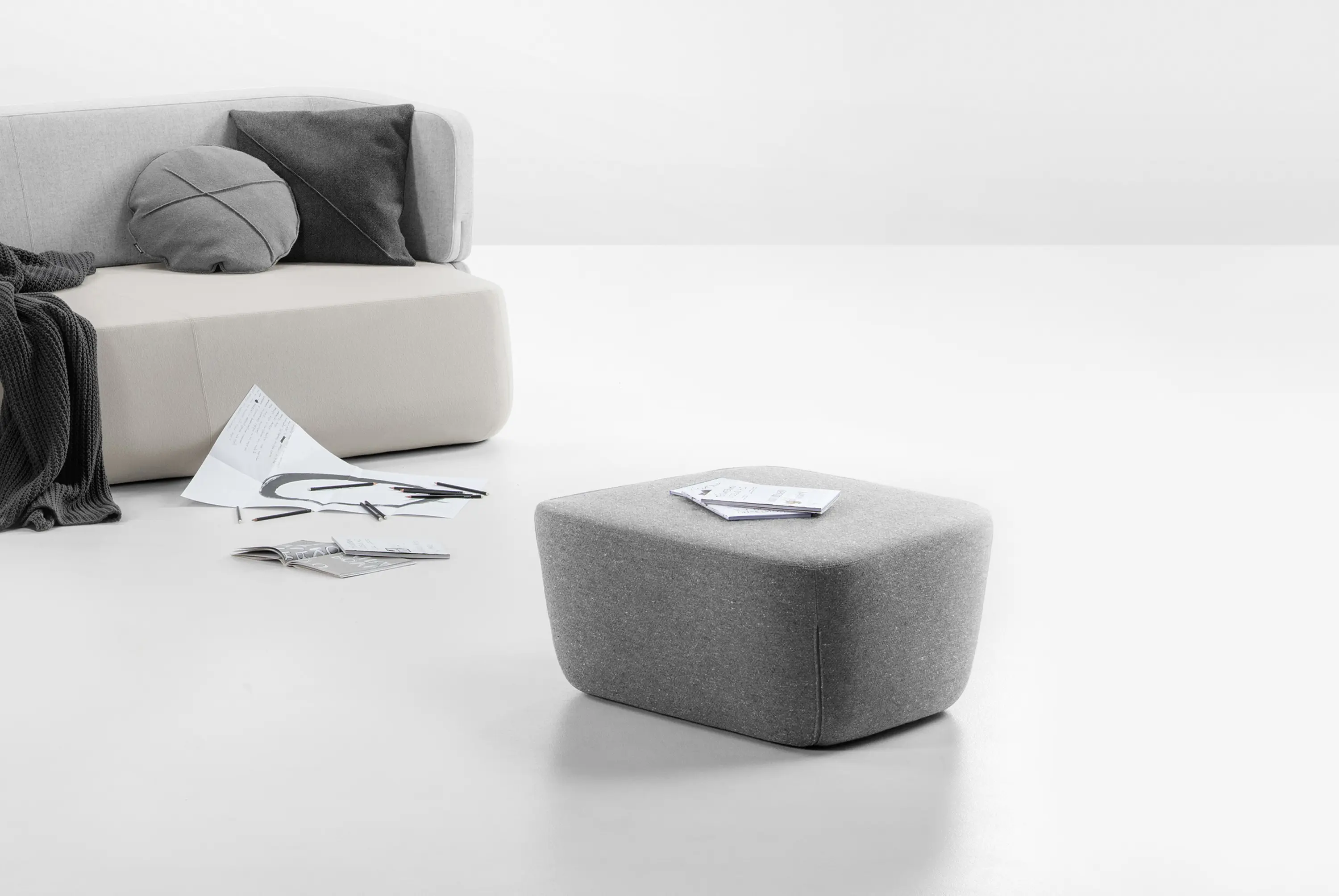
Le pouf Revolve fait partie de l'ensemble canapé-lit Revolve. Son rembourrage en mousse haute résilience ressemble à des matelas autoporteurs. Grâce à sa forme minimaliste sculpturale, il s'intègre bien dans différents types d'intérieurs.
Concept
Le design du canapé convertible Revolve est basé sur notre expérience des mécanismes compliqués qui ne tiennent pas dans la durée. Pour cette raison nous nous sommes concentrés sur la recherche d’un mode de conversion le plus simple possible. Nous avons créé une conversion par une rotation de 180° du dossier autour de l’assise, et qui devient partie intégrante de la surface de couchage. La version nuit déploie une symétrie bi-axiale et tient sa place en tant qu’objet design à part entière. Revolve déplié est visuellement aussi équilibré qu’en version repliée, ce qui est rarement le cas des canapés convertibles classiques. La qualité de soutien est égale à un matelas classique et est repartie de façon égale sur toute la largeur grâce a l’utilisation de mousse froide sur les deux blocs. L’expertise de Prostoria au niveau de la technologie de la mousse à froid a contribué de façon significative à l’obtention de ce résultat. Nous avons souligné le déploiement presque enfantin, par une poignée en cuir rendant la manipulation quasi intuitive pour l’utilisateur.
Ce produit appartient à la collection:
Près du sol
Assise rembourrée
Professionnel / Collectivités, Hôtellerie / Restauration, Habitat
Vous pouvez visiter la page produit de ces variantes : cliquez simplement dessus !

Austria
Product design group For Use was formed through collaboration of Sven Jonke, Christoph Katzler and Nikola Radeljkovic in the year 1998. Two members studied at the School of Design in Zagreb, while Katzler studied at High School for Applied Arts in Vienna. Since then the group designed furniture and objects for companies such as Cappellini, ClassiCon, Desalto, Interlubke, Magis, MDF Italia, Moroso, and Zanotta. In 1999 the group realized several important exhibition design projects and established Numen as a group name for projects realized outside of the field of industrial design. In the initial stage the group worked together with Jelenko Hercog and Toni Uroda, graphic and multimedia designers. The work was characterized by experimenting with rule-based design and radical reduction of form in the tradition of High modernism, mostly applied to total-design projects . In 2004 Jonke, Katzler and Radeljkovic started developing set design projects for various theater companies which led to a major breakthrough in 2005 with set design for Infierno in Centro Dramatico Nacional in Madrid. Since then the group designed sets in Belgrade, Berlin, Istanbul, Ljubljana, Madrid, Merida, Osijek, Rijeka, Skopje and Zagreb, mostly with directors Tomaz Pandur and Aleksandar Popovski with whom they developed a continuous cooperation. In 2005 Numen/ForUse established the first design oriented brand for quality furniture in former Yugoslavia - Element, designing visual identity and initial furniture collection. The group has since managed artistic direction and product development of the company. The group has simultaneously developed interior and exterior design projects, usually working with 3lhd and Imarea architects, the most important of which is the integral design of the waterfront in Split realized in 2007. From 2008 on Numen / For Use has been designing objects and concepts without predefined function, resulting in projects like Numen-light, Tape and NET. Besides these prominent realizations, the group has been awarded several international prizes for their work in the fields of set and industrial design.
Contactez directement
Contactez directement Prostoria
Prostoria


