Partager
Imprimer


Architonic ID: 1106165
Année de Lancement: 2009
Concept
At first glance,
you find beauty;
at second glance,
you find everything.
RHYTHM
The world is full of rhythms. Every organism develops its own vibrating beat – extending right into our lives. From physiological processes at cell level all the way to the abstract phenomenon which occurs when we consciously perceive something. The best example: music. Our aesthetic observations are no exception and demonstrate preferences of rhythm. While dependent on the cultural context there are certain visual patterns, the gaze of every individual seeks a unique balance in the complexity or its own exciting principle of order which reveals itself in the form of rhythm.
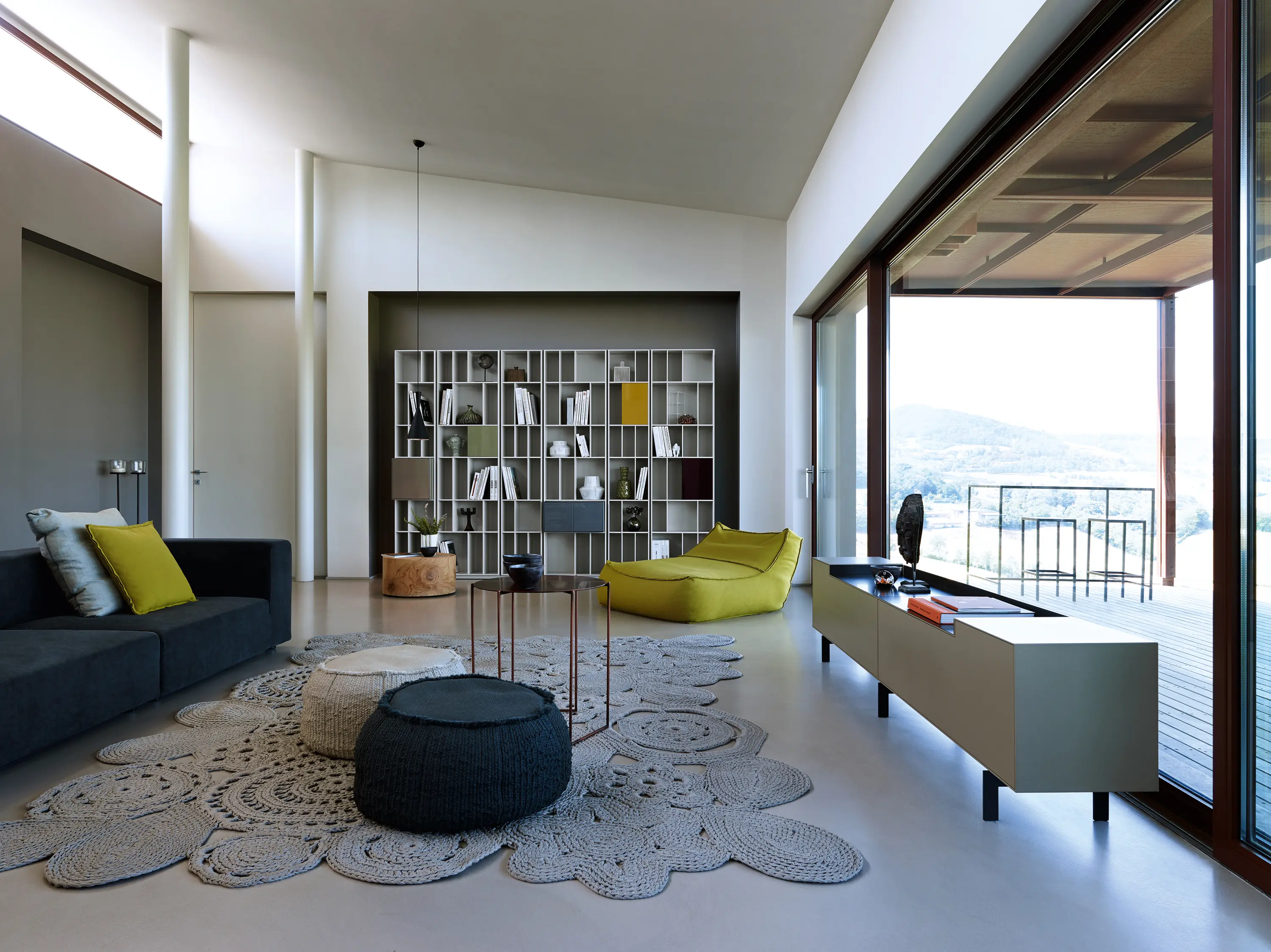
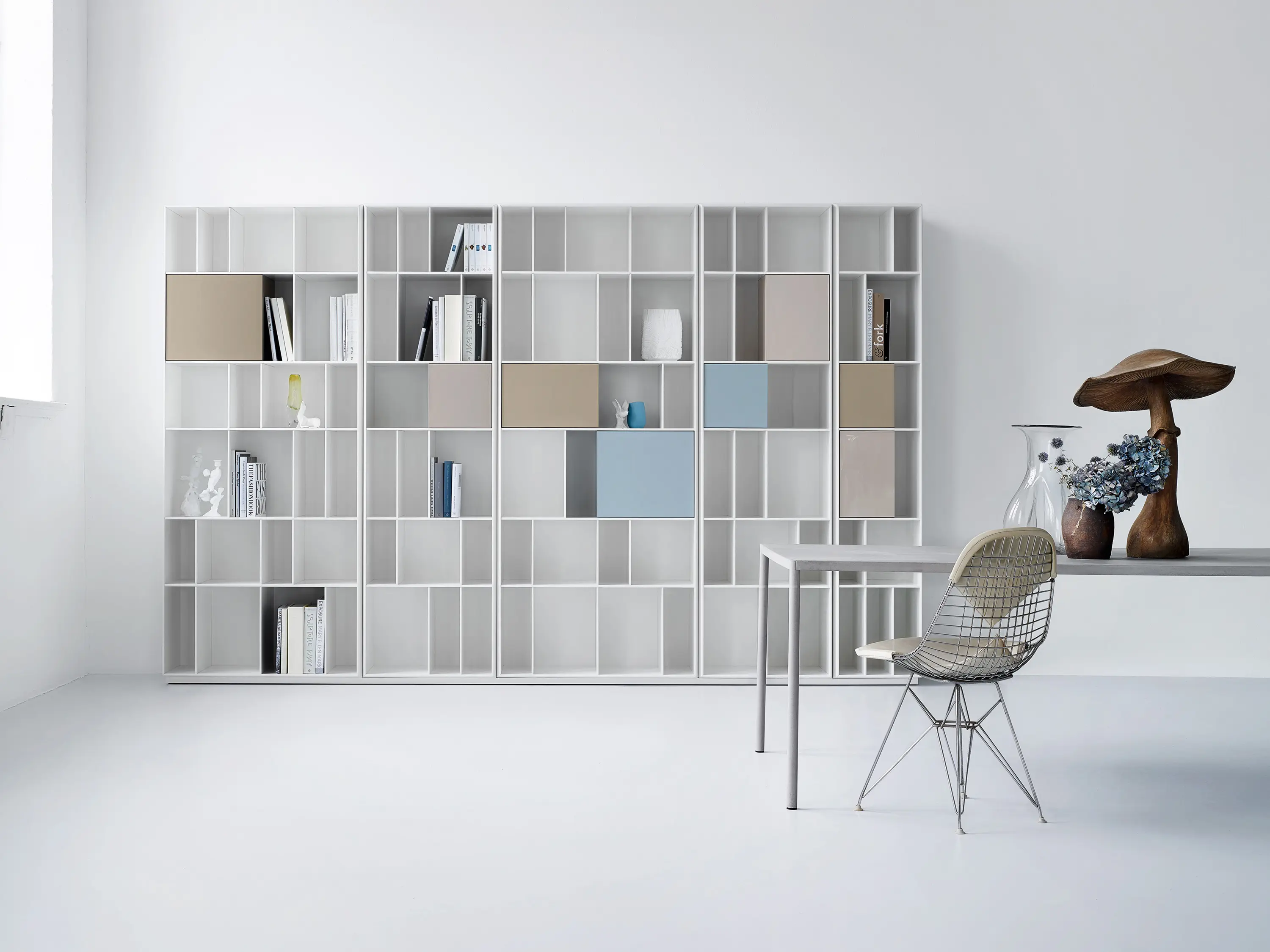
FLEX offers the ideal frame for those wishing to compose their own individual and aesthetic principle of order. That’s why FLEX provides finished shelves with a fixed partition – which you can use and combine as you please. Alternate the various shelf elements and add other prepared elements to establish an exciting basic structure which you can use creatively. Insert boxes to contribute to a look which is more on the calm side or one which is a bit wilder. In the front-flush version they have a harmonizing effect. They can also be placed so that they protrude out of the shelving unit to two different degrees. Ideally, in the case of extensive shelving units, the result is an extraordinary look with rhythmically divided fronts, a look which remains fascinating even after years have gone by. And another special feature: FLEX can also be mounted on the wall.
Ce produit appartient à la collection:
Près du sol
Systèmes d'étagères
Sur pied, Mural, Avec portes battantes
Habitat

Austria
Product design group For Use was formed through collaboration of Sven Jonke, Christoph Katzler and Nikola Radeljkovic in the year 1998. Two members studied at the School of Design in Zagreb, while Katzler studied at High School for Applied Arts in Vienna. Since then the group designed furniture and objects for companies such as Cappellini, ClassiCon, Desalto, Interlubke, Magis, MDF Italia, Moroso, and Zanotta. In 1999 the group realized several important exhibition design projects and established Numen as a group name for projects realized outside of the field of industrial design. In the initial stage the group worked together with Jelenko Hercog and Toni Uroda, graphic and multimedia designers. The work was characterized by experimenting with rule-based design and radical reduction of form in the tradition of High modernism, mostly applied to total-design projects . In 2004 Jonke, Katzler and Radeljkovic started developing set design projects for various theater companies which led to a major breakthrough in 2005 with set design for Infierno in Centro Dramatico Nacional in Madrid. Since then the group designed sets in Belgrade, Berlin, Istanbul, Ljubljana, Madrid, Merida, Osijek, Rijeka, Skopje and Zagreb, mostly with directors Tomaz Pandur and Aleksandar Popovski with whom they developed a continuous cooperation. In 2005 Numen/ForUse established the first design oriented brand for quality furniture in former Yugoslavia - Element, designing visual identity and initial furniture collection. The group has since managed artistic direction and product development of the company. The group has simultaneously developed interior and exterior design projects, usually working with 3lhd and Imarea architects, the most important of which is the integral design of the waterfront in Split realized in 2007. From 2008 on Numen / For Use has been designing objects and concepts without predefined function, resulting in projects like Numen-light, Tape and NET. Besides these prominent realizations, the group has been awarded several international prizes for their work in the fields of set and industrial design.


