Partager
Imprimer


Architonic ID: 20739024
Année de Lancement: 2023
On pouvait déjà trouver des cabanes en Chine au IVe siècle av. Ils ont permis aux gens de cette époque de créer des espaces homogènes dédiés à différentes coutumes. Une cérémonie, une privée.
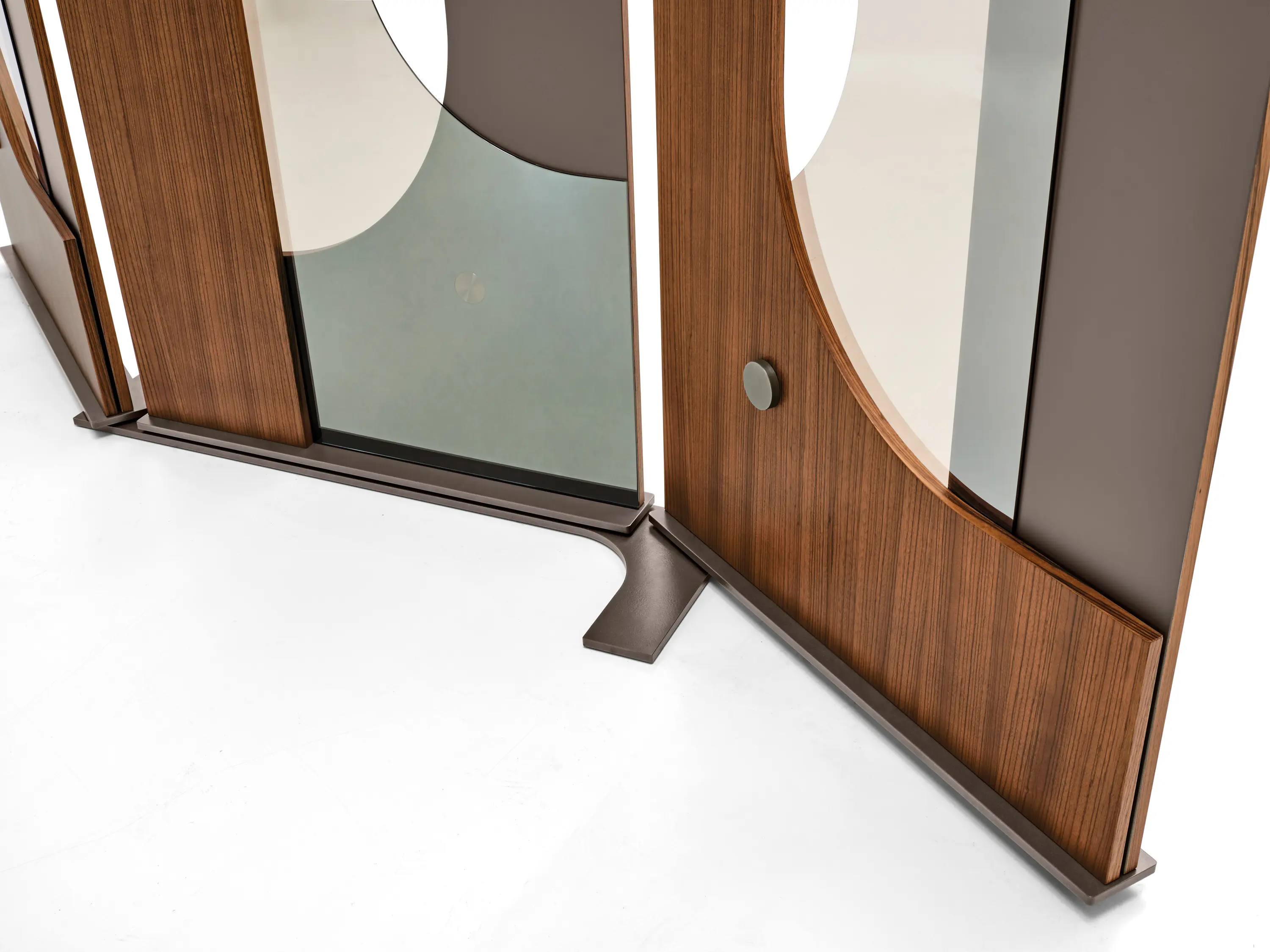
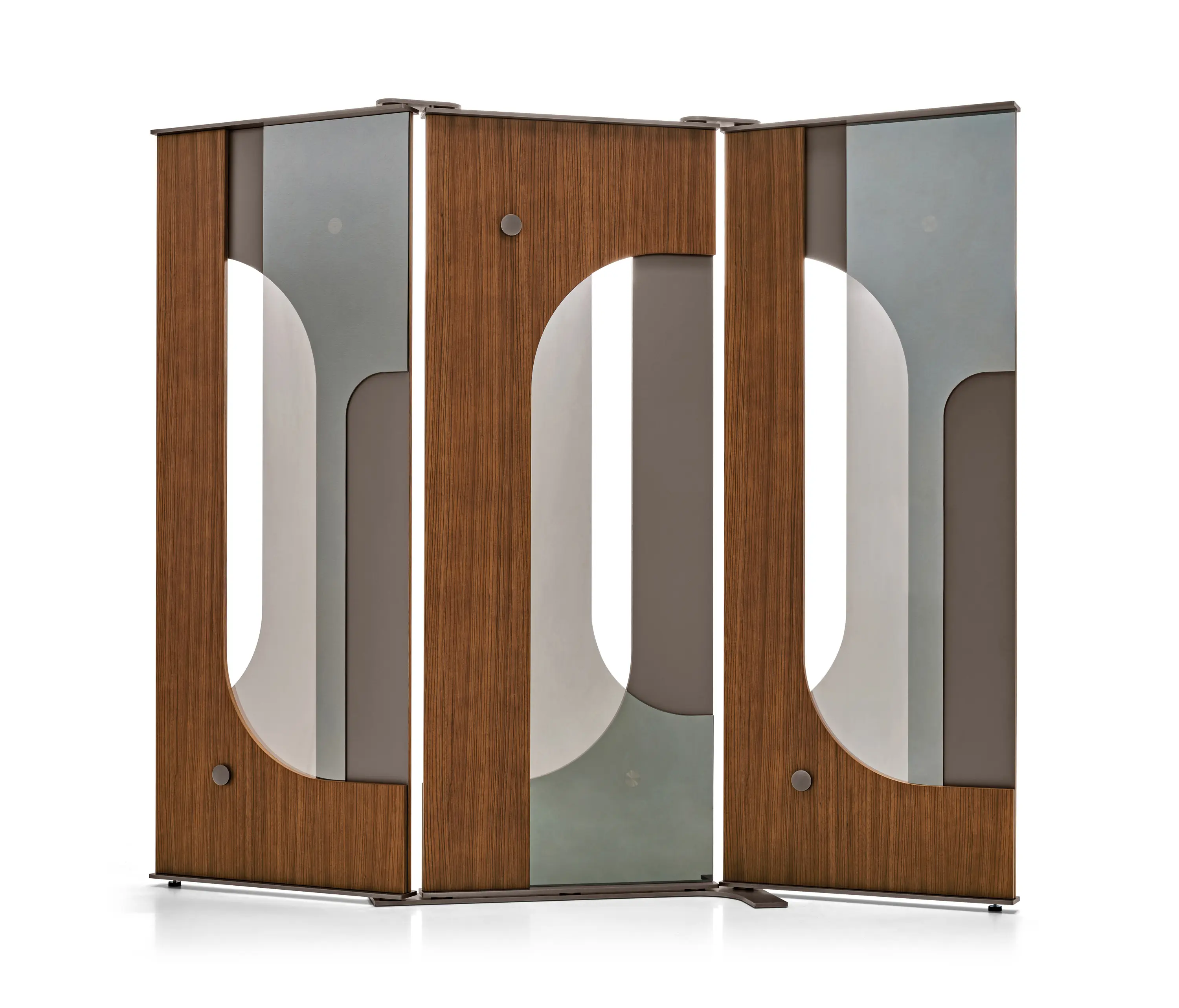
Lorsque nous divisons nos espaces intérieurs, nous faisons un effort conscient pour créer quelque chose de dynamique dans la pièce, la façon dont nous vivons et la façon dont nous répondons aux défis auxquels nos espaces intérieurs sont confrontés. Essentiellement, une séparation physique, comme Hide Me, représente également une façon dont nous décidons de vivre nos vies. Nous décidons de passer d'une zone à une autre pour pouvoir mieux gérer chaque chose séparément. C'est ce que Gino Carollo a réussi à faire. Avec Hide Me, il a créé deux types de séparation différents, l'un du sol et l'autre du plafond. Chaque panneau associe plusieurs matériaux : bois de zébrano ou d'eucalyptus, miroirs, bois vernis ou inserts métalliques.Avec ce contraste net, cette séparation nette si détaillée, mais si mesurée, elle reflète nos besoins et nos reconnaissances intérieures.
Concept
Par essence, une séparation physique, telle que Hide Me, représente également une façon dont nous décidons de vivre notre vie. Nous décidons de nous déplacer d'un endroit à l'autre, d'expérimenter un environnement dans toutes ses nuances. Hide Me exprime au mieux ce concept, en exploitant au maximum le potentiel qu'offre tout environnement, avec sa combinaison de matériaux entre le métal, le bois et le verre/miroir, ce qui donne une cloison différente, éclectique et moderne.
Ce produit appartient à la collection:
Dérivé du bois, Verre, Métal, Verre miroir, Structure dérivé du bois, Structure verre, Structure métal, Bois

Italy
Born in Vicenza, he began his career in the field of Industrial Design in 1990, also working as an art director with prestigious Italian and international companies in the furniture sector. He was commissioned by Assarredo to design the setup and coordinated image for the Italy Pavilion at the International Furniture Fair in Cologne in 1992 and 1993, and also in 1992, the Italian Pavilion at the Interieur fair in Vienna. In 1993, he took part in the Dirattan exhibition in Milan and in 1994 in the "Progetti e Territori" exhibition at the Abitare il Tempo fair in Verona. Some of his products have been exhibited at the MoMA in New York. During the same years, he received the Du Pont award in Cologne, the Young Design award in Milan, and the Casaidea award in Rome. In 2012, he won the Interior Innovation Award in Cologne for the "Bookless" product by Interlübke. In 1999, he founded Studio28 Gino Carollo with the goal of creating a qualified team to support companies in the industry. Product design, combined with engineering and the creation of models and prototypes, proved to be key tools that enabled the studio to achieve concrete results over the years and to establish long-term collaborations. In recent years, Studio28’s industrial design activity has expanded with the addition of new areas of expertise, particularly in the field of architectural design for exhibition spaces, showrooms, and corporate identity.


