Partager
Imprimer


Architonic ID: 20771355
Année de Lancement: 2024
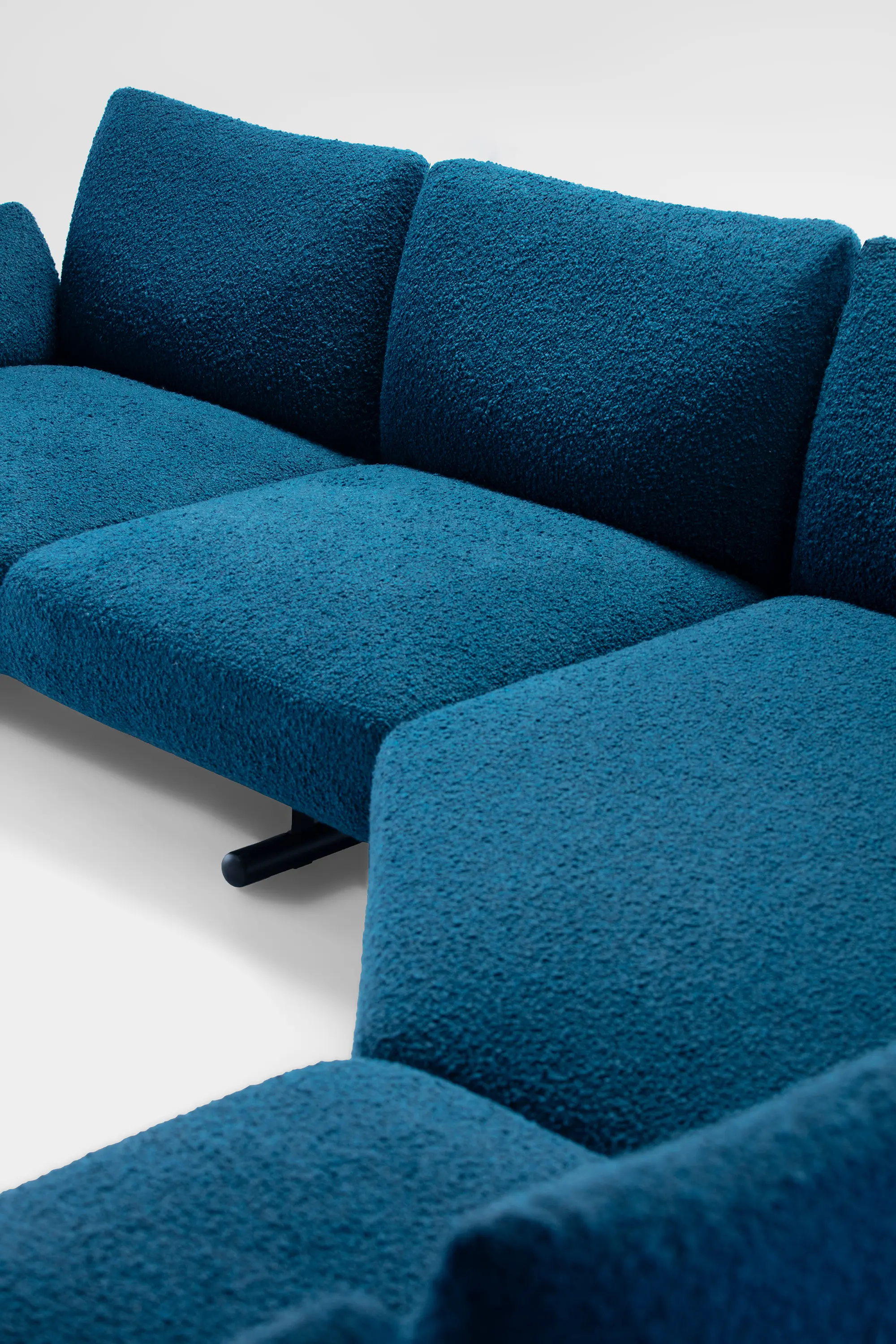
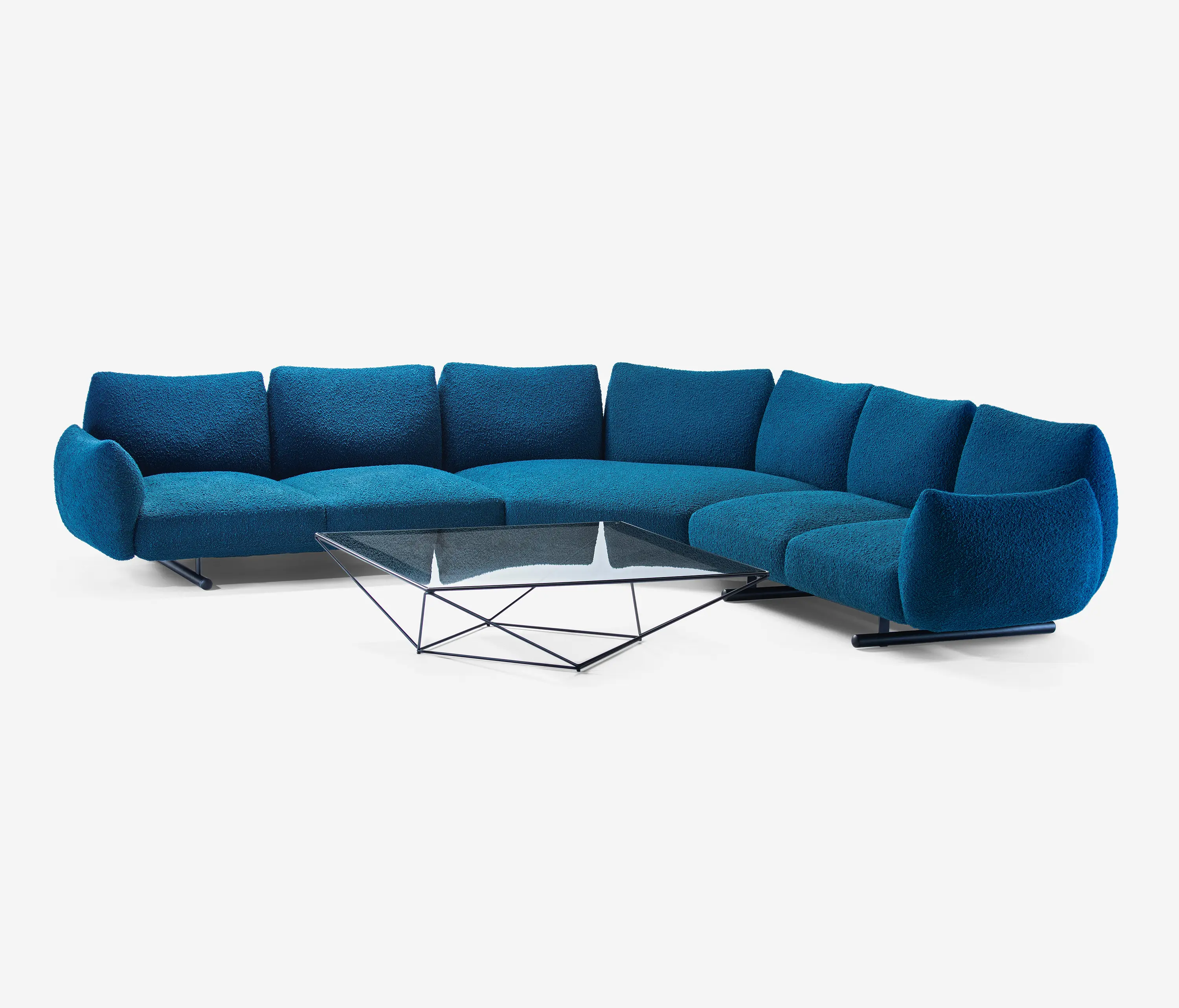
L’ensemble du canapé est une hypertrophie d’un oreiller. C'est une forme gonflée et distendue qui suggère un confort immédiat. Il s’agissait d’abandonner un style classique, élégant et anguleux, et de s’orienter nettement vers des lignes douces et arrondies afin de créer un canapé qui n’a pas besoin d’être apprivoisé ou apaisé par des coussins. Buffa est un objet très sculptural, contenant un élément de caprice incarné dans ses « cornes » de bouffon et ses courbes indulgentes, mais aussi un endroit par excellence pour se détendre et reprendre son souffle; rond, tactile et luxueux.
Concept
Conscients que nous vivons à une époque où le monde entier est notre maison, une époque où le confort est roi et où l'oreiller en est le symbole ultime, Buffa semble parfaitement en phase avec cet esprit du temps grâce à ses caractéristiques, comme son nom l'indique. Même l'accoudoir sert également de repose-tête, ergonomiquement conçu pour soutenir le corps en position allongée et chasser la réalité rigide. Le canapé peut être combiné avec un élément d'angle luxueux qui offre une plus grande profondeur d'assise. La collection comprend également un fauteuil qui peut fonctionner séparément, ce qui est particulièrement adapté aux espaces publics. Sa connexion avec l'opéra comique italien vient en second lieu – à travers une certaine espièglerie et superposition de formes.
Ce produit appartient à la collection:
Piétement métal, Métal

Austria
Product design group For Use was formed through collaboration of Sven Jonke, Christoph Katzler and Nikola Radeljkovic in the year 1998. Two members studied at the School of Design in Zagreb, while Katzler studied at High School for Applied Arts in Vienna. Since then the group designed furniture and objects for companies such as Cappellini, ClassiCon, Desalto, Interlubke, Magis, MDF Italia, Moroso, and Zanotta. In 1999 the group realized several important exhibition design projects and established Numen as a group name for projects realized outside of the field of industrial design. In the initial stage the group worked together with Jelenko Hercog and Toni Uroda, graphic and multimedia designers. The work was characterized by experimenting with rule-based design and radical reduction of form in the tradition of High modernism, mostly applied to total-design projects . In 2004 Jonke, Katzler and Radeljkovic started developing set design projects for various theater companies which led to a major breakthrough in 2005 with set design for Infierno in Centro Dramatico Nacional in Madrid. Since then the group designed sets in Belgrade, Berlin, Istanbul, Ljubljana, Madrid, Merida, Osijek, Rijeka, Skopje and Zagreb, mostly with directors Tomaz Pandur and Aleksandar Popovski with whom they developed a continuous cooperation. In 2005 Numen/ForUse established the first design oriented brand for quality furniture in former Yugoslavia - Element, designing visual identity and initial furniture collection. The group has since managed artistic direction and product development of the company. The group has simultaneously developed interior and exterior design projects, usually working with 3lhd and Imarea architects, the most important of which is the integral design of the waterfront in Split realized in 2007. From 2008 on Numen / For Use has been designing objects and concepts without predefined function, resulting in projects like Numen-light, Tape and NET. Besides these prominent realizations, the group has been awarded several international prizes for their work in the fields of set and industrial design.


