


Partager
Imprimer


Architonic ID: 20119228
Année de Lancement: 2014
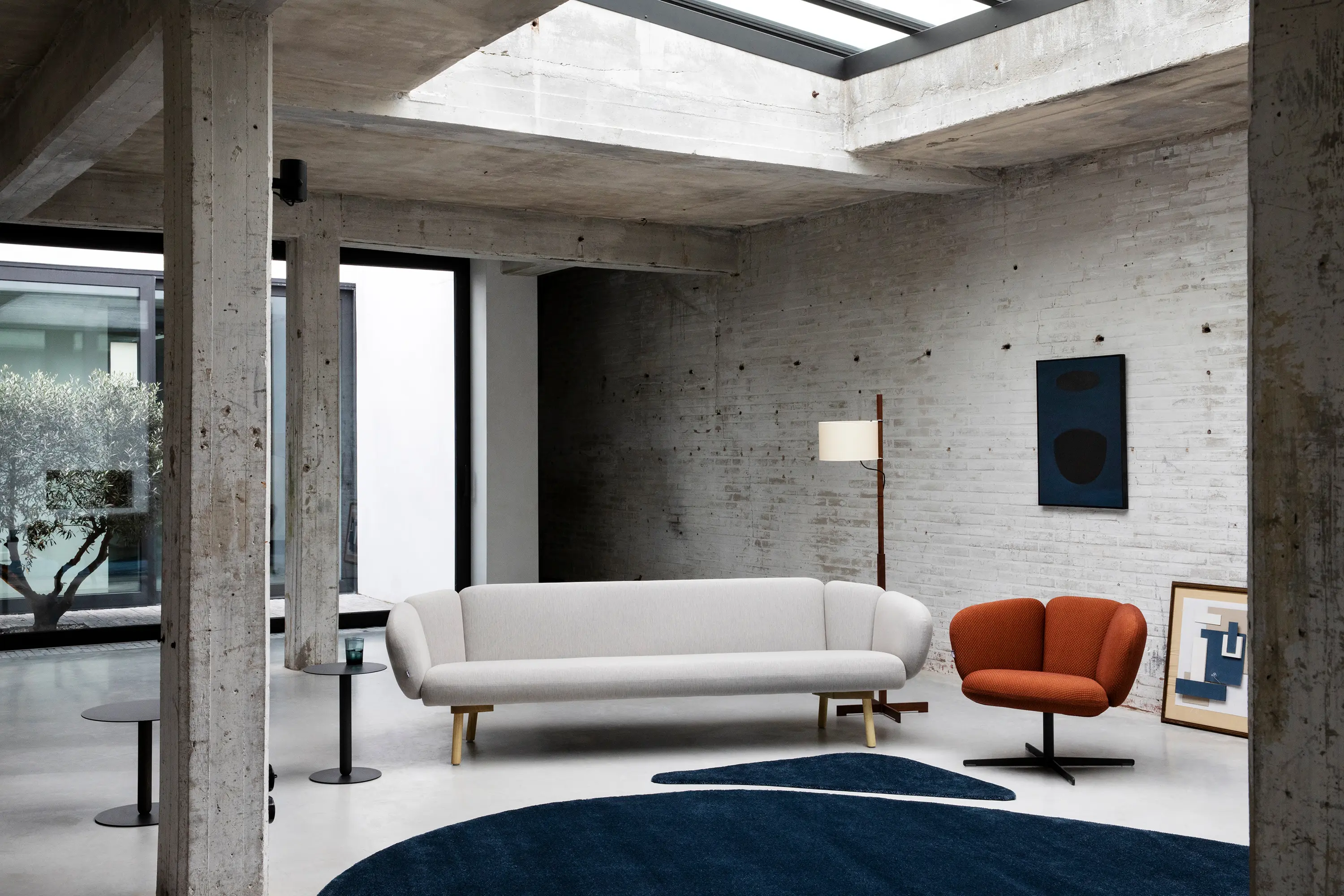
Bras, un canapé qui invite à s’y installer et vous enveloppe d’une étreinte. Assis de manière décontractée ou lové dans un coin douillet, profitez du confort que ce magnifique canapé aux lignes sobres vous propose.
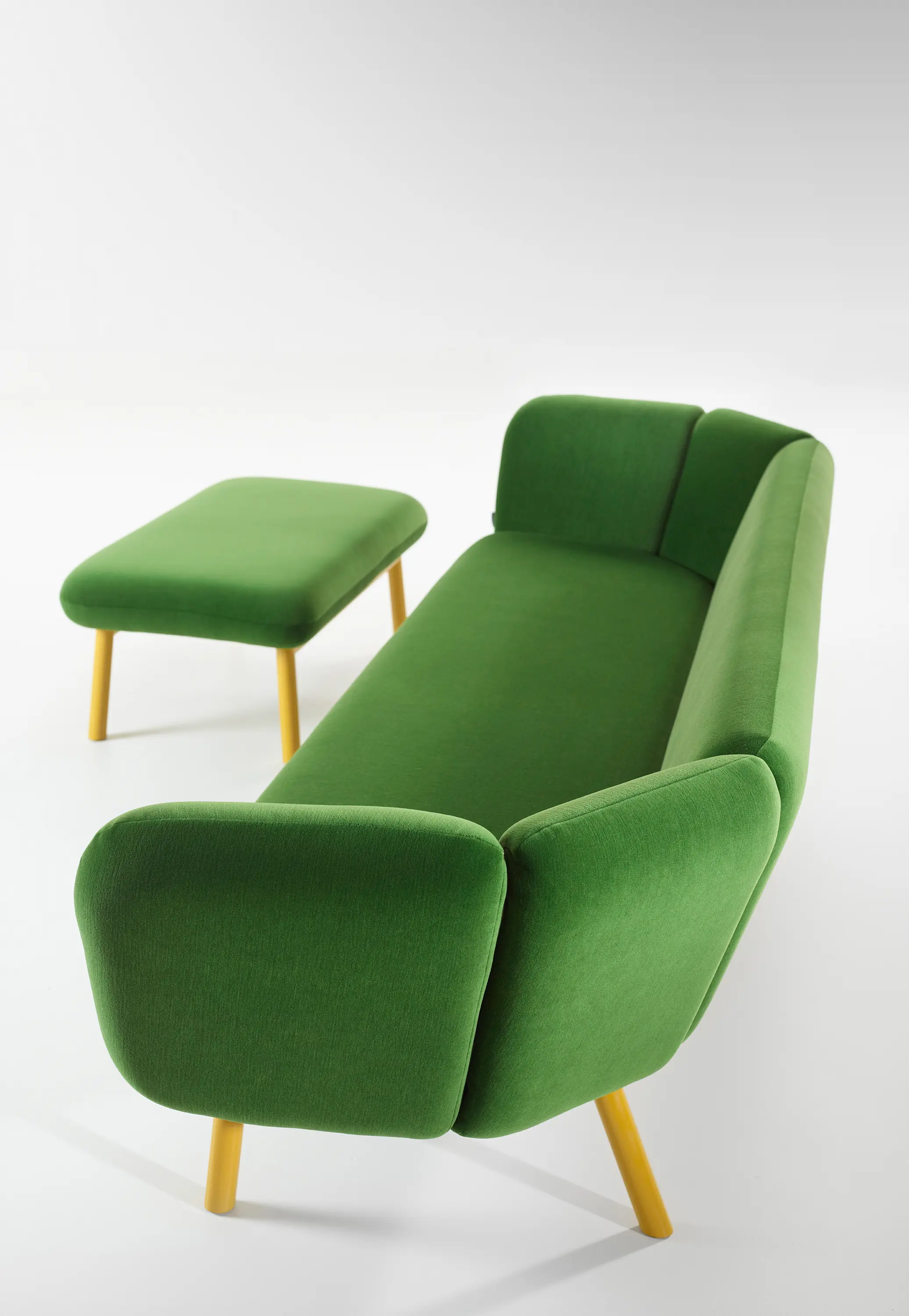
Parmi les caractéristiques qui font la particularité du Bras, citons ses accoudoirs uniques. C’est dans la forme naturelle prise par votre bras, lorsque vous le laissez reposer de manière détendue sur un accoudoir, que Khodi Feiz a puisé son inspiration pour ce design. Le bras ne forme en effet pas un angle droit, mais fléchit en plusieurs facettes, tout comme l’accoudoir du canapé Bras.
L’assise, le dossier et les accoudoirs sont garnis séparément et ne sont assemblés que par la suite. Les formes arrondies de ce canapé sont ainsi encore mieux mises en valeur, conférant à cette création un caractère léger et original.
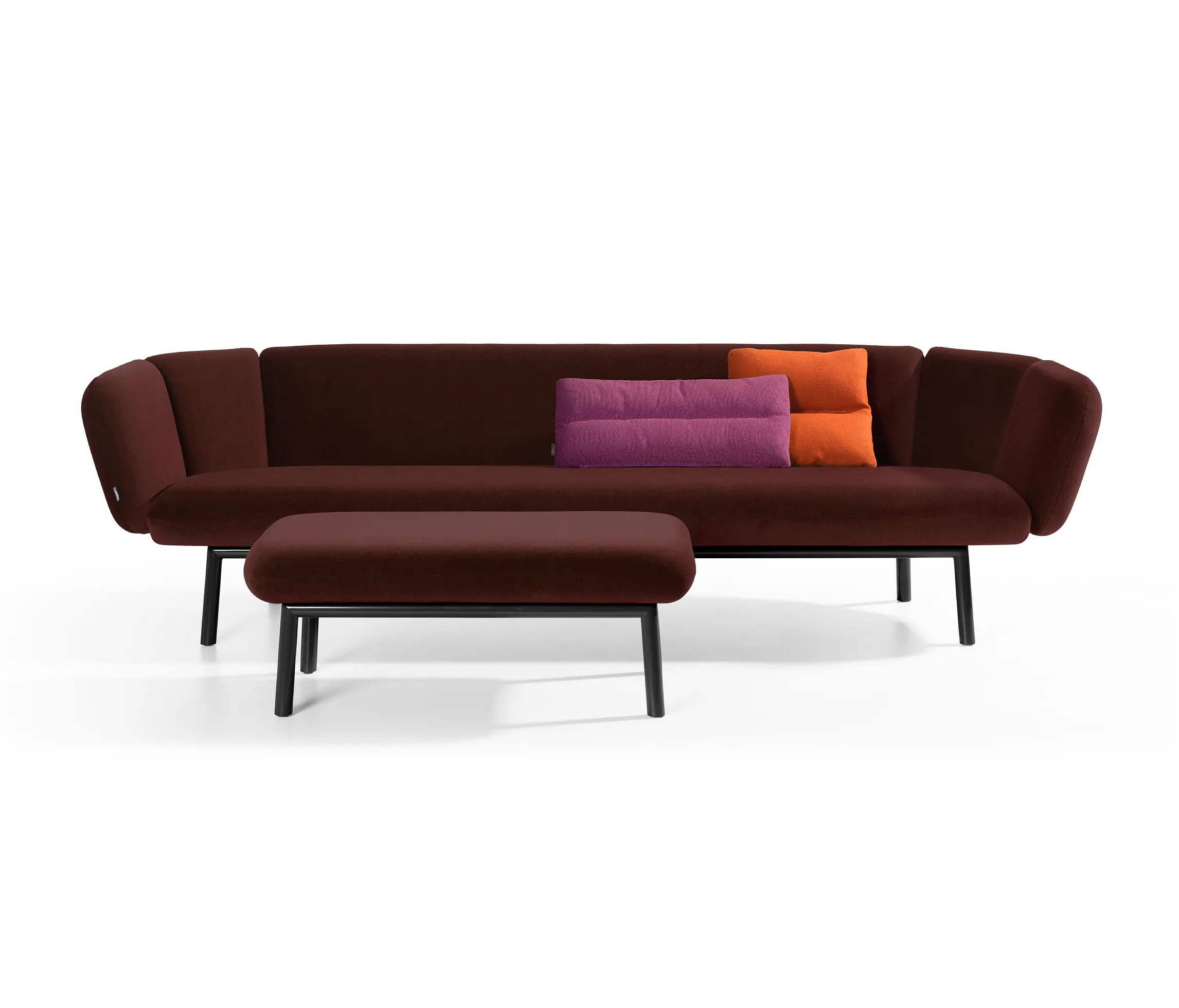
Grâce à sa construction unique, le dossier rebondit légèrement lorsque vous vous asseyez. L’assise est pourvue d’un support tressé, recouvert d’une couche épaisse de mousse à la fois souple et ferme. Les deux coussins assortis donnent un petit côté fantaisiste à ce canapé. Le repose-pied vous permettra de vous détendre, les jambes relevées. Mais rien ne vous empêche bien sûr de l’utiliser comme table d’appoint. Le piètement est recouvert par pulvérisation.
Bras existe en version 2 places, 2,5 places et 3 places. Le tabouret et les coussins assortis sont proposés séparément.
Concept
One of the distinguishing features of the Bras collection is its unique armrests. The natural shape of your arm when resting it on the armrest, as it doesn't form a right angle but bends in a facet-like manner, inspired Khodi Feiz to create this design. The Bras collection consistof a sofa programme, a highback armchair and a lowback armchair.
Ce produit appartient à la collection:
Piétement métal, Métal

Netherlands
A design consultancy with an integrated and multi-disciplinary approach, Feiz Design Studio handles all areas of design from brand building products to inspiring furniture; technically sophisticated industrial projects to household and consumer products. The overriding inspirations for our work can be summed up by: clarity, concept and context. Clarity: objects which are stripped down to their bare essence, not to make them boring, but to bring out their main expressive quality. Too often ‘simple’ projects are dismissed as superficial and banal; it seems the more ‘complex’ or ‘advanced’ the better. But we propose the opposite: the simpler the project the more challenging and difficult it becomes; you don’t have the guise of complication to hide behind. Concept: it is the idea that gives meaning to an object; when a piece captures your imagination or makes you look twice. It is from new concepts which new typologies emerge. Context: to be inspired by the environment you are designing for is a very strong starting point. Often not thinking of the object but of the context that creates the object can lead to new and surprising results. We believe that design is a generalist act. That is not to say that the designer is a jack of all trades and a master of none, but to be able to contribute creatively is a specialism in itself, whatever the realm; be it strategic, helping create future scenarios and propositions for culture and society; formal, designing relevant and beautiful products for our use; technical, helping industry innovate; communicative, making information and services understandable; or artistic, producing work which questions and inspires. These and many more elements constitute the world of design, and it has never been any different. It is within this context that we would like to develop and work with industry to achieve quality, whatever form it may take. Because, to us, quality is the obligation, design the inspiration. Biography Khodi Feiz, (1963) industrial designer, born in Iran and raised in the US, received his degree at the Syracuse University (NY) and worked for companies such as Texas Instruments and at the Industrial Design Center at Philips Electronics in the Netherlands. He set up Feiz Design Studio with graphic designer Anneko Feiz - van Dorssen in 1998. The main inspirations for Feiz's work can be summed up in three words: clarity, concept, and context. Feiz is an industrial designer working across a broad spectrum of design disciplines, including products, furniture, strategic design, new concepts, and interior and exhibition design. He received many awards and prizes and his work is exhibited worldwide. Khodi Feiz works for Alessi, Artifort, Bang & Olufsen, Cappellini, Decathlon, EMI Music, Kembo, Loewe, LEGO, Lost Boys, Leitmotiv, Nokia and Offecct.
Contactez directement
Contactez directement Artifort
Artifort


