Partager
Imprimer

Partager
Imprimer
Architonic ID: 1000142
Année de Lancement: 1933
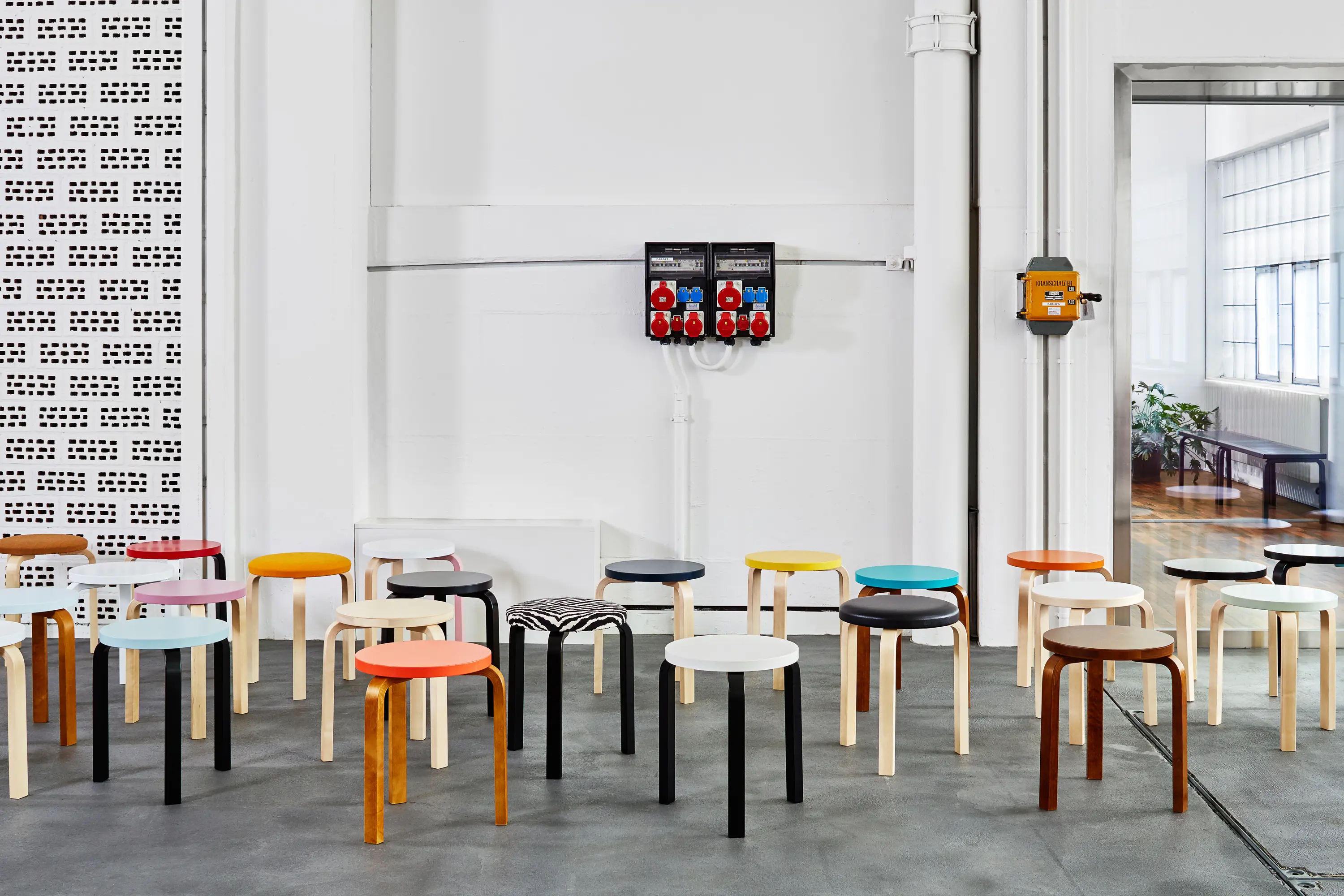
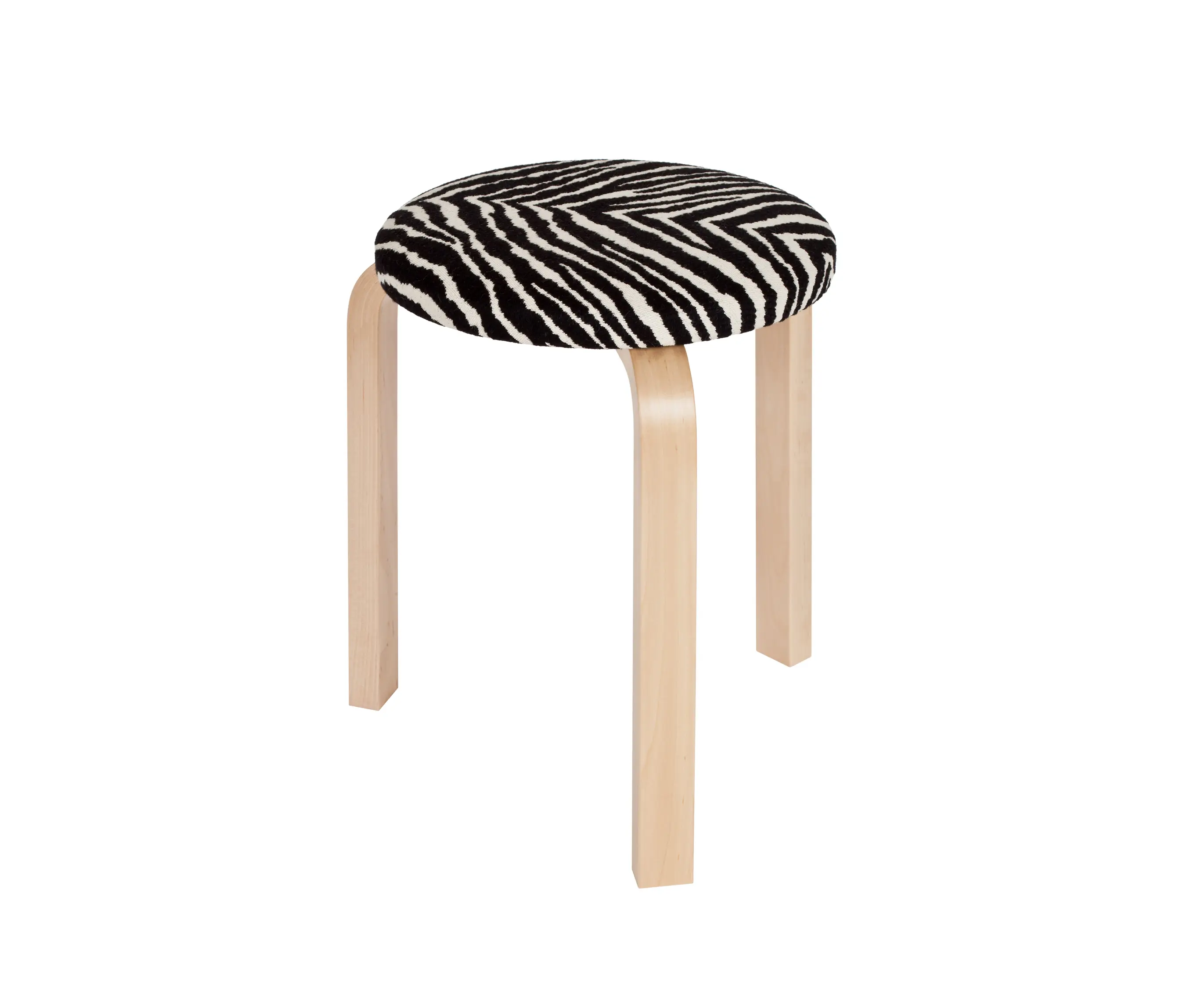
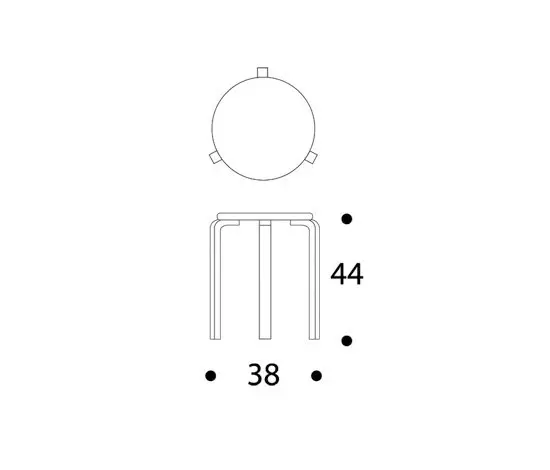
Alvar Aalto’s iconic Stool 60 is the most elemental of furniture pieces, equally suitable as a seat, a table, storage unit, or display surface. The legs are mounted directly to the underside of the round seat without the need for complicated connecting elements. Thanks to its geometry, the stool can be stacked to save space in a spiralling tower sculpture. Manufactured in 42 production steps at the A-Factory in Turku, Finland, Stool 60 is available in a wide variety of colours and finishes. Several million units of Stool 60 and its four-legged cousin, Stool E60, have been sold, making it one of the most cherished products in the history of design.
Concept
The stool is the most elemental of furniture pieces, a part of daily life since time immemorial. Eternally contemporary, the stool provides a surface for seating, storage, and display. Practical, portable, and adaptable, the stool may be moved at will and can fulfil a variety of roles from step to seat. Modest and unobtrusive, in groups, the stool may be used to seat multitudes. Varying in material and design, some stools are made to stack, saving space when not in use. Uniting the values of craftsmanship, durability, and timelessness, Artek’s stools have been among its most iconic and beloved products since the company’s founding.
Ce produit appartient à la collection:
Piétement dérivé du bois, Piétement bois massif, Bois

Finland
Alvar Aalto was a Finnish architect, designer, sculptor and painter. He was considered one of the most influential architects of Nordic modernism and Finnish design in particular. Alvar Aalto: a biography Alvar Aalto was born on 3 February, 1898, in Kuortane, Finland. In 1921, he completed his architectural studies at the Technical University of Helsinki. By September of 1923, he had opened his first architectural office in Jyväskylä. It was only with the completion of his sanatorium in Paimio in 1932 that Aalto became internationally recognised. Later, buildings such as his library in Vyborg (1927–1935), his student residence in Cambridge, Massachusetts (1947–1949), the main building of the Helsinki University of Technology (1953), the Maison Carrée in Paris (1956–1958), the Cultural Centre in Wolfsburg (1958–1962) and the Essen Opera (1989) continued to build Aalto’s reputation for thoughtful modernist architectural designs. In 1935, Aalto and his wife Aino Aalto Marsio founded the furniture company Artek in Helsinki, together with Aalto’s patron, the industrialist's wife Mairea Gullichsen.From 1936, Aalto designed glassware for the company, including the now-iconic Aalto Vase. The Finnish manufacturer Iittala continues to produce the Aalto Vase to this day, while Artek continues to manufacture the Artek Stool and other Artek furniture. In the 1950s and 1960s, Aalto received numerous honours and awards for his achievements, including the Royal Gold Medal for Architecture, presented to him in 1957 by Queen Elizabeth II. The Savoy Vase by Alvar Aalto In 1936, Aalto created the Aalto Vase, together with the Finnish glass manufacturer Iittala. The Aalto vase became one of the most famous products of Finnish design. It was first designed for the luxurious Savoy Restaurant in Helsinki, from which it takes its other name, the Savoy Vase. With its asymmetrical shape and free-flowing curves, the design symbolises originality, straightforwardness and the high aesthetic standards that were innate to Finnish design. The vase is created from supple, wavy lines, which represent the Finnish landscape with its many lakes and forests. Aalto’s design for the vase was inspired by nature, much like his many architectural designs. The Aalto Vase was presented at the World Exhibition in Paris in 1937; and its simplicity has remained extremely popular, well into the 21st century. Smaller versions of the design are still produced in the Iittala glass factory in Finland. Recently, the vase has attained an iconic status. Alvar Aalto's Paimio Chair For his sanatorium project in Paimio, Alvar Aalto designed numerous pieces of furniture and lamps. The Paimio Chair was one of the Aalto furniture pieces designed for the interior of the building. Aalto worked with wood laminate to produce a warm, pliable material suitable for making furniture for patients who had to sit several hours at a time every day. The first drafts of the design for the Paimio Chair, or Paimio Armchair as it is sometimes called, were presented in 1929 in the city of Turku. Today, the Paimio Chair can be found in numerous museums, including in the permanent collection of the Museum of Modern Art in New York. © by Architonic