Partager
Imprimer

Partager
Imprimer
AJ Applique
Architonic ID: 20281592
SKU: 90403-5743150500-01
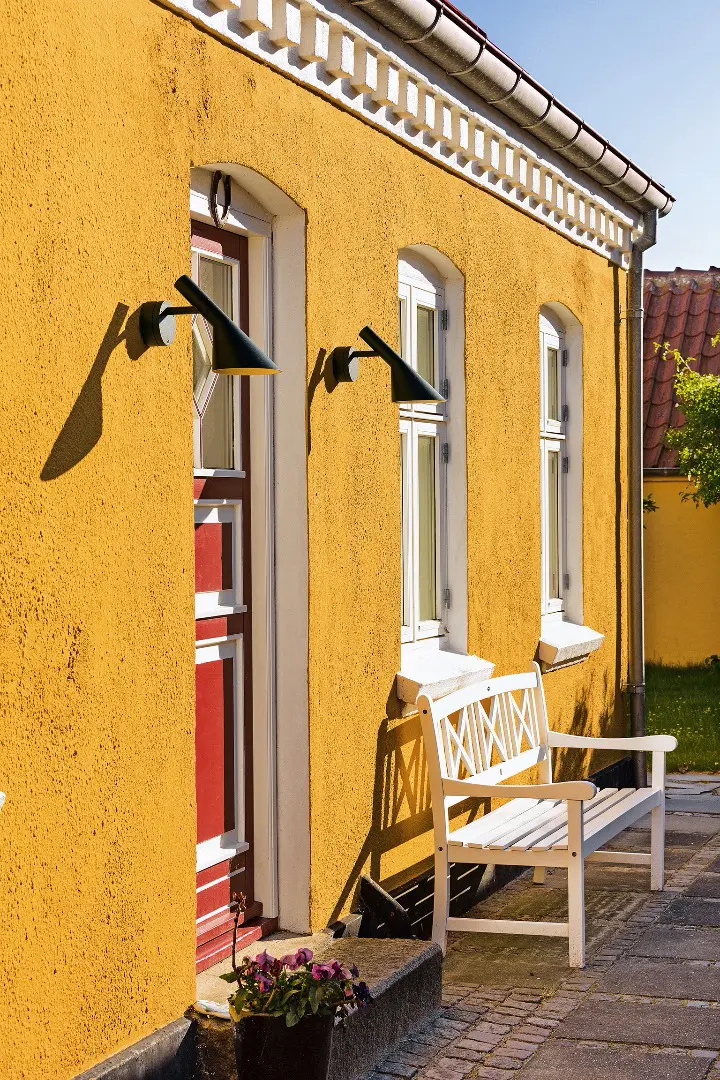
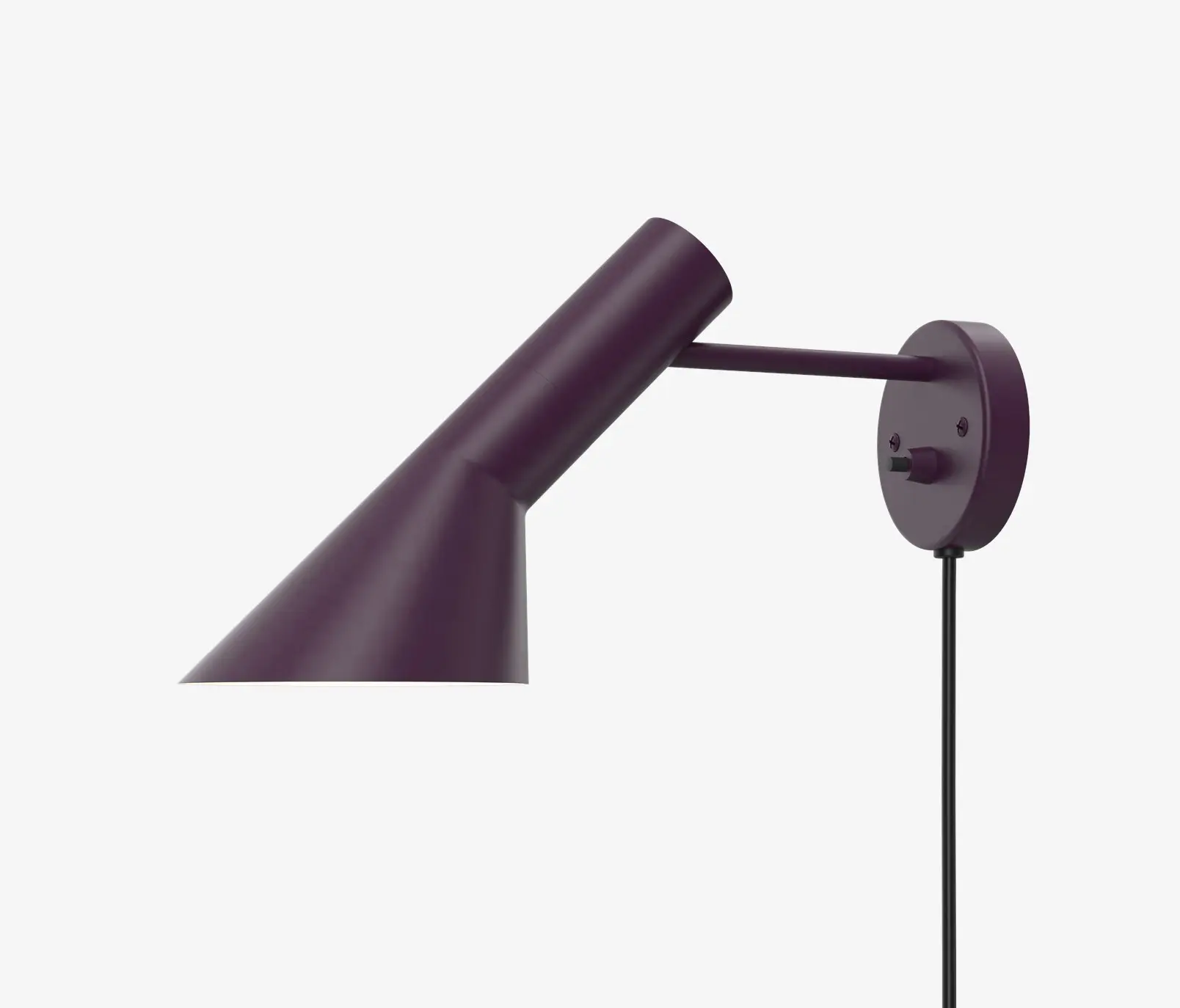
Arne Jacobsen a imaginé la lampe AJ pour le SAS Royal Hotel de Copenhague (Radisson Collection) en 1957. La série AJ est aujourd’hui considérée comme le modèle qui a fait connaître l’architecte danois dans le monde entier. À l’époque, la famille AJ comprenait une lampe de table et un lampadaire, une applique, une petite lampe de table et une lampe de table conçue pour se fixer à la table. L’applique en acier inoxydable était disposée en superbes alignements dans le hall de l’hôtel lors de son ouverture en 1960. En association avec la suspension AJ Royal, la lampe AJ faisait partie du concept général de décoration imaginé par Arne Jacobsen pour l’hôtel. Non seulement Arne Jacobsen a imaginé l’hôtel jusque dans ses moindres détails pour la compagnie aérienne SAS, mais il a également conçu quasiment tout le mobilier et les accessoires d’origine de l’hôtel. Le profil de la lampe AJ, avec ses lignes droites et sa combinaison d’angles obliques et droits, est une référence assumée au profil des fauteuils de la gamme 3300, ainsi qu’aux lignes géométriques des bâtiments de l’architecte. La lampe AJ était employée dans plusieurs parties de l’hôtel en finition cuivre et acier inoxydable. Elle était initialement également disponible en gris clair, en marron foncé et en noir, tout comme AJ Suspension. De nouvelles couleurs ont été proposées par la suite à l’occasion des anniversaires successifs de la gamme.
2020 voit le retour, à l’occasion du 60e anniversaire de l’ouverture du SAS Royal Hotel, d’AJ Mini Lampe de Table, particulièrement à son aise sur un rebord de fenêtre, une table de chevet, ou associée à une autre pièce de mobilier. De plus, toutes les autres versions de la lampe AJ font également leur retour dans leur finition acier inoxydable d’origine, qui reflète son environnement, dans l’esprit d’Arne Jacobsen, et met en avant la forme minimaliste caractéristique de la lampe ainsi que son éclairage parfait.
Concept
Dessiné par Arne Jacobsen en 1960 pour le SAS Royal Hotel à Copenhague (Radisson Blu), il faisait partie du concept de design complet créé pour l’Hôtel. Bon nombre de produits créés à cette occasion sont perçus comme des icones du design et dans l’industrie de l’éclairage, les lampes AJ ont en particulier obtenu une renommée mondiale. A l’occasion du 50 ème anniversaire de la famille de luminaires AJ, cinq nouvelles finitions ont été introduites. Les nouvelles couleurs ont été soigneusement choisies dans un concept coloristique Arne Jacobsen mis à jour.
Ce produit appartient à la collection:
Métal
Vous pouvez visiter la page produit de ces variantes : cliquez simplement dessus !

Denmark
Arne Jacobsen was one of the most accomplished Danish designers and architects of the 20th century. His distinctly elegant style married the efficiency and clean lines of modernism with sensuous, organic forms found in nature. Biography Arne Jacobsen Arne Jacobsen was born in Copenhagen in 1902. Originally, he began an apprenticeship as a stonemason, but decided instead to study architecture at the Royal Danish Academy of Fine Arts in Copenhagen, which he successfully graduated from in 1927. One of Jacobsen’s first projects was a ‘House of the Future’, with a helicopter landing pad on the roof, which he designed together with Flemming Lassen. He also designed several larger projects, such as the Bellavista housing estate in Klampenborg. In 1942, Arne Jacobsen and Erik Moller won an architectural competition to design the City Hall of Aarhus, working together with the designer Hans J Wegner. Between 1956 and 1960, he worked on the SAS Royal Hotel (now the Radisson Blu Royal Hotel) in Copenhagen. The building was conceived as a total work of art, and the three architects designed every detail, from the Egg Chair and the Swan Chair, which owe their iconic status to their seductive, organic forms, down to the cutlery in the building. In 1956, he became a professor at the Royal Danish Academy of Fine Arts. The Munkegård school in Genofte, the Toms factory in Ballerup, the Danish National Bank and the Sports Hall in Landskrona, were all pioneering works of Scandinavian modernism designed by Jacobsen. Some of Jacobsen’s international projects, such as the school building for Christianeum in Hamburg and the Danish Embassy in London were only completed after his death in 1971. Designs by Arne Jacobsen Jacobsen designed furniture, textiles, cutlery and wallpapers among other things, but his most famous projects are his chairs. His 1952 Ant Chair, together with his later Series 7 Chair became some of the most commercially successful designs ever produced. Jacobsen's work is influenced by the iconic architecture and furniture of Le Corbusier and Ludwig Mies van der Rohe. In his quest for perfection, he was not afraid to investigate new and even radical ideas. He always worked to produce objects industrially, while imbuing them with a certain handmade quality; an approach that became the hallmark of modern Danish design. Jacobsen’s Swan Chair Designed for the lobby and lounge of the SAS Royal Hotel, Jacobsen's Swan Chair of 1956 is deemed by many to be a true turning point in furniture design. Inspired by the bird’s elegant, soaring wings, the innovative design abandons straight lines in favour of sweeping curves and organic forms. The chair's sensuous sculptural qualities and bold colours epitomise the optimism of the 1960s. The Swan Chair was first produced by the Danish manufacturer Fritz Hansen, who continue to produce it to this day. Egg Chair Like the Swan Chair, the Egg Chair was also designed for the SAS Royal Hotel in Copenhagen. The armchair's generous size means it was used to furnish the hotel's lobby. The Egg Chair's restrained form is made seductive by the organic shapes reminiscent of an oval eggshell. Because of its unique, comfortable design, it is one of the most popular chair designs of the 20th century, and continues to be manufactured today by Fritz Hansen. © by Architonic


