Unfolding new spaces: Brunner teams up with atelier oï
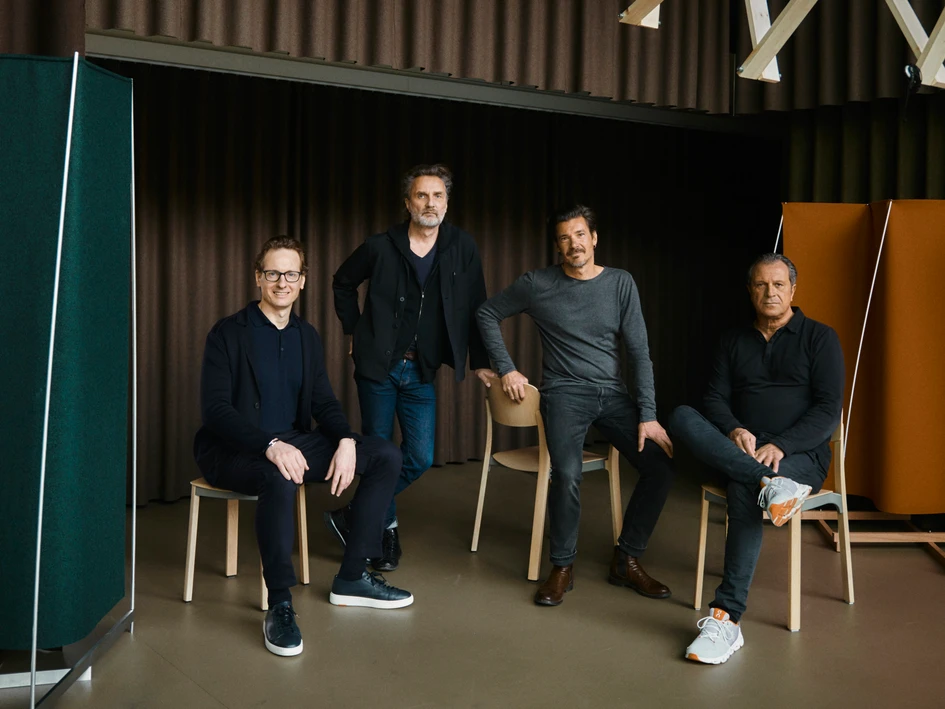
Designed by Swiss creative office atelier oï for contract-furniture specialists Brunner, "foild" is an ultra-nomadic, space-shaping device that turns its users into interior planners. Text by Simon Keane-Cowell


+1
Por Brunner, Atelier Oï, y Simon Keane-Cowell para

Brunner
abril 13, 2023 | 10:00 pm CUT
Google Maps is lying to me.
I’m making my way, on foot, from the local train station to Swiss architecture and design trio atelier oï’s office on Lake Biel in what should be, according to my phone, a mere five-minute walk. But it’s been a good quarter of an hour already and in that time I’ve been confronted with a dead-end, have clambered over a small fence, and darted through a children’s playground.

“I don’t know why the app suggests that circuitous route," says one of the team, all smiles and sympathy, when I arrive at my destination. “The road less-travelled,” I reply, thinking how apt a metaphor it is for a transdisciplinary outfit that’s spent over three decades experimenting, challenging the received boundaries of material, form and, indeed, typology. Unsurprisingly, the building itself is a major typology-bender. A cleverly adapted landmark motel from the late 1950s, atelier oï’s three-storey “Moïtel” (see what they did there?) is home to 900 square metres of workshops, offices, a materials library and a photographic studio, as well as a dedicated gallery space.
"
'The classic architect is interested in the stable, the static. But we are always fascinated by the dynamic'
'We’re always fascinated by the mobile, the living, in all our projects,' explains Aurel Aebi, who along with Armand Louis and Patrick Reymond, founded atelier oï in 1991. 'The classic architect is interested in the stable, the static. But we are always fascinated by the dynamic.' Their latest product-design collaboration – with Made-in-Germany, contract-furniture specialists Brunner – is no exception. Called “foild”, it is, as Aebi puts it, 'a loose piece of furniture that allows you to fold and unfold a space'; in short, a soft and optically light, ultra-flexible spatial element that, in an instant, can be deployed by the users of a space to shape it according to their individual needs.
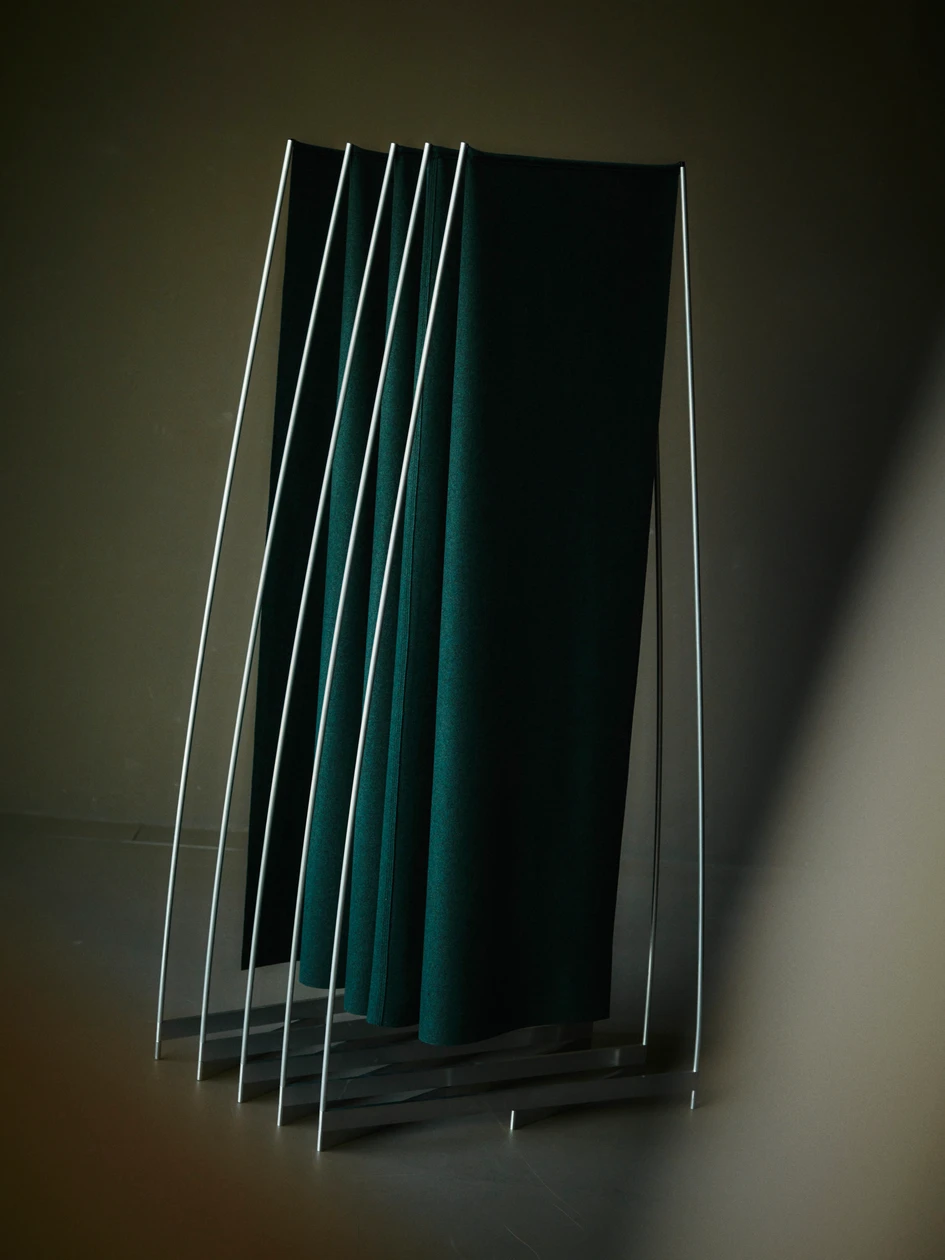
'It’s like a punctuation mark. The beauty of punctuation marks is that you can structure a sentence that is too long with them. You can add brackets, you can make a hyphen, you can put a full stop. So it's actually punctuation in a macro space, which can be endlessly moved and varied.' In other words, the user becomes a kind of ad-hoc spatial planner. Or, to use Aebi’s analogy, an editor.
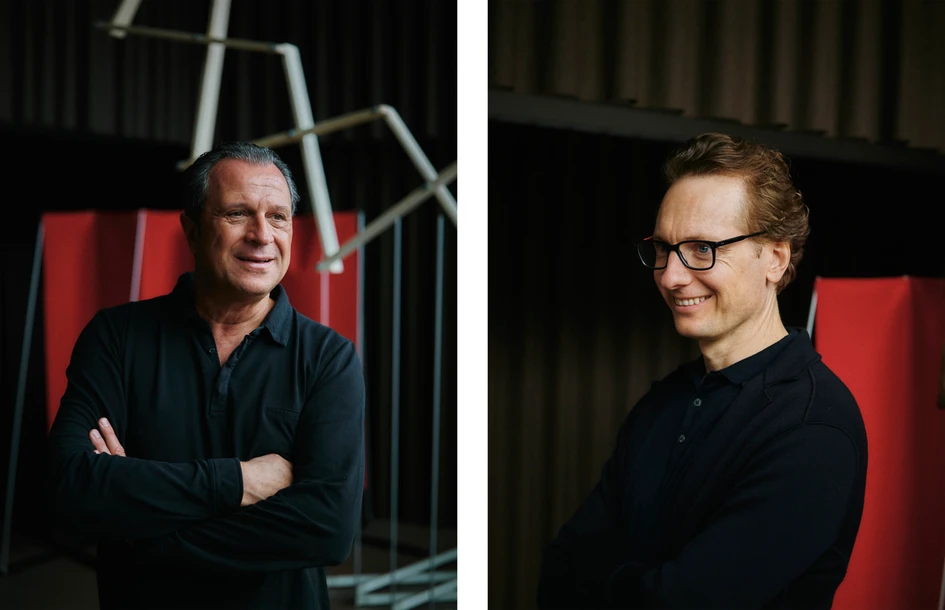
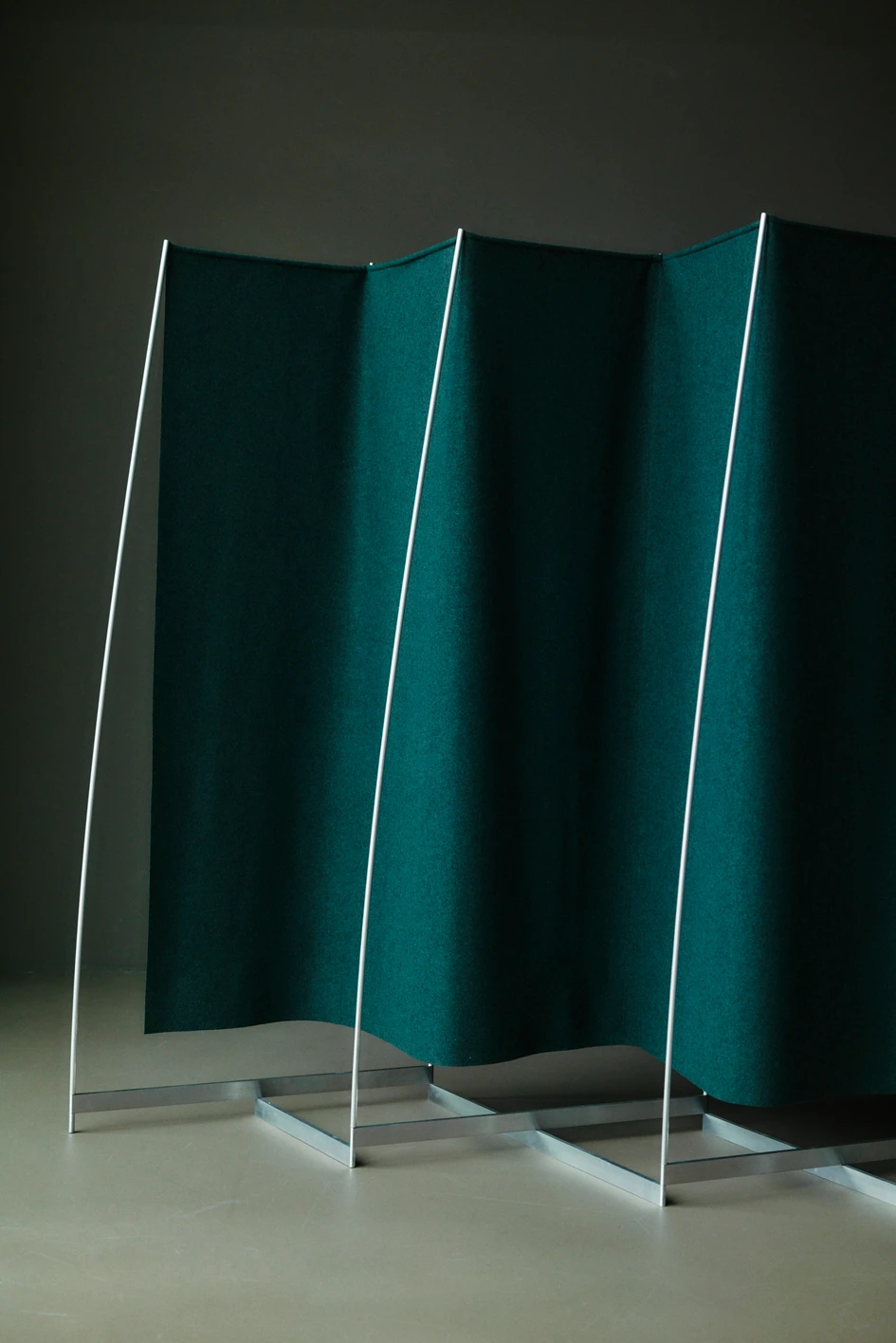
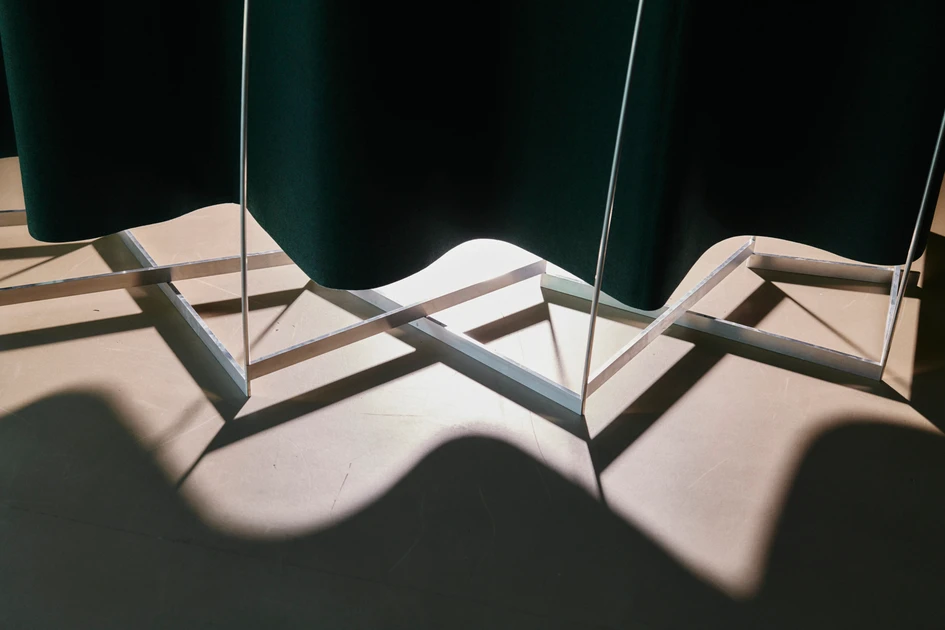
The result of a completely open brief from Brunner ('We’ve never worked with a designer this way before, but we had complete confidence in the collaboration,' says owner Dr. Marc Brunner), foild sees a horizontally expandable, skeletal structure – featuring a lattice-like, concertina base and a series of vertical aluminium rods – married with high-quality textiles that are held in tension like the sails of a boat, but ones which fold into themselves beautifully when the frame is collapsed.
"
'The product has such a universal character, that we can imagine it being used in the most diverse of contexts'
Unlike some of the heavy space-dividing, micro-architectural products already on the market, there’s a lightness here – both literal and visual, aesthetic and practical – meaning foild lends itself to frequent repositioning, like an ever-nomadic tent. Areas within a larger space can be defined with ease, as well as privacy delivered, shade provided, and so on. 'The product has such a universal character,' explains Dr. Marc Brunner, 'that we can imagine it being used in the most diverse of contexts. For example, when it comes to creating structures within public areas, at events, guidance systems perhaps or simply to conceal things for certain moments in the area. Especially seminar settings, where agile working groups can create pop-up spaces. And all of this with a product that uses as little material as possible. This was extremely important to us.'
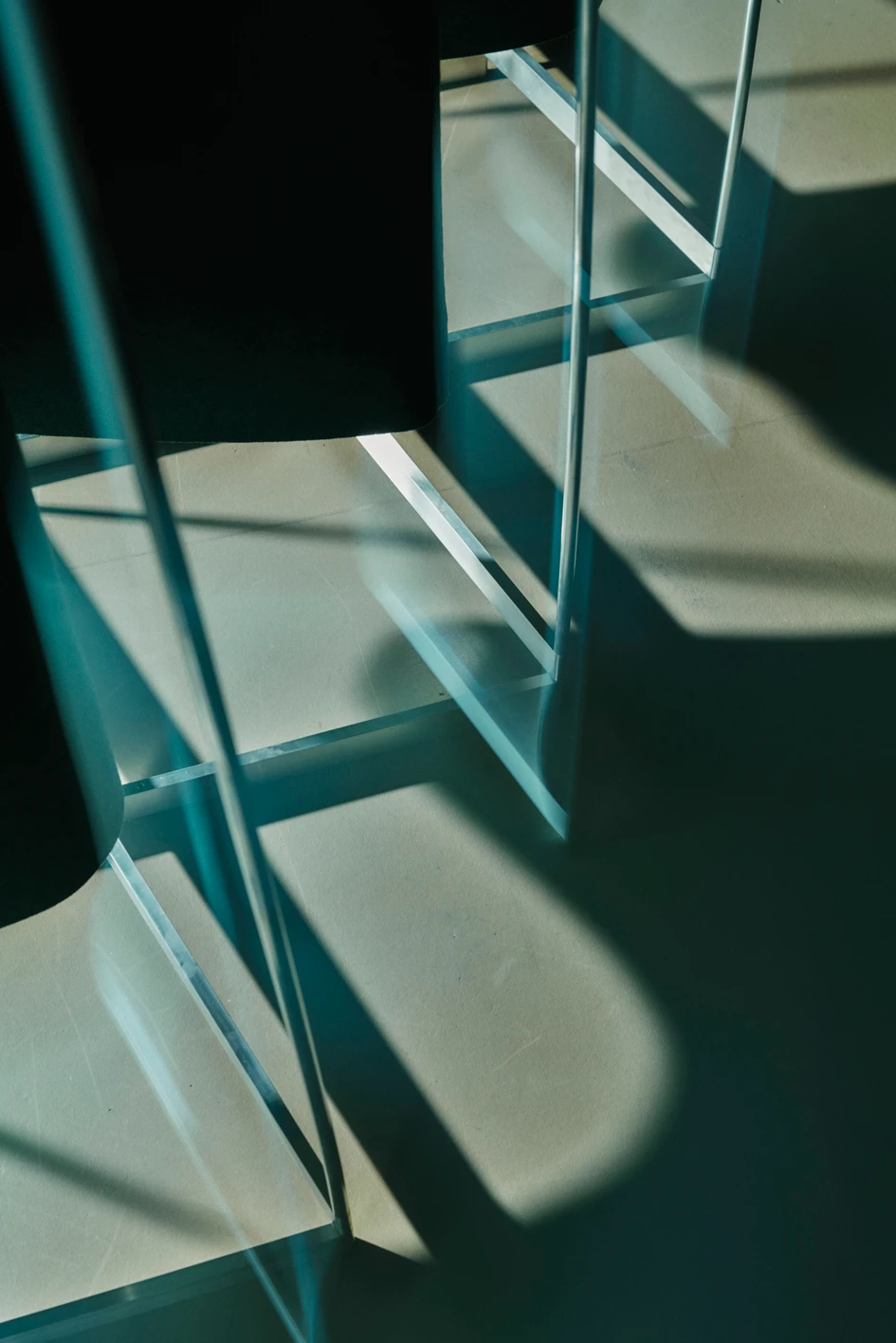
For Aebi, atelier oï’s extensive ‘savoir-faire’, its deep know-how that combines a solid understanding of engineering with an extreme fascination with materials and craftsmanship, is what underpins foild’s success. 'We think with our hands,' he says, emphasising the intense, iterative process of physical prototyping and refinement that goes into the studio’s approach to product development.
Galería de proyectos


