Gloriously Glossy
Given the huge vogue for cladding buildings in ceramic tiles, we shouldn’t be surprised to hear that they are now fast infiltrating interiors too. It’s not hard to see why. People find glazed ceramic tiles appealing because of their seductive qualities – their lusciously lustrous surfaces and, if patterned, their potential for being stunningly decorative.

septiembre 22, 2014 | 10:00 pm CUT
‘They’re available in so many beautiful colours and finishes and are extremely functional as they’re durable and can be wiped clean,’ says London-based designer Giles Miller, who decorates interiors with tiles in very innovative ways. ‘As such, ceramic tiles are very appealing to both designers and their clients.’ They’re also relatively sustainable since they’re made out of water and biodegradable clay. If in the past they were usually double-fired, today they are often single-fired, a more eco-manufacturing method.
Miller is just one of a growing number of designers who are rediscovering ceramic tiles and celebrating their colourful, graphic qualities. Others include UK-based designers Afroditi Krassa, Ptolemy Mann and David David. The last two have collaborated with the British firm Johnson Tiles: Mann created a tiled mural exhibited at London’s Clerkenwell Design Week last May, and David David designed two murals, inspired by geometric patterns found on Islamic tiles, that were displayed at the Victoria and Albert Museum during the recent London Design Festival. Krassa has just launched her collection of Art Deco-inspired Piano Tiles with black and white stripes in various widths. Although these tiles aren’t ceramic – they’re made using encaustic cement – they’re another sign of the burgeoning vogue for tiles in interiors.
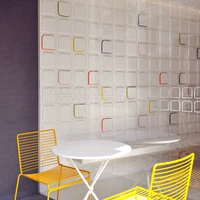
Also on show during the London Design Festival, at the fair 100% Design, was Philippe Starck’s Flexible Architecture collection of ceramic tiles for Capitol Designer Studio, manufactured by Ceramica Sant’Agostino. These can be fixed to floors and walls to create a more homogeneous, all-enveloping surface, and come in punchy hues like sunshine yellow and tangerine and so lend themselves well to bold colour-blocking. The tiles incorporate extended, roughly textured edges (in a matching colour), which resemble grouting and so make a feature of it – a witty touch.
Designers are also drawn to ceramic tiles for their links with the past and with ancient craft traditions, which inevitably endow them with romantic qualities. Arguably, such qualities appeal as an antidote to the technology increasingly dominating our lives. Glazed bricks have existed since circa 575 BC and began to be popular in Persia in the 10th century AD. This was due partly to the fact that, being small and modular, tiles weren’t confined to flat areas and could adorn domes on mosques. During the Baroque era, which began in the 1600s, tiles were widely adopted in Spain and Portugal (where they are known as azulejos). At around the same time, Delftware tiles were becoming popular in the Netherlands; these tiles often depicted mythological beasts, giving them a whimsical quality. So, too, did those of the 19th-century Arts and Crafts movement, which were also inspired by Islamic designs.
One contemporary architect who has embraced tiles for their historical associations is Rem Koolhaas of OMA, whose fȇted Casa da Musica concert hall of 2005 in Porto incorporates hand-painted blue tiles that salute Portugal’s craft traditions. The tiles are also used to acknowledge the context of the building.
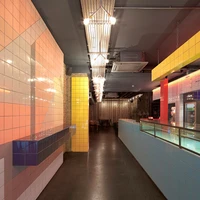
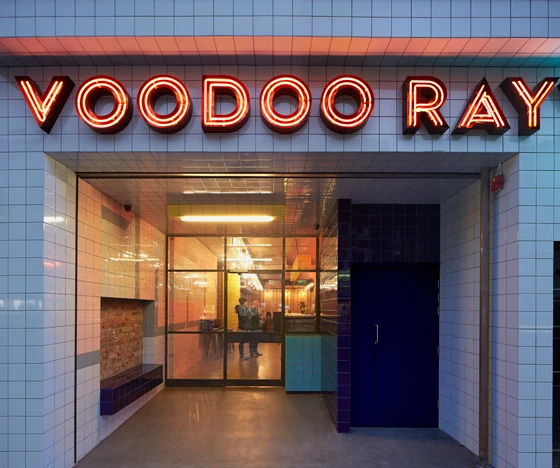
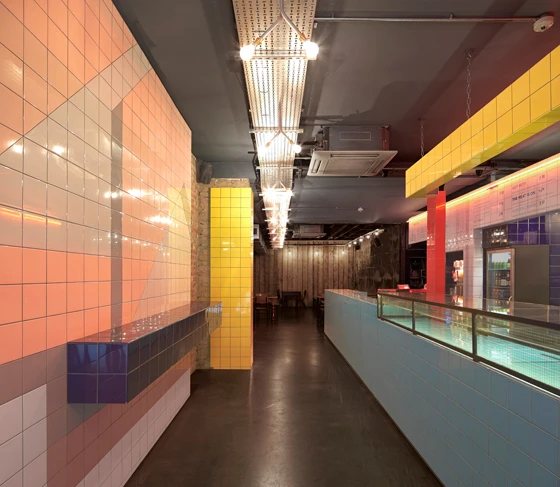
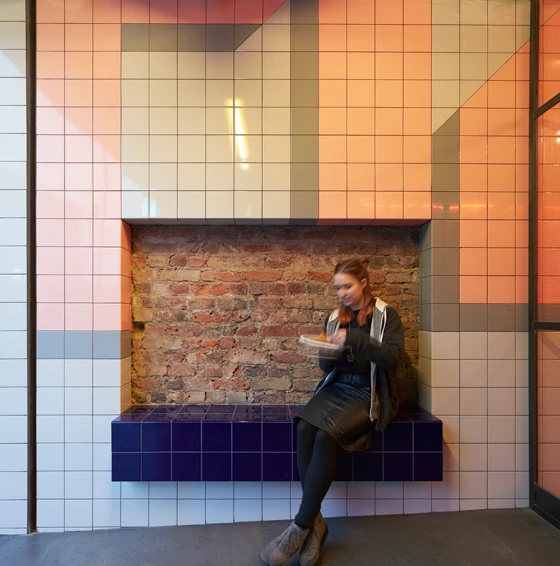
A more recent project, Voodoo Ray’s pizza bar in London’s hip Dalston area, designed by Gundry & Ducker, is boldly clad, inside and out, in square tiles in primaries and pastels. Tiles also cover ledges, on which plates can be placed, as well as a bench. ‘Our references include graphics from New York and East London of the 1950s and 1980s,’ say the architects. In fact, the pizza bar’s aesthetic channels the current, ultra-fashionable revival of the 1980s Memphis design movement, which took inspiration from 1950s American diners and their kitsch, candy-bright Formica furniture. Voodoo Ray’s demonstrates that today’s tiles have associations not only with age-old cultures, but also with the styles of more recent eras – in this case, 20th-century pop and postmodernism.
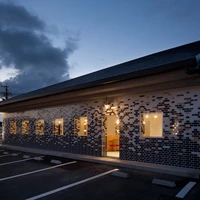
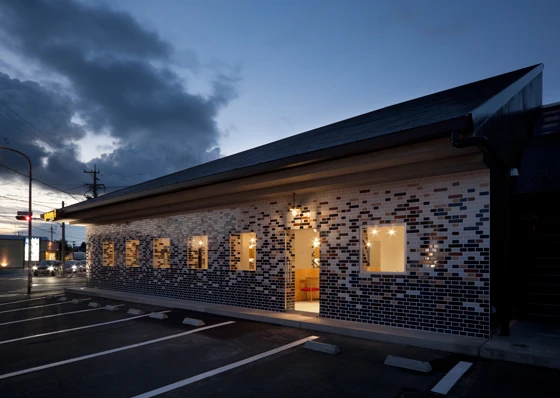
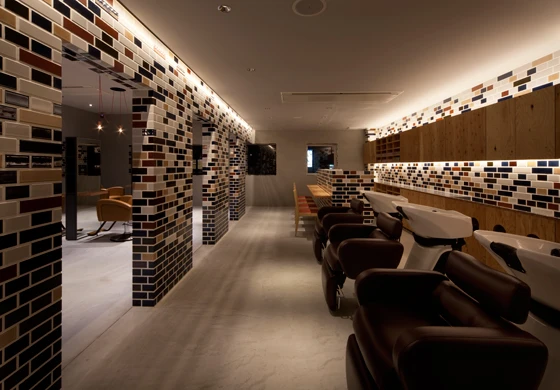
Similarly, architect Hiroyuki Miyake has covered both the exterior and interior of the striking Granny F beauty salon in Toyokawa, Japan, with tiles. Yet, compared with Voodoo Ray’s vibrant design, Granny F’s brick-like patterns come in a soothing, neutral palette of chocolate, terracotta and beige, as befits an environment where customers want to feel pampered.
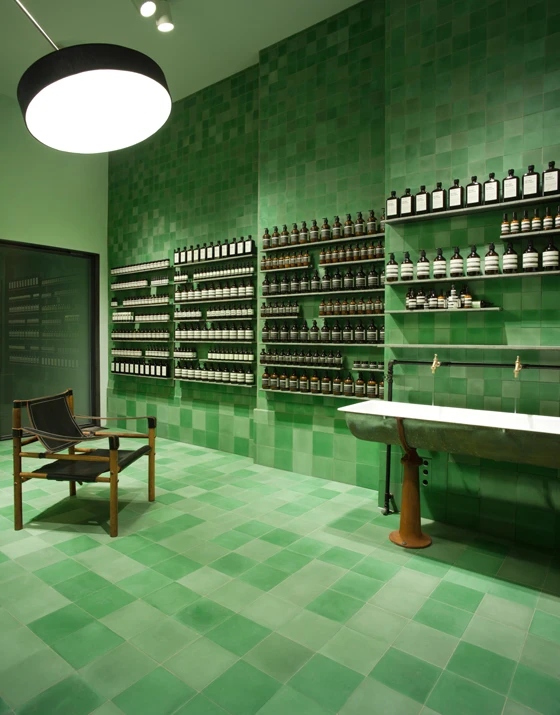
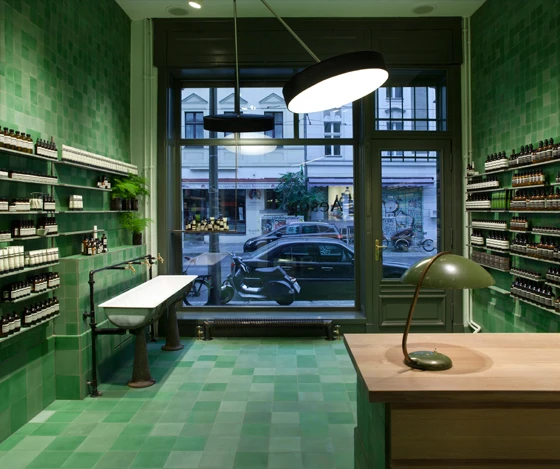
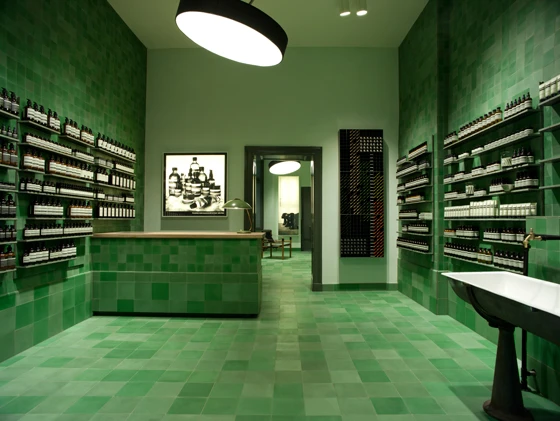
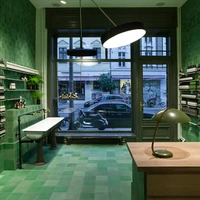
Tiles in another soothing hue – fern green – grace two shops recently opened by Australian skincare brand Aesop in Berlin and London’s Covent Garden, and designed by German practice Weiss-heiten and French studio Ciguë respectively. In the Berlin store, the tiles clad walls, floors and other areas, creating a surface that looks homogeneous and an environment that feels immersive – almost as if you’ve dived into a lagoon. In both shops, the tiles are intended to have a 20th-century retro charm, reinforced by the addition of 1920s exposed, copper plumbing or reclaimed 1950s sinks. The latter (in the Berlin store) was incorporated as a nod to the building’s former incarnation: a dairy.
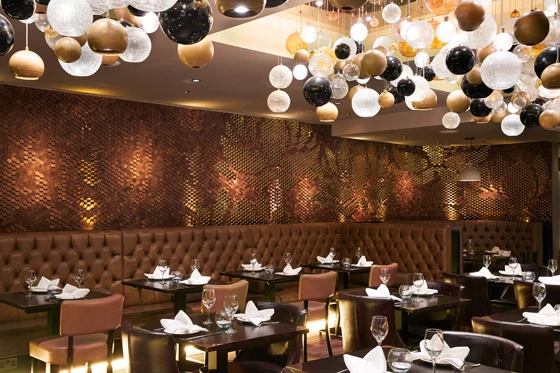
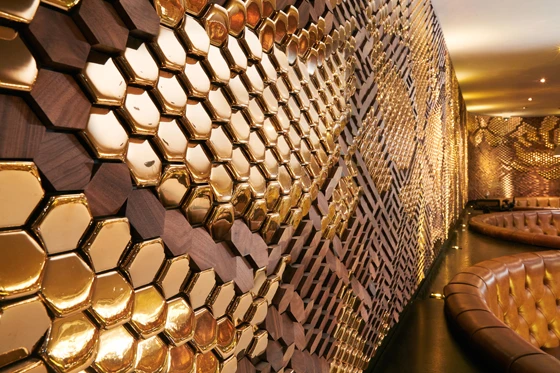
At the Sukhothai restaurant in Leeds, Giles Miller has covered three of its walls with tiles to create a similarly immersive setting. His treatment is more flamboyant and unconventional than that of the Aesop shops, however: he has created a 3D, sculptural design that combines hexagonal, high-gloss gold tiles with matt ones made of walnut, arranged at different angles. This results in contrasting areas of light and shade, used here to depict huge lotus flowers.
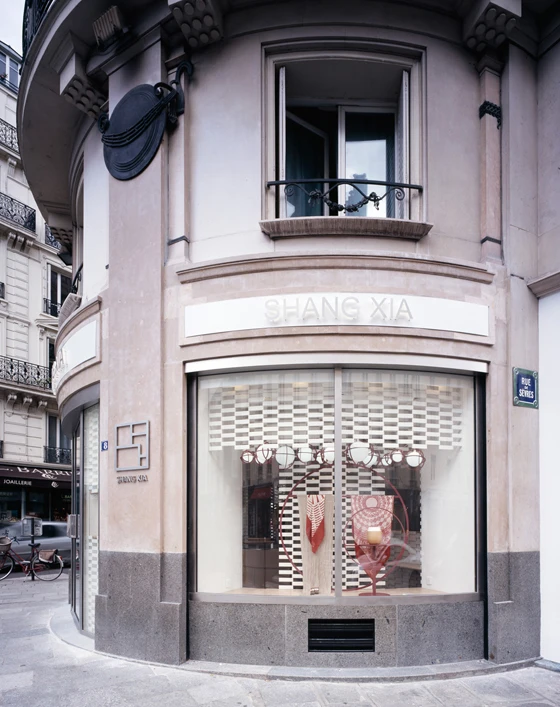
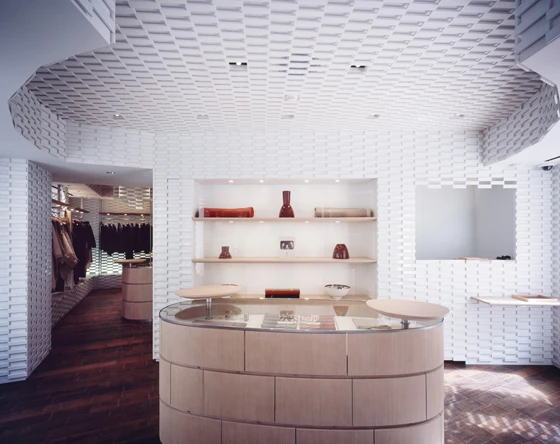
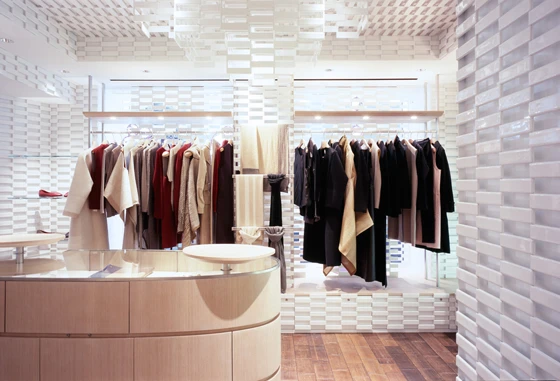
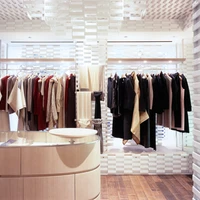
Tiles have been deployed in a completely different way in Kengo Kuma & Associates’ chic Paris boutique for Chinese lifestyle brand Shang Xia. Here, extra-thin, glossy white tiles have been exploited for their translucency. The tiles are arranged in a brickwork, bas-relief pattern. Lining the inside of the shop’s walls and ceiling, they reflect light, creating a luminous, ethereal environment. Meanwhile, tiles form screens in the windows, and gaps between the tiles and their semi-transparent ceramic material draw more light into the shop.
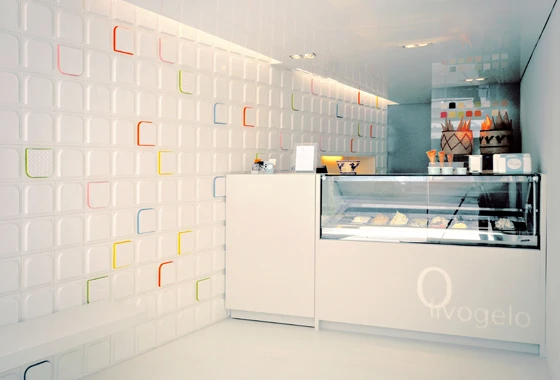
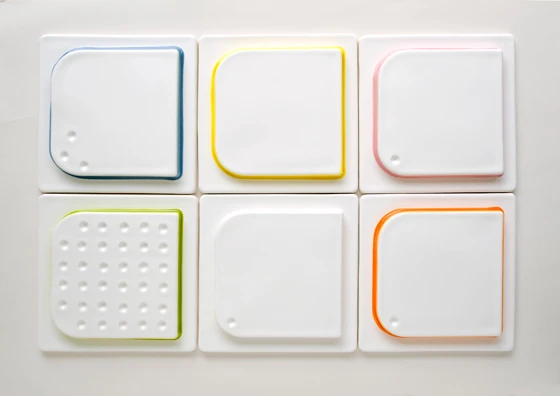
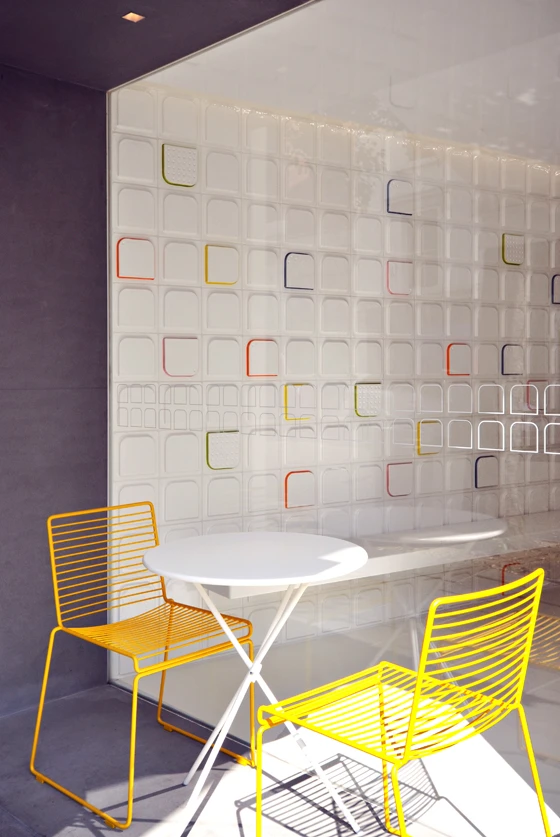
Bespoke white tiles edged with mouth-watering pastels at London ice-cream parlour Olivogelo also create an airy interior. Andy Martin Architects designed the gelateria, while the tiles were hand-glazed by seasoned ceramicist Lubna Chowdhary. ‘Andy Martin Architects wanted the tiles to complement Olivogelo’s artesan ice creams. I worked closely with the team to develop glazes representing some of their flavours: blueberry, lime, lemon …’ says Chowdhary. ‘The glazes had to simulate melting ice cream, while the tiles’ round edges are based on the spoons fixed to the lids of ice-cream tubs.’
In short, tiles offer designers plenty of opportunities to experiment – as the upcoming Italian tile and bathroom fittings exhibition Cersaie (held in Bologna from 22 to 26 September) is bound to demonstrate. And with the versatile tile now in huge demand, the timing for this fair couldn’t be better.
Galería de proyectos