Compartir
Imprimir

Compartir
Imprimir
Este producto está descontinuado y ya no está disponible. Para obtener información de mantenimiento o más detalles, por favor
1140
Architonic ID: 20200833
Año de Lanzamiento: 2021
220 x 100 cm
Concepto
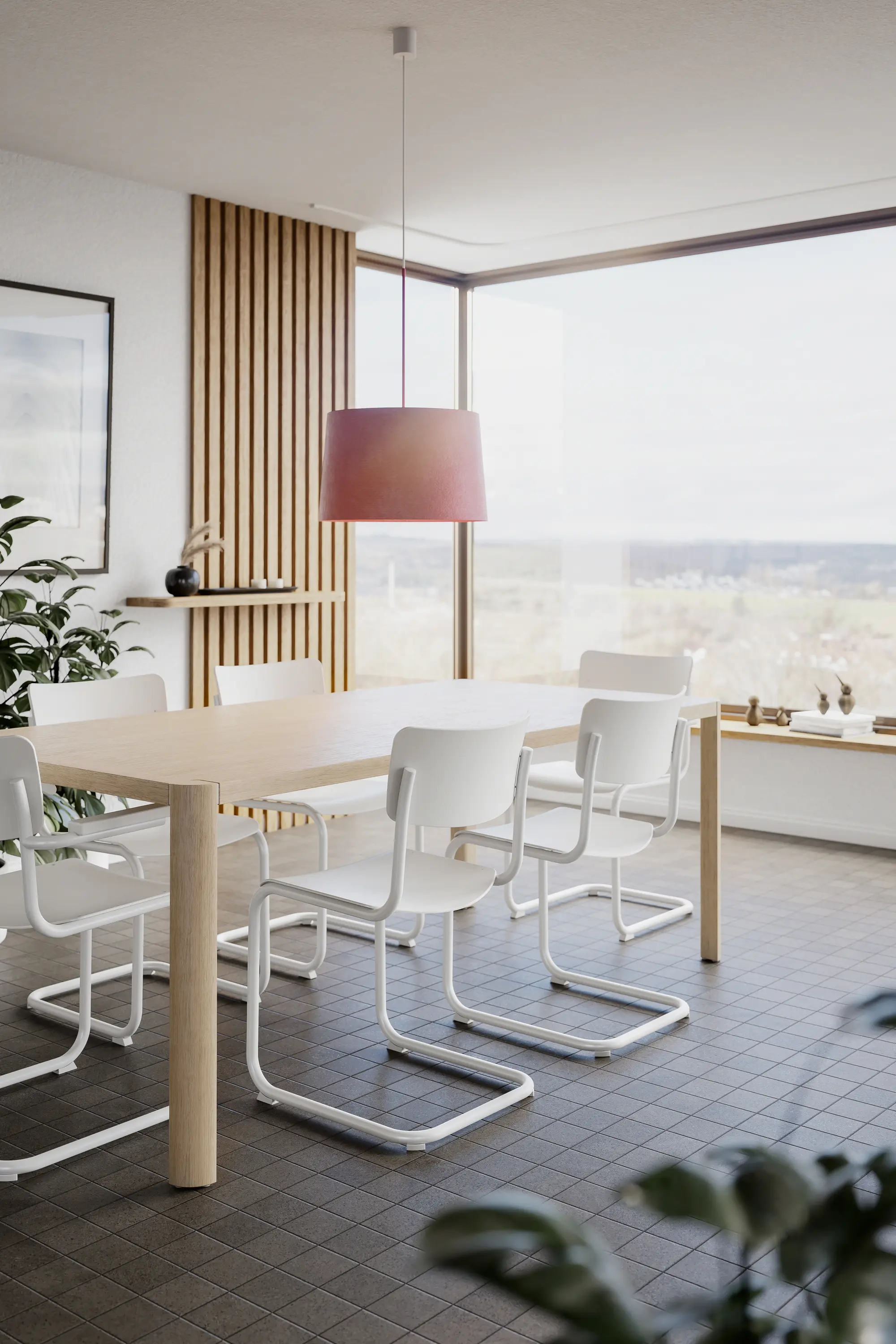
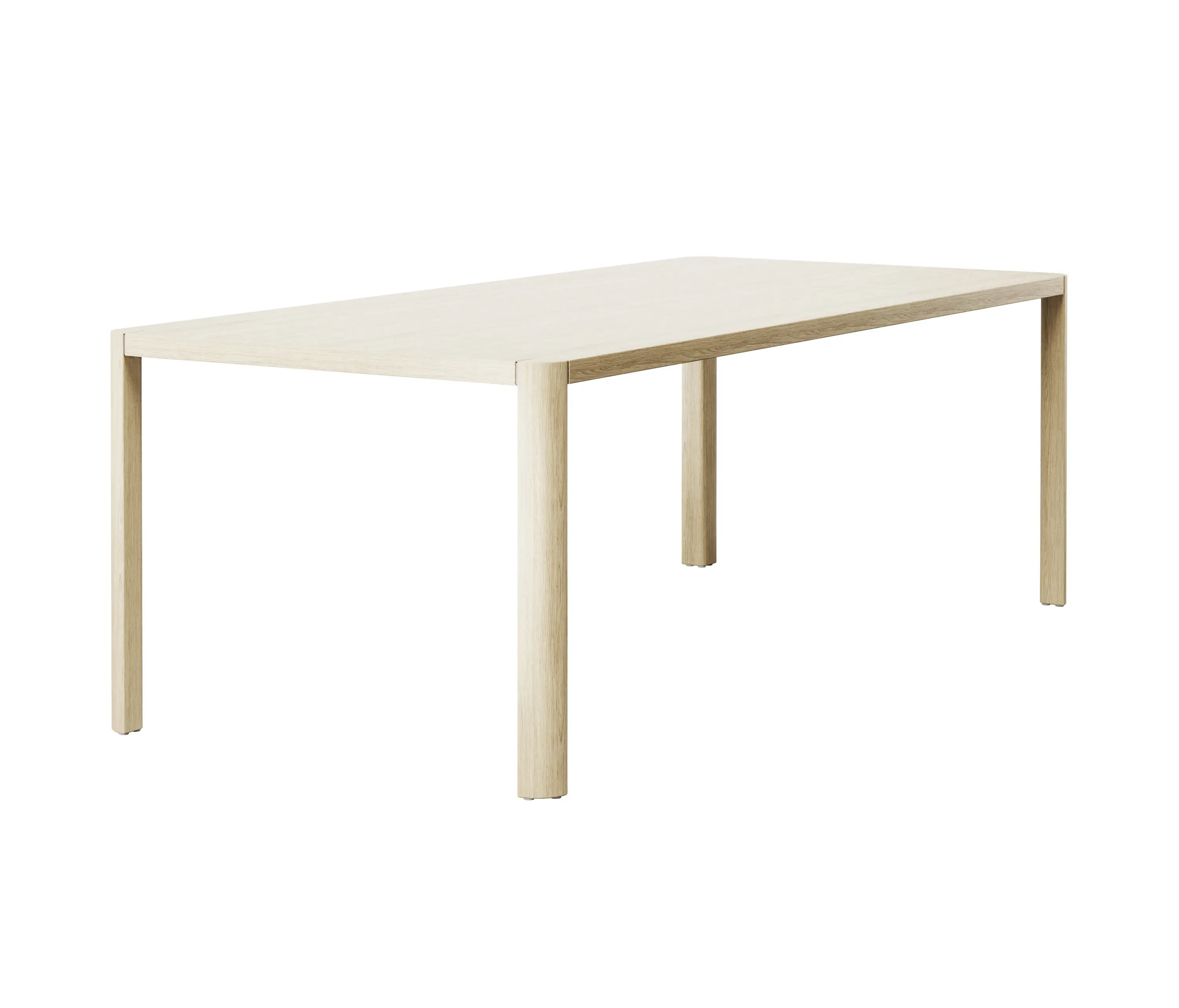
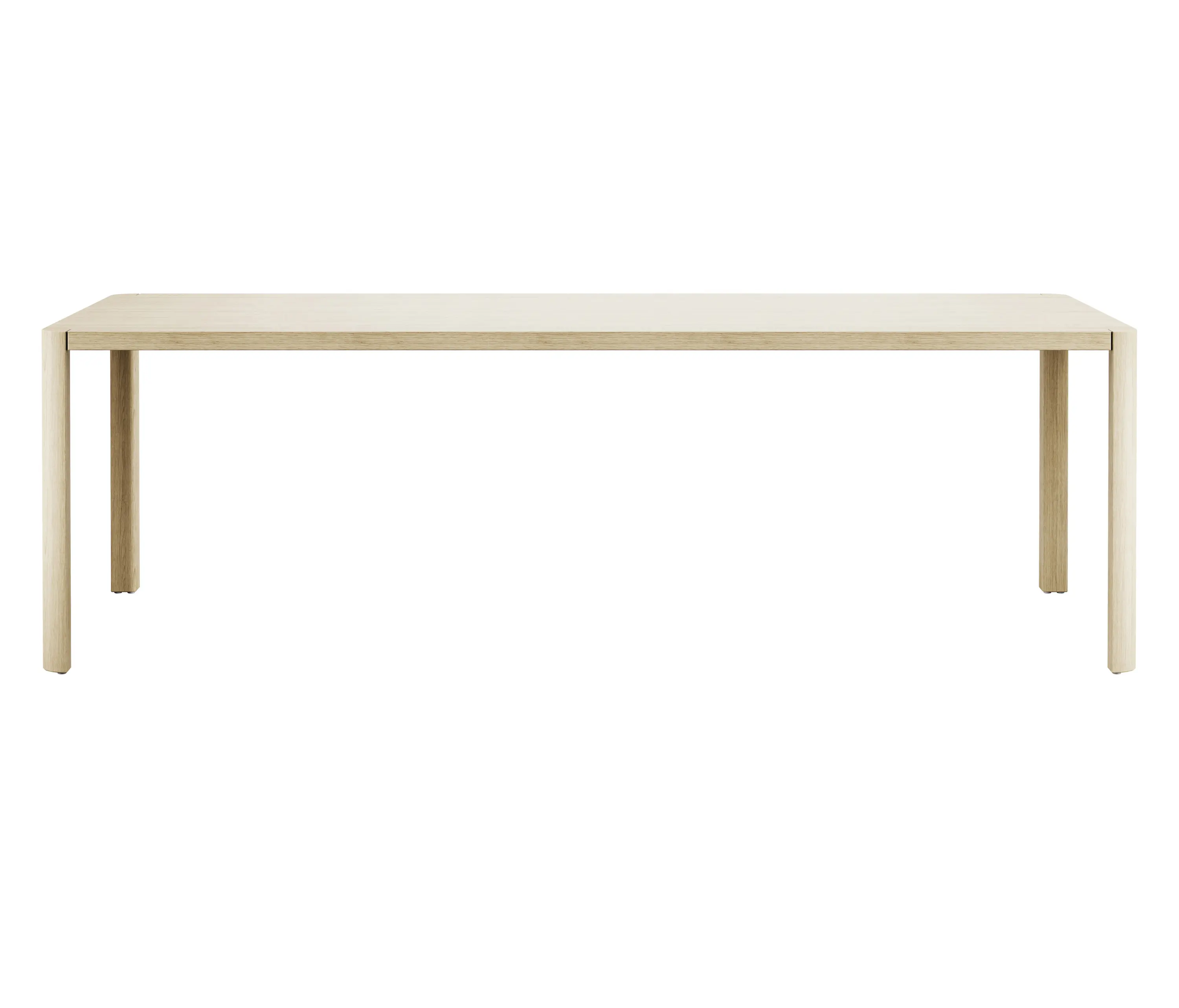
Maciza a la par que ligera; sobria, pero con presencia: la mesa 1140 de Thonet, diseñada por Werner Aisslinger como «community hub» (lugar de reunión comunitario), se caracteriza por su funcionalidad, versatilidad y elegante simplicidad. Sus elementos distintivos son las patas de roble macizo, redondeadas en su parte exterior formando un cuarto de círculo, y los elementos de conexión inteligentes, discretamente ubicados en las esquinas del tablero. Con ello, el tablero da la sensación de estar flotando. Gracias a este ingenioso diseño, debajo de esta mesa sumamente resistente y estable incluso se pueden colocar sillas con apoyabrazos. Además de valor estético, la parte exterior redondeada de las patas de la mesa aporta dos ventajas evidentes: si los ocupantes tienen que sentarse muy juntos, no se chocan con ninguna arista y, si se necesita una configuración más grande con cuatro o más mesas, se pueden pasar cables por debajo desde el centro. Al usar menos materiales y utilizar madera con certificación, la mesa también destaca en lo que a sostenibilidad se refiere. La 1140 es una mesa absolutamente versátil que puede utilizarse para comer o trabajar tanto en el entorno privado como en el profesional, desde el contexto del Nuevo Trabajo y los espacios de «coworking» hasta hoteles, restaurantes, bibliotecas y salas de conferencias.
Este producto pertenece a la colección:
Base madera maciza, Roble, Tablero madera maciza, Madera

Germany
Profile The works of the designer Werner Aisslinger born 1964 cover the spectrum of experimental, artistic approaches, including industrial design and architecture. He delights in making use of the latest technologies and has helped introduce new materials and techniques to the world of product design like in his unique gel furniture with the collection“soft cell“ and the chaise „soft“ for zanotta in 2000. The "Juli chair (cappellini)" was the first item of furniture to use a new type of foam called "polyurethane integral foam" and became the first German chair design to be selected as a permanent exhibit at the MoMA in New York since 1964. In the process he has created striking designs and received awards from all over the world - from Milan's Compasso d'Oro to the Design Prize of the Federal Republic of Germany, the Red Dot Award or FX Award in the UK. Werner Aisslinger´s „loftcube“–project became one of the most discussed modular and transportable housing projects within the last years. His work is exhibited in the permanent collections of international museums such as the Museum of Modern Art (MoMA) and the Metropolitan Museum in New York, the French Fonds National d´Art Contemporain in Paris, the Museum Neue Sammlung in Munich, and the Vitra Design Museum in Weil, Germany. Werner Aisslinger lives and works in Berlin. Biography Werner Aisslinger, Designer / Interior Architect born 1964 in Nördlingen (Germany) 1986/87 University LMU Munich: history of arts and Science of Communication 1987-1992 Designstudent at University of fine Arts Berlin, Diploma 1989-1992 Freelancer at Jasper Morrison and Ron Arad, London and Studio de Lucchi in Milan 1993 Founding »studio aisslinger« in Berlin 1994-1997 Teaching at UdK Berlin and Lahti Design Institute, Finnland 1998-2005 Professor for Produktdesign at Staatlichen Hochschule für Gestaltung, Karlsruhe-Germany 2003 Founding Member of Association Transform-Berlin e.V. the Institution of the „Designmai“-Festival in Berlin 2006 projectmanager of Designlabor Bremerhafen, Germany since 2006 permanent Curator of Raymond Loewy Foundation as well as the Jury of the Lucky Strike Design Award. 2008-2009 Professor for Design at the Staatliche Hochschule für Gestaltung, Karlsruhe

