Compartir
Imprimir

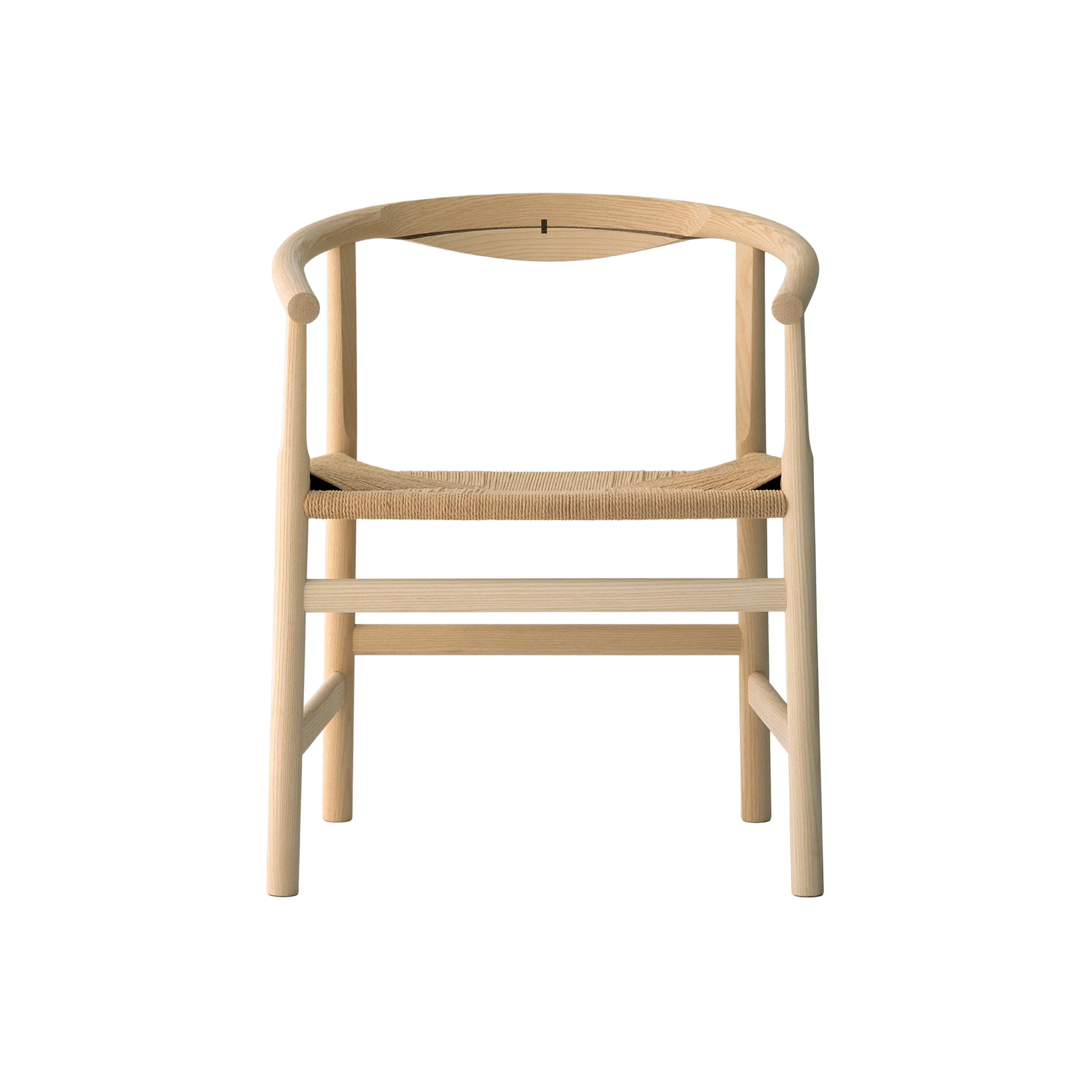
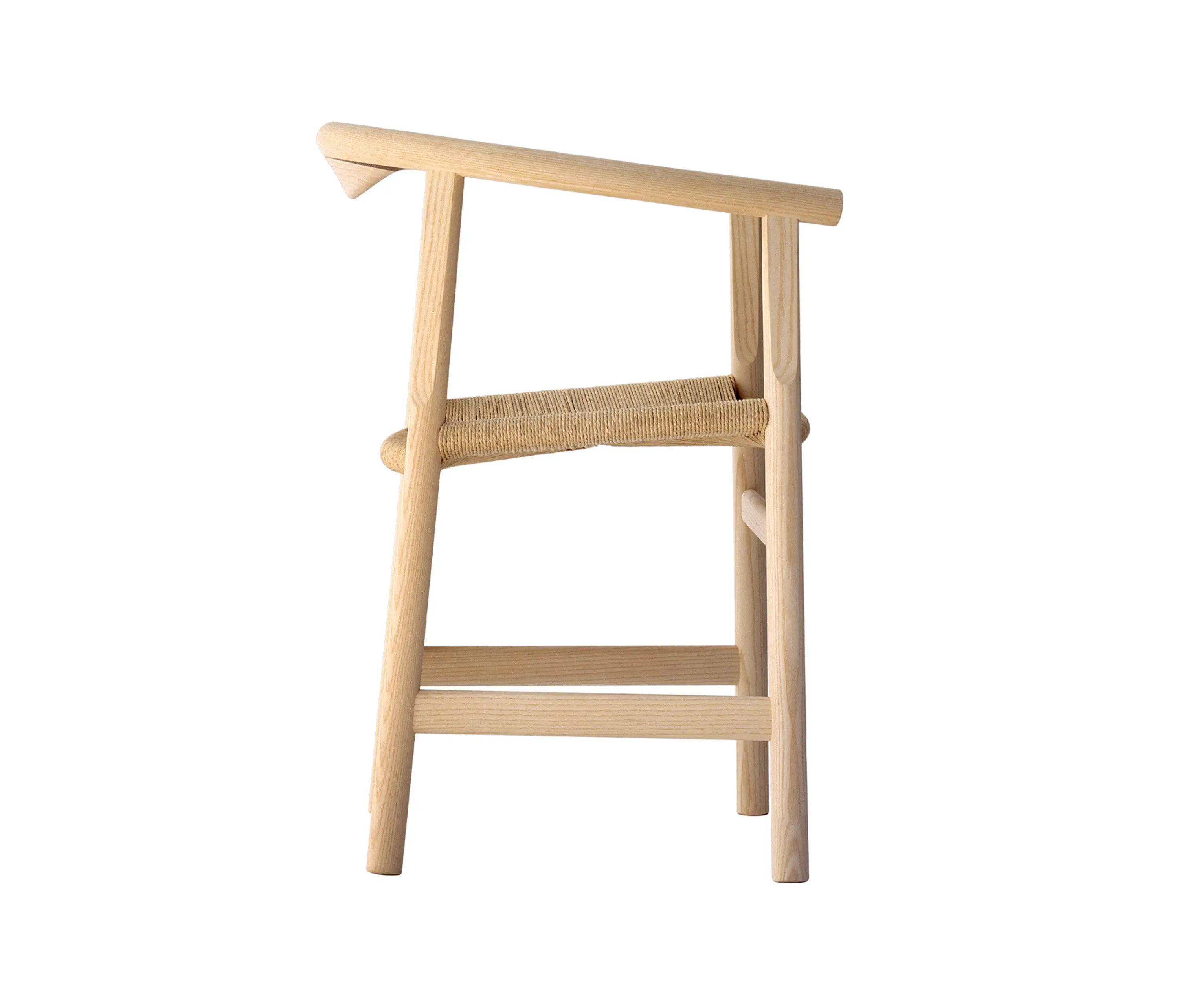


Architonic ID: 1002893
Año de Lanzamiento: 1969
Revising the old Chinese Chair, the pp201 First Chair combines the aesthetics of the pp701 Minimal Chair with the construction of the pp66 Chinese Chair thus creating a new expression, where the strict geometrically defined frame supports only the most prudent use of those organic shapes so characteristic of Wegner’s work through the 1950’s.
The First Chair marks one of the most important milestones in the lifelong close partnership between Hans J. Wegner and PP Møbler. Until 1969, PP Møbler had been more of a free space for Wegner rather than a business partner. Although PP Møbler had produced thousands of frames for the Papa Bear Chair, Wegner’s relation to PP Møbler was primarily based on his friendship with the PP family and craftsmen.
Available in oak and ash.
Papercord seat.
Joint details: Wengé.
Concepto
At the end of the 60ies, Wegner designed two prototypes, which were further developed by PP Møbler. Wegner offered the workshop to produce the prototypes if they were interested. Nevertheless, Master of Crafts Ejnar Pedersen was most fond of one of the chairs due to its back and legs. Consequently, this chair, PP 203 went into production in 1969 while the other chair went to Getama. PP 203 was the first full step in the long cooperation between PP Møbler and Wegner.
The design points in several directions. The under-frame is almost identical with that of Wegner's so-called 'Chinese Chairs' while the minimal back points to 'The Chair' and other characteristic Wegner designs.
Este producto pertenece a la colección:
Base madera maciza, Asiento madera contrachapada, Asiento tejido, Madera

Denmark
Hans J Wegner was one of the world's most famous furniture designers in the 20th century, and one of the driving forces behind the rise and influence of Danish design. The Life of Hans J Wegner Hans J Wegner was born on 2 April, 1914, in Tønder, Denmark. His talent for wood carving was recognised early on, during his apprenticeship as a carpenter. He went on to study design and also architecture at what would later become the Royal Danish Academy of Fine Arts in Copenhagen, where he taught furniture design between 1946 and 1953. In 1940, he initiated a project to fit out the Town Hall of Aarhus, together with fellow architects Erik Moller and Arne Jacobsen. That same year, Wegner began collaborating with the master cabinetmaker Johannes Hansen. The Danish Museum of Art & Design first bought one of Wegner’s chairs in 1942; but his most popular chair was the 1949 Wishbone Chair which has been produced since 1950 by Carl Hansen & Son. In 1982, Hans J Wegner won the CF Hansen Medal for architecture, the highest award for the discipline in Denmark; and in 1997 he won the 8th International Design Award in Osaka. He was also awarded with an honorary doctorate from the Royal College of Art in London in 1997. Hans J Wegner’s design approach Hans J Wegner was one of the most creative and productive furniture designers of his time. He designed numerous chairs, living-room furniture, dining tables and other home furnishings. He was best known for his chairs however; and following his motto ‘a chair is a chair only if someone sits on it’, Wegner united form and function with his chairs, and brought Scandinavian design to the fore. Wegner was concerned not only with the appearance of a chair, but with its function – to support the human body. Hans J Wegner's creativity and his extraordinary sense for sculptural expression made him the pioneer of Danish modernism. His approach to minimalism was inspired by the material properties of wood, and the sculptural, organic forms found in nature. For Wegner, the experience of a chair was not limited to the merely visual; it should be an artwork that appeals to all the senses, touch included. Hans J Wegner’s CH24 Wishbone Chair The CH24 Wishbone Chair, also known as the Y-Chair, is one of Hans J Wegner’s most successful designs. He created it for Carl Hansen & Son, who have produced it since the 1950s, as part of a series of chairs inspired by antique Chinese armchairs. The characteristic element that gives the chair its name is a Y-shaped, clavicle-like element supporting the backrest. The ergonomic design and strong, structural form of the Wishbone Chair have made it a design classic, and the chair became world famous when, in 1961, it was used during a TV debate between John F Kennedy and Richard Nixon. The CH25 Lounge Chair: a Danish design icon The CH25 Lounge Chair was one of the first chairs designed by Wegner for furniture manufacturer Carl Hansen & Son. The sloping rear legs give the CH25 Chair its characteristic appearance: restrained and yet structurally dynamic at the same time. The CH25 Lounge Chair was designed to be relaxing, while offering enough support so that the occupant would not fall asleep. Its strong form, and sculptural use of wood, is similar to that of the Wishbone Chair. © by Architonic


