Compartir
Imprimir

Compartir
Imprimir
Este producto está descontinuado y ya no está disponible. Para obtener información de mantenimiento o más detalles, por favor
Architonic ID: 1377637
Año de Lanzamiento: 2016
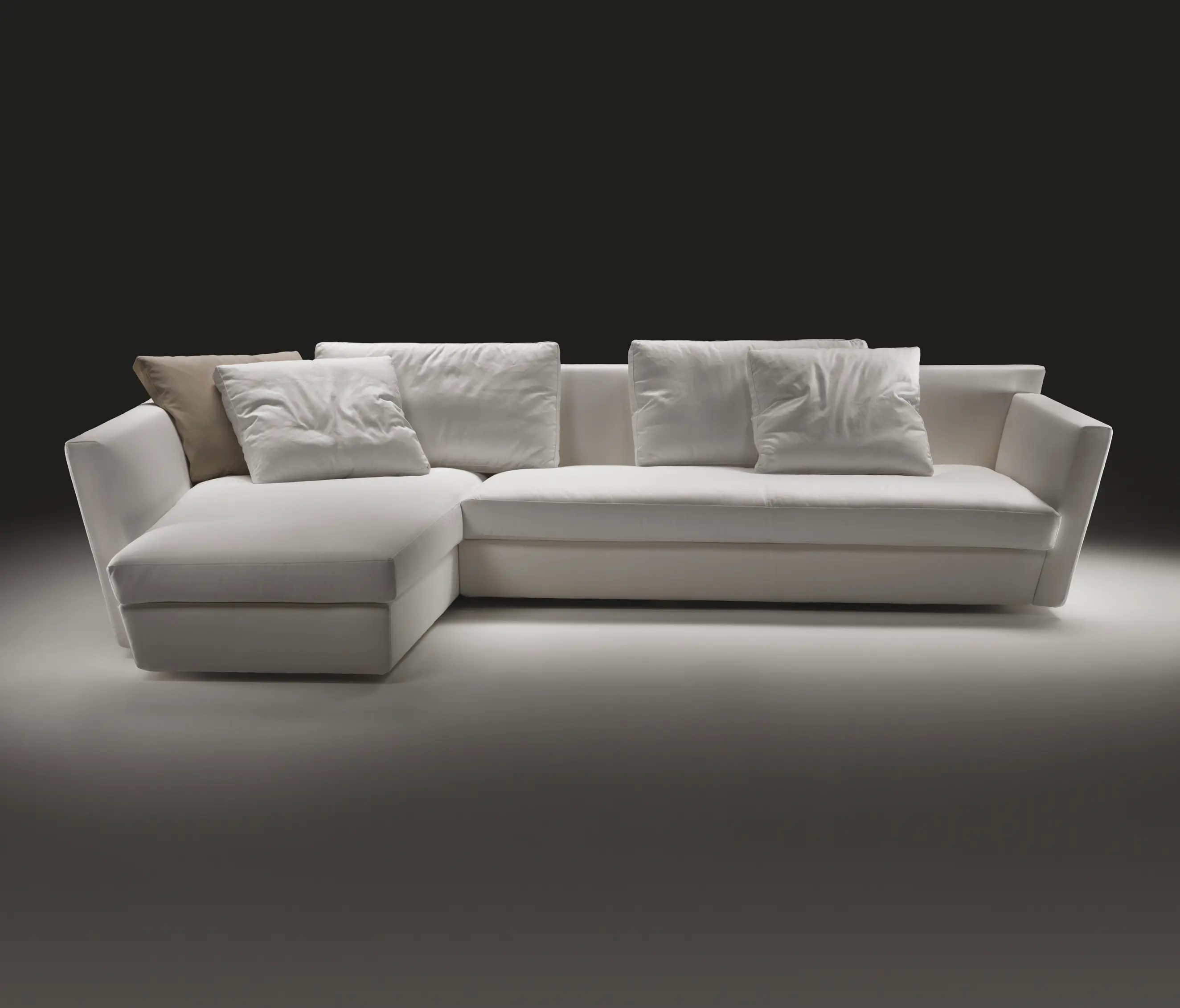
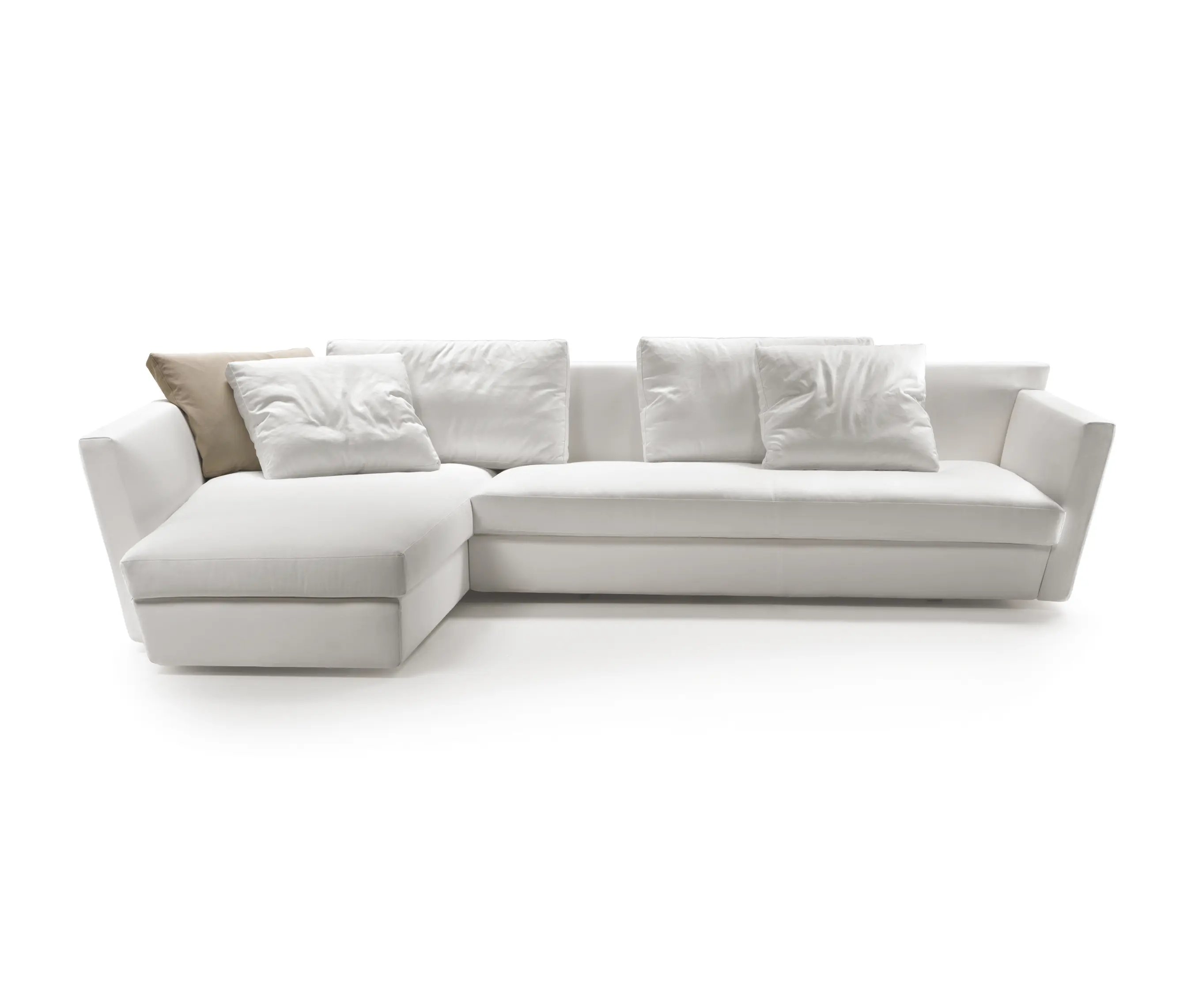
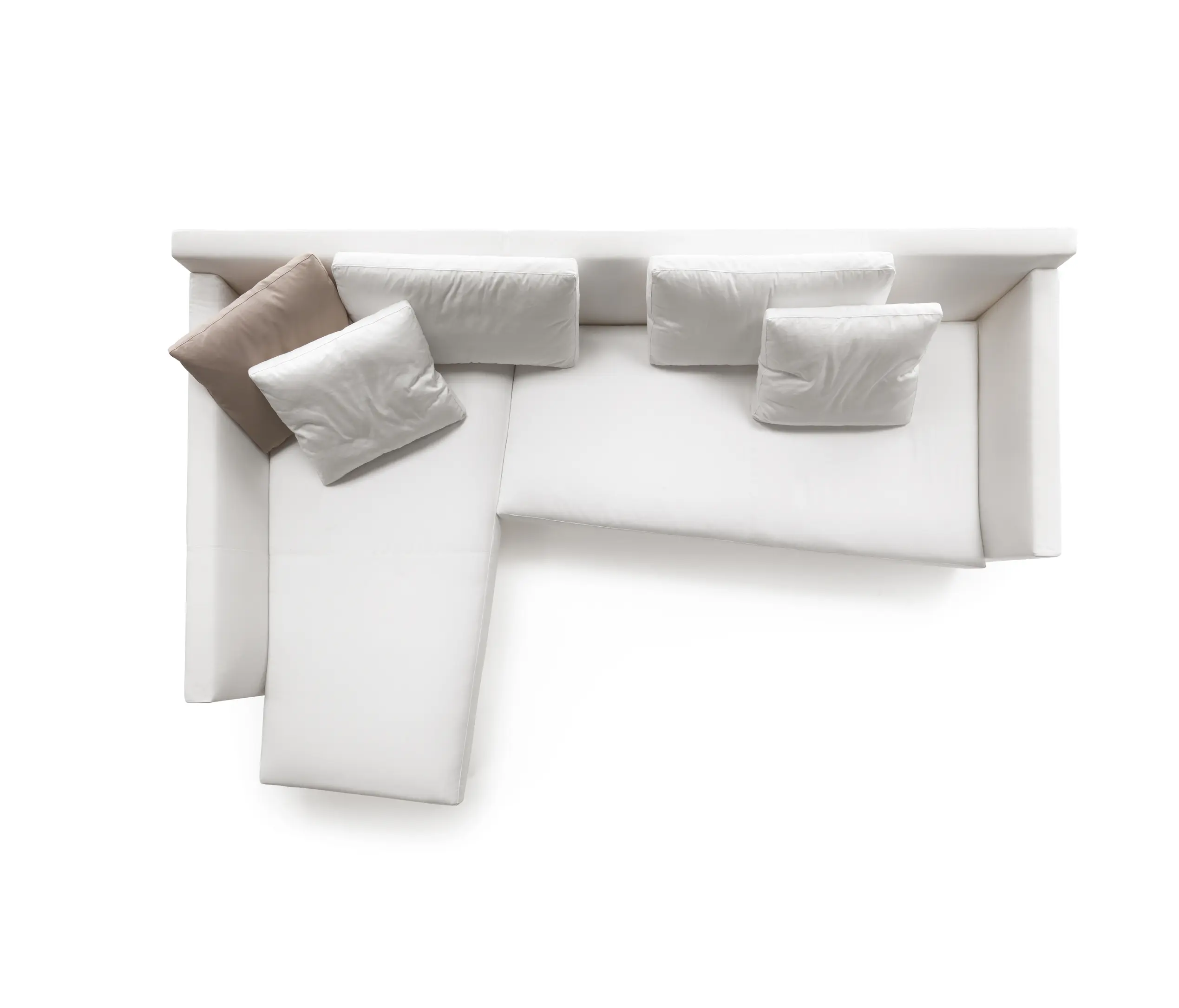
A project with a dynamic, deconstructed design, like the works of architecture of the visionary American talent. A component sofa, visually light, the result of the composition of specific volumes where Euclidean geometry is cast aside. The upholstered back is high and inclined, while the single soft cushion is trapezoidal in form, combined with a chaise longue element that also has an asymmetrical form. The armrests are padded or in painted metal. Unusual angles and thicknesses, with no orthogonal joints, because the harmony comes from the balanced composition of the volumes.
The ADAGIO Sofa brings together a synergy of architectural form and everyday comfort. ADAGIO means slow or at ease. The canted arms and back re-imagine the rigid structure of a traditional sofa creating more comfortable movement and a dynamic form. The materials and colors are inspired by classic Italian design.
“The design celebrates the subtle details of the everyday form and the excellence of Italian craftsmanship,” said architect and designer Daniel Libeskind.
The fertile collaboration between the designer and the company has generated a product that perfectly combines the architect’s philosophy of forceful, iconic forms with the idea of sober elegance that is an integral part of the company’s identity. The result is a product that emphasizes and reinforces the idea of comfort, introducing unusual new aesthetic codes.
frame in wood with polyurethane padding covered with a protective fabric lining
seat cushions in polyurethane and dacron back
cushions down-filled and polyester fibre
throw pillows down-filled (on request with upcharge)
feet in polished pvc
ottoman base in metal
upholstery removable fabric or leather covers
Este producto pertenece a la colección:
Base a ras de suelo
De tres plazas, Configuraciones angulares
Modulares, Asiento y respaldo tapizados, Con apoyabrazos
Residencial

United States
Studio Libeskind is an international architecture practice headquartered in New York City. The Studio is involved in designing and realizing a diverse array of urban, cultural and commercial projects internationally. The Studio has completed buildings that range from museums and concert halls to convention centers, university buildings, hotels, shopping centers and residential towers. Daniel and his partner Nina Libeskind established Studio Daniel Libeskind in Berlin, Germany, in 1989 after winning the competition to build the Jewish Museum Berlin. In February 2003, Studio Daniel Libeskind moved its headquarters from Berlin to New York City when Studio Libeskind was selected as the master planner for the World Trade Center redevelopment. Biography Daniel Libeskind Mr. Libeskind has taught and lectured at many universities worldwide. He has held such positions as the Frank O. Gehry Chair at the University of Toronto, Professor at the Hochschule für Gestaltung, Karlsruhe, Germany, the Cret Chair at the University of Pennsylvania, and the Louis Kahn Chair at Yale University. He has received numerous awards including the 2001 Hiroshima Art Prize — an award given to an artist whose work promotes international understanding and peace, never before given to an architect. Born in post-war Poland, Daniel Libeskind immigrated to America with his family becoming an American citizen in 1964. A virtuoso musician at a young age, he gave up music to study architecture. Mr. Libeskind holds a degree in Architecture from the Cooper Union for the Advancement of Science and Art in New York City and a postgraduate degree in the History and Theory of Architecture from the School of Comparative Studies at Essex University in England. Mr. Libeskind lives in New York with his wife and business partner Nina Libeskind.
