Compartir
Imprimir


Modus Basic 263/7
Architonic ID: 1040398
SKU: 263/7
Año de Lanzamiento: 1995
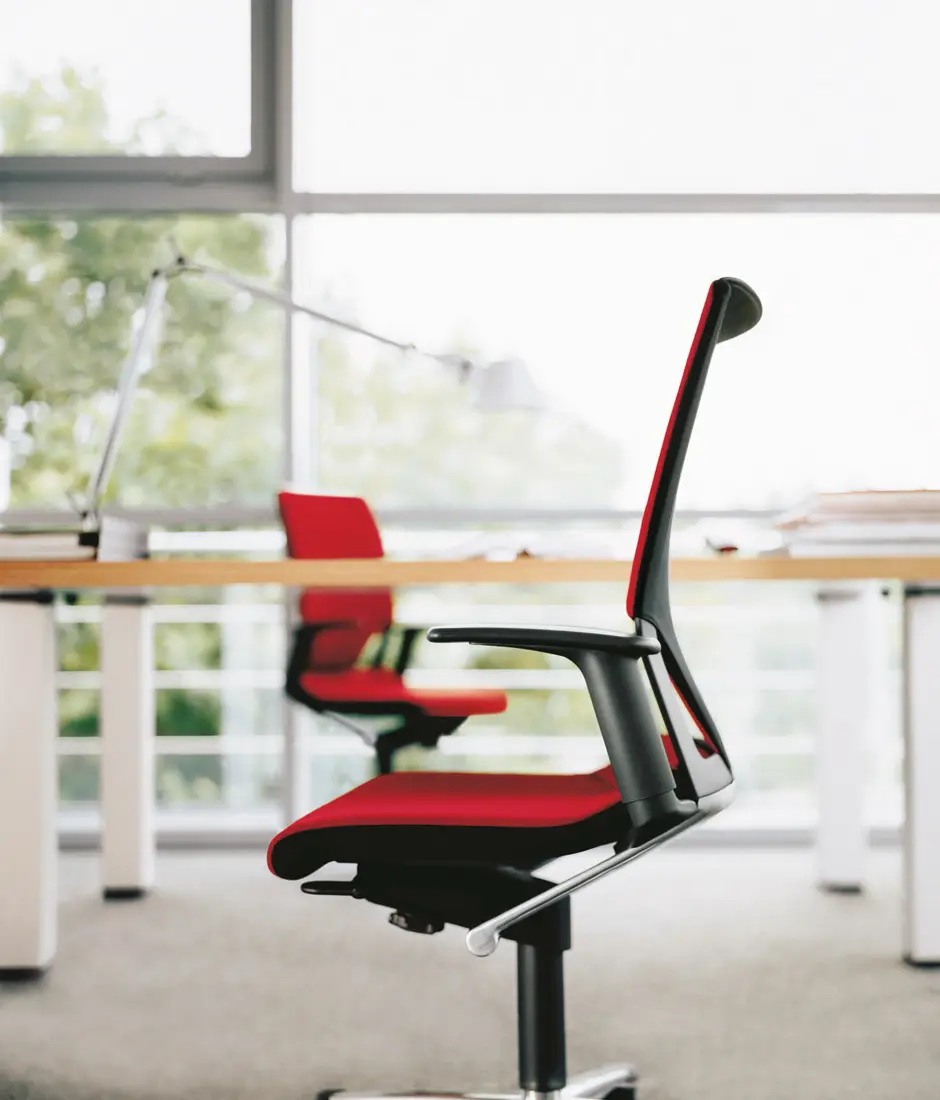
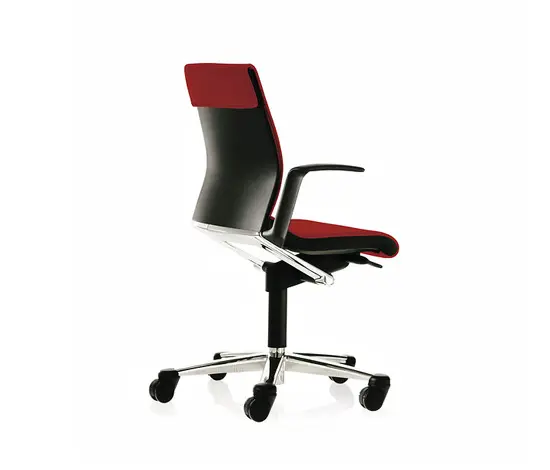
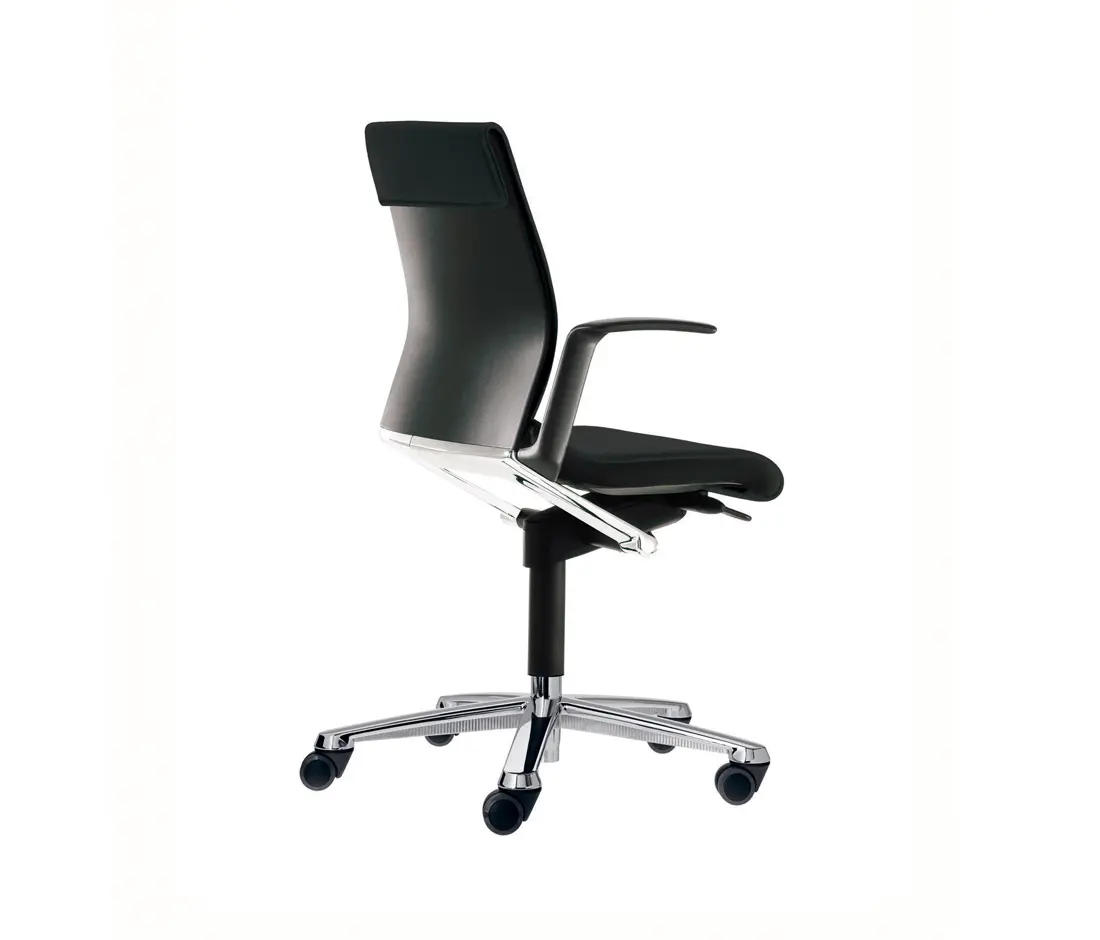
Mínimo uso de materiales. Máxima transparencia. Perfecto autoajuste. Hace ya 30 años los diseñadores Klaus Franck y Werner Sauer crearon, bajo el leitmotiv “Sentarse sin carné de conducir”, un clásico del sentado dinámico: la línea FS. Con el desarrollo del programa de sillas de oficina Modus, ambos diseñadores trasladaron este principio a las posibilidades técnicas y la estética del siglo XXI.
A través de un respaldo flexible en forma de horquilla, de plástico de alto rendimiento resistente a la rotura, en el que va tensado un tejido transpirable de alta tecnología. De este modo, el respaldo se adapta – como si fuera una segunda piel- a la forma, a las posturas y a los movimientos del usuario.
Con un asiento acolchado transpirable, cuyo borde delantero redondeado relaja los muslos y donde su cuña integrada evita el desplazamiento de la pelvis. La capa de vellón integrada en el tapizado asegura una compensación natural de la humedad.
Con una sincronización automática especialmente confortable a base de barras de torsión. Guiados sobre placas oscilantes, el respaldo y el asiento se desplazan de forma sincronizada hacia el ángulo de apertura, a la vez que el asiento se desliza hacia atrás para relajar las corvas de las piernas. A través de la contrapresión progresiva el cuerpo permanece siempre en equilibrio independientemente de la posición de sentado.
No es de extrañar que Modus se haya convertido en el ejemplo de una nueva generación de sillas de oficina. Citado en muchas ocasiones, pero nunca igualado, Modus representa hasta hoy una clase por si misma, gracias a su sentado dinámico de formas perfectas.
Dimensiones:
Altura total: 910 – 1170 mm
Ancho: 640 mm
Profundidad: 610 mm
Altura del asiento: 420 – 530 mm
Este producto pertenece a la colección:
Aluminio, Base metal, Metal

Germany
Klaus Franck, born in1932, studied at the Academy of Design in Ulm (HfG). After that, he worked at the Institut für Industrialisiertes Bauen (Institute for Industrialized Building), he was a free-lance architect, graphic designer and author; amongst other projects, he was Head of Lufthansa’s Interior Design Group and lectured at the HfG and the Fachhochschule in Hanover. From 1971 to 1985, he was Head of the Wilkhahn Design Department which was later to become an independent company under the name of wiege. After seven more years as Managing Director of wiege, he left to set up business on his own. Today he lives in Moraira, Spain, and works there as a free-lance designer. As a product designer, interior designer, art director and author, he has constantly retranslated the legacy of the HfG Ulm into a new language and had a formative influence on corporate development at Wilkhahn.
Germany
Werner Sauer, born in 1950, studied industrial design at the Folkwang Hochschule in Essen, and experimental environmental design at the Staatliche Hochschule für Bildende Künste in Brunswick. First on a free-lance basis, then employed from 1978, he started off working in the Design Department and then continued at wiege until 1993 before setting up his own design studio in Springe near Hanover. He began as a lecturer at the Fachhochschule Hildesheim/Holzminden, then advanced to Professor, then Dean in 2000, and since 2003 he has been Executive Dean. Werner Sauer is a Member of the Board of the Deutscher Werkbund Nord.
Germany
The wiege Entwicklungsgesellschaft mbH evolved from the design and development division at Wilkhahn, office furniture manufacturer. Today it is a design consultancy which operates on an international level. It not only works for Wilkhahn but also for other clients from various branches of industry and commerce. By founding the wiege Entwicklungsgesellschaft mbH, Fritz Hahne pursued an idea that was both simple and significant: on the one hand, the inhibition threshold for external designers to present their ideas to Wilkhahn was to be lowered. On the other hand, a wide field of activity outside furniture design should serve to widen horizons and give new impetus. Both became true. wiege competes productively with other designers with whom Wilkhahn works, and its field of activity includes clients from quite different branches and areas: ranging from exhibition management, home entertainment products, car manufacturers to public commissions, product design, exhibition platforms and interface design.


