Compartir
Imprimir


Architonic ID: 1374480
SKU: 1010
Año de Lanzamiento: 1960
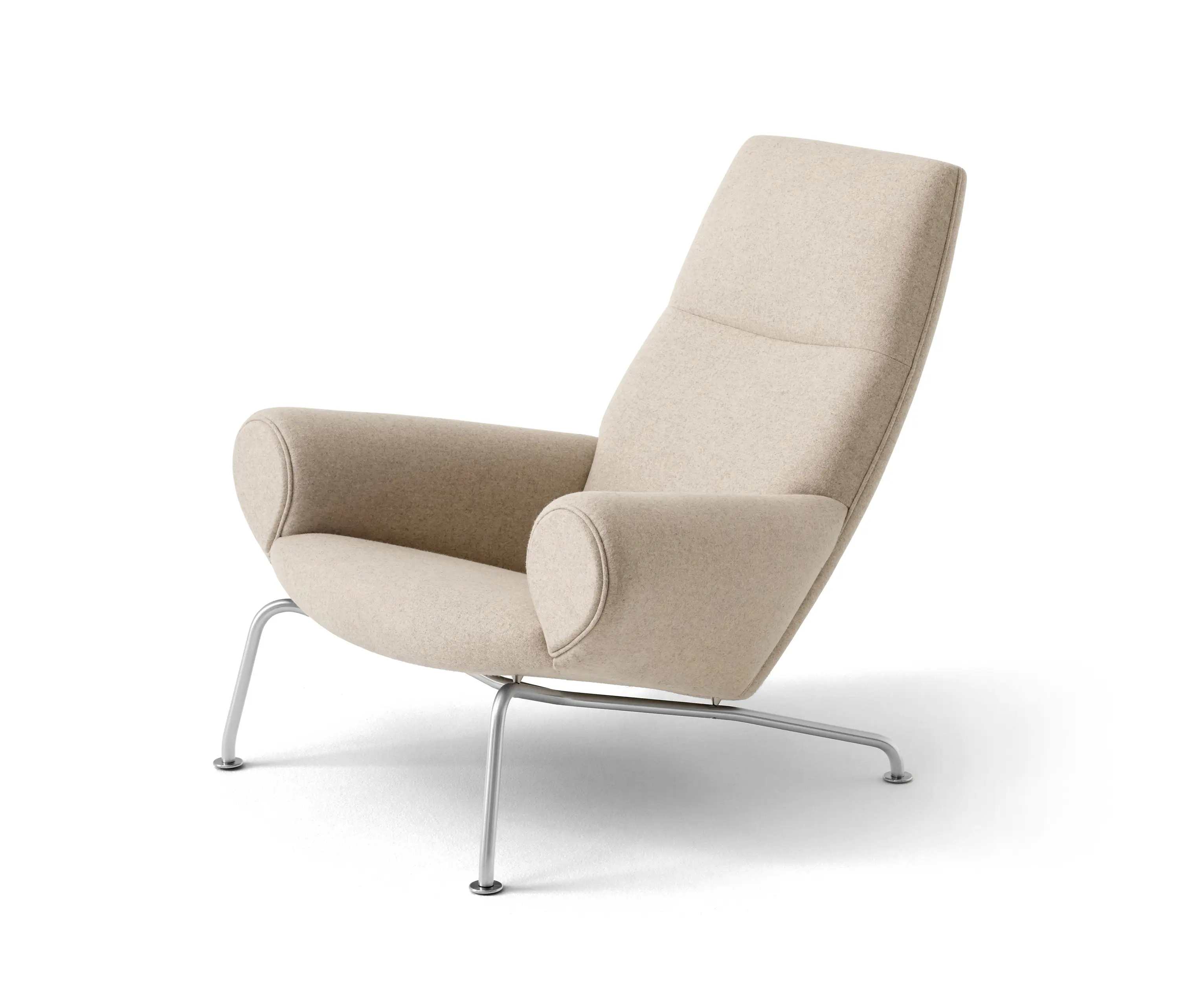
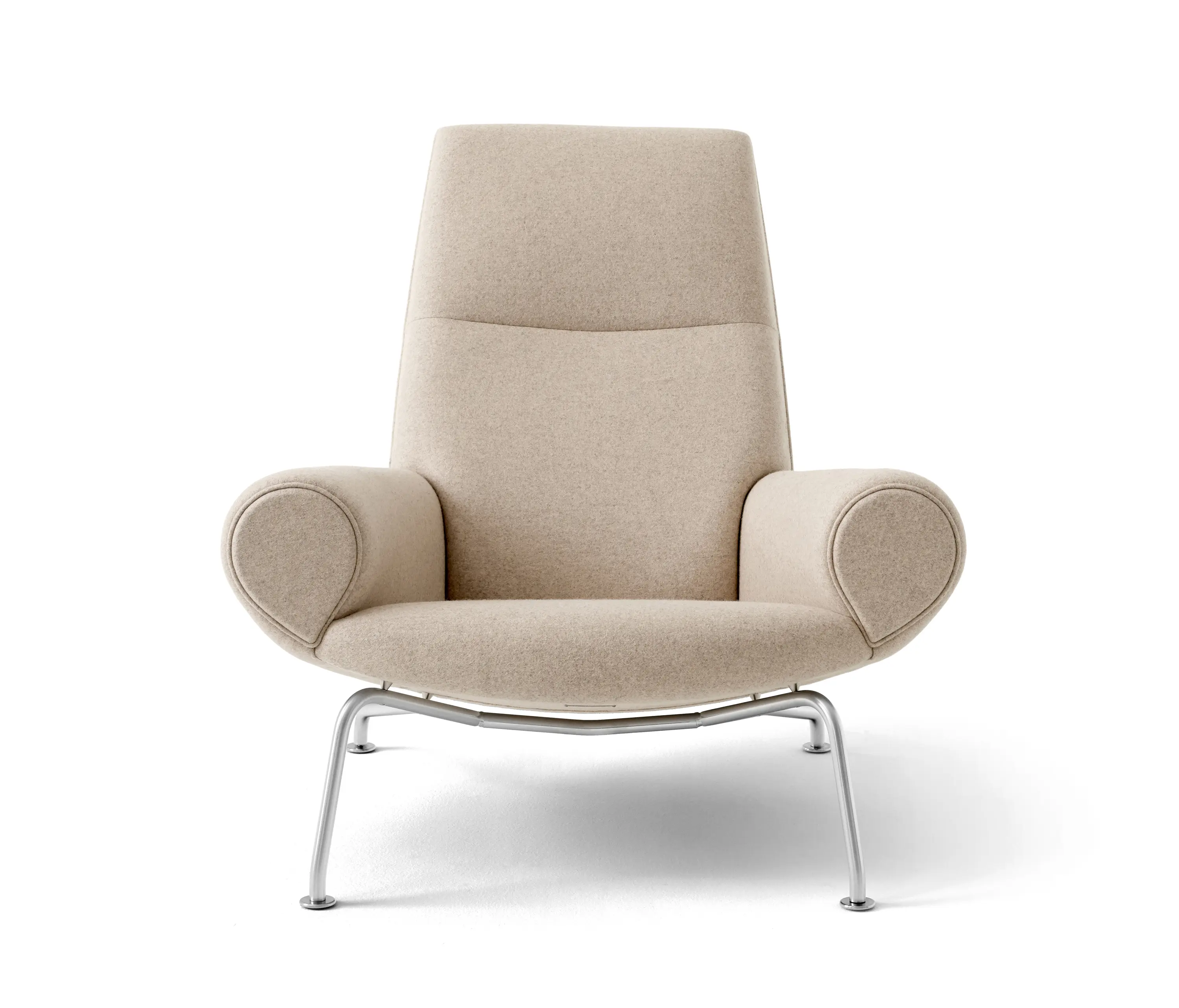
Fully upholstered easy chair in fabric or leather. Inner frame of solid wood and moulded cold cured foam. Piping at backrest and arm pads available in leather as contrast to fabric upholstery. Base of steel.
W: 92 cm D: 99 cm H: 90 cm Wt: 28 kg Cbm: 1.1 cbm Sh: 36 cm
Concepto
With his design of the Ox Chair, Hans J. Wegner challenged the prevailing sense of aesthetics when it was first introduced in 1960. Given its symbolic reference to ox horns, generous proportions and delicate frame, it was a bold, confident design in contrast to the understated approach to Scandinavian furniture at the time. Originally manufactured by A.P. Stolen, each Ox Chair was custom-made and upholstered with wool. The chair remained in production for two years.
Almost three decades later in 1989, Wegner approached Erik Jørgensen in search of a more viable method of construction. Known for his upholstery expertise, Jørgensen rose to the occasion with an innovative solution. Inspired by his trip to the Italian tyre manufacturer Pirelli, Jørgensen saw the potential in using foam rubber to optimise comfort. The Ox Chair was subsequently relaunched at the Milan Furniture Fair and has experienced unprecedented success ever since. Demonstrating Wegner’s belief that a chair is only finished when someone actually sits in it.
It is a demanding task to upholster the Ox Chair, requiring precision and a certain amount of physical strength. In fact, it takes a whole day to make one Ox Chair by hand.
Of the 500 chairs Wegner is known to have designed, the Ox Chair is arguably his most striking piece and a personal favourite he featured in his own home.
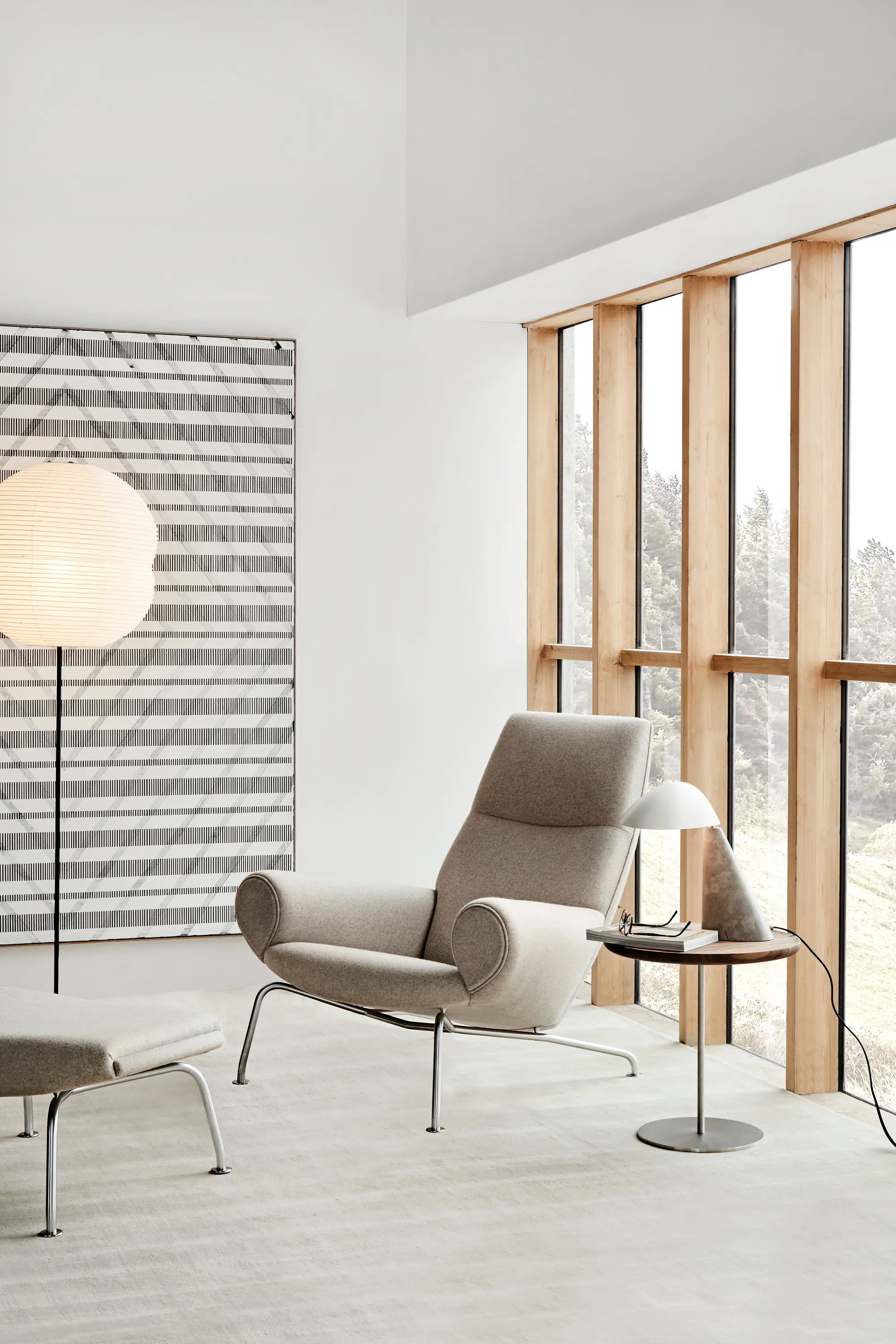
Wegner’s Queen Chair is an equal match for the Ox Chair’s masculine presence. Regal yet relaxed, the ample, almost cylindrical arm rests and high, majestic back echo the Ox Chair. The chairs share the same chromed-steel base positioned low the ground, which adds a light, lyrical aspect. The Queen Chair is one of Wegner’s most elegant lounge chairs, admired for its sophisticated construction and sculptural sensibilities.
The Ottoman is a perfect punctuation to the collection, adding to the pleasure of lounging. In a shape which echoes the seat of the Ox Chair and Queen Chair, supported by a chromed steel base.
Together, the Ox Chair, Queen Chair and Ottoman demonstrate Wegner’s organic, artistic angle on design, rooted in functionalism, with a focus on immaculate detailing and craftsmanship. Reflecting his ongoing desire to redefine traditional seating.
Este producto pertenece a la colección:
Base metal, Metal

Denmark
Hans J Wegner was one of the world's most famous furniture designers in the 20th century, and one of the driving forces behind the rise and influence of Danish design. The Life of Hans J Wegner Hans J Wegner was born on 2 April, 1914, in Tønder, Denmark. His talent for wood carving was recognised early on, during his apprenticeship as a carpenter. He went on to study design and also architecture at what would later become the Royal Danish Academy of Fine Arts in Copenhagen, where he taught furniture design between 1946 and 1953. In 1940, he initiated a project to fit out the Town Hall of Aarhus, together with fellow architects Erik Moller and Arne Jacobsen. That same year, Wegner began collaborating with the master cabinetmaker Johannes Hansen. The Danish Museum of Art & Design first bought one of Wegner’s chairs in 1942; but his most popular chair was the 1949 Wishbone Chair which has been produced since 1950 by Carl Hansen & Son. In 1982, Hans J Wegner won the CF Hansen Medal for architecture, the highest award for the discipline in Denmark; and in 1997 he won the 8th International Design Award in Osaka. He was also awarded with an honorary doctorate from the Royal College of Art in London in 1997. Hans J Wegner’s design approach Hans J Wegner was one of the most creative and productive furniture designers of his time. He designed numerous chairs, living-room furniture, dining tables and other home furnishings. He was best known for his chairs however; and following his motto ‘a chair is a chair only if someone sits on it’, Wegner united form and function with his chairs, and brought Scandinavian design to the fore. Wegner was concerned not only with the appearance of a chair, but with its function – to support the human body. Hans J Wegner's creativity and his extraordinary sense for sculptural expression made him the pioneer of Danish modernism. His approach to minimalism was inspired by the material properties of wood, and the sculptural, organic forms found in nature. For Wegner, the experience of a chair was not limited to the merely visual; it should be an artwork that appeals to all the senses, touch included. Hans J Wegner’s CH24 Wishbone Chair The CH24 Wishbone Chair, also known as the Y-Chair, is one of Hans J Wegner’s most successful designs. He created it for Carl Hansen & Son, who have produced it since the 1950s, as part of a series of chairs inspired by antique Chinese armchairs. The characteristic element that gives the chair its name is a Y-shaped, clavicle-like element supporting the backrest. The ergonomic design and strong, structural form of the Wishbone Chair have made it a design classic, and the chair became world famous when, in 1961, it was used during a TV debate between John F Kennedy and Richard Nixon. The CH25 Lounge Chair: a Danish design icon The CH25 Lounge Chair was one of the first chairs designed by Wegner for furniture manufacturer Carl Hansen & Son. The sloping rear legs give the CH25 Chair its characteristic appearance: restrained and yet structurally dynamic at the same time. The CH25 Lounge Chair was designed to be relaxing, while offering enough support so that the occupant would not fall asleep. Its strong form, and sculptural use of wood, is similar to that of the Wishbone Chair. © by Architonic


