Compartir
Imprimir

Compartir
Imprimir
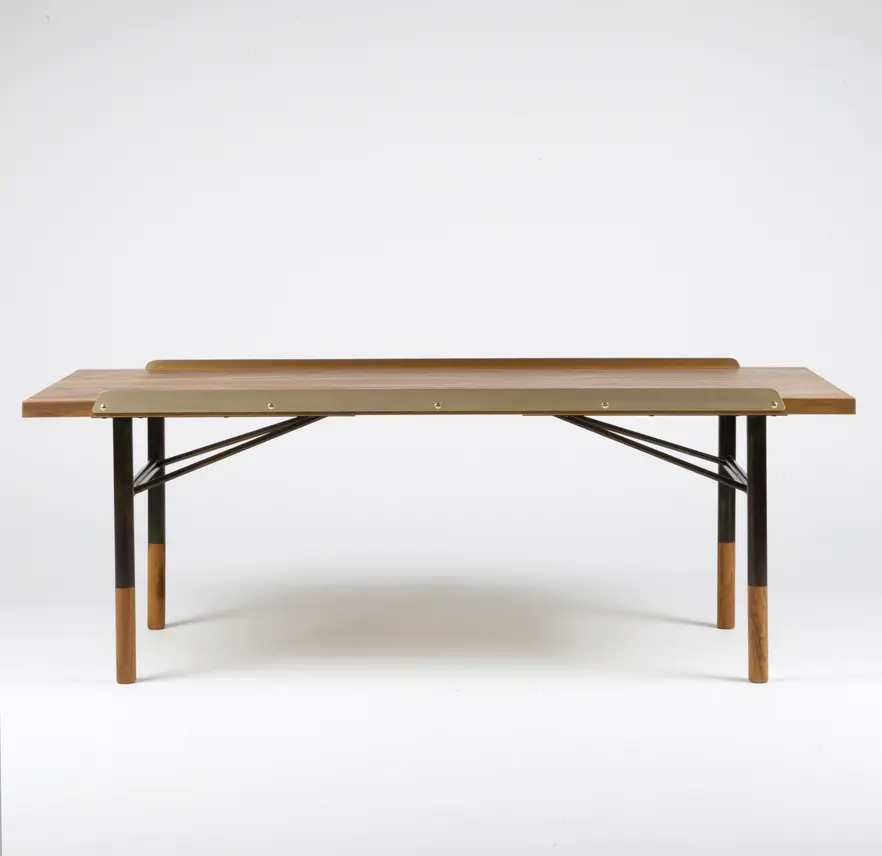
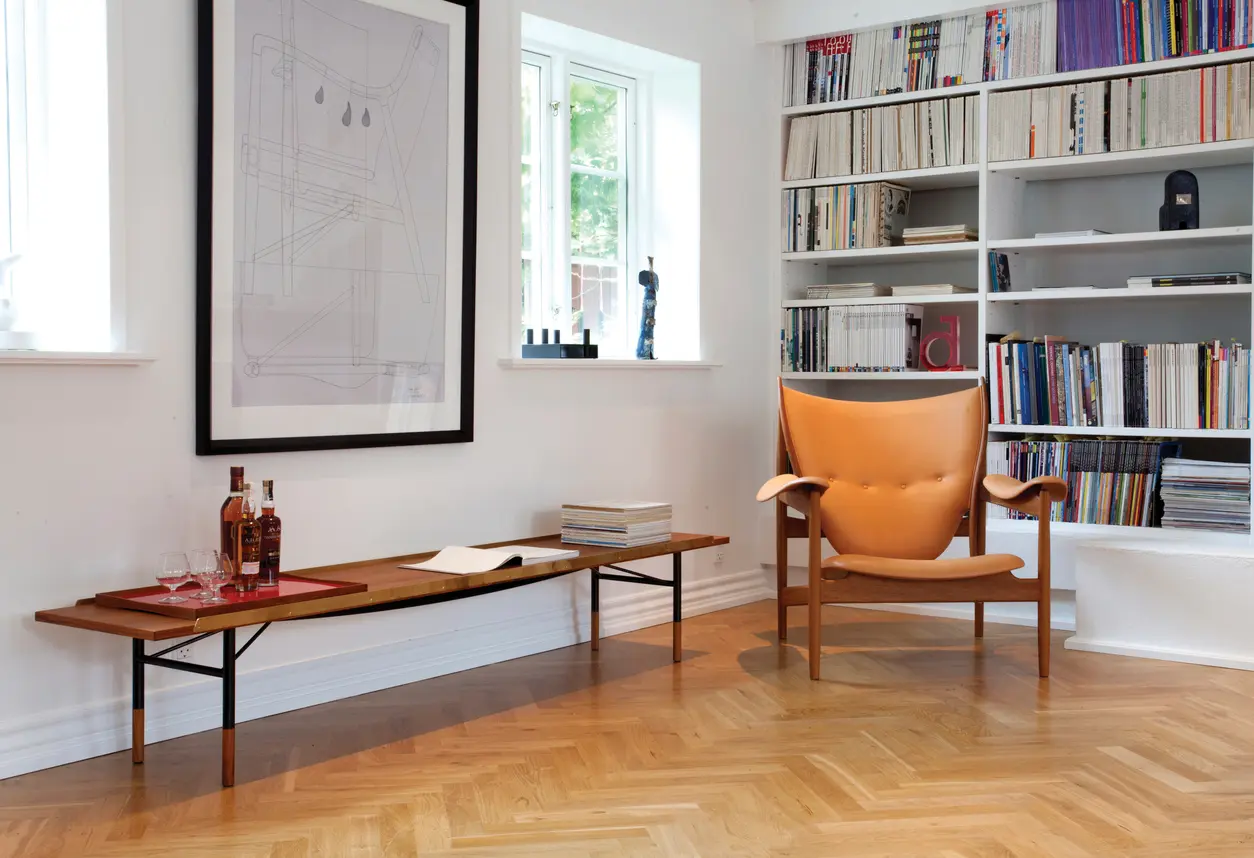
Table Bench
Architonic ID: 1177742
Año de Lanzamiento: 2012
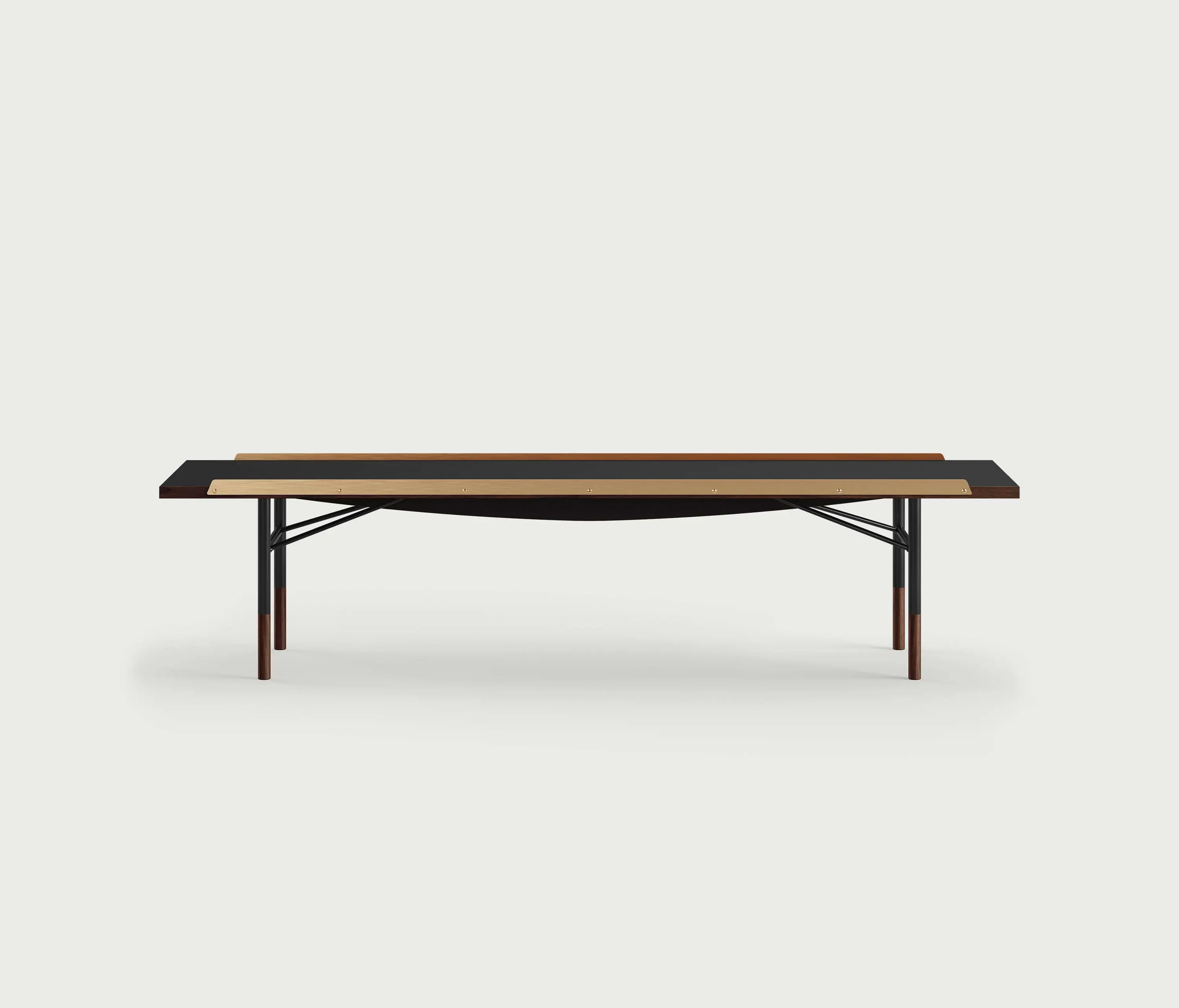
The Table Bench is available in teak, oak, walnut, Oregon pine or black linoleum with a frame in either burnished steel or painted black, orange or light blue. The Table Bench comes with matching wooden toes and with or without edges in matte polished brass. Furthermore, the Table Bench is available with a foldable, padded cushion in fabric or leather.
3 sizes:
L 112cm x W 45cm x H 39cm
L 170cm x W 45cm x H 39cm
L 225cm x W 45cm x H 39cm
Concepto
Finn Juhl experienced an international breakthrough in the USA during the early 1950s. He subsequently designed a range of furniture with steel pipe frames, inspired by the American designers he had come across.
The Table Bench was part of the range from this period and was also included in the large-scale exhibition called Design in Scandinavia. The exhibition, that was curated by Finn Juhl himself, travelled across 22 cities in North America between 1954 and 1957 and was attended by approximately 650,000 visitors.
As a result of this exposure and because of its light, elegant and timeless design, the Table Bench has always been a popular piece that has achieved extremely high prices at auctions worldwide.
The Table Bench is available in teak, oak, walnut, Oregon pine or black linoleum with a frame in either burnished steel or painted black, orange or light blue. The Table Bench comes with matching wooden toes and with or without edges in matte polished brass. Furthermore, the Table Bench is available with a foldable, padded cushion in fabric or leather.
Este producto pertenece a la colección:
Base metal, Base madera maciza, Metal, Asiento madera maciza, Tablero madera maciza, Madera

Denmark
The Danish designer, architect, and interior architect Finn Juhl is today primarily known for his furniture designs, despite his contributions to all three fields. He is one of the most prominent Scandinavian furniture designers, and, along with Arne Jacobsen, one of the most important representatives of Danish design. Finn Juhl: a biography Finn Juhl was born 30 January 1912 in Frederiksberg. Under pressure from his father, he went to study architecture at the Royal Danish Academy of Fine Arts in Copenhagen from 1930 to 1934. Subsequently, he worked with the renowned architect Vilhelm Lauritzen, who himself contributed significantly to Danish architectural modernism. Juhl then began to teach interior design at his alma mater in Copenhagen, and soon after that founded his first design studio. In the 1940s, he also taught at the Frederiksberg Technical School and so began to influence the next generation of designers through his tutelage. In 1942, Juhl designed a house for himself, which is still known simply as Finn Juhl's House. In 1951, Juhl made his debut in the United States at the Good Design Show in Chicago and also at the Museum of Modern Art in New York. In both 1954 and 1957, he received significant recognition for work he exhibted at the Milan Triennale. He was then given the task of designing several pieces of furniture for the Danish Embassy in Washington, D.C. and for the offices and aircraft interiors of Scandinavian Airlines. During the 1950s, Juhl was appointed the interior architect of the Trusteeship Council Chamber inside the New York headquarters of the United Nations, where he designed the chairs for the organisation's deputies. Other well-known designs by Juhl include a porcelain dinner set for Denmark's Bing & Grondahl, refrigerators for General Electric, and glassware for Georg Jensen. Finn Juhl: Poet Sofa The Poet Sofa was designed by Finn Juhl for his own house in 1941; Juhl designed the sofa along curving organic lines, with armrests which seem to softly embrace the sitter. The hand-stitched sofa became a design classic in the 1950s, when it was discovered in America during the Scandinavian design craze. Finn Juhl: 45 Chair Designed in 1945, the 45 Chair by Finn Juhl signified a break with existing traditions in chair design. The main feature of the design is the freeing of the seat and the backrest from the frame of the chair itself. The result is a simple, elegant and remarkable chair which brought Juhl enormous recognition, making him world-renowned and helping to popularise Danish design the world over. © by Architonic