Compartir
Imprimir
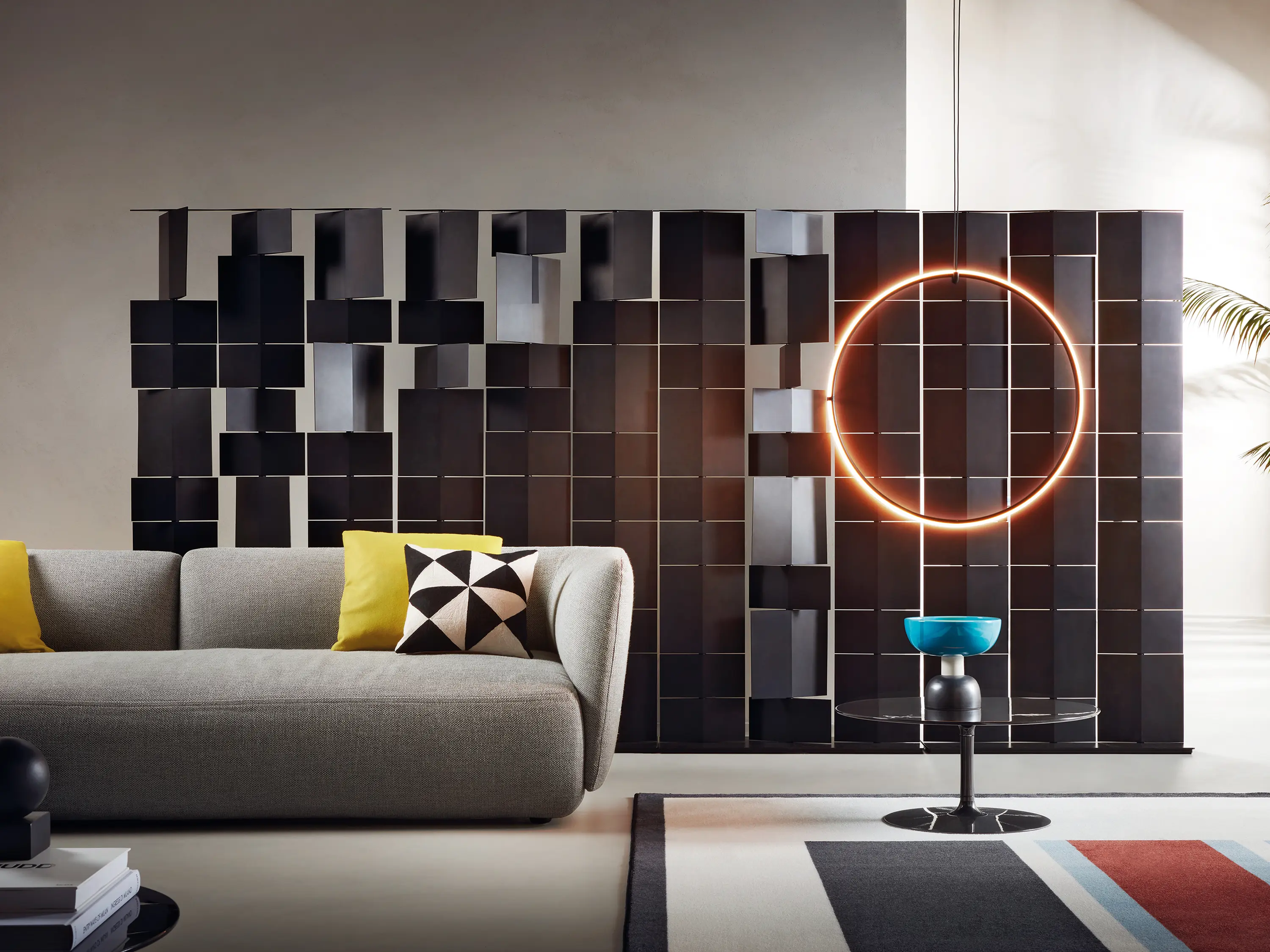
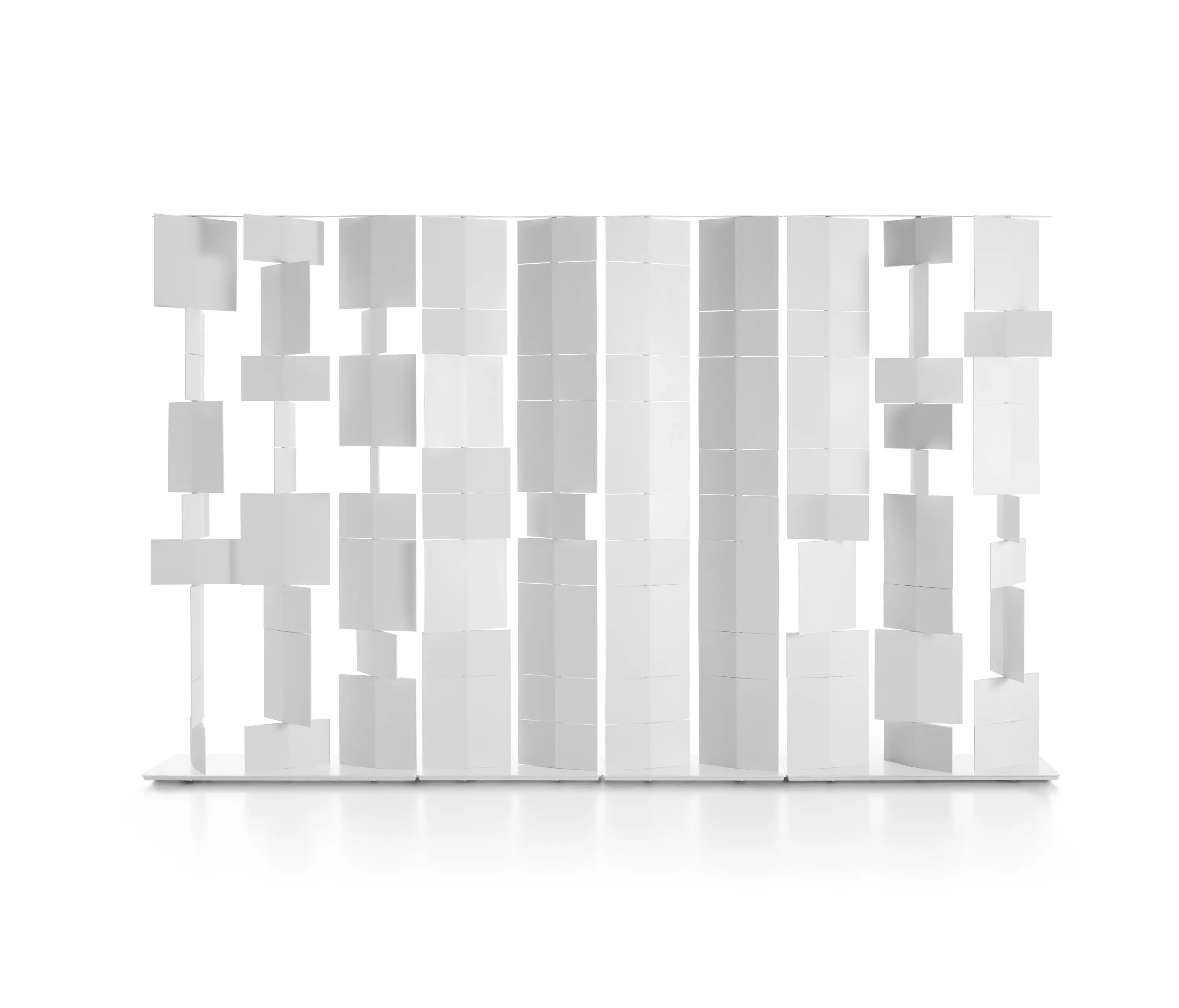
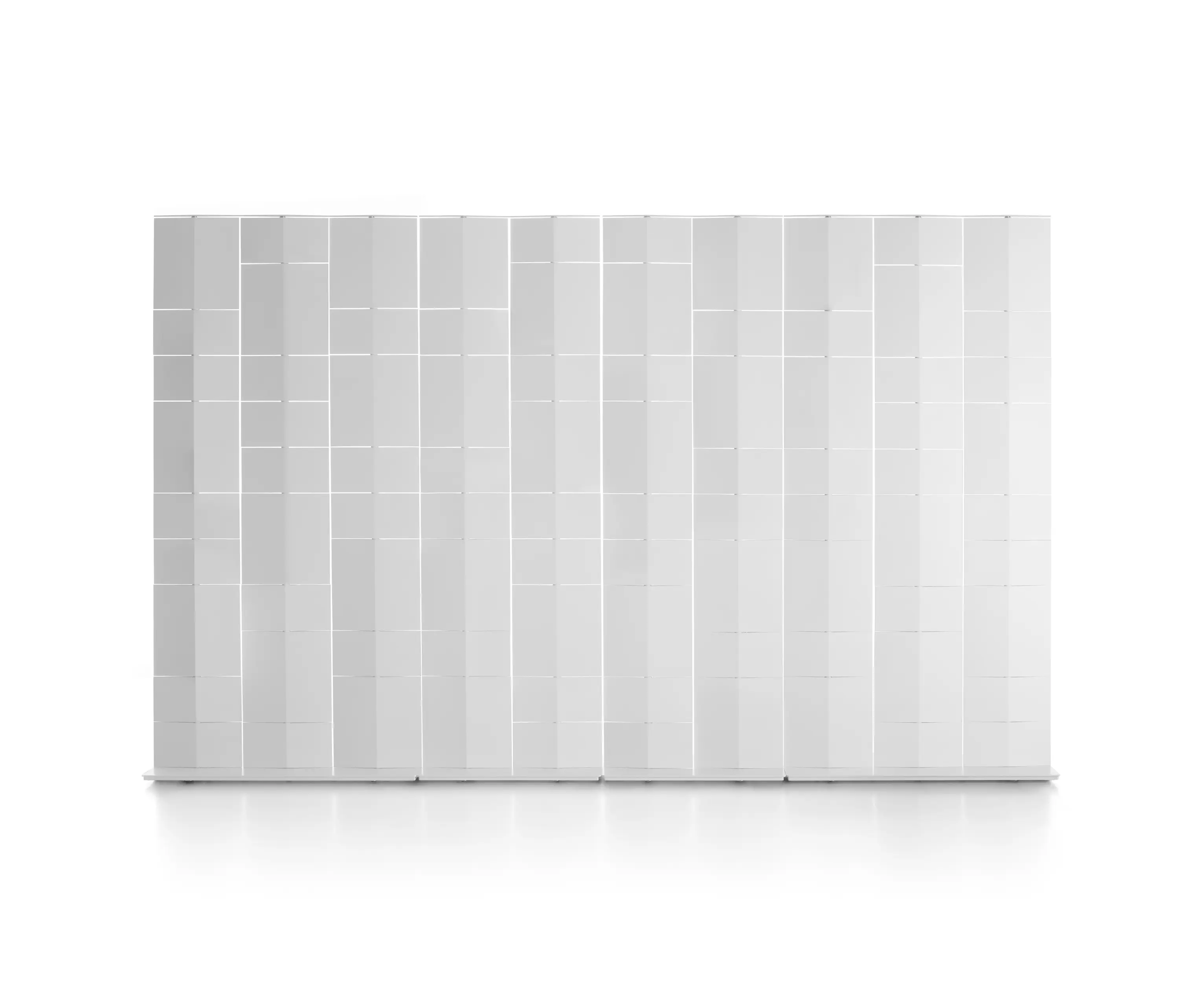


Divide IT
Architonic ID: 20162445
Año de Lanzamiento: 2020
Divide-IT nace para satisfacer estas necesidades, es un producto dinámico que se adapta a cada momento y permite dividir los espacios de trabajo y hogar, para definir escenarios sin restricciones entre oficina y vivienda, entre semi-privado y público; hoy la definición estricta, formal y tradicional del espacio no es tan importante.
El usuario puede escoger y controlar el flujo de luz y el sonido con sus propias manos, girando cada panel sobre un eje de 360 grados.
Esta rotación permite infinitas posibilidades de división, transición y difusión. Divide-IT invita al usuario a interactuar con su funcionamiento como si fuera un “juguete” que puede ofrecer diversión e incluso sacar una sonrisa.
Estructura
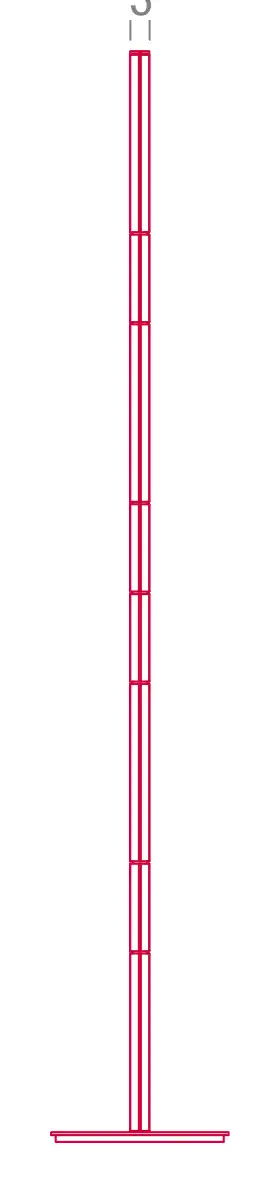
Estructura portante compuesta por una base de chapa de aluminio, acoplada con lastre de hierro, con ruedas esféricas de acero (bajo petición) para facilitar el desplazamiento a 360°; montantes de acero, Ø 20 mm, equipados con tope, y travesaño superior de aluminio.
Toda la estructura compuesta así está barnizada con polvos epoxi en los colores mate blanco y negro.
Los paneles giratorios, que pueden girar a 360°, en dos tamaños, están dispuestos respetando una secuencia geométrica alternada y definida, y son de poliuretano integral pintado en molde, disponible en los colores mate blanco y negro.
Medidas y tipologías
Cada elemento separador está disponible en dos tamaños, L90 y L60 (ver detalle de las composiciones) que, según la combinación o dibujo, pueden realizar configuraciones de gran tamaño e imagen. Divide IT es siempre monocromático y está disponible en las combinaciones:
• estructura en blanco mate con paneles giratorios en blanco mate;
• estructura en negro mate con paneles giratorios en negro mate.
Accesorios
El juego de ruedas está disponible solo para suelos duros (mármol, granito, suelos de terracota, cerámica, gres, klinker, pietra serena, hormigón, etc.).
Mantenimiento
Para una correcta limpieza evitar los productos con base alcoholica, utilizar agua y jabón suave. Enjuagar bien después del lavado, solo con agua.
Este producto pertenece a la colección:

Israel
Pitsou Kedem Architects Studio opened in 2000 and today consists of 11 architects. The studio is responsible for the design and planning of many projects in Israel and lately, also in Europe. Pitsou Kedem set up the studio after finishing his studies at the Architectural Association School of Architecture (AA). The studio’s design language and concept is founded on the modernist style and his work encompasses the values and principles of the period as well as the design philosophies of the modernist movement. During its formative years, the studio was involved in a constant dialogue with the fundamental principles of minimalism: reduction and moderation, clean lines for each element, separation of structural materials as part of the process designed to avoid the irrelevant in order to emphasize the significant and refining and seeking out the essence of the space. Together, all these elements lead to a strong architectural concept that is uncompromising in its search for the absolute truth, in its pursuit for purity of form and shape and in its goal of achieving a spatial perception of comfort and tranquility. This constant quest for simplicity leads to sophisticated and precise elements which , in turn, contributes to their uniqueness. The majority of the studio’s projects can be characterized by simple geometric, rectangular and recurring shapes that impart an exact and interconnecting look to the structure and its spaces. Structural facades are uniform, mono-chromatic, devoid of all decoration and provide a feeling of being almost monumental in nature. By using this architectural and design language, we attempt to bring order to urban chaos. For the past years, the studio has been searching for new materials, for a fresher approach that will allow us to enter new territory and step outside of recognized and boundaries. After years of simplifying materials to the extent avoiding all distractions that created those pure moments when “emptiness” disappeared and the individual sees and feels all that they failed to see and feel before, we began to add layers of materials and spatial layers. Inevitably, these layers created increasingly ambiguous and illusory spaces within the structure, layers that, in turn, created a greater sense of curiosity. A great deal of effort was used in our research for new materials, and in particular, for materials to be used for building external structures and walls. In its ongoing search to deepen and expand its architectural and design language and to add new contentment, the studio has, over the past few years, been working with contrasting materials such as weathered steel and exposed concrete on the one hand and carbon and other new and innovative materials taken from the world of industrial technology on the other. The combination of different materials and different architectural and design languages and even, on occasion, different schools of design, created, in many projects, a surprising and dramatic tension. The studio designs projects covering a wide range of sizes and complexity. From the interior design of restaurants, stores and living spaces to the design of private residences – usually those spreading over very large plots – and recently, hotels and residential complexes. In all of our projects we consult closely with the client and “brainstorm” in our efforts to discover the story, the concept, that flash of inspiration that will lead to the project’s design. The nucleus of an idea, leads to the development of the design language and concept which then leads to the development of spaces which serve the users – whilst all the time, placing an emphasis on the context and the integration of the building into the urban fabric. The studio has, over the years, been awarded many prizes including, for the past seven years, the Israeli Design Award. Our designs have been showcased in many professional journals and magazines around the world as well as on leading architectural web sites. Pitsou Kedem has mentored graduation projects for the Faculty of Architecture at the Technion, Israel and lectures regularly at all of Israel’s architectural faculties.
Ponte en contacto directamente con .
Ponte en contacto directamente con MDF Italia.
MDF Italia


