Compartir
Imprimir


Compartir
Imprimir
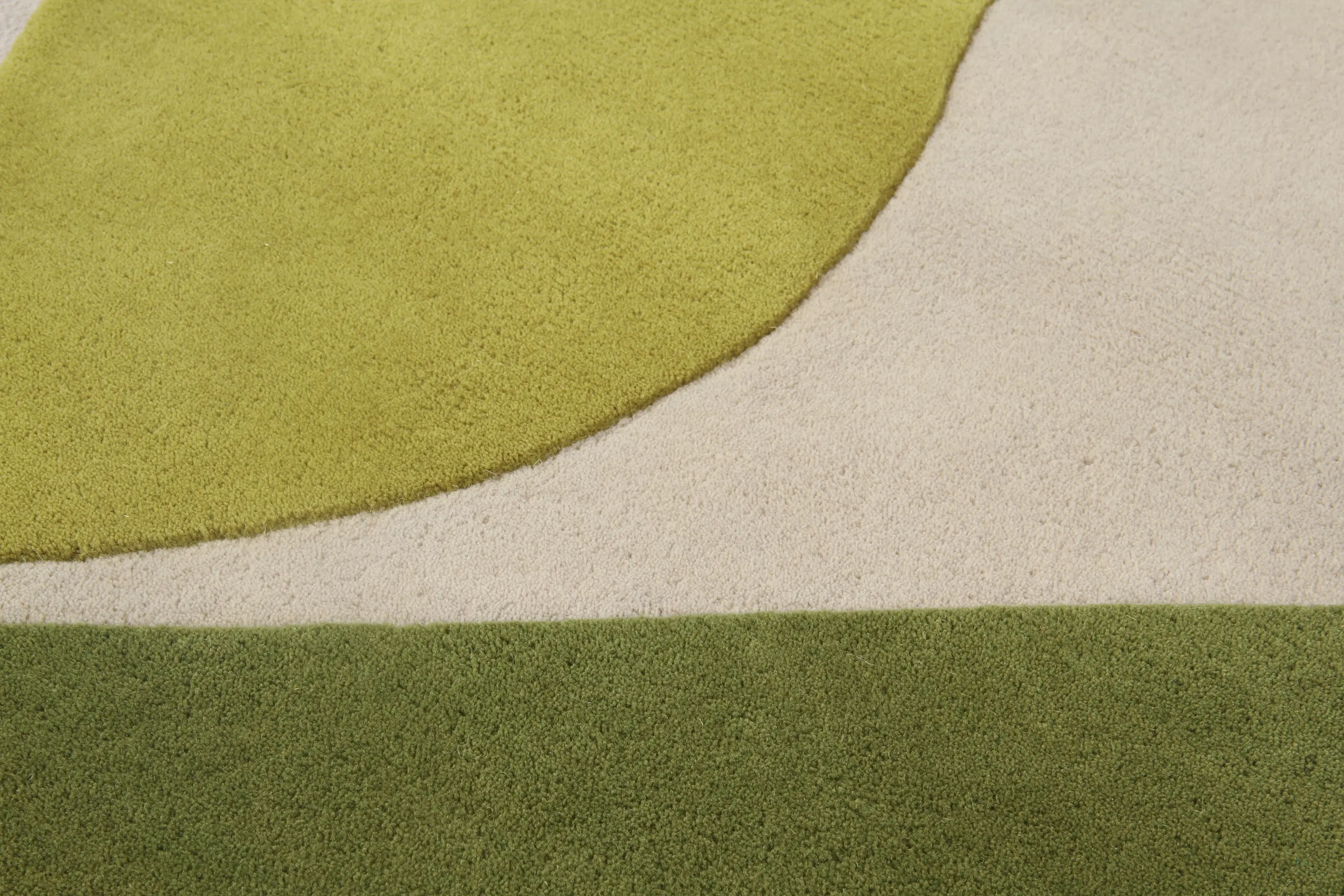
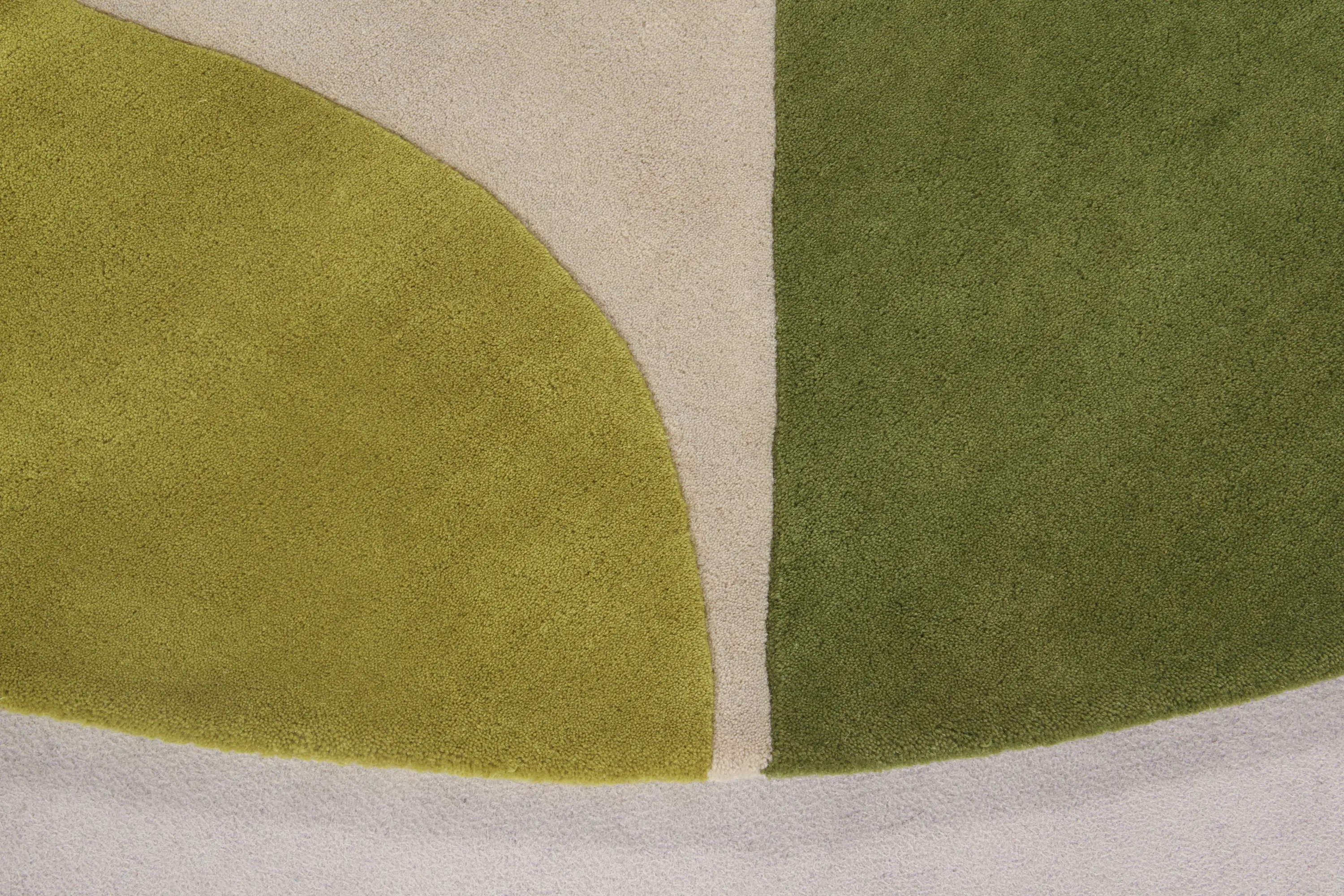
Isola JC-7 green
Architonic ID: 1503019
Año de Lanzamiento: 2017
Pile composition
100% blend of New Zealand Wool
Height
18mm
Technique
hand tufted
Origin
India
Finishing
wool pile cut, hand washed and carved
Stock size
Ø 240
Lead time for custom sizes
3-4 months
Concepto
Isola
Isola echoes designer Joe Colombo's aesthetic, in which a strong sense of irony smooths its almost-science fictional essence. This carpets reintroduces the graphic design element visible in technical drawings penned by Joe Colombo for the Hoecht stand at the Dusseldorf plastics fair in 1970.
JOE COLOMBO
Colour gradations, rounded shapes and sinuous lines reflect the futuristic visions of the modern and ingenious designer.
A blend of New Zealand wool varieties, hand tufted and with a FInishing effect that discreetly harks back to a 1960s feel, are the distinguishing features of the carpets from the Joe Colombo Collection. This eclectic mix would have been certainly been to the liking of the brilliant designer, who was always well informed and up-to-date on manufacturing materials and technical details, at least as much as he was also sophisticated, and attentive lover of beauty. The starting point for translating this Milanese architect’s novel, futuristic vision into material, color and knots, had to be digging up some of his most recurrent graphic elements, or particularly representative projects. Thanks to the active participation of Studio Joe Colombo, still active today and headed by architect Ignazia Favata, everything has been examined and reproposed to a di erent scale from the original design, so as to become a piece of furniture in its own right. Bubbles and Isola are the first creations for the Joe Colombo collection, which is currently being developed further. The Isola series reintroduces the graphic design element visible in technical drawings penned by Joe Colombo for the Hoecht stand at the Dusseldorf plastics fair in 1970. The particular color combinations, together with the round shape of the carpet lend to the ensemble an e ect of continuous motion and at the same time of balance.
DESIGN ICONS COLLECTION
Masters. While different with regard to generation, training, experience, and legacy, what unites them is a self-same project: a kind of unfettered, personal quest, indeed, a search for the discovery and development of a dynamic and multifaceted modernity. Masters without limiting their investigation, they have dabbled with all kinds of artistic and technical forms- painting, architecture, design, applied arts, publishing, film and photography. If Gio Ponti, still a 19th century man, was bent on outdoing himself with each passing decade in an all-consuming, playful and eye-catching display of genius, Joe Colombo, whom Ponti held in especially high esteem, was rather a personality who lacked any abiding connection with the past and that’s what makes his artistic visions so prophetic. True blue Milanesi like Ponti and Colombo are o set by small-town artists Ico Parisi and Manlio Rho, with ties to the rationalist movement in Como headed by Giuseppe Terragni. And yet their paths are well marked out, and highly original at that. Whereas Rho conceptualizes his own version of geometric abstraction embellishing it with nature’s colors, Parisi experiments with every aspect of the furnishing project seeking the key to integration with the world of the arts. Amini adopts today these Masters’ great legacy, presenting it with uttermost faithfulness to the originals in a ne collection of carpets.
Este producto pertenece a la colección:
Tamaño personalizado
Puedes visitar la página del producto para estas variantes, ¡simplemente haz clic en ellas!

Italy
Joseph, or Joe, Colombo was an Italian designer, artist and architect who created many of the most iconic Italian designs, despite coming to the profession only late in his life. In a brief but successful career, Joe Colombo produced highly innovative objects, which made him into one of the most influential product designers in Italy at the time. Joe Colombo: a biography Joe Colombo was born 30 July 1930 in Milan. He studied painting at the Accademia di Brera art school in Milan until 1949, after which he began to study architecture at the Politecnico di Milano, which he graduated from in 1954. Having finished studying, Colombo joined the Nuclear painting movement, and exhibited his work together with its founders Enrico Baj and Sergio Dangelo in various cities in Europe including Milan, Turin, Venice and Brussels. In 1959 Joe Colombo took over his family’s business, a electrical factory, following his father’s death. It was here that he first experimented with new designs and production technologies. In 1962 he founded his own design studio in Milan, branching out from electrical items into furniture and other fields. In just a few years, many of his designs had become famous, and it was during the 1960s that he also established collaborations with manufacturers such as Alessi, Kartell, Zanotta, Stilnovo, Oluce and Rosenthal, with whom he would work for the rest of his life. Colombo’s Career as a Designer Together with his brother Gianni Colombo, Joe Colombo developed many new concepts in lighting, such as the prismatic Acrilica Lamp of 1962. In 1963, he designed his famous Elda armchair. One of Colombo's first designs for the manufacturer Cartel was Chair No. 4801, which he created from bent plywood in 1967. The flowing elements of the chair would go on to inform many of his later works in plastic, particularly the Chair Universal. From the 1960s onwards, Colombo created many more innovative designs for furniture, lighting, glass, door handles and even wrist watches. The Elda: the most famous of Joe Colombo’s chairs Joe Colombo’s Elda chair, named after his wife, was designed in 1963 and has continued to be produced in Italy ever since. The Elda Chair forms part of the permanent collection of the Museum of Modern Art in New York, the world’s most important design museum. The chair’s sinuous curves and fibreglass shell were both highly innovative when it was designed, and both became hallmarks of Colombo’s later work. Joe Colombo’s Spider Lamp Joe Colombo's most famous lamp is the Spider floor and table lamp, designed in 1965 for Italian brand Oluce. Colombo won Italy’s most prestigious industrial design prize, the Compasso d'Oro, with the Spider Lamp. In 1972, it formed part of the groundbreaking exhibition "Italy - The New Domestic Landscape" at the MoMA in New York, and has since become a design classic of the period. © by Architonic


