


Detalles de contacto
Enviar un mensaje
Llámanos
Distribuidores



Variantes disponibles:


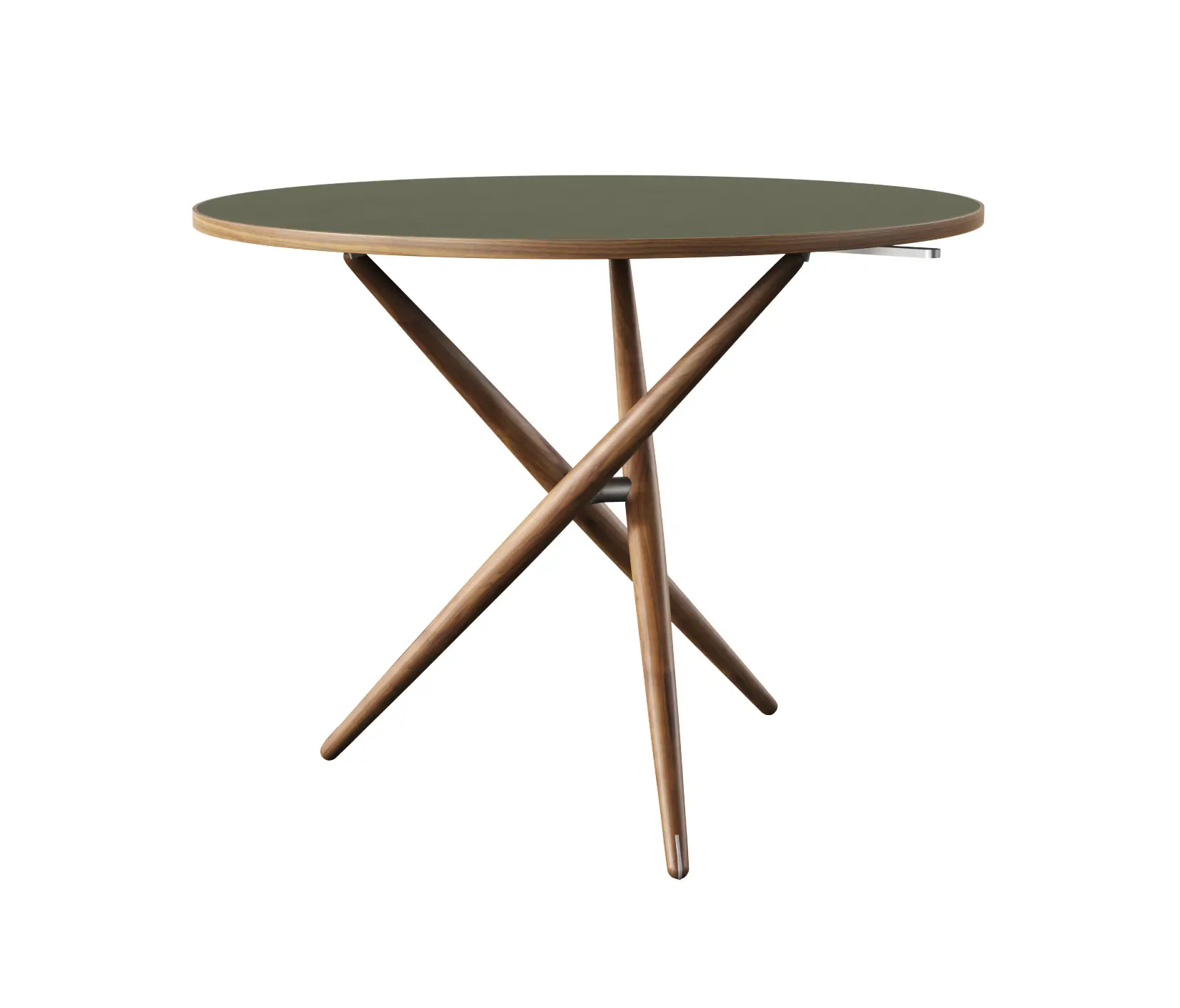
ess.tee.tisch t-6500
Architonic ID: 20025433
SKU: t-6500 4184
Año de Lanzamiento: 1951
3-leg table, table top covered with linoleum and solid wood edge, frame in solid wood, adjustable 32cm, central foot connection in cast iron anthracite, adjustment mechanism of stainless steel, diameter 95 cm, table height: 42-74cm
Concepto
Jürg Bally's ess.tee.tisch is one of only a few Swiss table icons. The architect designed this height-adjustable table in 1950, shortly before he started working for Knoll International in New York. The table is a birthday present for his future wife Ica who didn't have a table in her furnished room. The table, called S.T. then, has had a place in her home up to this day. The name gives us a glimpse at Bally's linguistic wit, because the height adjustment turns it from a dining ("Ess-Tisch") to a coffee table ("Tee-Tisch"), which decidedly sounds like "Ess-Tee-Tisch" ("aesthetic") German. It was inspired by Hans Bellmann's three-legged 1944 "colonial table." With his "lift table" (its popular name), Jürg Bally created an answer to the changed living conditions and increasing mobility, which is a topical issue to this day. The "lift table," as it was also called, went into series production at "Werkgenossenschaft Wohnhilfe" in 1951/54*. After 1968, Bally himself took charge of production and distribution, such as in his Zurich furniture shop at Neumarkt 11. The ess.tee.tisch became Jürg Bally's most prominent design. Today, the official 1950 prototype is exhibited in the collection of the Zurich design museum. In 1955, he was awarded the "Die gute Form" prize by the Swiss association of workmen.
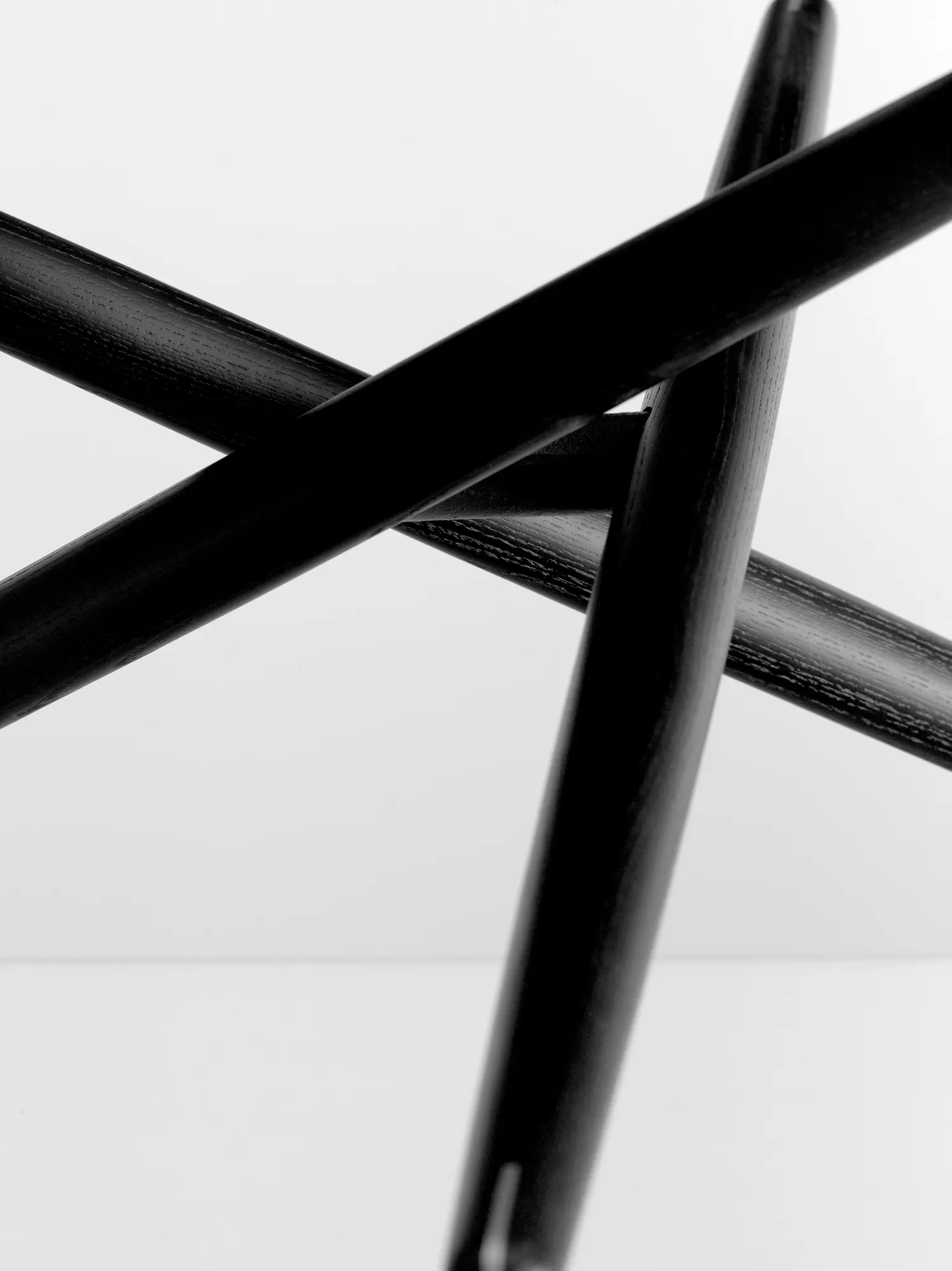
The construction of this design classic is as simple as it is ingenious: The table top rests on three crossed-over legs linked by a moveable pin hinge. For the 2014 re-edition, the self-locking lifting mechanism was perfected in 400 collaborative working hours with design engineer Daniel Hunziker. Using a lever under the table top, spring force is used to roll up or unroll a steel strap inside a drum. While the legs meet or part in the rails under the table top, it is raised or lowered from dining to coffee table in ten steps from 72 to 40 centimetres. Thanks to its precise details and careful fitting, this adjustment works smoothly without having to clear the table top.
The re-edition was presented in the "horgenglarus: ess.tee.tisch von jürg bally" exhibition in the gallery of the German association of workmen in Berlin in May 2014.
Este producto pertenece a la colección:
Base madera maciza, Linóleo, Melamina, Plástico, Tablero linóleo, Tablero plástico, Tablero madera maciza, Madera
Puedes visitar la página del producto para estas variantes, ¡simplemente haz clic en ellas!

Switzerland
Daniel Hunziker (* 14 February 1973 in Rüti, Zurich) is a Swiss designer and engineer. He lives and works in the cities of Zurich and Rome. The designer sees himself as a storyteller in three-dimensional space. Hunziker loves to sequence his client’s DNA, learn everything about it, and use that knowledge to create made-to-measure products. Since 2003, Daniel Hunziker has designed, inter alia, identity-enhancing products for the cities of Zurich and Bern, for two-star Michelin chef Tobias Funke, for the Fondation Beyeler and the traditional Swiss furniture manufacturer Horgenglarus.