

Compartir
Imprimir
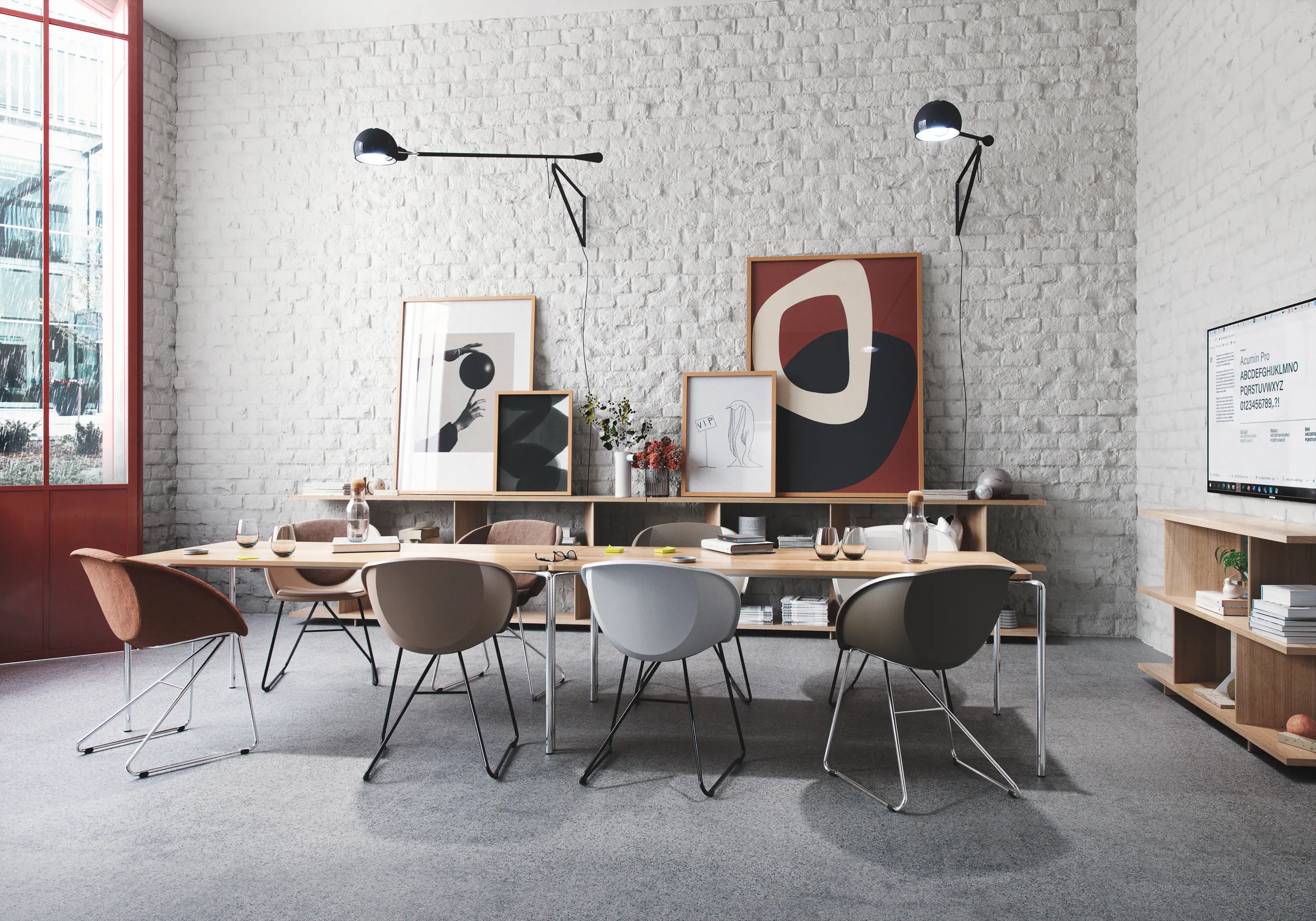


Architonic ID: 1170520
Año de Lanzamiento: 2012
100% recycled PP-plastic.
White NCS S 0500-N
Dark grey NCS S 8500
Beige NCS S 4005-Y20R
Golden Pink NCS 3215-Y43R
Brown NCS 6815-Y42R
Chrome, black or white base without surchange.
Available with a monochrome base coating to pair the shell or additional RAL/NCS colored base upon request.
Chair stacks 5 pieces without pillow and 3 pieces with pillow or upholstery.
Plastic or felt gliders
Can be hung on tables. Chrome, black or white base. Base in epoxy is available on request. Soft plastic gliders.
Concepto
The POPCORN chair was one of several specially designed products made for the opening of the Henie Onstad Art Centre outside Oslo in 1968. POPCORN was originally manufactured with a fibreglass shell. Today’s model is available in either a white or a dark grey plastic version with a light structured surface. This, in combination with the shape of the base, gives the chair a feeling of movement and comfort. POPCORN is a stackable chair and can be fixed to a table for easy cleaning of the floor. The base is available in white/black epoxy or chrome. The chair comes with no pillows, alternatively seat or seat/back pillow in textile or leather.
Este producto pertenece a la colección:
Base metal, Metal, Plástico, Asiento plástico

Norway
Sven I. Dysthe (1931 – ) Sven Ivar Dysthe is a Norwegian industrial designer who is especially known for his furniture. His design career began when he started as an apprentice at one of the most respectable carpenter workshops in Trondheim. Arne Remlov, interior architect and editor of the design magazine Bonytt, persuaded Dysthe to apply for admission to the Royal College of Art in London. In 1952, Dysthe began his studies there at its newly created field of industrial design. The general manager at the school, furniture designer David Pye, played an important role in Dysthe´s development. The highlight as a student was most definitely when he was assigned to make the pincushion box for Queen Elizabeth II’s coronation in 1953. After graduating in 1954, Dysthe started working for the Danish architects and furniture designers Peter Hvidt and Orla Mølgaard Nielsen in Copenhagen. In Denmark, he gained close knowledge and understanding of Scandinavian design. He moved back to Norway the following year and it did not take long for his career to take off. His furniture is characterized by elegant and modern design, all products are minimal in form and material use. One of his main focuses was to allow for serial production, combining great systematic solutions with the right amount of details. He loved to explore new and modern techniques, an example of that is his dining chair Era. With its black powder coated steel frame and a steam bent T-shaped wooden backrest, together with a light and almost floating veneer seat, this chair is definitely showing his creative talent.


