Compartir
Imprimir



Compartir
Imprimir
Este producto forma parte de nuestro catálogo de referencia.
Las consultas adicionales están reservadas para las marcas socias de Architonic.
Campus
Architonic ID: 1273512
Año de Lanzamiento: 2000
Concepto
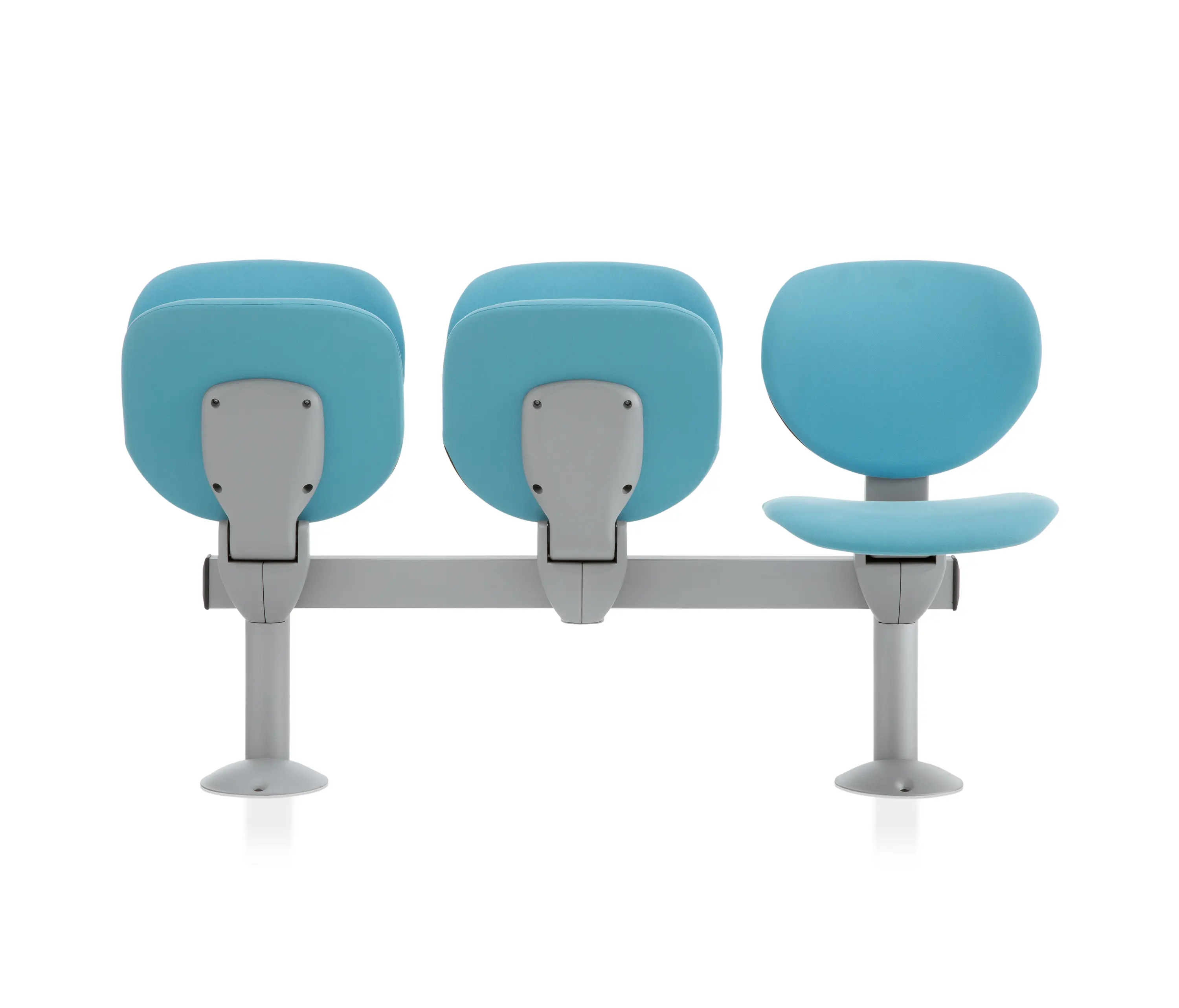
Study bench for use in lecture theatres, conference halls, auditoriums.
Campus is available as a foldaway or fixed option.
Writing table: fixed, laminated chipboard. Available colours: beech wood or grey (edged with ABS). Mounted with sheet metal brackets, welded to the legs.
Foldaway writing table (440x353x18 mm) with anti-panic retraction system, attached to two rotating aluminium brackets on a connecting tubular steel bar (40x30x2 mm). The table is made of chipboard with a laminate coating and is available in beech wood colour or grey, edged in ABS. The short sides are inserted into aluminium guiding tracks.
Modesty panels (steel sheets) are available for the first row bench.
Legs: tubular steel (Ø 70x2 mm), welded to a circular steel sheet base for fixing the legs to the floor.
Connection bar: for attaching the legs to the seats, in tubular steel with a rectangular cross-section (80x40x2 mm). They have an epoxy powder coating.
Seat and backrest: beech plywood with a natural varnish or upholstered padding. Folding seat with spring-loaded system for automatic return. The springs are housed within a die-cast aluminium casing.
The back rest is made from moulded steel sheets, protected by a polypropylene casing.
Campus adapts to any building structure requirement such as flat or sloping floors, ones with wide or narrow steps or amphitheatre-shaped with curved beams.
Upon request, the writing table can be supplied with a non-standard finish or size.
Accessories: painted steel wire basket for storing objects.
Este producto pertenece a la colección:
Conferencia / reunión, Contract, Educación, Multiuso, Oficina

Italy
Design rhymes with Italy! Adriano Baldanzi and Alessandro Novelli, born and bred in Tuscany, know this all too well! After graduating in Industrial Design at ISIA in Florence they embarked on a design adventure that has led them to be considered amongst the best Italian designers in the seating and office furniture sector, and not only. In fact, 30 years of experience have enabled them to develop a great design culture and a thorough understanding of the technology available and the real demands of the different markets, to the point that they are considered more partners than designers by the companies that choose them. This approach has always been in their DNA: their career took off after having founded and developed the company Casamania in the early eighties, which was later sold to Frezza, a prestigious Italian brand. They then devoted themselves to their true vocation:design. Their career encompasses some emblematic geographical milestones: working first in a small but very demanding Italy, then in Europe, they are now in demand all over the world. Their homeland is a source of constant inspiration and their international experiences offer constant enrichment.
Ponte en contacto directamente con .
Ponte en contacto directamente con Emmegi.
Emmegi