Compartir
Imprimir

Compartir
Imprimir
Architonic ID: 1019334
Año de Lanzamiento: 2005
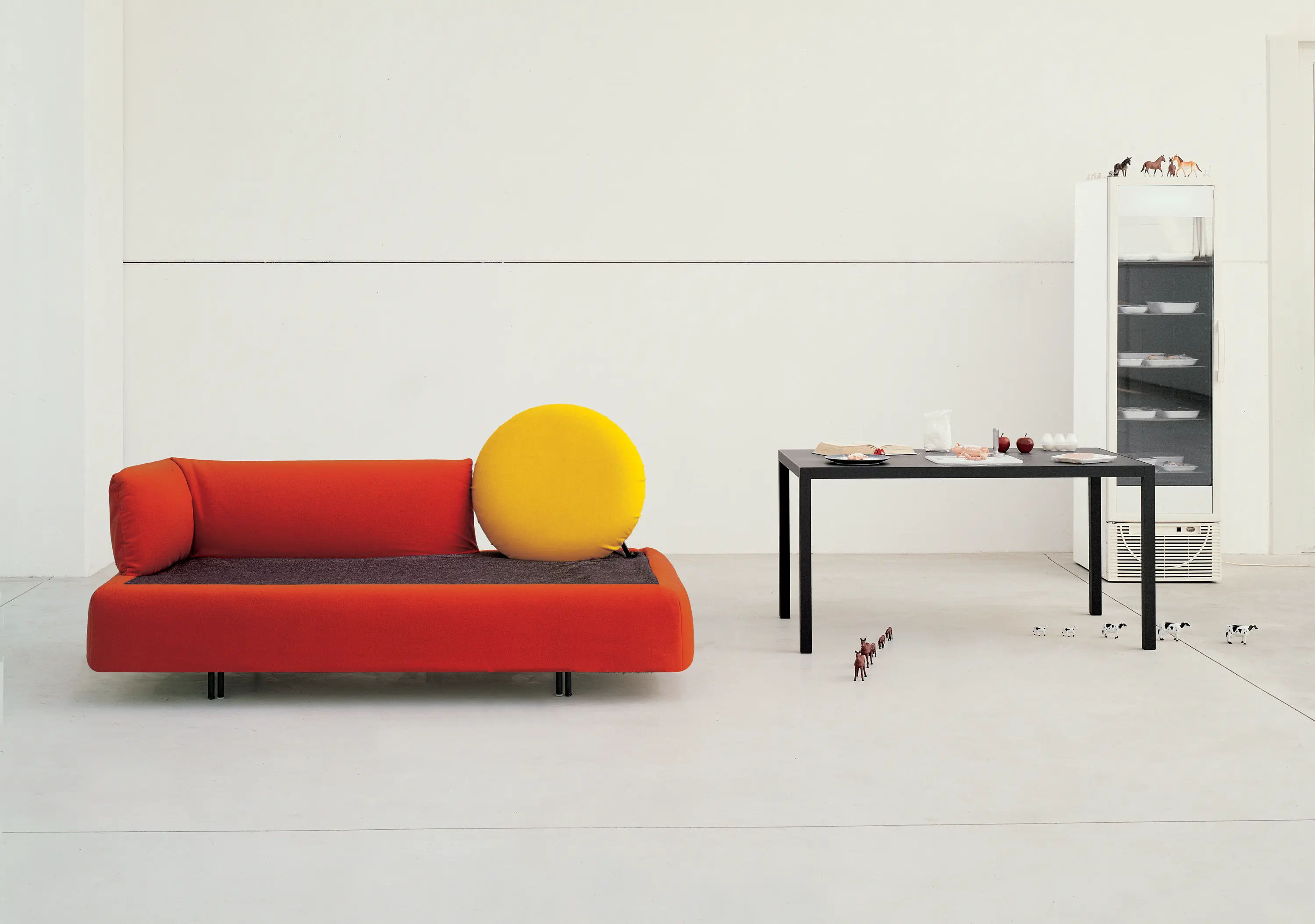
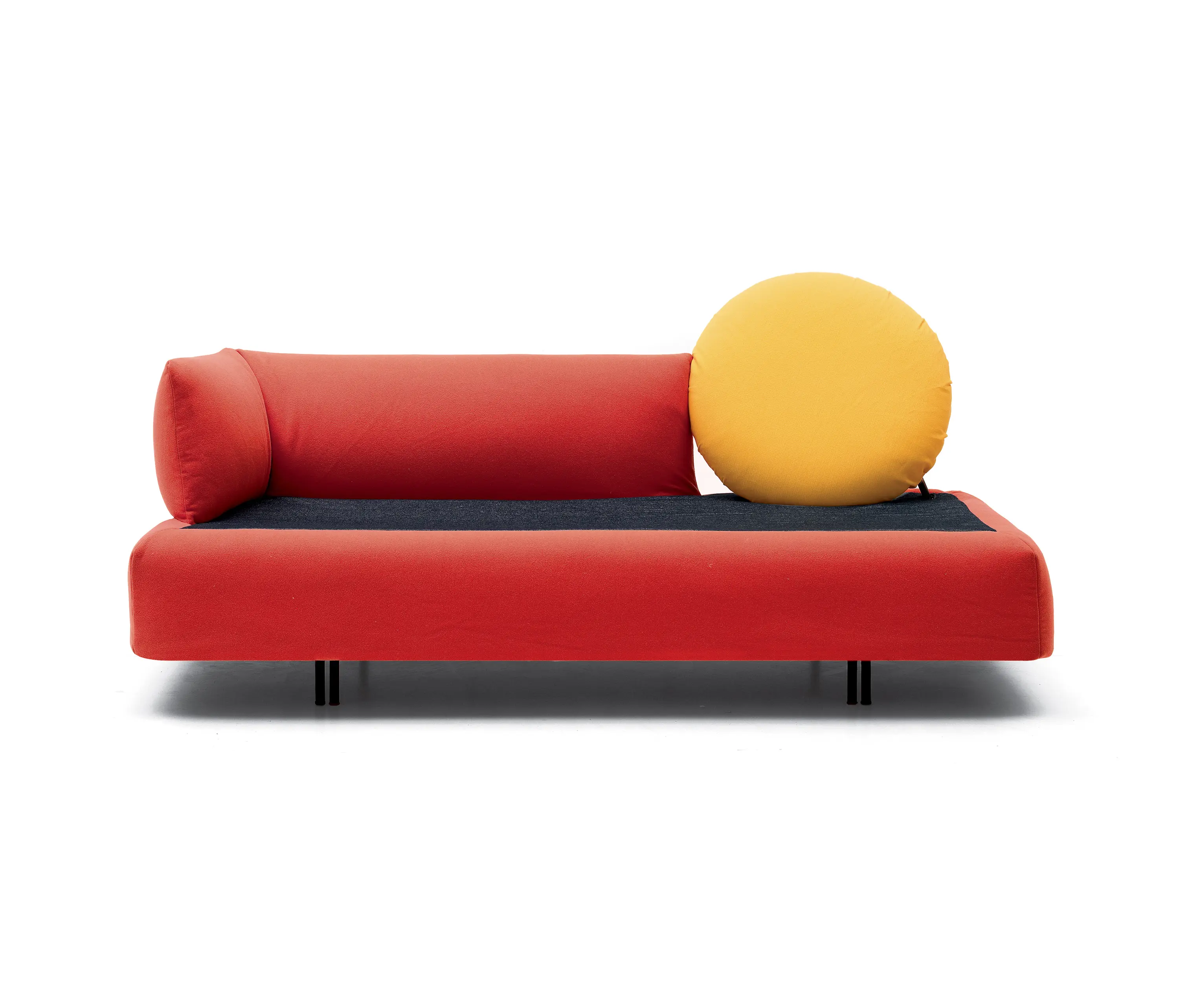
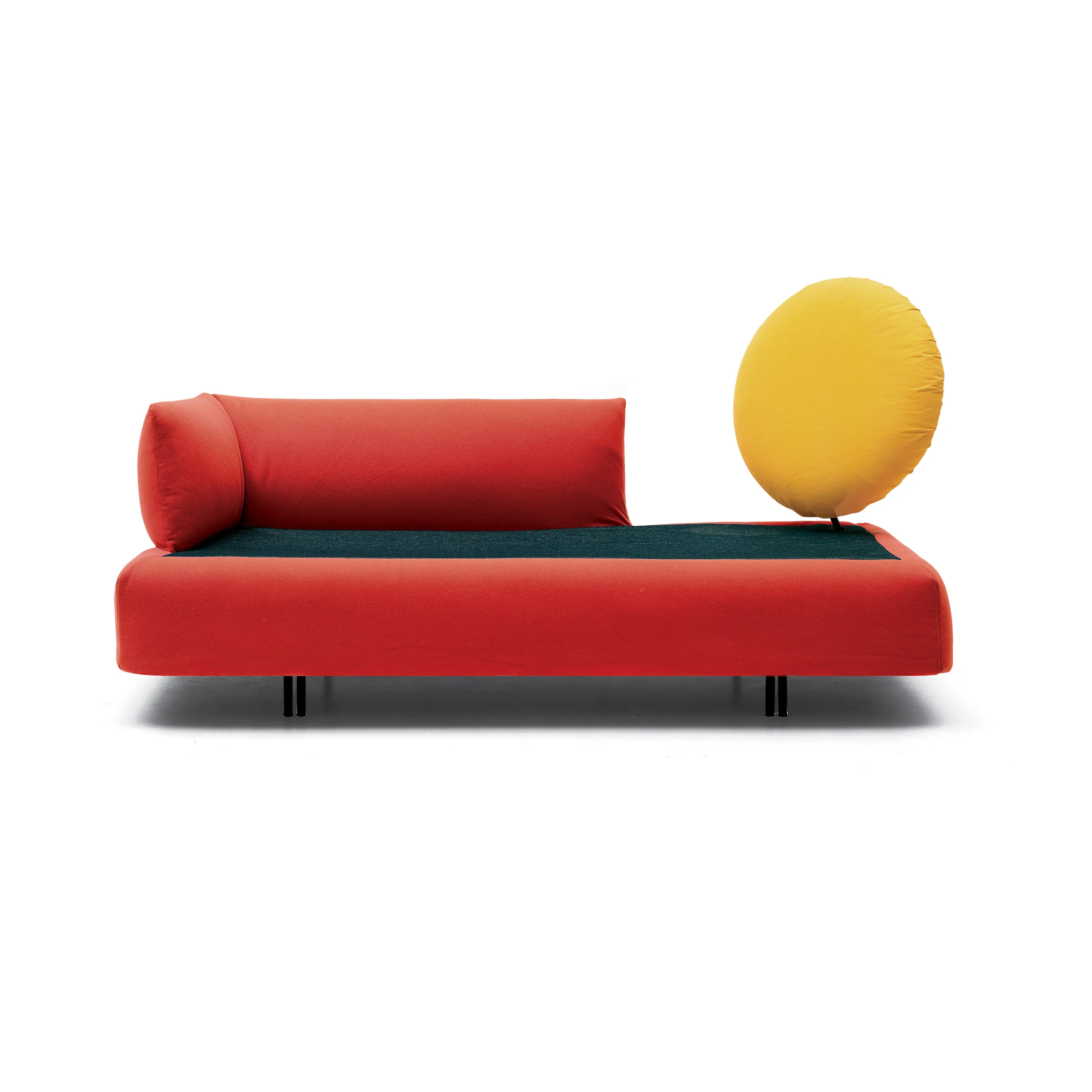
You don’t need to go against the rules if you can easily do without them. Just like Vico Magistretti who conveys a sense of liberty, with the lively imagination of a child to all his new projects. Oblò is a sofa which can be converted into an armchair, a single or a double bed and a chaise longue. Still, all these forms are equally important and no function is prevailing. The large round cushion rotates on an invisible pin and it can be both a backrest or a relaxing cushion. Both the steel frame, upholstered in polyurethane foam and fibre and the sleeping surface made of stratified beech with mattress in polyurethane foam, are of the highest quality. It is provided with fully removable covers available both in the bright colour combination designed by Magistretti and in thousands of other shades. Single bed 68 x 202 cm, Double bed 136 x 202 cm
Concepto
Oblò is a project out of rules; it is at the same time a sofa, a chaise-longue, a single or double bed. It is an undefined object to rest, to relax, to sleep: the natural flexibility of the component allows, in fact, whoever sits on it freedom to modify design and perfomance of Oblò to their preference.
Este producto pertenece a la colección:
Base abierta
Base cuatro patas
Red
De dos plazas
Asiento y respaldo tapizados, Con apoyabrazos
Residencial

Italy
Vico Magistretti was an Italian architect, as well as furniture and industrial designer. For many years he was a leading figure of Milan Rationalism, and developed timeless solutions for technical and formal problems. Vico Magistretti – a biography Ludovico Magistretti was born on 6 October 1920 in Milan. The son of an architect, he began his own architectural studies in 1939 at the Polytechnic University of Milan. In 1943, he left Italy during his military service, moving to Switzerland, where he attended architecture courses at the university in Lausanne. It was in Switzerland that Magistretti encountered the architects Ernesto Nathan Rogers, a key moment in his intellectual and professional formation. 1945 saw Magistretti move back to Milan, where he graduated from the polytechnic. He went on to work with the architect Paolo Chessa in his father Pier Giulio’s firm. Originally involved in city planning for Milan, Magistretti migrated in the 1950s over to the industrial design of furniture and lamps, working primarily for manufacturers Artemide, Cassina, Fritz Hansen and Kartell. One of his most celebrated pieces is the Carimate chair for Cassina, which, over the years, has become a bestseller. Magistretti’s work has been exhibited internationally in many of the most important museums, from Europe and the USA to Japan. Several pieces can be found in the permanent collection of the Museum of Modern Art in New York. Vico Magistretti’s various accolades include the Grand Prix and a Gold Medal from the Triennale di Milano, two Compasso d'Oro awards and a gold medal from the Chartered Society of Industrial Artists & Designers. Magistretti taught for 20 years at the Royal College of Art in London and was recognised as a Royal Designer. He also taught at Milan’s Domus Academy and was honorary member of the Royal Scottish Incorporation of Architects. Vico Magistretti’s design work Magistretti’s designs are considered by many to enjoy a cult status when it comes to Italian design. He was without doubt a leading figure in the golden era of Italian product design, combining innovative ideas with rational functionality. His work was always thoroughly utilitarian, using the latest technologies to create timeless classics. Carimate Chair In 1959, Vico Magistretti designed the Carimate Chair for the golf club in Carimate, Lombardy. It quickly became the most popular seating choice for restaurants throughout Italy. Produced by Cassina since 1962, the piece saw the beginning of a long collaboration with the Italian manufacturer. Eclisse Table Lamp Vico Magistretti designed the Eclisse Table Lamp in 1967 for the Italian manufacturer Artemide. The light source is housed at the centre of a small, sculpture-like form. The design was awarded a Compasso d'Oro in 1967 and can be found to this day in numerous museum collections worldwide. © by Architonic