Compartir
Imprimir

Compartir
Imprimir
AJ Aplique
Architonic ID: 20281592
SKU: 90403-5743150500-01
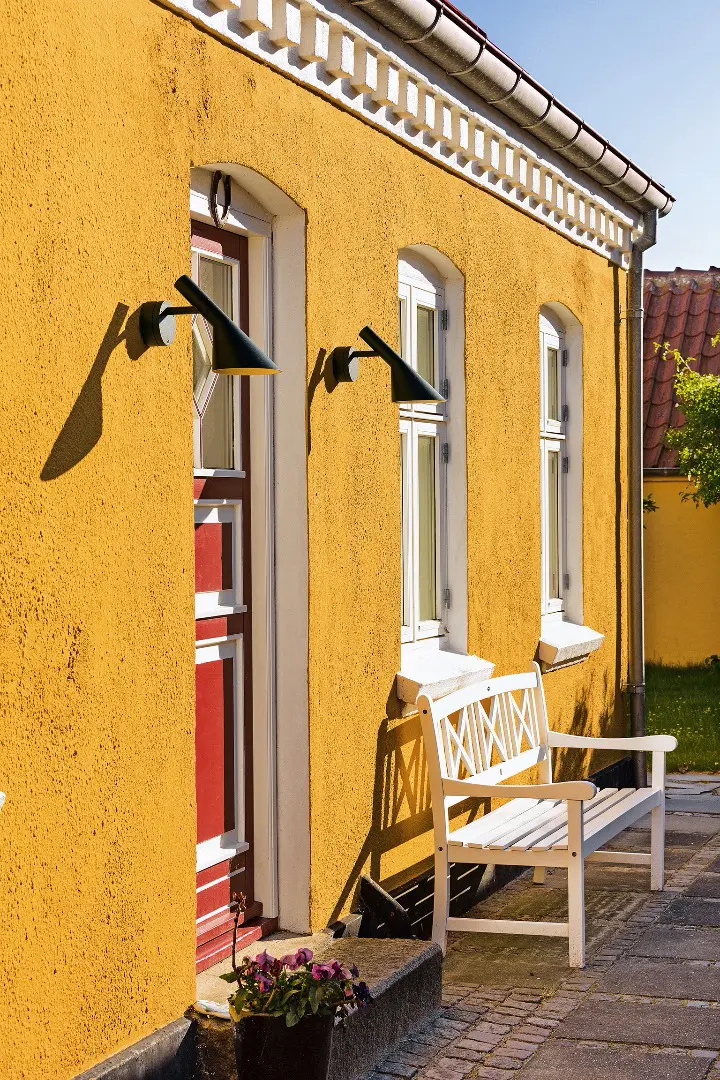
Arne Jacobsen diseñó la lámpara AJ para el SAS Royal Hotel de Copenhague (actual Radisson Collection) en 1957. Hoy día, la familia AJ se considera como el diseño que ha hecho famoso en todo el mundo a este arquitecto danés. Por aquel entonces, la familia AJ estaba compuesta por una lámpara de sobremesa y una de suelo, así como un aplique, otra pequeña lámpara de sobremesa y otra también de sobremesa diseñada para fijarse a la propia mesa. La lámpara de pared adornaba en bellas filas de acero inoxidable la recepción del hotel en el momento de su apertura en 1960. En combinación con la lámpara de suspensión AJ Royal, la lámpara AJ formaba parte del concepto de diseño global que Jacobsen ideó para el hotel. Arne Jacobsen no solo diseñó el hotel hasta el más mínimo detalle para SAS (Scandinavian Airlines), sino que diseñó también casi todo el mobiliario del hotel y otros objetos utilitarios. La silueta de la lámpara AJ, con sus líneas rectas y su combinación de ángulos oblicuos y rectos, no es solo vista como un paralelismo formal a la silueta de sus asientos Series 3300, sino también a la propia geometría de sus edificios. La lámpara AJ, en cobre y acero inoxidable, se empleó en varias zonas del hotel. Y, como la lámpara de suspensión AJ, estuvo inicialmente disponible en gris claro, marrón oscuro y negro. Desde entonces se llevan introduciendo, a lo largo de los años, nuevos colores en homenaje a los aniversarios de la serie.
En 2020, con motivo del 60 aniversario de la apertura del SAS Royal Hotel, hemos tenido el placer de reintroducir la AJ de sobremesa Mini, que encaja a la perfección en el alféizar de la ventana, en una mesita de noche o en combinación con otro mobiliario casual. Además, todas las versiones de la lámpara AJ se han reintroducido en su versión original de acero inoxidable, que refleja su entorno al más puro estilo Arne Jacobsen y subraya la forma minimalista y distintiva de esta lámpara, además de su impecable emisión de la luz.
Concepto
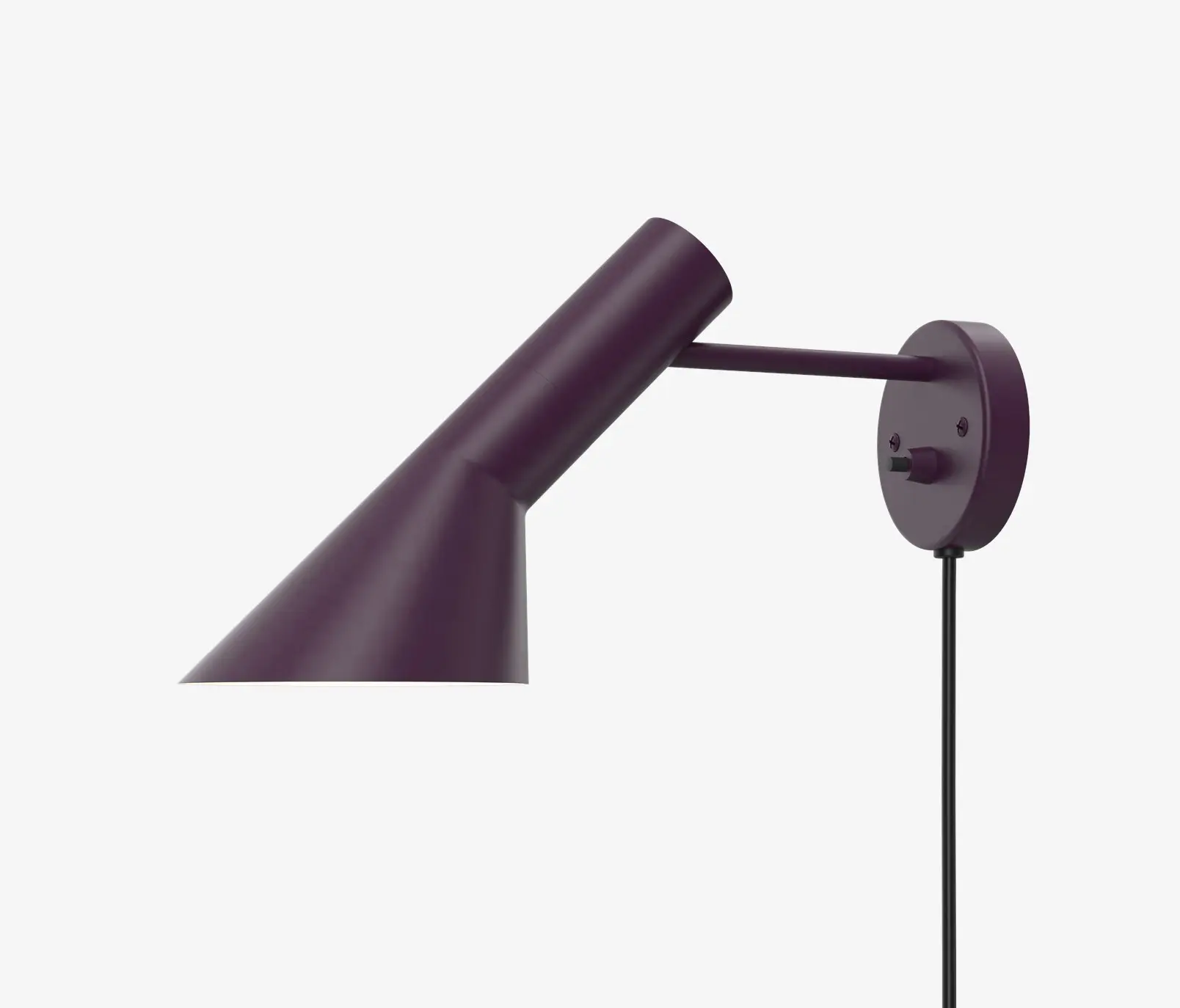
El Aplique AJ presenta una cabeza con forma asimétrica diferenciada que determina las características de la luz proyectada por la luminaria. La cabeza de la luminaria es inclinable. La singular calidad el estilo de diseño ha convertido esta luminaria en una clásica moderna. La placa posterior de la luminaria incorpora un interruptor.
Este producto pertenece a la colección:
Metal
Puedes visitar la página del producto para estas variantes, ¡simplemente haz clic en ellas!

Denmark
Arne Jacobsen was one of the most accomplished Danish designers and architects of the 20th century. His distinctly elegant style married the efficiency and clean lines of modernism with sensuous, organic forms found in nature. Biography Arne Jacobsen Arne Jacobsen was born in Copenhagen in 1902. Originally, he began an apprenticeship as a stonemason, but decided instead to study architecture at the Royal Danish Academy of Fine Arts in Copenhagen, which he successfully graduated from in 1927. One of Jacobsen’s first projects was a ‘House of the Future’, with a helicopter landing pad on the roof, which he designed together with Flemming Lassen. He also designed several larger projects, such as the Bellavista housing estate in Klampenborg. In 1942, Arne Jacobsen and Erik Moller won an architectural competition to design the City Hall of Aarhus, working together with the designer Hans J Wegner. Between 1956 and 1960, he worked on the SAS Royal Hotel (now the Radisson Blu Royal Hotel) in Copenhagen. The building was conceived as a total work of art, and the three architects designed every detail, from the Egg Chair and the Swan Chair, which owe their iconic status to their seductive, organic forms, down to the cutlery in the building. In 1956, he became a professor at the Royal Danish Academy of Fine Arts. The Munkegård school in Genofte, the Toms factory in Ballerup, the Danish National Bank and the Sports Hall in Landskrona, were all pioneering works of Scandinavian modernism designed by Jacobsen. Some of Jacobsen’s international projects, such as the school building for Christianeum in Hamburg and the Danish Embassy in London were only completed after his death in 1971. Designs by Arne Jacobsen Jacobsen designed furniture, textiles, cutlery and wallpapers among other things, but his most famous projects are his chairs. His 1952 Ant Chair, together with his later Series 7 Chair became some of the most commercially successful designs ever produced. Jacobsen's work is influenced by the iconic architecture and furniture of Le Corbusier and Ludwig Mies van der Rohe. In his quest for perfection, he was not afraid to investigate new and even radical ideas. He always worked to produce objects industrially, while imbuing them with a certain handmade quality; an approach that became the hallmark of modern Danish design. Jacobsen’s Swan Chair Designed for the lobby and lounge of the SAS Royal Hotel, Jacobsen's Swan Chair of 1956 is deemed by many to be a true turning point in furniture design. Inspired by the bird’s elegant, soaring wings, the innovative design abandons straight lines in favour of sweeping curves and organic forms. The chair's sensuous sculptural qualities and bold colours epitomise the optimism of the 1960s. The Swan Chair was first produced by the Danish manufacturer Fritz Hansen, who continue to produce it to this day. Egg Chair Like the Swan Chair, the Egg Chair was also designed for the SAS Royal Hotel in Copenhagen. The armchair's generous size means it was used to furnish the hotel's lobby. The Egg Chair's restrained form is made seductive by the organic shapes reminiscent of an oval eggshell. Because of its unique, comfortable design, it is one of the most popular chair designs of the 20th century, and continues to be manufactured today by Fritz Hansen. © by Architonic


