Designing spaces for serendipity
Wilkhahn explores how in-between spaces shape creative culture, foster spontaneity and turn office users into co-authors of space.

By Wilkhahn for

Wilkhahn
June 4, 2025 | 12:00 am CUT
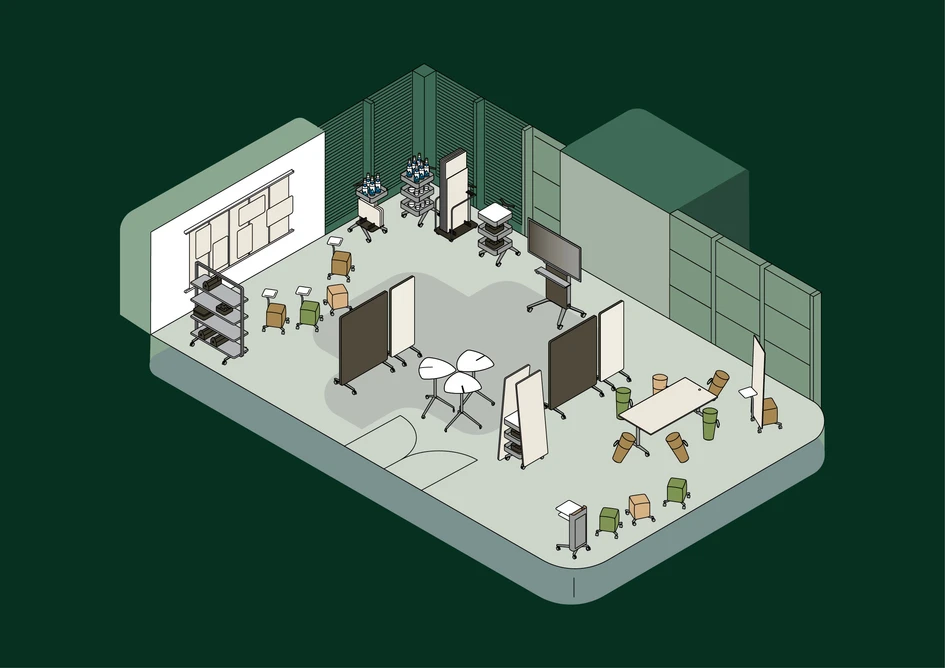
Areas of Future Design. A creative hotspot for spontaneous encounters and ideas
Not every breakthrough starts in a meeting room. Some of the most valuable ideas, relationships and shifts in perspective arise from chance encounters – at the coffee machine, in a hallway or between two tasks. In the hybrid world of work, where presence is precious, these in-between moments gain new significance. But they don’t just happen by magic. They happen in places that invite people to cross paths – and linger.
In the first issue of Wilkhahn’s latest publication series Office On Stage, the conference and office furniture manufacturer explores the opportunities of shaping agile collaboration, devoting a full chapter to the phenomenon of “In-between Spaces for Empowerment and Improvisation.” Rather than treating circulation areas and transitional zones as afterthoughts, the chapter calls on architects, designers and planners to curate these spaces as cultural tools – not only for interaction, but for participation, visibility and shared authorship.
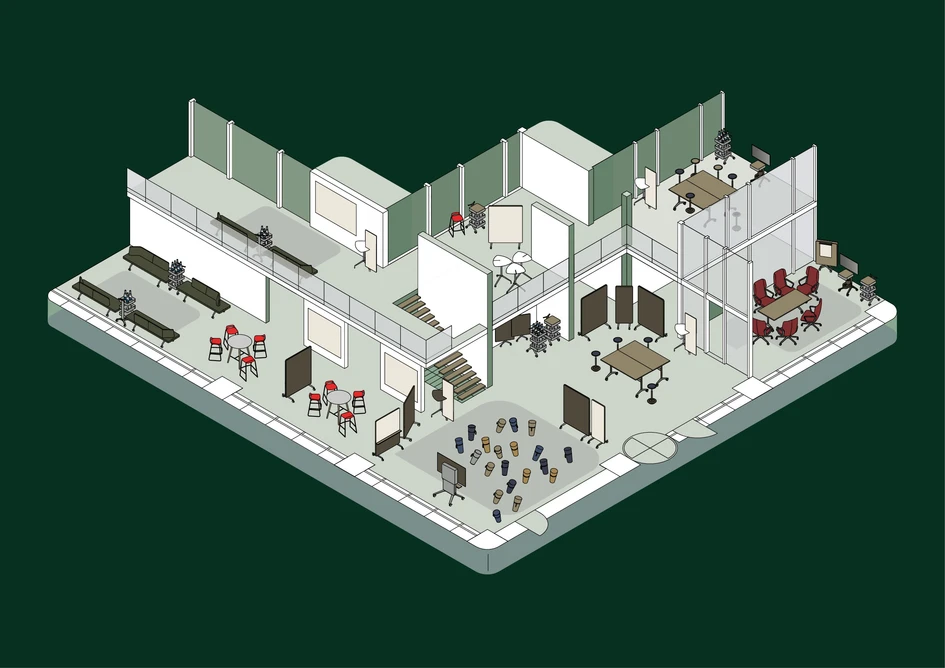
Open space in motion: A flexible setting that sparks collective creativity and self-organised collaboration
From corridors to catalysts
Terms like 'office village' or 'office city' reflect a new understanding of the workplace as a social organism. The 'in-between' areas – passageways, alcoves, foyers or leftover spaces between desks and zones – become the subtle infrastructure of office life. Whether they energise that life, however, depends on how they are designed.Wilkhahn frames this through three guiding questions:
1. Is there a reason to visit this space (e.g. snacks, information, scenery, rest)?
2. Is it easily accessible and barrier-free (and near enough not to feel like a detour)?
3. Does it invite people to stay and interact (through comfort, atmosphere and informal utility)?
These questions are not aesthetic trivia. They are cultural design prompts. When in-between spaces are inviting, they enable spontaneity – a precious commodity in times of remote work, busy calendars and spatial fragmentation.
Designing the moment
With Office on Stage – Corporate Hybrid Wilkhahn offers practical strategies for turning generic zones into cultural stages:- Placing information screens or intranet terminals at intersections
- Offering snack points and coffee stations to trigger casual interaction
- Using compact seating or fire-safe wall tiles as perching spots
- Integrating good lighting, airflow and acoustic calm
- Ensuring barrier-free accessibility for universal participation
It also proposes a shift in mindset: to see open, central spaces as 'projects in progress'. These are not only transit areas – they are places where work, learning and community happen as they form. When equipped with the right tools, these zones support brainstorms, knowledge exchange, spontaneous celebrations or informal debate – without prior scheduling.
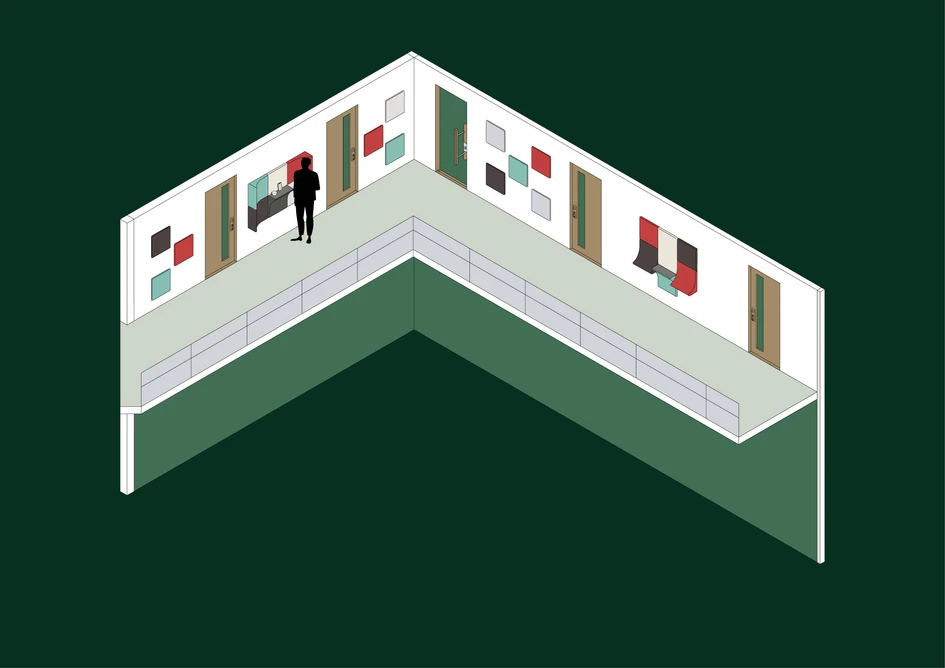
In-between spaces are not left-overs in the floor plan – they can be an impulse for interaction
Tools for improvisation
To enable this agility, architects and designers should choose flexible, mobile and intuitive modules, such as:- Foldable tables and stackable chairs for immediate setups
- Mobile acoustic panels to zone spaces without permanence
- Writable whiteboards and mini-liteboards for sketching and visual collaboration
- Mobile catering units or material servers to support informal rituals
This approach empowers a key transformation: from passive consumers to active collaborators. Employees are no longer just users of space – they become co-authors of their environment.
Culture by design
Ultimately, Wilkhahn’s Office on Stage calls for a new type of responsibility – one that is spatially and socially visible. It’s not enough to install breakout furniture or call a corner a 'lounge'. If the goal is to support creative empowerment and improvisation, the environment should enable this without instruction.Design, therefore, becomes a quiet enabler of agency:
- Inviting people to move, shift and rearrange
- Removing barriers to participation
- Encouraging small rituals of collaboration
And while these spaces are humble in size, they are rich in potential. They make everyday culture tangible – and transform the workspace into a resonant stage for interaction.
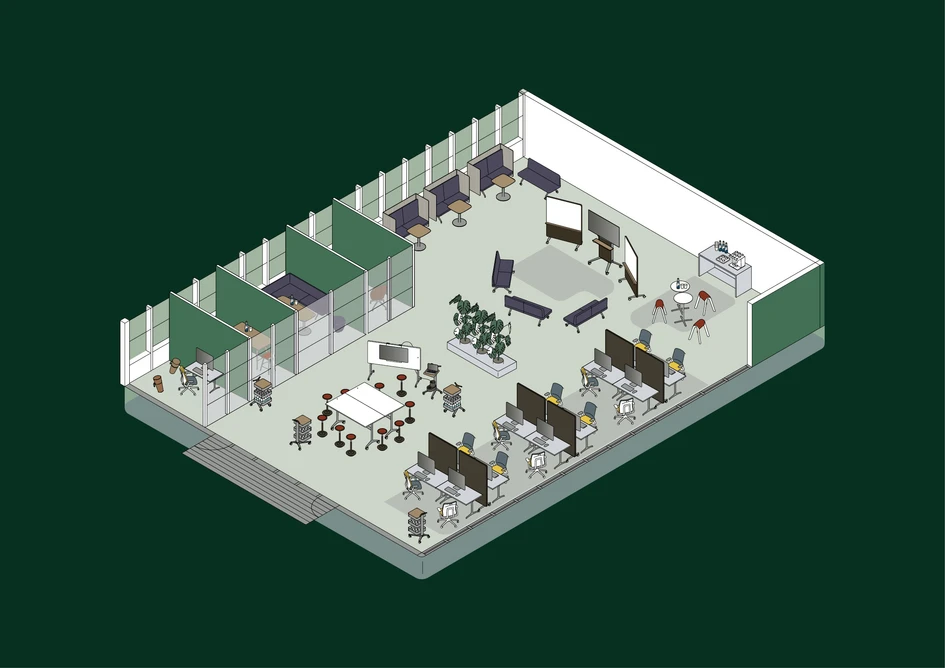
Smart and striking: The Confair Next series provides flexible elements that support movement, focus and idea sharing
Setting the office on stage
Office on Stage is Wilkhahn’s latest contribution to rethinking office design. The publication series presents the workplace as a dynamic stage – animated by changing roles, spontaneous encounters and collaborative energy.Structured like a theatre play, it offers architects, planners and designers a new kind of playbook where furniture becomes the protagonist. The focus shifts from rigid efficiency to flexible environments that support improvisation, expression and identity-building.
Rooted in Wilkhahn’s long-standing tradition of knowledge sharing – dating back to the seminal Planning Guide for Conference and Communication Environments (published by Birkhäuser 2008) – Office on Stage fuses conceptual thinking with practical guidance.
Central to the concept is Confair Next, Wilkhahn’s next generation modular system. With its mobile, multifunctional elements, it exemplifies spatial transformation. Benches turn into platforms, walls become backdrops, and every piece invites interaction. Here, adaptability isn’t a feature – it’s the foundation.

Can be ordered digitally for browsing or as a high-quality working copy: The 120-page 'program booklet' for various forms of agile collaboration
Download for inspiration
Designers, architects and creatives looking for concrete inspiration can explore these ideas in detail in Wilkhahn’s publication Office on Stage – Corporate Hybrid.Chapter V – In-between Spaces for Empowerment and Improvisation – is especially relevant for those who want to move beyond classic typologies and design meaningful momentum into the flow of work.
Because sometimes, the most important part of the office is what happens between the desks.
Project Gallery


