'By combining the most advanced technology and the greatest possible attention to materials and techniques, SCIC have given life to an innovative yet artisanal product'
With its roots in Parma, SCIC has avoided manufacturing its designs cheaply abroad — and with good reason. Parma is located in the Emilia Romagna region, renowned for producing goods to the highest standards. Operating from its 70,000sq m production plant, SCIC creates and distributes its kitchens all over the world. This houses workshops, showrooms and offices, allowing the business to be self-sufficient. SCIC has over 70 years’ experience of developing and refining its kitchens and so draws on its own wealth of expertise. Its locally produced goods more than qualify for the label ‘Made in Italy’.
Sustainability is also deeply engrained in SCIC’s culture. Arguably, manufacturing goods locally at a centralised plant rather than in several places or abroad is inherently sustainable since this reduces fuel consumption and pollution caused by transportation. Some years ago, in a conscious effort to be environmentally friendly, SCIC covered its plant with solar panels, becoming the first Italian company to fabricate its goods using renewable solar power only. When manufacturing its products, it minimises its reliance on harmful formaldehyde and only uses timber from woodland where reforestation occurs, ensuring its kitchens are fully recyclable.
'Although now in the distant past, Canossa’s reputation for scholarship lives on, forging new bonds with our daily search for things done well, which is deeply rooted in Italy’s great craftsmanship tradition'
A broad-minded approach to materials is the bedrock of SCIC’s unique designs. Take its kitchen collections, Canossa, Pompei, Labirinto and Monolite, produced using a nuanced lexicon of materials to create richly textured kitchens and convey the character of each design. Just as SCIC identifies itself with the label ‘Made in Italy’, so it mines ancient Italian history for inspiration.
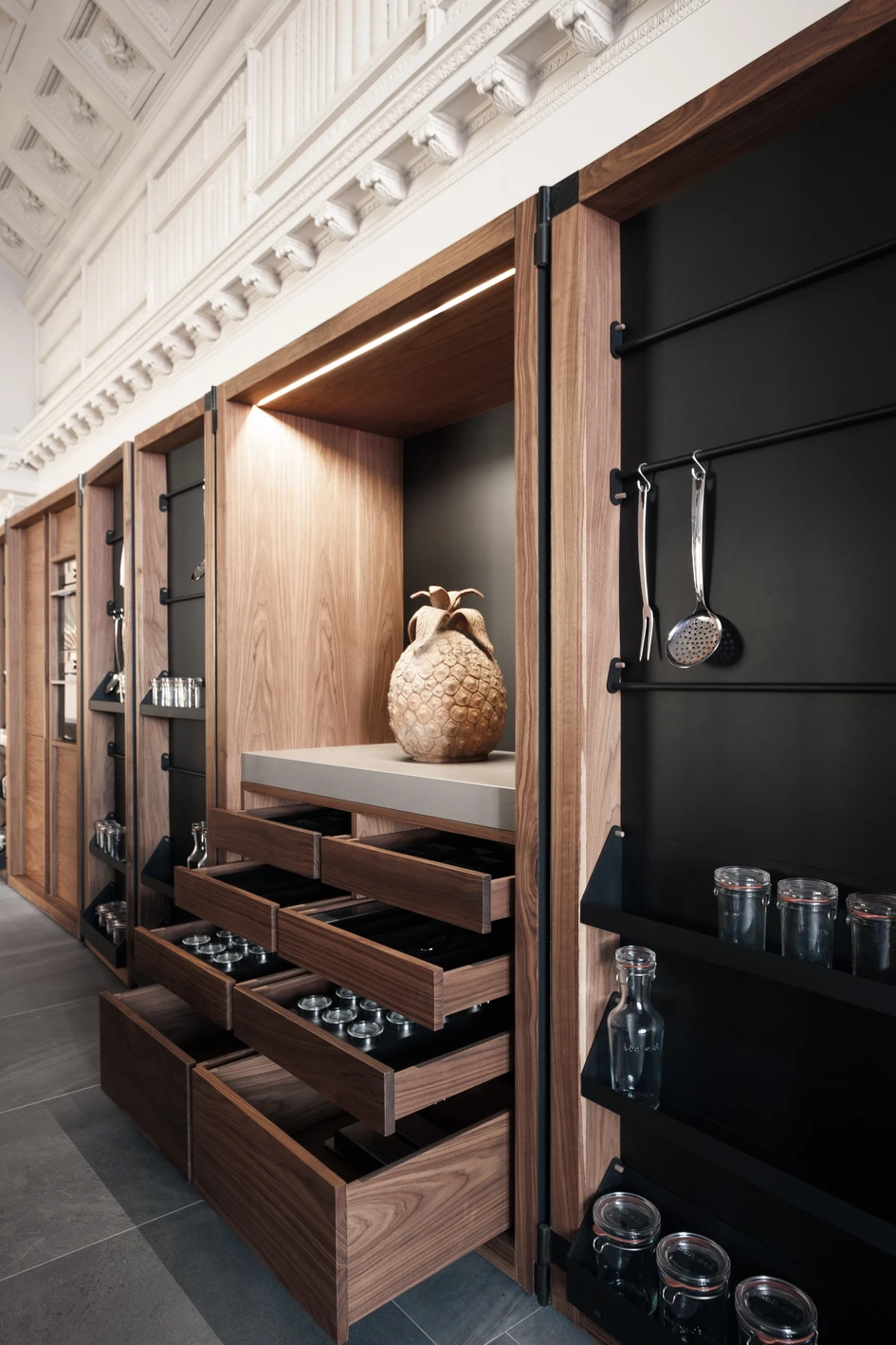
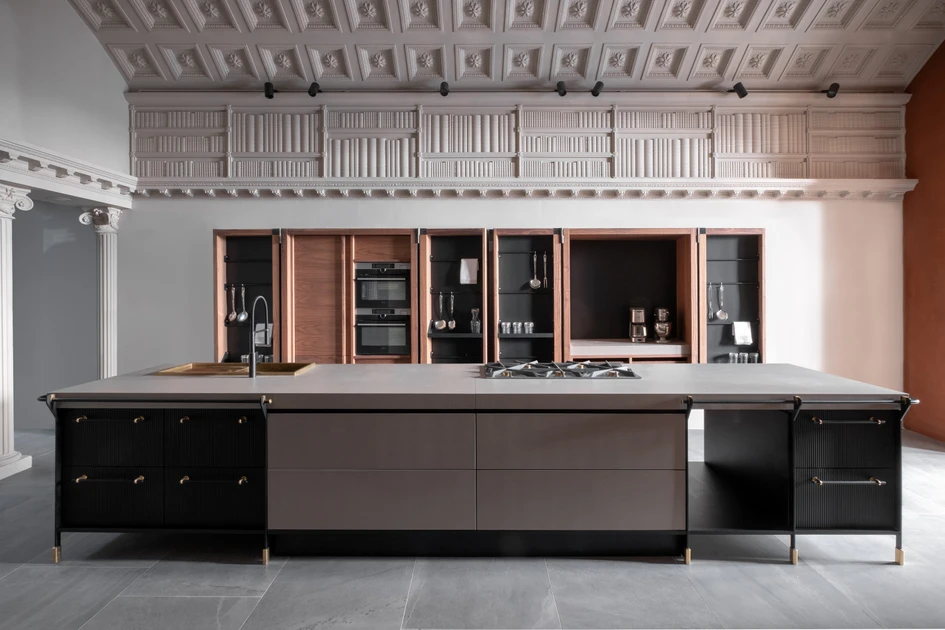
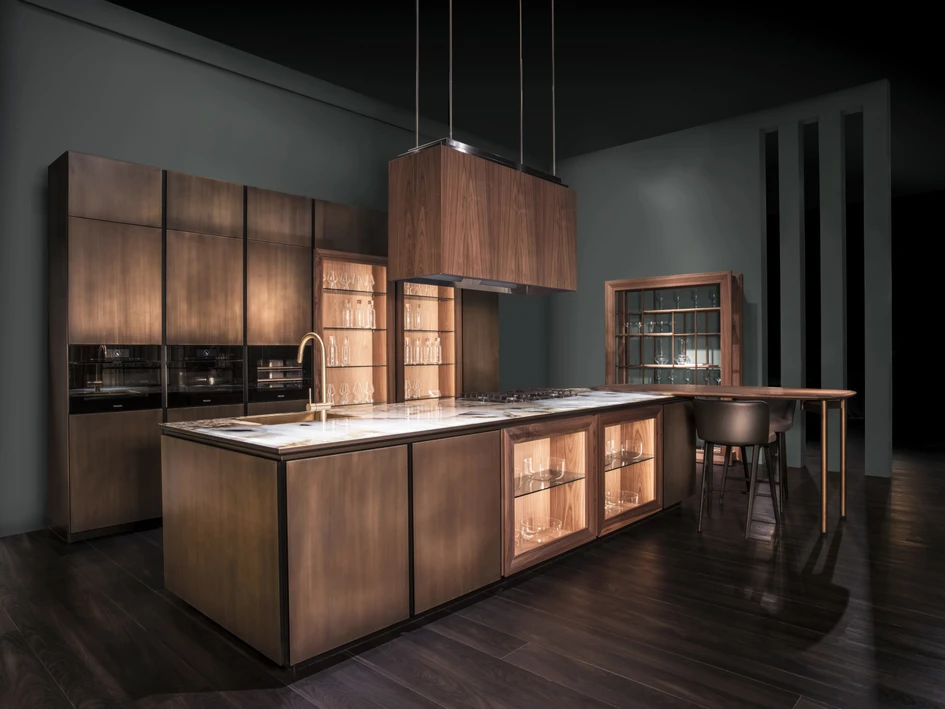
Designed by Ser-Jøhn & Co, Canossa references the eponymous town and its ruined castle in the Emilia-Romagna region where SCIC is based. The castle once belonged to medieval ruler Matilda of Tuscany, a well-read cultural ambassador for the area. Although now in the distant past, Canossa’s reputation for scholarship lives on, forging new bonds with our daily search for things done well, which is deeply rooted in Italy’s great craftsmanship tradition.
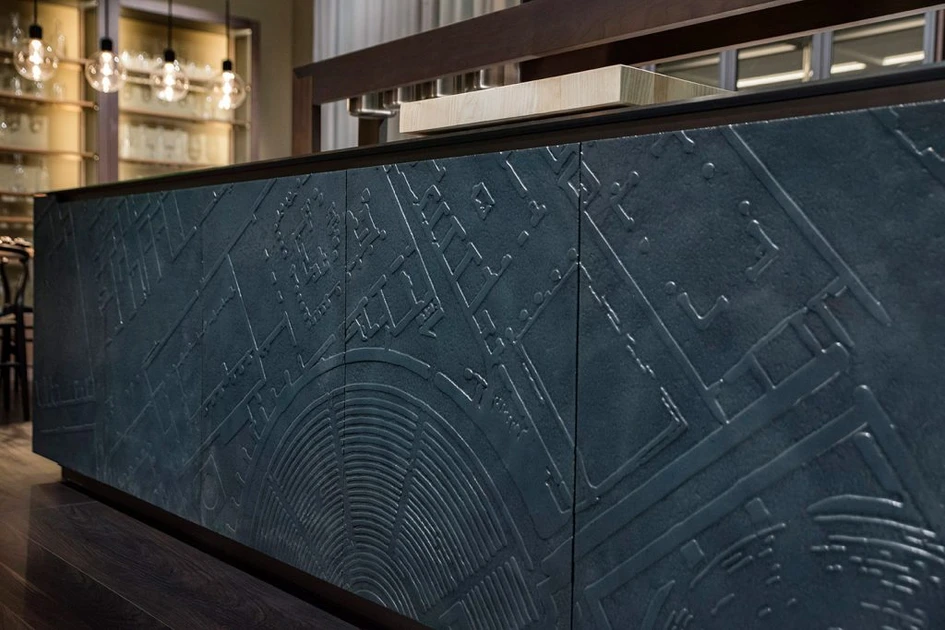
It incorporates a multi-layered spectrum of materials. Its stoneware worktops and Canaletto walnut handles look utilitarian yet recall well-appointed country-house kitchens. By contrast, its drawers fronted by fluted glass suggest luxury. That said, Canossa, which features doors that open at 180°, satisfies a desire for practicality. As its name suggests, Pompei stretches further back into Italian history. Its cabinets are fronted with lava stone etched with aerial views of the city once buried in ash from Mount Vesuvius. The lava stone is sustainable — sourced, appropriately, from the foot of the volcano.
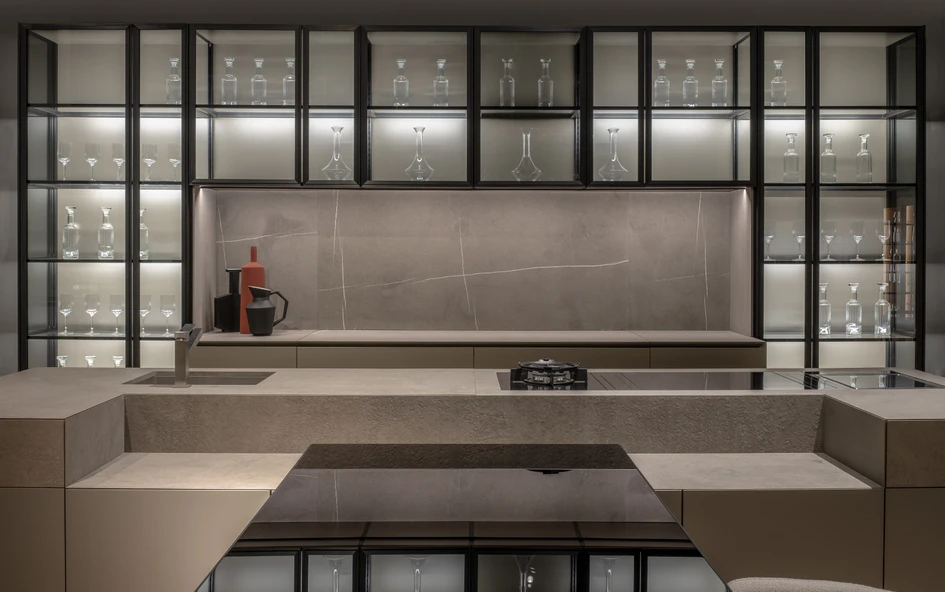
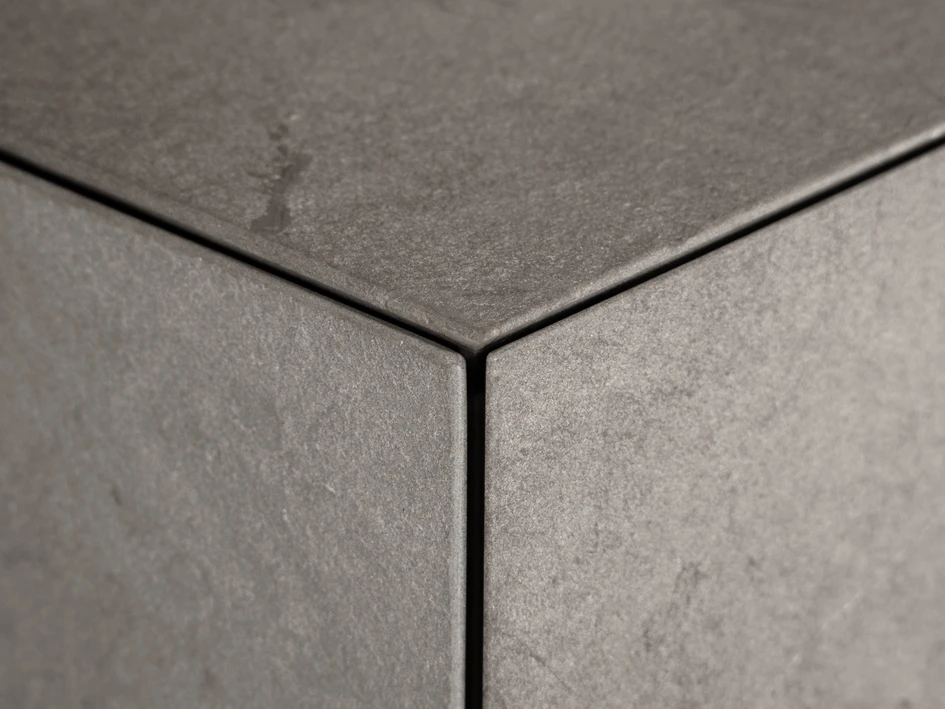
Labirinto, co-designed by architects Anna and Enrico Cattaneo, pays homage to Parma’s Labirinto della Masone di Fontanellato, known for its immersive bamboo maze designed by Franco Maria Ricci, creator of SCIC’s original, 1960s hexagonal logo. Labirinto mimics a natural setting by featuring organic materials in warm, tawny tones that feel enveloping and inviting. By contrast, the streamlined, understated Monolite is determinedly contemporary, although its monolithic forms fashioned from subtly striated limestone have a timeless appeal.