'The body doesn't change': Patrick Jouin gets comfortable
The Compasso-d'Oro-winning Parisian on his latest collaboration with PEDRALI, when waiters get too close, and how the Egyptians had it right.


By PEDRALI and Simon Keane-Cowell for

PEDRALI
May 7, 2025 | 03:00 am CUT
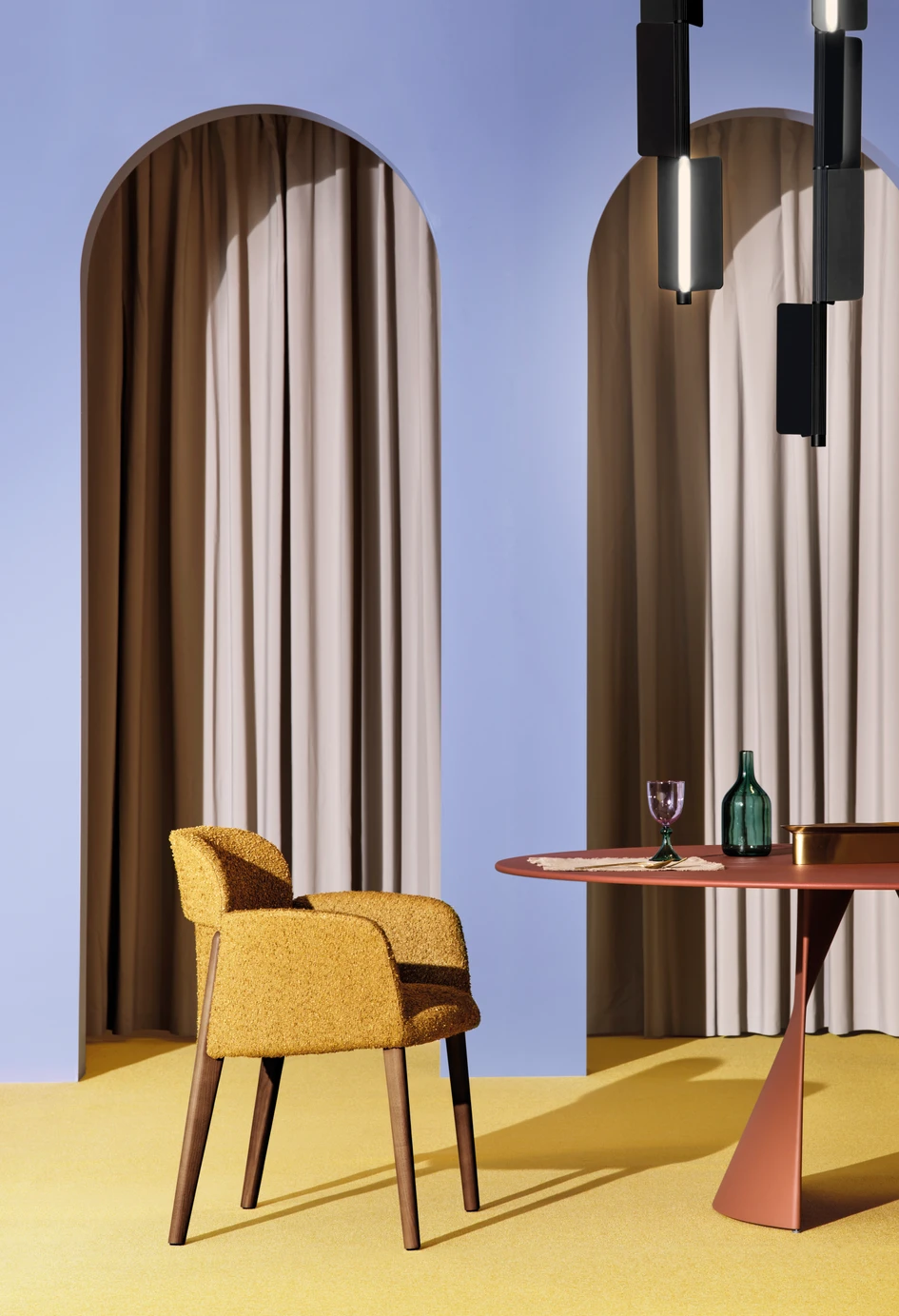
Designed by Patrick Jouin, Pedrali’s Opale armchair is a companion piece to Ester, which debuted 10 years ago for a Michelin-starred restaurant. Photo: Omar Sartor, art direction: Studio FM Milano, set design & styling: Studio Milo

Patrick Jouin: ‘We’re always experimenting. Doing our own research to see how we can do things better’. Photo: Thomas Duval
What is Opale? Why did you design it?
Well, it’s 10 years since I designed the Ester for Pedrali – whose name comes from The Dorchester in London, as the armchair was originally created for Alain Ducasse’s Michelin-starred restaurant there. It was all about elegance, ergonomics and functionality, and you can now find Ester everywhere. It’s been a real success."
‘It took me three years, in total. A real labour of love. We went through many, many iterations’
What were the challenges that you faced in the design process then?
Giuseppe Pedrali [CEO and Operations Director at Pedrali] loved my sketches, but every time we tried to transform the sketch into something bigger in 1:1 scale, we were touching on problems of fabrication. So, I had to rework, to really go into the DNA of this little sketch and try to transform it.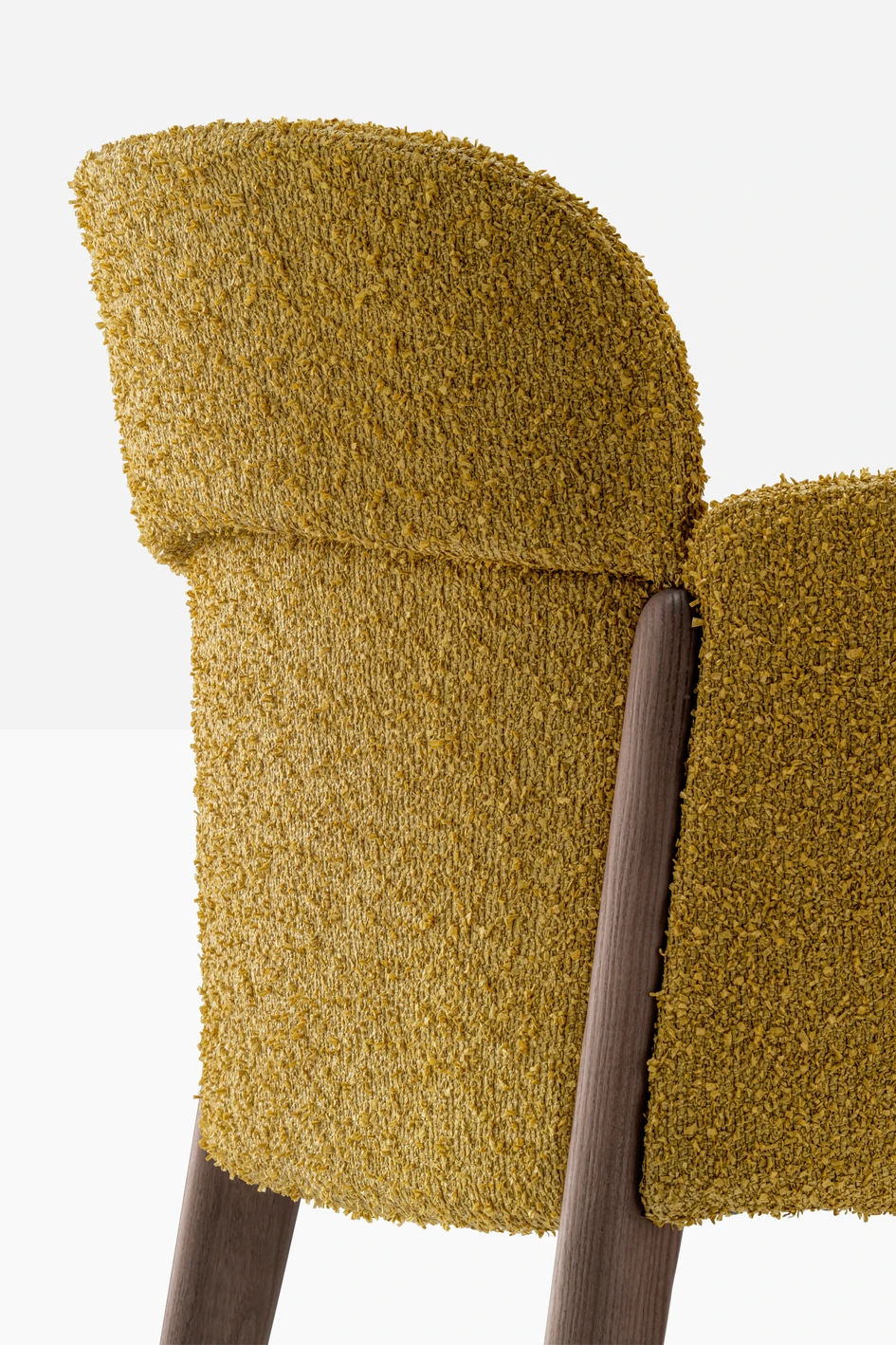
What one feature of Opale’s would you like to highlight?
I’m always thinking about the usage of products. And was struck by the fact that when a waiter pulls a chair out for you or helps you sit in to the table, there’s no proper place for them to put their hands. And sometimes it’s uncomfortable as they’re too close to the customer. So I integrated a handle into Opale’s backrest seamlessly, which makes the armchair much easier to manoeuvre."
‘It’s a bit like a pop song, where you’ve only got a minute, or even a few seconds, to convince the audience’
My highlight would be the junction at the back of the chair, where the legs, armrests and backrest meet. Beautifully considered.
...Is it a case of leveraging the visual performance of a design to communicate an elevated experience of comfort to come, when the user actually sits down? A kind of visual contract or promise, if you will.
Well, it’s a bit like a pop song, where you’ve only got a minute, or even a few seconds, to convince the audience that it’s something special. With Opale, you look at it and you immediately understand.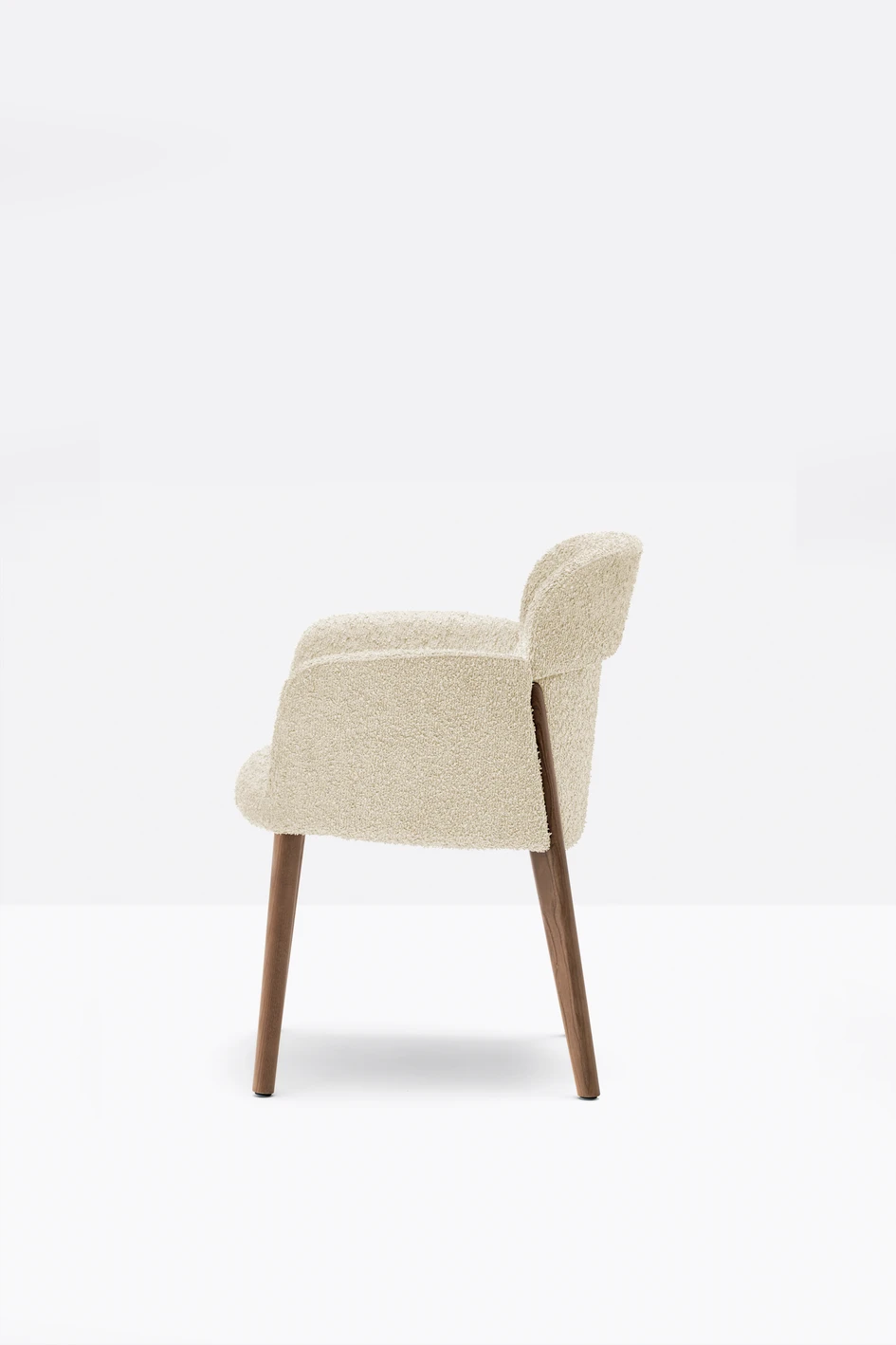
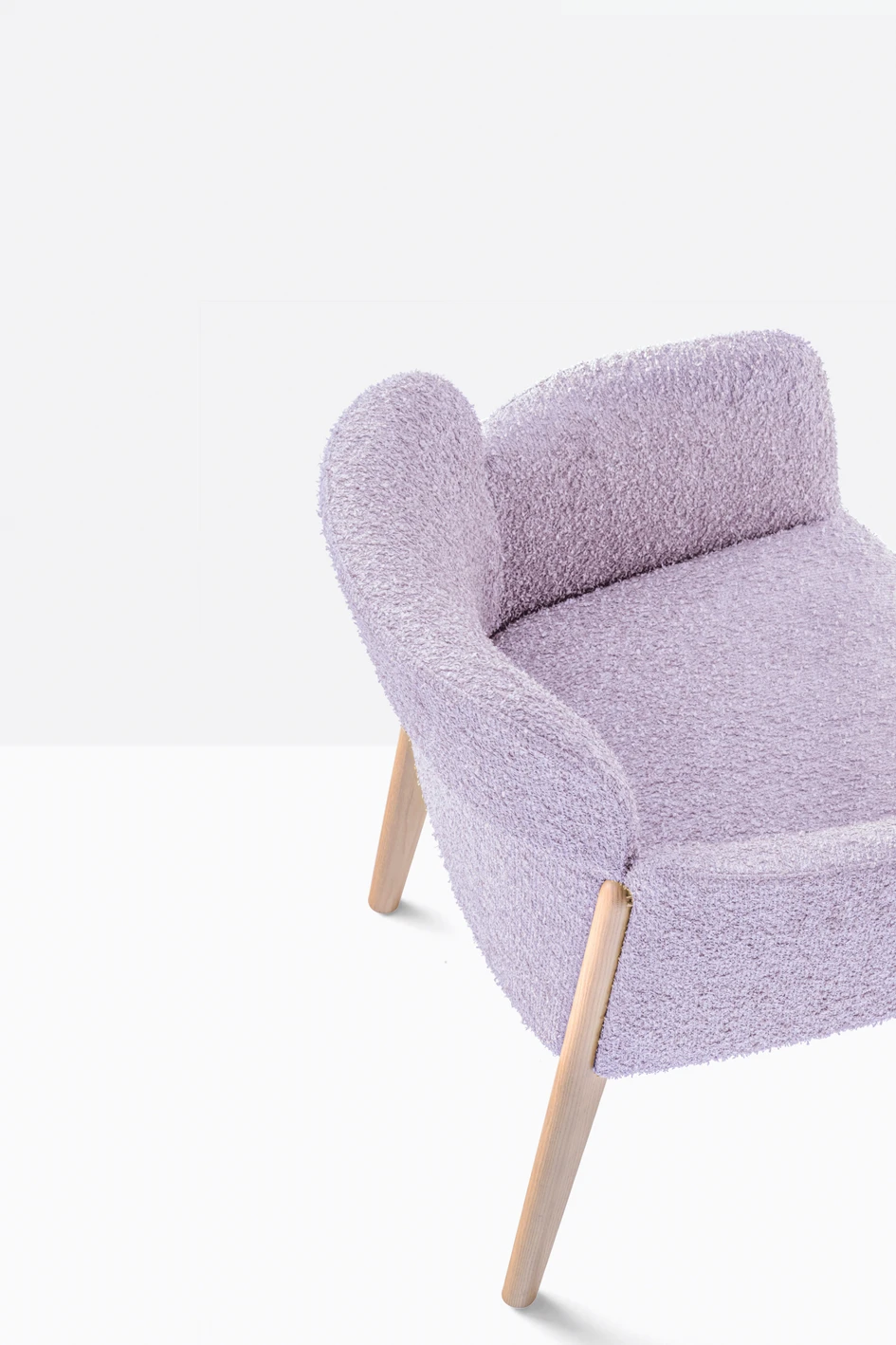
A three-year process of refinement has led to Pedrali’s Opale, an armchair designed for hospitality spaces with thoughtful attention to every detail
Patrick, how has your perspective on chair design changed in the past 10 years?
We’re always experimenting. Doing our own research to see how we can do things better. I’ve moved away from plastic as much as possible, of course. And the next challenge is foam. But nothing is glued in Opale, so everything can be disassembled at end of life."
‘Yes, we’re going through a big shift right now. But, at the same time, the shape of the body doesn’t change’
And from looking back to looking forward: do you think the chair as the recognisable design typology we know today, will change radically?
Well, in the 1960s, designers invented new ways of sitting, but this was more political than anything else. To be honest, I think radicality appears when there are big shifts in society. And, yes, we’re going through a big shift right now. But, at the same time, the shape of the body doesn’t change. There was an exhibition in Paris a few years ago on the Egyptian tomb and it included a chair that was thousands of years old but looked like it had been taken from a shop. It was amazing. Wood, painted black. It was like a Bauhaus chair. So what have we been doing?Head to the Architonic Magazine for more insights on the latest products, trends and practices in architecture and design.
Project Gallery


