Shelf-life
In the retail world, bookstore interiors are arguably changing more radically than in any other sector. Time was when bookshops appealed for being old-world and fusty, with their labyrinthine layouts, faintly musty smells and eccentrically bookish proprietors. One example might be Paris’s Shakespeare and Company bookshop, founded by Sylvia Beach in 1919. Fast-forward to the 1990s, and bookshops had become megastores incorporating cafés and comfortable leather armchairs where customers could browse for hours and sip cappuccinos.


By Studio MK27 and Dominic Lutyens
December 15, 2014 | 11:00 pm CUT
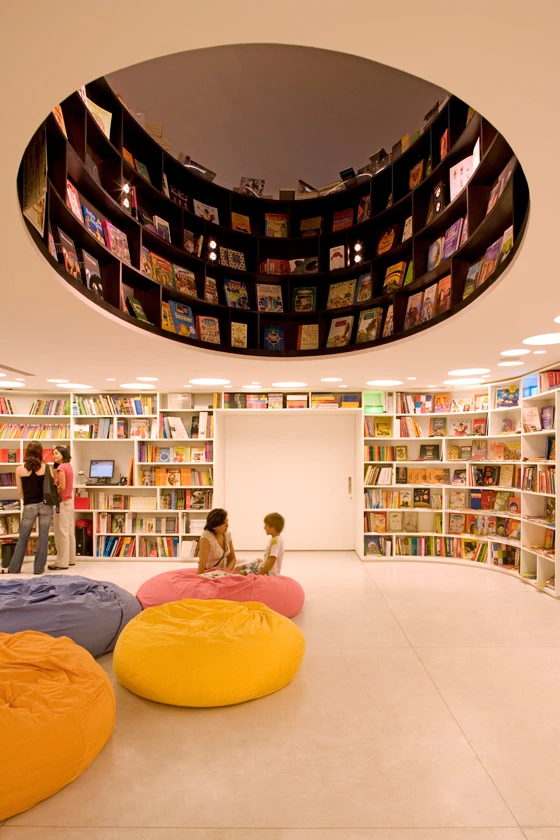
With its apertures connecting different floors, Isay Weinfeld’s Livraria da Vila bookstore in São Paulo anticipated the trend for more transparent interiors in bookshops that’s now increasingly common
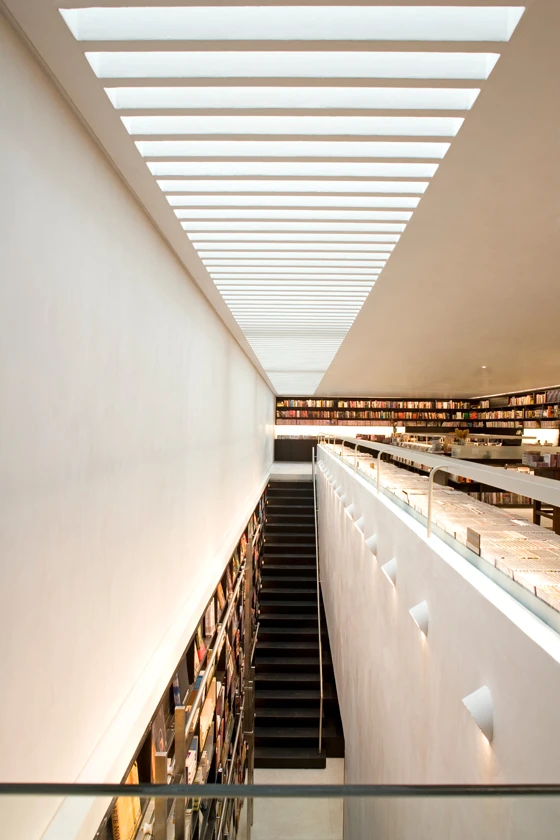
Another view of the store, formerly a two-storey house on a narrow site. The top floors have no windows, but skylights draw natural light into the store
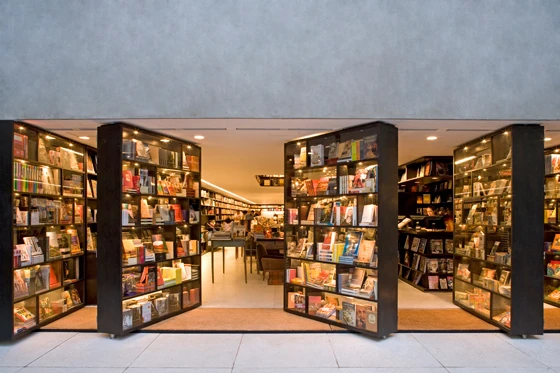
A note of whimsy is struck by revolving bookcases — suggestive of opening a book — that line the store front
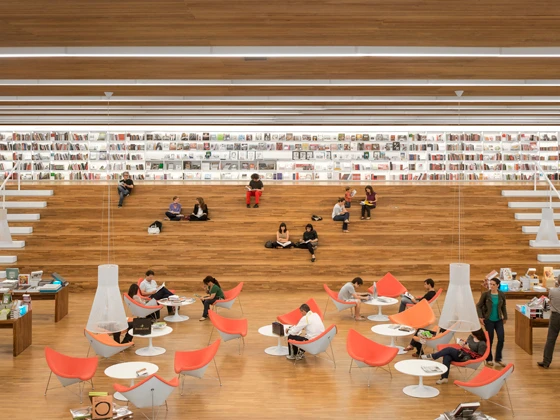
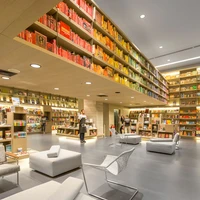
The top floor in MK27’s Livraria Cultura, in São Paulo’s Iguatemi shopping centre. Its lead architect Marcio Kogan describes the shop, which also hosts cultural events, such as a ‘Bookstore of the 21st Century’
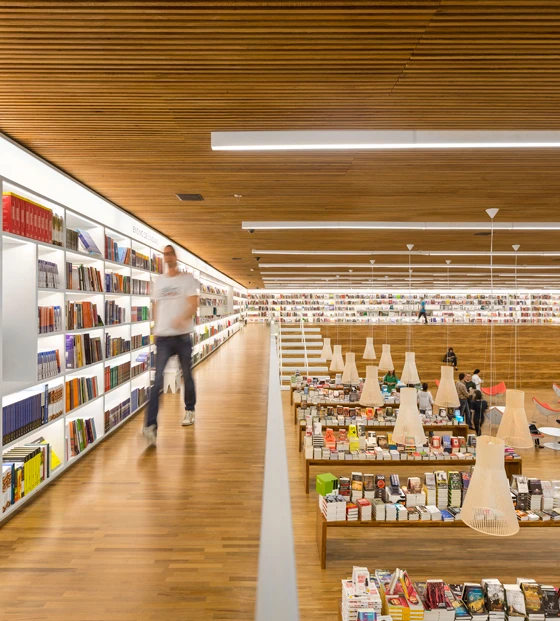
A mezzanine level skirts the periphery of Livraria Cultura’s top floor, providing access to books on the uppermost shelves
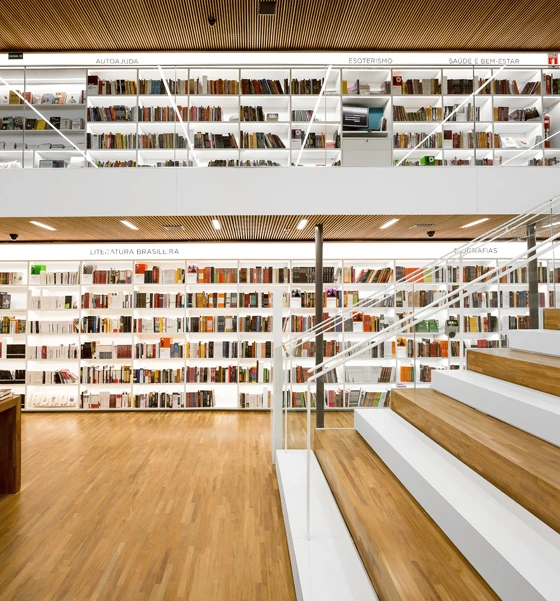
At one end of wide wooden benches that resemble seating in a stadium, white stair treads have been cleverly added to create a staircase

At leading Brazilian bookseller Saraiva’s flagship store in Rio de Janeiro, designed by architect Arthur Casas, books on the higher shelves are arranged by colour not category, to decorative effect
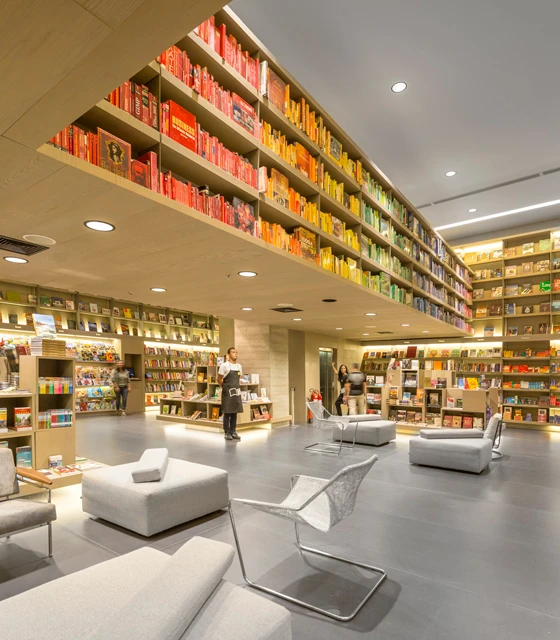
The area below, dotted with furniture by Sergio Rodrigues, was designed to feel like a public square
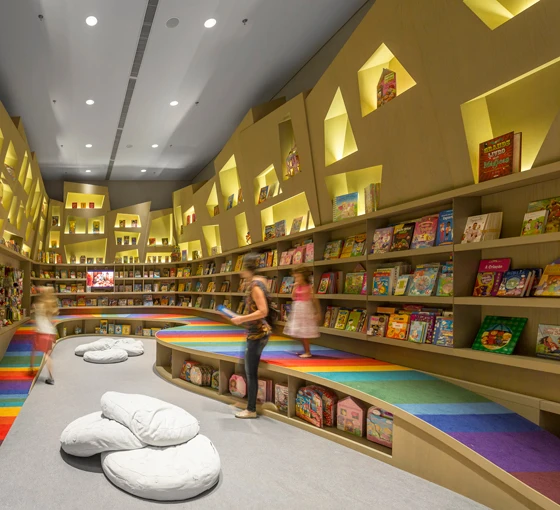
The basement is devoted to a children’s area. A ramp with multicoloured stripes inevitably echoes the store’s conceit of arranging some books by colour rather than by category
Project Gallery