Share
1/7

Victory 200
Share
- Home/Auditorium seating/
Victory 200
About this product
Architonic ID: 1274487
Year of Launch: 2008
Concept
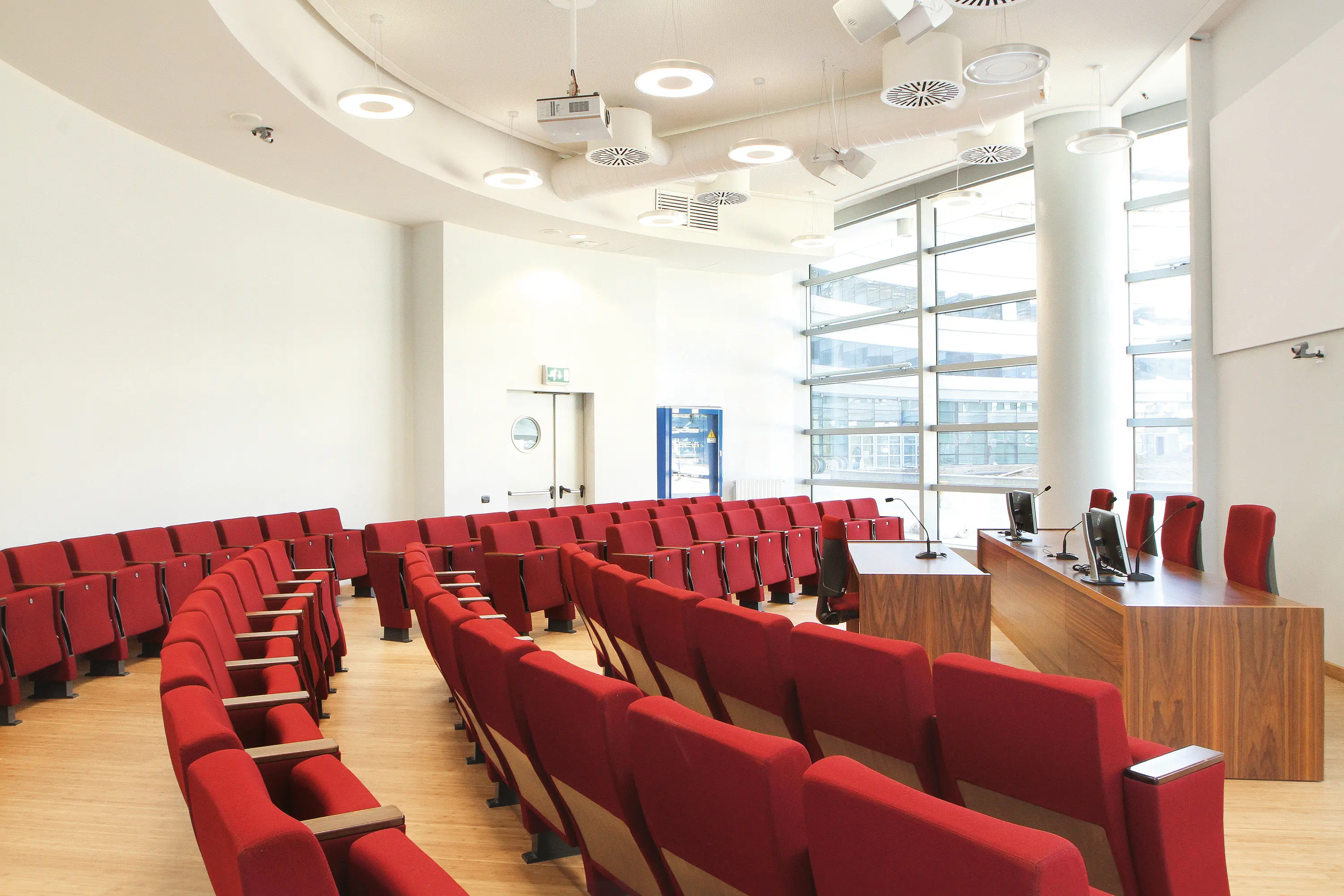
Seating system for conferences and auditorium.
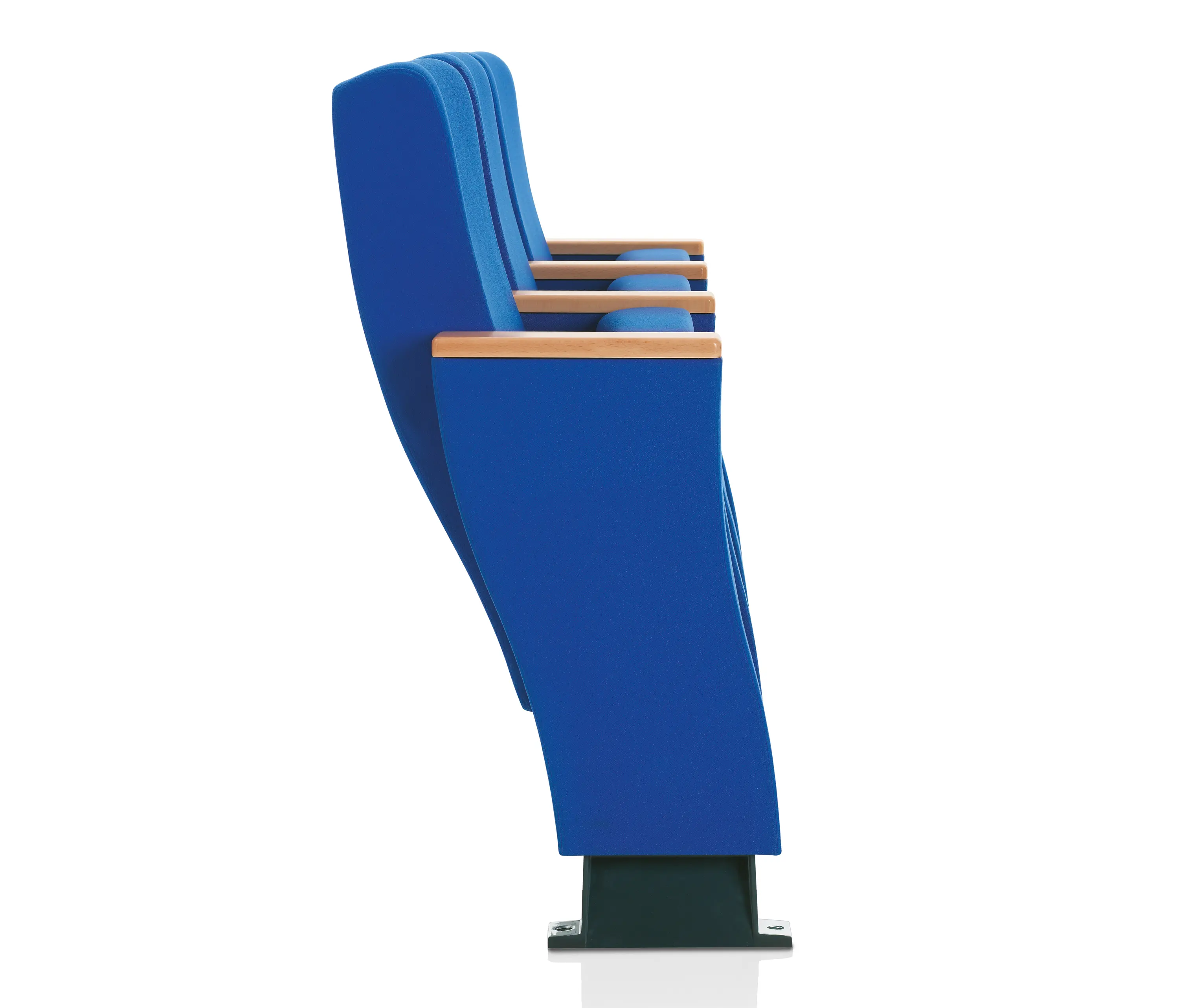
Seat: foldaway, with a tubular steel insert and polyurethane foam padding, ergonomic shape, flame retardant and CFC-free. The seat foldaway action operates on a counterweight steel pivot system. The seats rotate on guiding tracks.
Backrest: available in two heights, with a polypropylene supporting frame and CFC-free polyurethane foam padding.
The backrest can be positioned at different angles in relation to the seat’s positioning or the gradient of the slope.
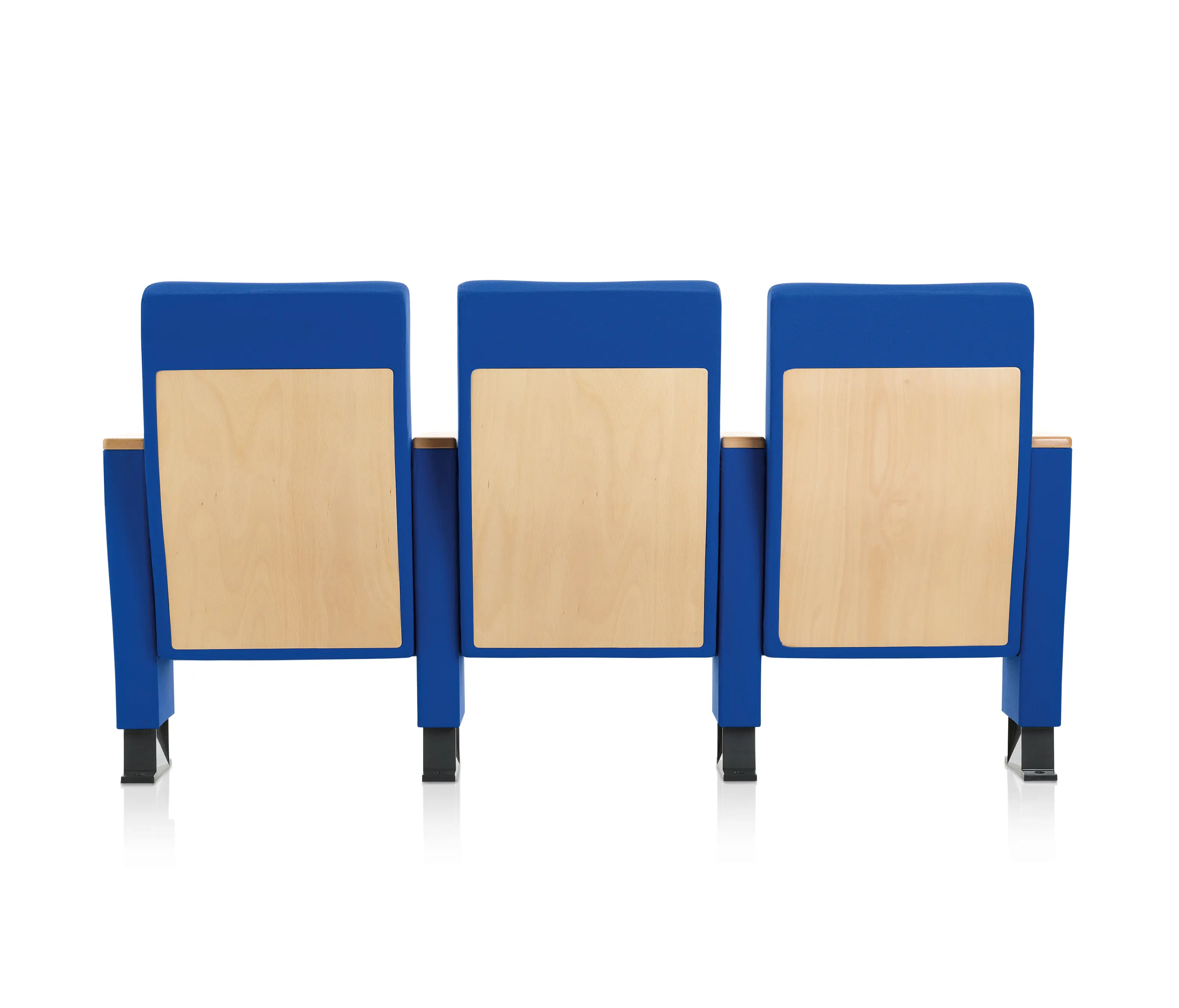
Upon request, the rear side of the backrest can be supplied in varnished plywood (both sizes) or in ABS (only for the smaller size).
Sides: polypropylene body with upholstered polyurethane foam padding (with upholstered and padded or solid wood armrests). Two available versions -
V100- short sides, on beam. Fixed to the floor by a circular steel base every two-three seats, black epoxy powder coating.
V200- long sides, fixed to the floor by a die-cast aluminium base, adjustable for varying sloping, black epoxy powder coating. Upon request, the front of the base can be supplied in polished aluminium.
The sides can be fitted with a beech plywood writing tablet with black, double laminate coating and black plastic edge. The tablet has an anti-panic retraction system and can be stowed inside the arm.
Victory can be fitted with a document holder, seat and row numbers and can be predisposed to allocate electronics and a simultaneous interpreting or voting system.
This product belongs to collection:
Specifications
Usage
Conference / Meeting, Contract, Culture / Exhibition, Education, Multipurpose, Office
Design files
7
Distributors
Designers

Baldanzi & Novelli
Italy
Design rhymes with Italy! Adriano Baldanzi and Alessandro Novelli, born and bred in Tuscany, know this all too well! After graduating in Industrial Design at ISIA in Florence they embarked on a design adventure that has led them to be considered amongst the best Italian designers in the seating and office furniture sector, and not only. In fact, 30 years of experience have enabled them to develop a great design culture and a thorough understanding of the technology available and the real demands of the different markets, to the point that they are considered more partners than designers by the companies that choose them. This approach has always been in their DNA: their career took off after having founded and developed the company Casamania in the early eighties, which was later sold to Frezza, a prestigious Italian brand. They then devoted themselves to their true vocation:design. Their career encompasses some emblematic geographical milestones: working first in a small but very demanding Italy, then in Europe, they are now in demand all over the world. Their homeland is a source of constant inspiration and their international experiences offer constant enrichment.