





Contact details
Send a message
Call us
Distributors
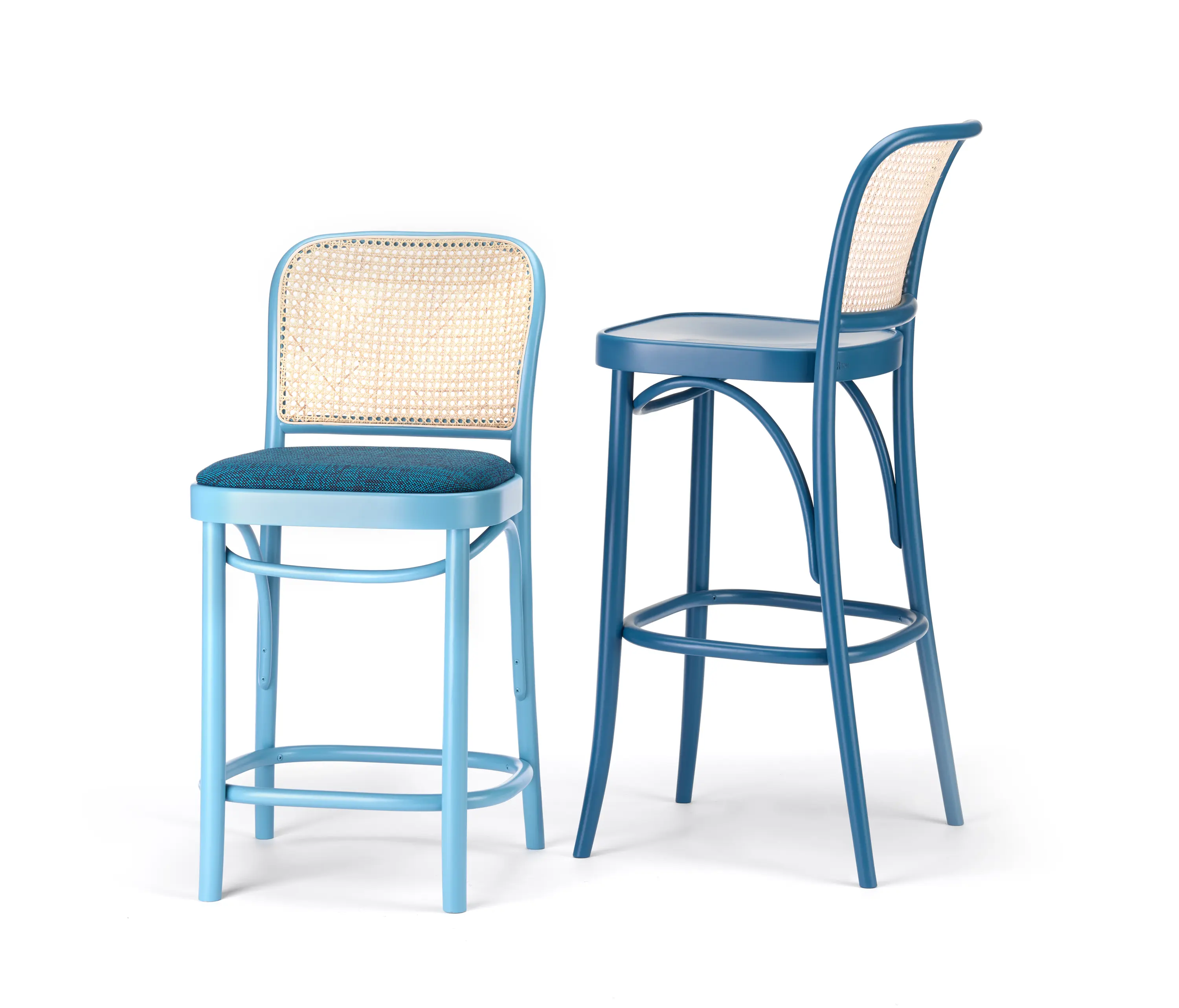
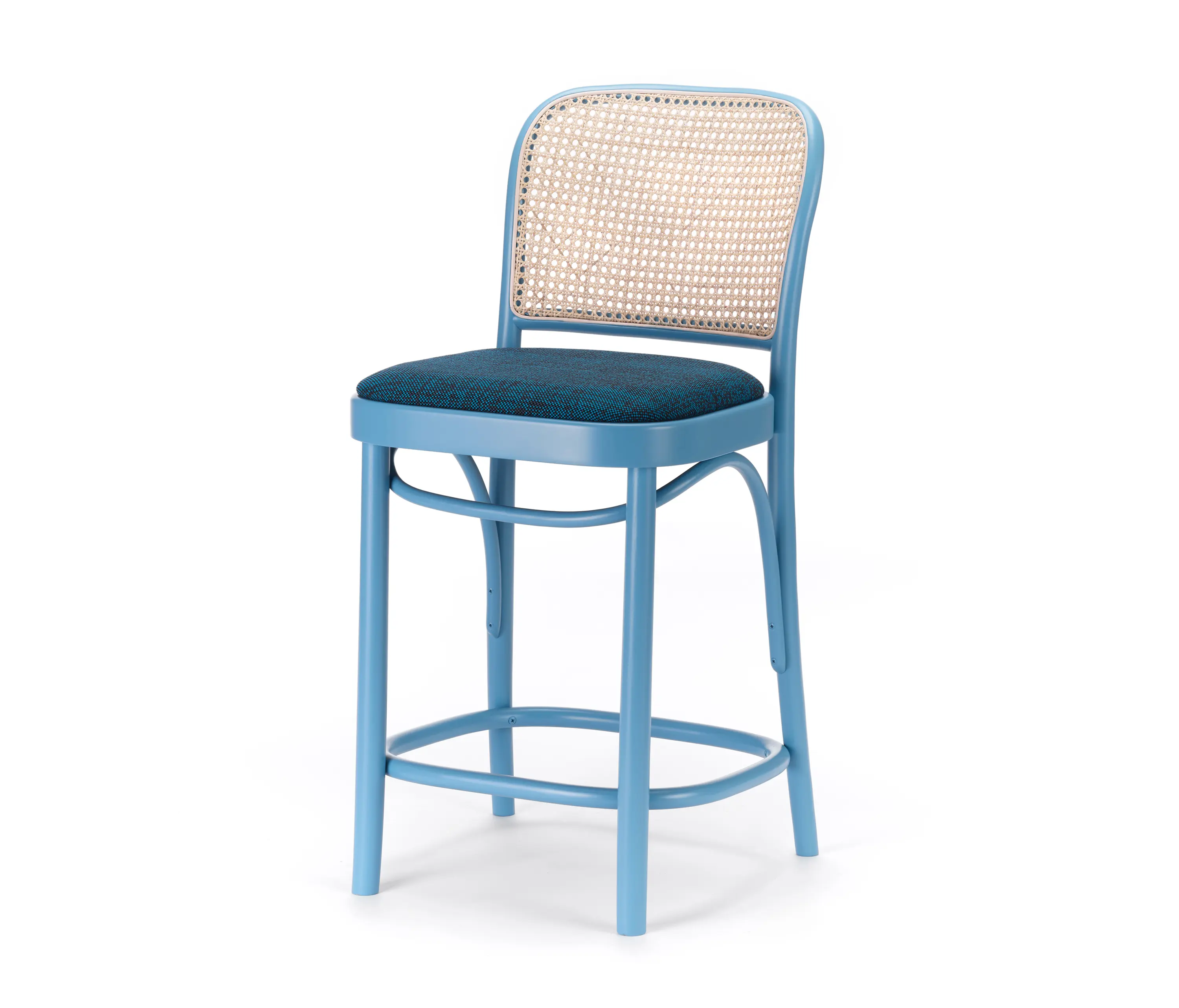
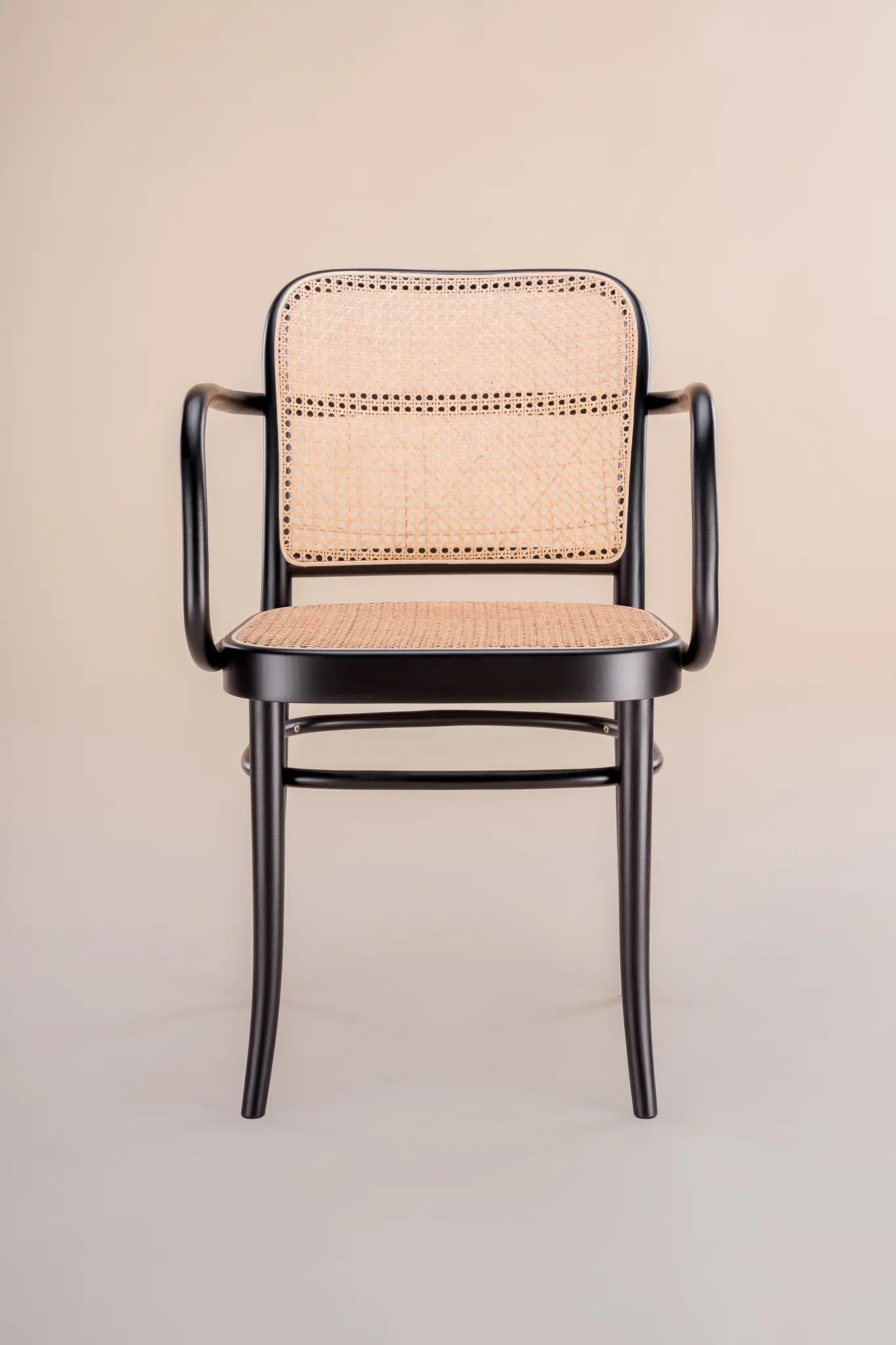
Barstool no. 811
Architonic ID: 20036285
SKU: 313811
Year of Launch: 1905
Good design never grows old. This barstool was first designed by Austrian Josef Hoffmann nearly 100 years ago. He created an elegant bar chair with bentwood parts, usually combined with a cane weave to ensure an extremely comfortable sitting position.
Concept
The foundations of the 811 Collection were laid almost a century ago by renowned Austrian designer Josef Hoffmann, who designed an eye-catching interplay of curved shapes that together create a very comfortable sitting experience. The Art Nouveau inspiration is clear here, but still allows us to combine a cane-weave backrest with an upholstered chair or barstool seat. The 811 Collection’s timeless design has been reincarnated by Swedish design studio Claesson Koivisto Rune, who re-interpreted it for the modern world.
This product belongs to collection:
4-leg base, Open base
Seat upholstered, With backrest, Without armrests
Contract, Hospitality, Residential

Austria
Josef Hoffmann was an Austrian designer and architect, and co-founder of the Wiener Werkstätte, the Vienna Secession und the Österreichischer Werkbund. He was a key figure in Viennese Modernism. Josef Hoffmann – a biography Josef Hoffmann was born on 15 December 1870 in Pirnitz, formerly in Austria-Hungary, now part of the Czech Republic. He began his architectural studies at the Higher State Crafts School in Brno in 1887 and later continued at the Academy of Fine Arts in Vienna. Hoffmann worked from 1896 at the architectural office of the leading architect and Vienna city planner Otto Koloman Wagner. By 1895, Hoffmann had already founded the ‘Siebener Club’ together with architect Joseph Maria Olbrich and artist Koloman Moser, and went on to establish the Vienna Sucession with both of them in 1897. From 1899 to 1936, Hoffmann taught as professor at the University of Applied Arts Vienna. At the 1900 World’s Fair in Paris, he was responsible for the design of the Vienna Sucession Hall. He also travelled with Moser through England, where he got to know Scottish architect and designer Charles Rennie Mackintosh. 1903 saw Josef Hoffmann found the Wiener Werkstätte and produce numerous furniture designs. He became chief architect for the city of Vienna in 1920, and five years later designed the Austrian pavilion for the Exposition des Arts Décoratifs in Paris. In 1932 he participated in the building of Vienna’s Werkbundsiedlung. Josef Hoffmann’s No. 670 Sitzmaschine Josef Hoffmann designed the No. 670 Sitzmaschine in 1905 for his Sanatorium Purkersdorf in Vienna, a ‘Gesamtkunstwerk’ or total work of art, uniting architectural construction and space with interior architecture and design. Some suggest that his No. 670 Sitzmaschine is influenced by Philip Webb’s Morris Chair. The armchair’s construction is noteworthy for its rational form and typifies the Wiener Werkstätte’s fusion of decorative and structural elements. Josef Hoffmann’s Kubus Sofa Josef Hoffmann designed the Kubus Sofa in 1910, as well as the Kubus armchair. Both pieces are characterised by strong geometric forms. Their resolutely cubist forms and leather upholstery make the pieces timeless classics. Hoffmann exhibited them at the International Exhibition in Buenos Aires to mark the centennial of Argentinian independence. © by Architonic