Share
1/14


Storia | Frame
Help me find it
- Home/Dining tables/
Storia | Frame
About this product
Architonic ID: 20224202
Year of Launch: 2021
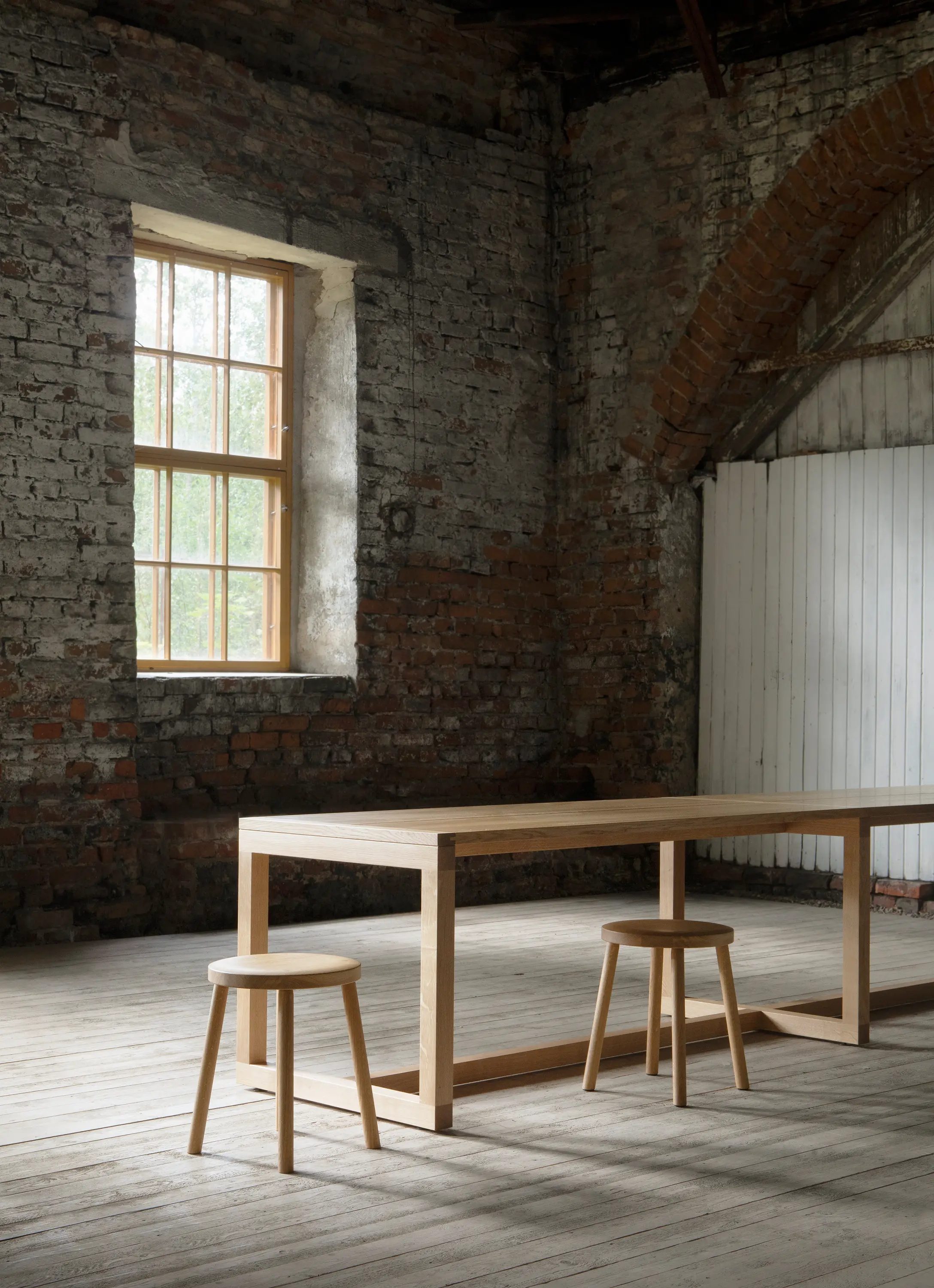
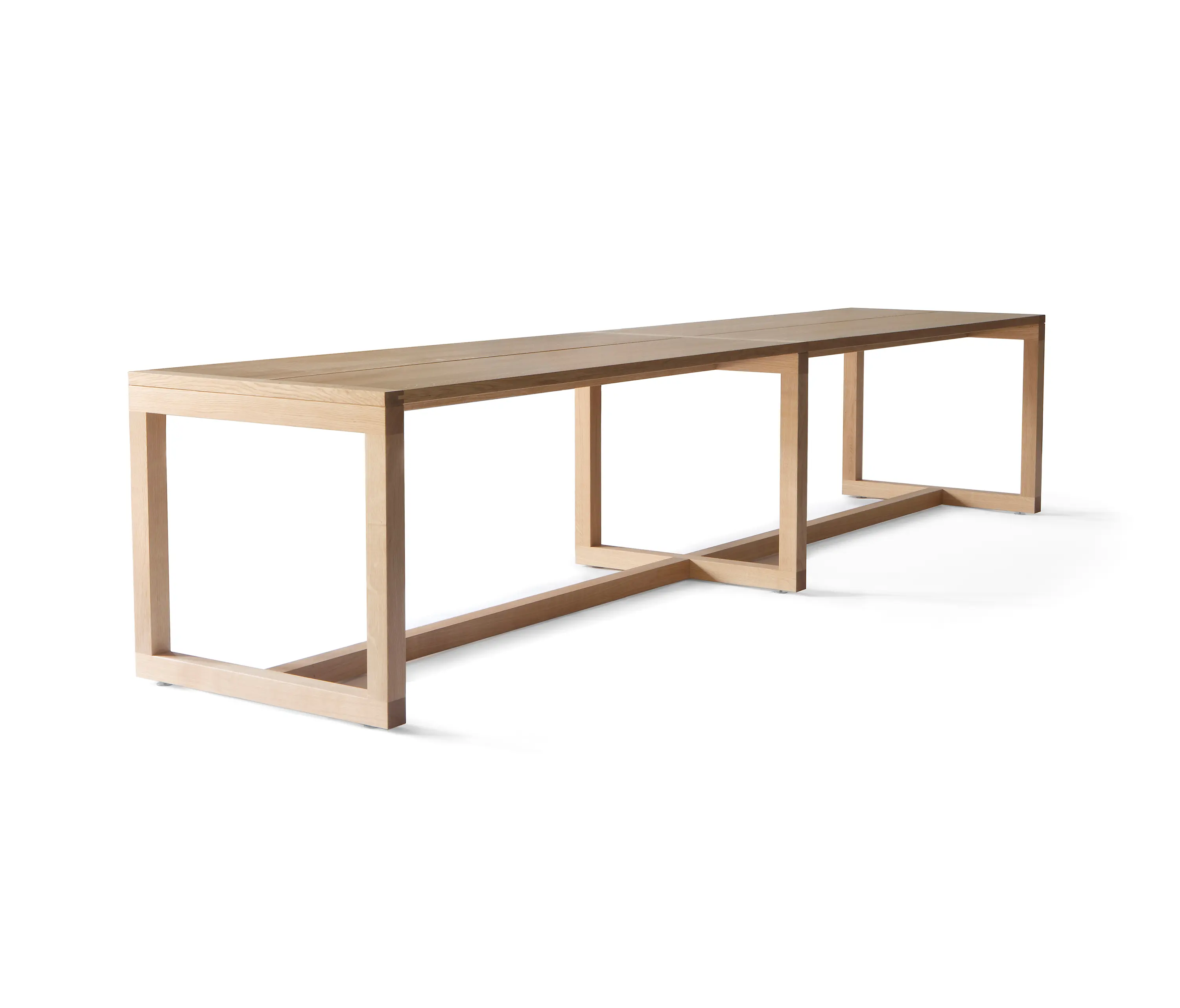
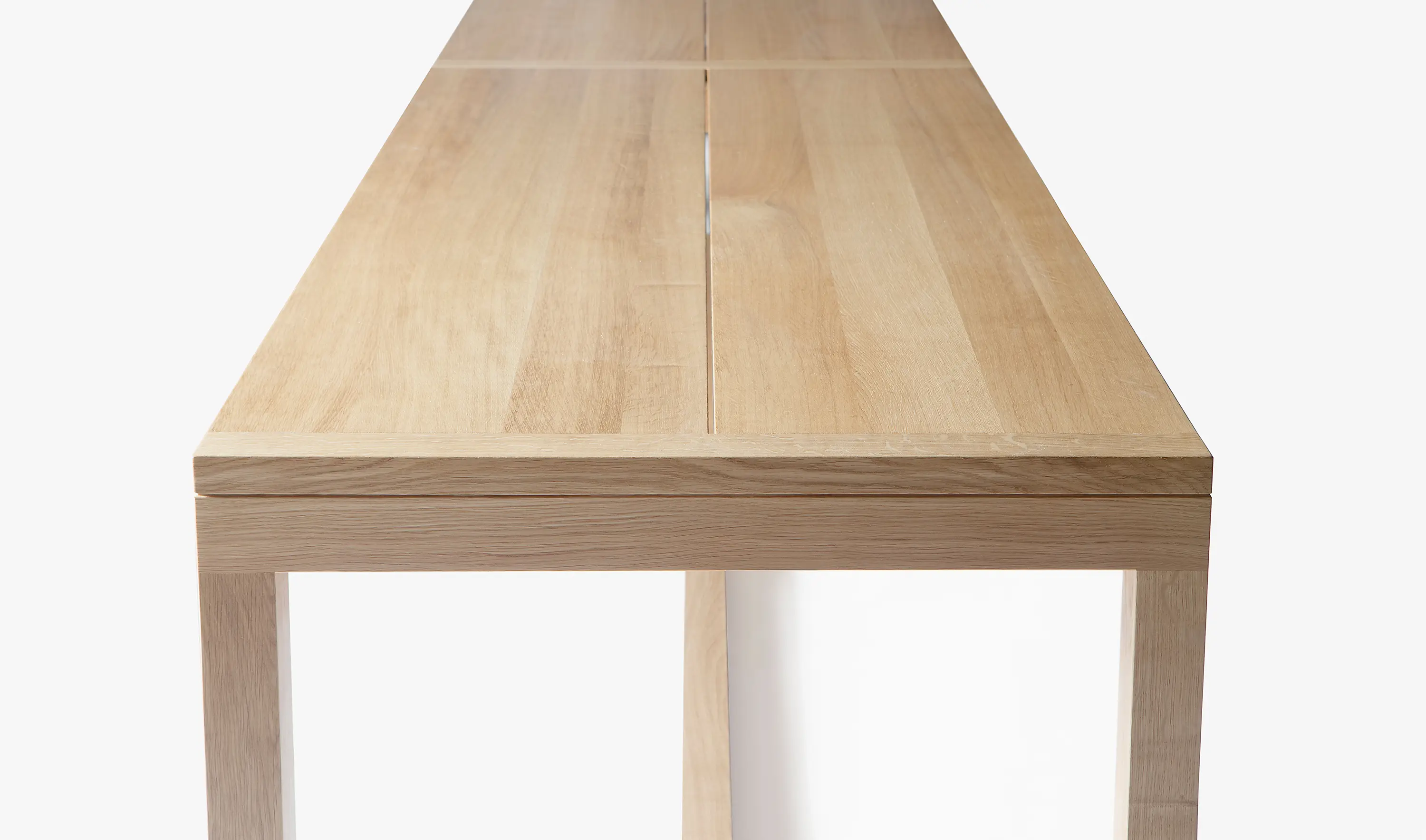
The first version of the Frame table was designed by architect John Pawson for his own family farm house in the Cotswolds. The Frame table collection is a great example of warm minimalism, which Pawson masters brilliantly.
”Whether at the scale of a monastery, a house, a saucepan or a ballet, everything is traceable back to a consistent set of preoccupations with mass, volume, surface, proportion, junction, geometry, repetition, light and ritual. In this way, even something as modest as a fork can become a vehicle for much broader ideas about how we live and what we value.” — John Pawson
Concept
When Nikari turned 50 years in 2017, the company celebrated the birthday with a theme ”50 years of stories”. The Storia collection began to develop throughout the 50th anniversary year, bringing interesting addition to the company collection. It has been growing ever since, finding fresh forms by using traditional Nordic craftsmanship techniques.
This product belongs to collection:

Specifications
Material
Base solid wood, Tabletop solid wood, Wood
Design files
3
Distributors
Designers

John Pawson
United Kingdom
John Pawson was born in 1949 in Halifax, Yorkshire. After a period in the family textile business he left for Japan, spending several years teaching English at the business university of Nagoya. Towards the end of his time there he moved to Tokyo, where he visited the studio of Japanese architect and designer Shiro Kuramata. Following his return to England, he enrolled at the Architecture Association in London, leaving to establish his own practice in 1981. From the outset his work has focused on ways of approaching fundamental problems of space, proportion, light and materials, rather than on developing a set of stylistic mannerisms — themes Pawson also explored in his book Minimum, first published in 1996, which examines the notion of simplicity in art, architecture and design across a variety of historical and cultural contexts. Early commissions included homes for the writer Bruce Chatwin, opera director Pierre Audi and collector Doris Lockhart Saatchi, together with art galleries in London, Dublin and New York. Whilst private houses have remained a consistent strand of the work, subsequent projects have spanned a wide range of scales and building typologies, ranging from Calvin Klein Collection’s flagship store in Manhattan and airport lounges for Cathay Pacific in Hong Kong, to a condominium for Ian Schrager on New York’s Gramercy Park, the interior of a 50-metre yacht and sets for new ballets at London’s Royal Opera House and the Opéra Bastille in Paris. Over the years John Pawson has accrued extensive experience of the particular challenges of working within environments of historic, landscape and ecological significance. Key examples including the Sackler Crossing — a walkway over the lake at London’s Royal Botanic Gardens, Kew — the Cistercian Abbey of Our Lady of Nový Dvůr in Bohemia, the interior renovation of the basilica of the Benedictine Archabbey of Pannonhalma in Hungary and the remodelling of the former Commonwealth Institute in London, opened as a new permanent home for the Design Museum in 2016.


