


Contact details
Send a message
Call us
Distributors
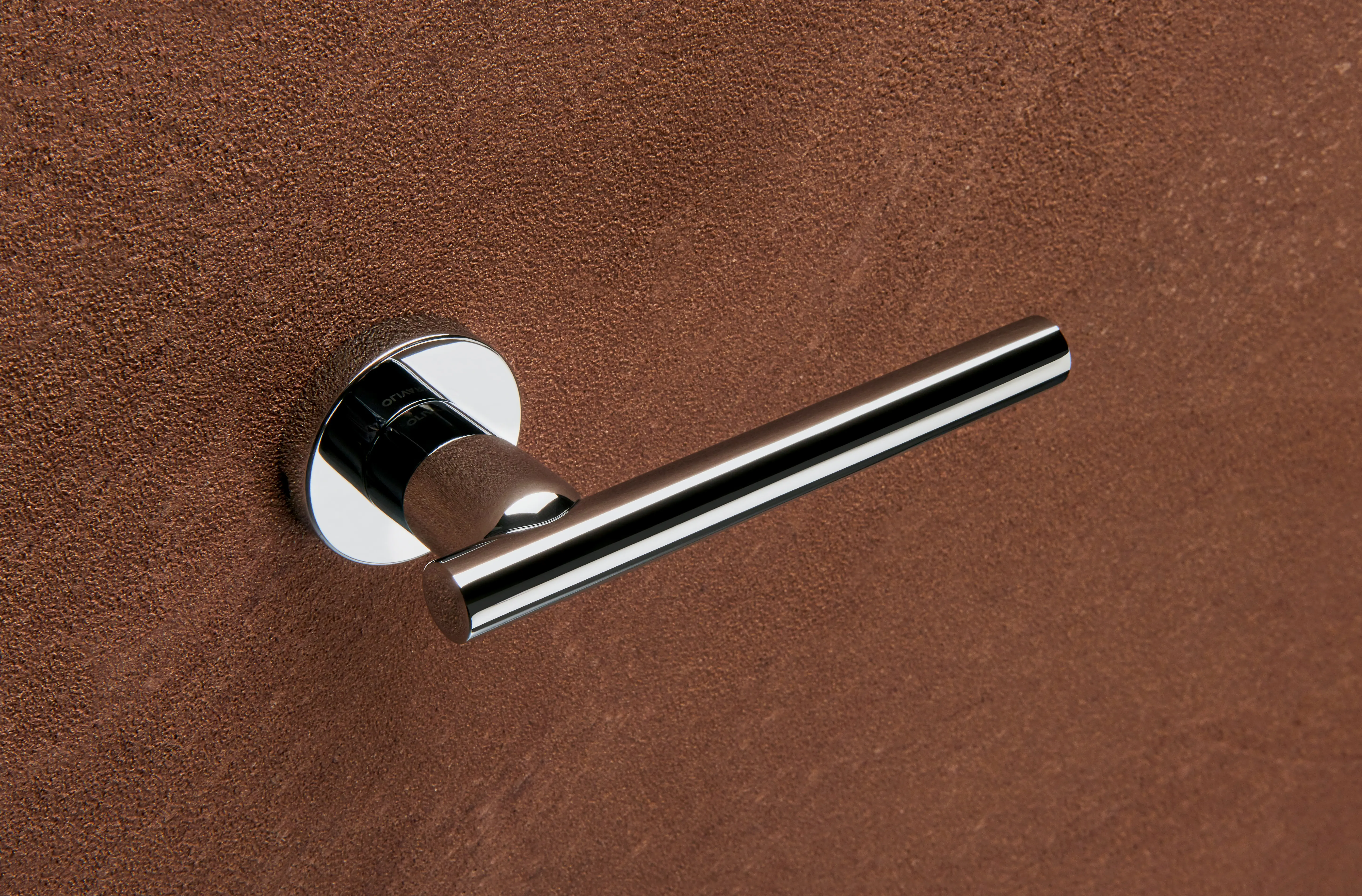
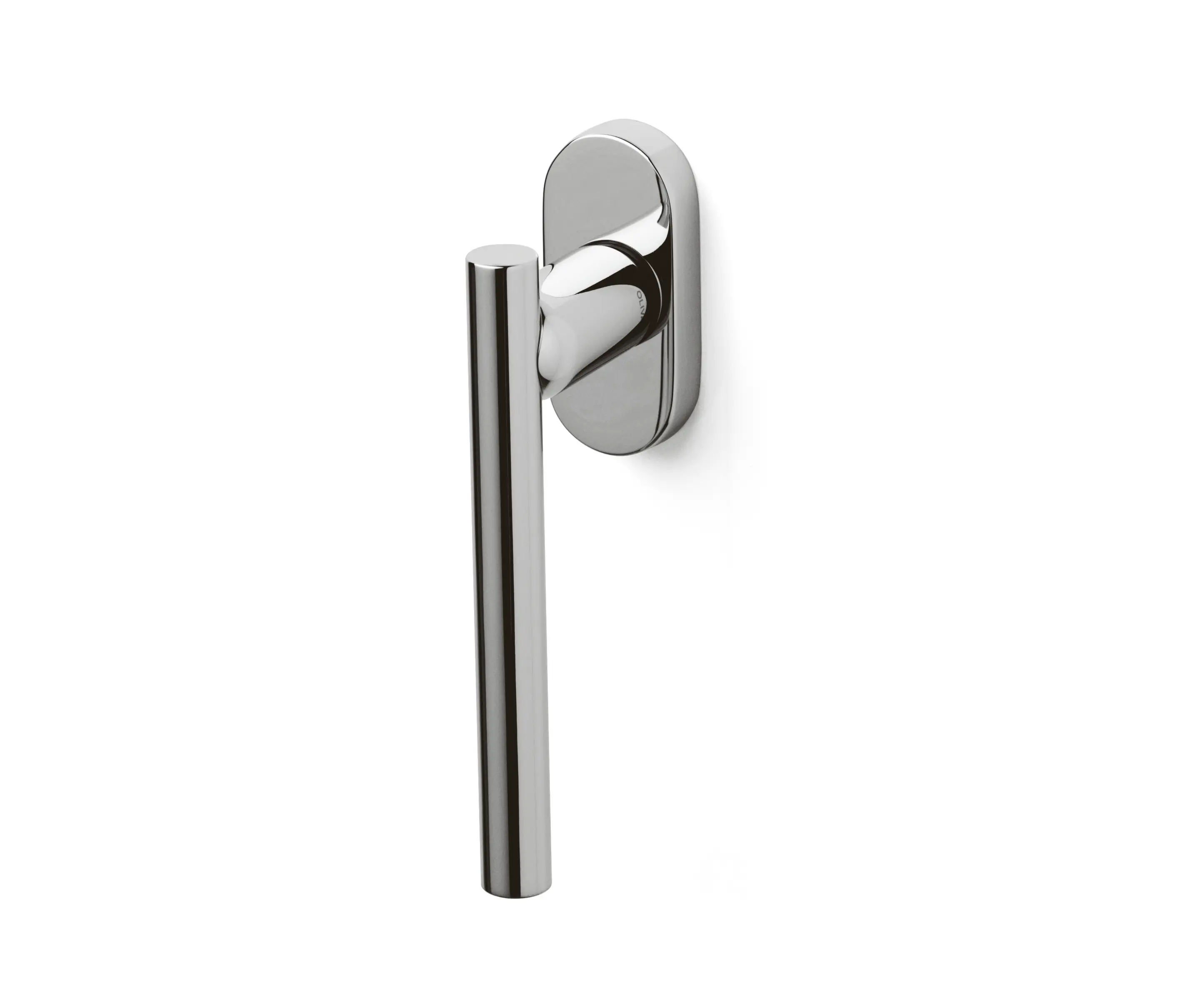

Stilo
Architonic ID: 20031957
SKU: K190 CR
Year of Launch: 2003
Finish:
CR bright chrome
Concept
The design for the Stilo handle is aimed at simplification, but the departure point was less directed at the form than at the production technology. Enzo Mari based the design reasoning for the Stilo handle on the revision of the processing technique. His alternative is machine-turned brass for the lever. Stilo employs turning as a more elementary substitute for the traditional techniques of moulding or casting. It is used for the cylindrical rod of the lever and for the shaft, the latter of which was designed with a shape that can be paired with all kinds of variants.
The joint is fitted with a normal screw to block the components in a perfectly solid unit. Here, the handle’s form is a translation of the logical scheme of the production process and the assembly of the parts.
Material:
Brass
Finish:
bright chrome, satin chrome, supergold bright, superstainlesssteel satin

Italy
Profile Artist and designer, Mari has created a lot of games, toys, graphics, office and table accessories and furniture. He made researches in psychology and the perception of space, color and volume. He collaborated intensively with Danese since the fifties but also designed ceramics for Gabbianelli and textiles and furniture for Driade. Mari was awarded two Compasso d'Oro, one in 1967 for his research on design and one in 1979 for his "Delfina" chair for Driade. Enzo Mari was born in Novara, Italy, in 1932. An artist and designer, he attended the Brera Academy of Fine Arts in Milan in the early ‘50s and dedicated his attention to research into the methodology of design. As a true philologist of the language of the visual arts, he turned his attention to design in the late ‘50s, fully aware of the need to work towards a global project of quality within mass culture. The disciplinary complexity of his activities have been commented on by personalities in the world of culture: Enzo Mari think creatively and builds logically (Max Bill, 1959), Enzo Mari – a philologist of a creative language (Pierre Restany, 1967), Enzo Mari – the more he thinks about it (about the crazy, ambiguous, uncertain and slippery "profession” of design) the worse he feels (Ettore Sottsass, 1974), Mari – the designer's conscience (Alessandro Mendini, 1980), Enzo Mari, who works at a systematic level (Arturo Carlo Quintavalle, 1980) the various Enzo Mari (six in all) who are known to Tomàs Maldonado (1980), Enzo Mari who would be an aesthetic, political and design operator all at the same time (Atenor-Pedio, 1980), Enzo Mari – the greatest moral authority in the field of Italian design (Giovanni Klaus Koenig, 1981), Enzo Mari – turns contradiction into truly creative material, Enzo Mari – committed to reducing potential errors in the use of objects (Vittorio Gregotti, 1981) Enzo Mari – lightly Calvinist, as honoured by Carlo Argan (1980), undertakes to create design for a society which is not to be opulent, Enzo Mari who responds philosophically when confronted with the elementary concepts of art and science (Maurizio Calvesi, 1986), Mari – for whom aesthetic is art and design's own way of communicating (François Burkhardt, 1997). In January 2001 his essay "Progetto e Passione” was published, where Mari, without any mention of his work, deals with design themes setting them in a wider cultural horizon. Enzo Mari's works have been exhibited in many Italian and foreign museums, including the Venice Biennale, in 1967, in 1979, and 1986; at Kassel exhibition in 1968; the "Modelli del Reale” exhibition in the Republic of San Marino in 1988; "Arbeiten in Berlin”, Schloss Charlottenburg, Berlin, in 1988; the great exhibition "Enzo Mari il lavoro al centro” in Barcelona in April 1996, moved to Milan Triennale on November 1999, the exhibition "Tre mostre di Enzo Mari” at the International Museum of Ceramics in Faenza, on June 2000. Examples of his art and design work are to be found in the collection of many museums, including 9000 drawings kept since 1980 in the Archivio del Progetto of the University of Parma and works in the National Gallery of Modern Art in Rome, the Museum of Modern Art in New York, Kaiser Wilhelm Museum in Krefeld, and the Kunstmuseum in Düsseldorf. Mari has created 1600 projects for Italian and foreign companies such as Danese, Olivetti, Boringhieri, Adelphi, Driade, Le Creuset, Artemide, Castelli, Gabbianelli, the Municipality of Milan, Interflex, Zanotta, Fantini, Agape, Alessi, Zani e Zani, K.P.M., Robots, Ideal Standard, Arnolfo di Cambio, Magis, Rosenthal, Frau, Thonet, Daum, Muji. From 1976 to 1979 he was president of ADI (Association for Industrial Design). His research work has won him about 40 awards, including "Compasso d'Oro ": in 1967 for his individual researches on design, in 1979 for the chair "Delfina” (manufactured by Driade) , in 1987 for the chair "Tonietta” (manufactured by Zanotta) and in 2001 for the table "Legato” (manufactured by Driade). In 1997 he was also awarded with the "Barcelona” award. Since 1989 he has been a member of AGI (Alliance Grafique Internationale). In November 2000 he was awarded "HonRDI” (Honorary Royal Designer for Industry) by RSA (Royal Society for the encouragement of Arts) of London and in the same year he was also appointed honorary professor at the Hochschule für bildende Künste in Hamburg. In October 2002 he received the honorary degree in Industrial Design from the Faculty of Architecture of the Politecnico of Milan. His teaching courses include those at the CSAC at the University of Parma, the Academy of Fine Arts in Carrara, the Faculty of Architecture at the Politecnico of Milan, and ISIA, Florence; recently he has also taught at the Hochschule der Künste in Berlin and at the Hochschule für Angewandte Kunst in Wien.