



Contact details
Send a message
Call us
Distributors

This product is part of our reference catalogue.
Additional inquiries are reserved for Architonic partner brands.
Architonic ID: 1474803
SKU: SDRAP000
Year of Launch: 2009
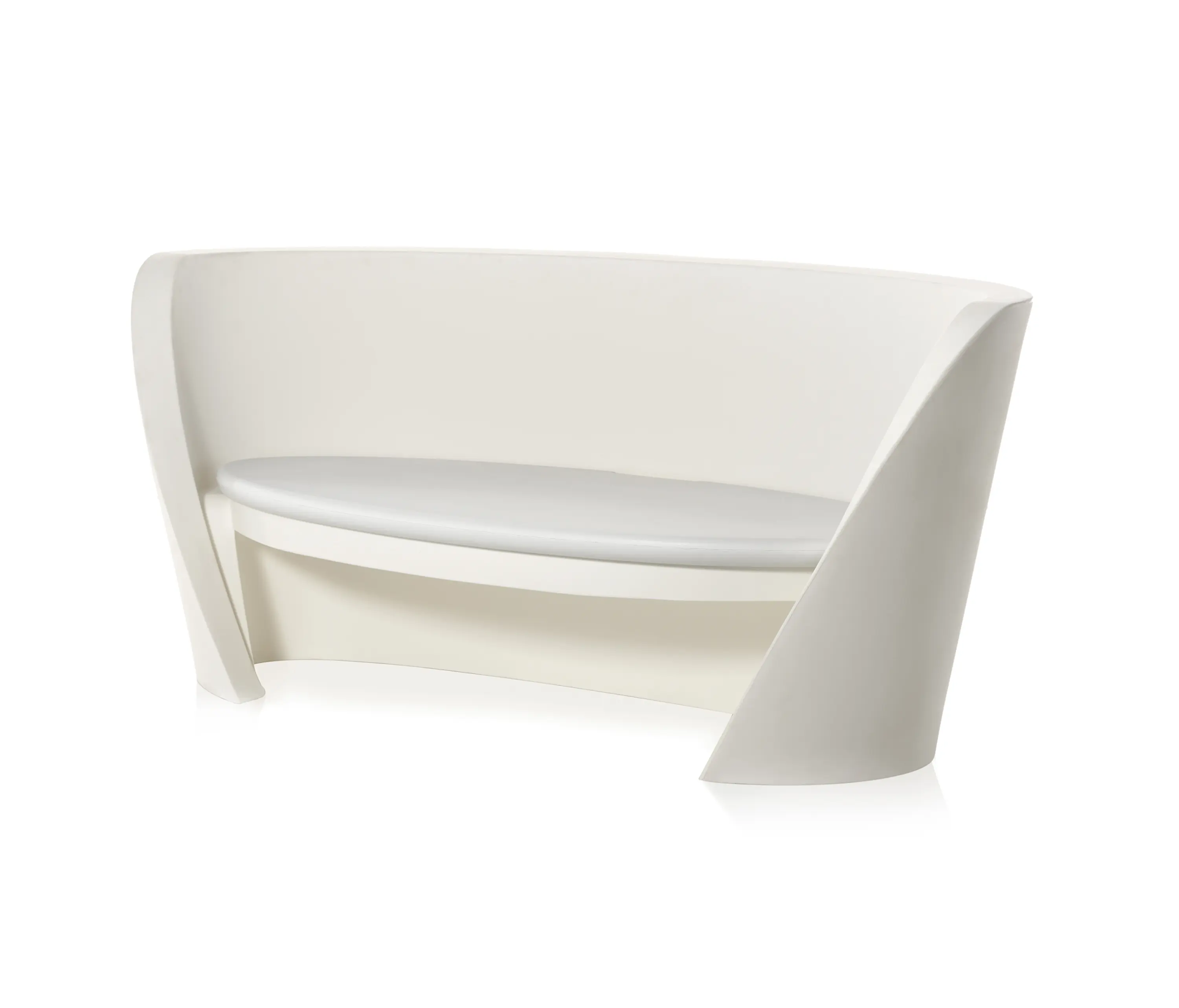
Sofa.
Dimensions: 170 cm x 80 cm x 75 cm. Seat h. 36 cm
Weight: 35 Kg
Material: polyethylene
Colours
Standard: white, black, grey, chocolate, malva green, blue, argil, light grey, lime green, yellow, orange, red, fuchsia.
Lacquered: white, black, grey, ivory, red, gold, silver, copper.
Lighting: white, fuchsia.
Soft polyurethane cushion: white, grey, anthracite
Concept
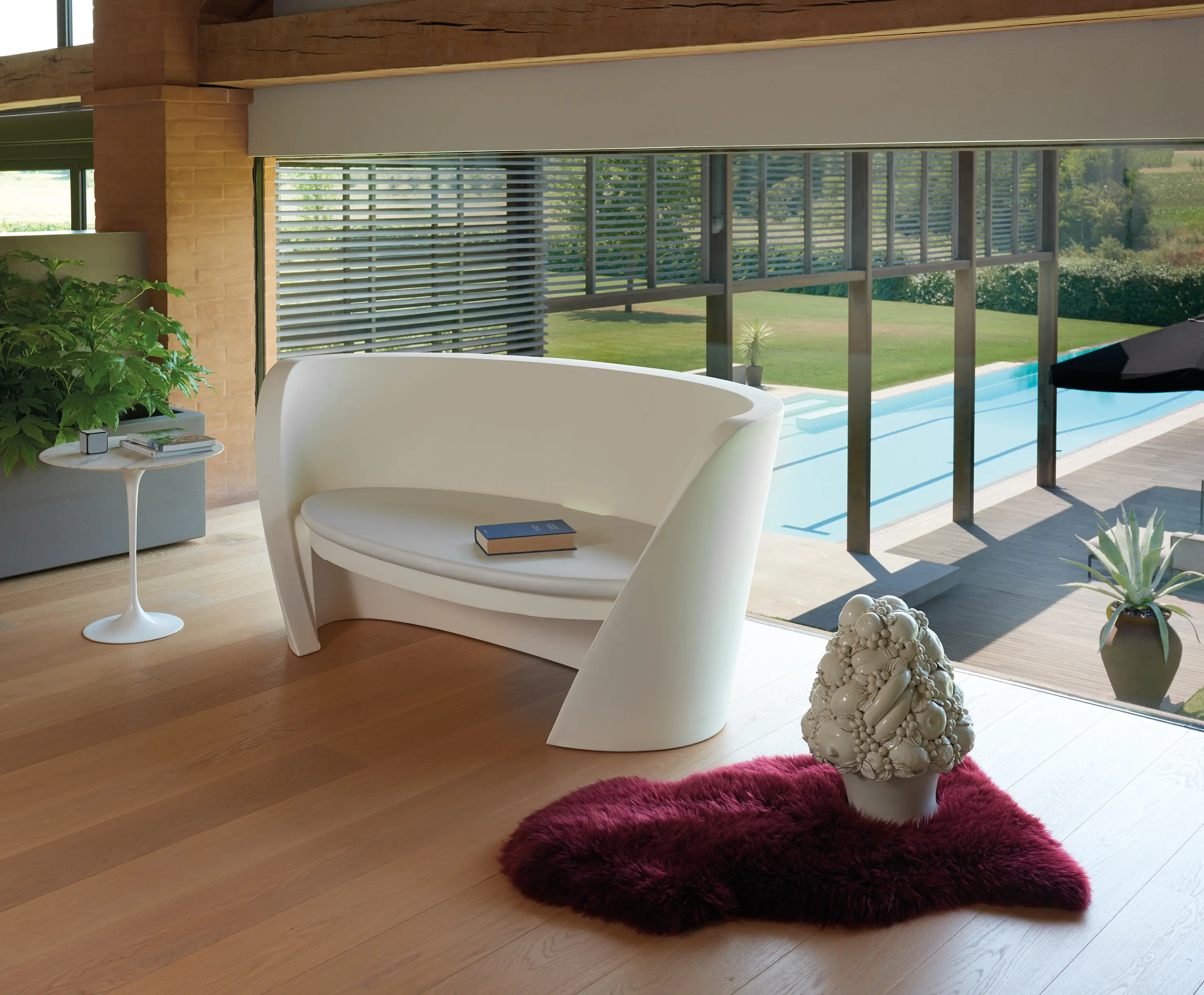
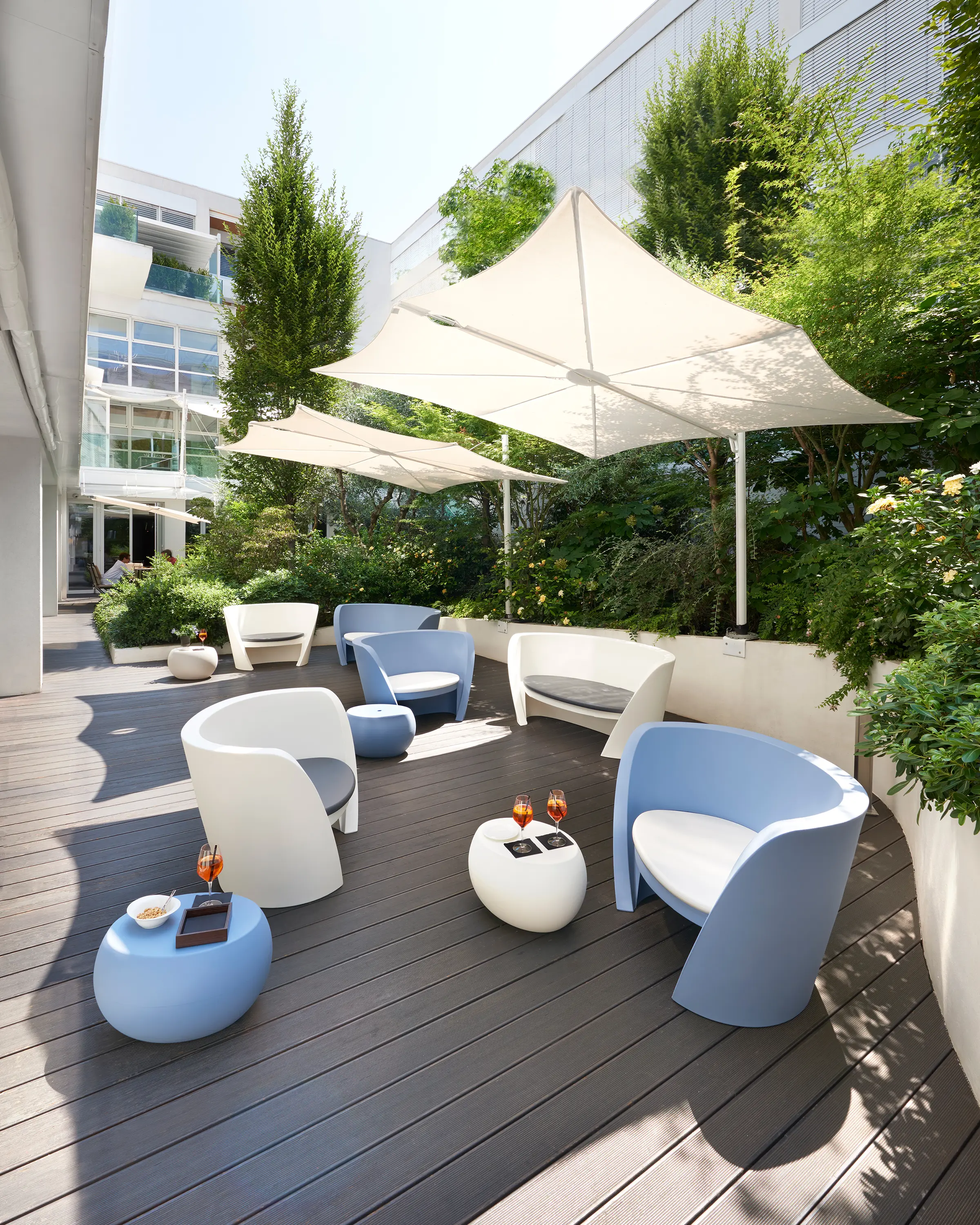
Essential and minimalist, the Rap collection has got comfortable seats and wrap backrests. Created by the ecletic designer Karim Rashid, the collection is composed by two seats: Rap sofa and Rap Chair armchair. Ideal to create an unforgettable indoor or outdoor corner of contract and events, the Rap collection is a magnet with its minimal but unusual design. The shape of the backrest wraps averyone who sits down on them. The Rap collection gives comfort, relax and a sense of protection that allows you to enjoy a lovely moment.
This product belongs to collection:
Base plastic, Plastic, Seat plastic

United States
Today poetic design is based on a plethora of complex criteria: human experience, social behaviors, global, economic and political issues, physical and mental interaction, form, vision, and a rigorous understanding and desire for contemporary culture. Manufacturing is based on another collective group of criteria: capital investment, market share, production ease, dissemination, growth, distribution, maintenance, service, performance, quality, ecological issues and sustainability. The combination of these factors shape our objects, inform our forms, our physical space, visual culture and our contemporary human experience. These quantitative constructs shape business, identity, brand and value. This is the business of beauty. Every business should be completely concerned with beauty - it is after all a collective human need. I believe that we could be living in an entirely different world - one that is full of real contemporary inspiring objects, spaces, places, worlds, spirits and experiences. Design has been the cultural shaper of our world from the start. We have designed systems, cities, and commodities. We have addressed the world’s problems. Now design is not about solving problems, but about a rigorous beautification of our built environments. Design is about the betterment of our lives poetically, aesthetically, experientially, sensorially, and emotionally. My real desire is to see people live in the modus of our time, to participate in the contemporary world, and to release themselves from nostalgia, antiquated traditions, old rituals, kitsch and the meaningless. We should be conscious and attune with this world in this moment. If human nature is to live in the past - to change the world is to change human nature.
Get directly in touch with
Get directly in touch with Slide
Slide