
Share
1/10


Help me find it
Share
About this product
Architonic ID: 1442884
Year of Launch: 2013
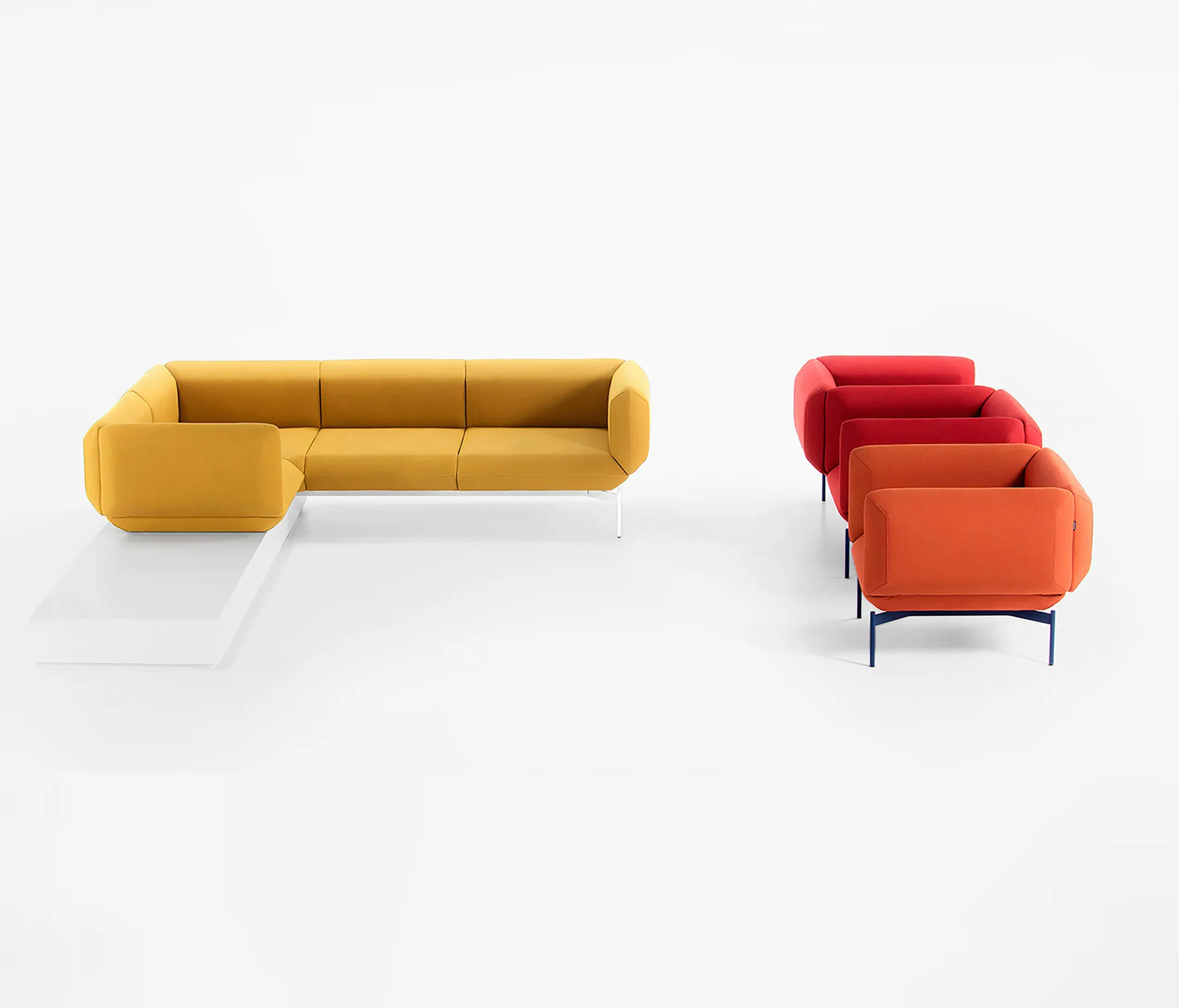
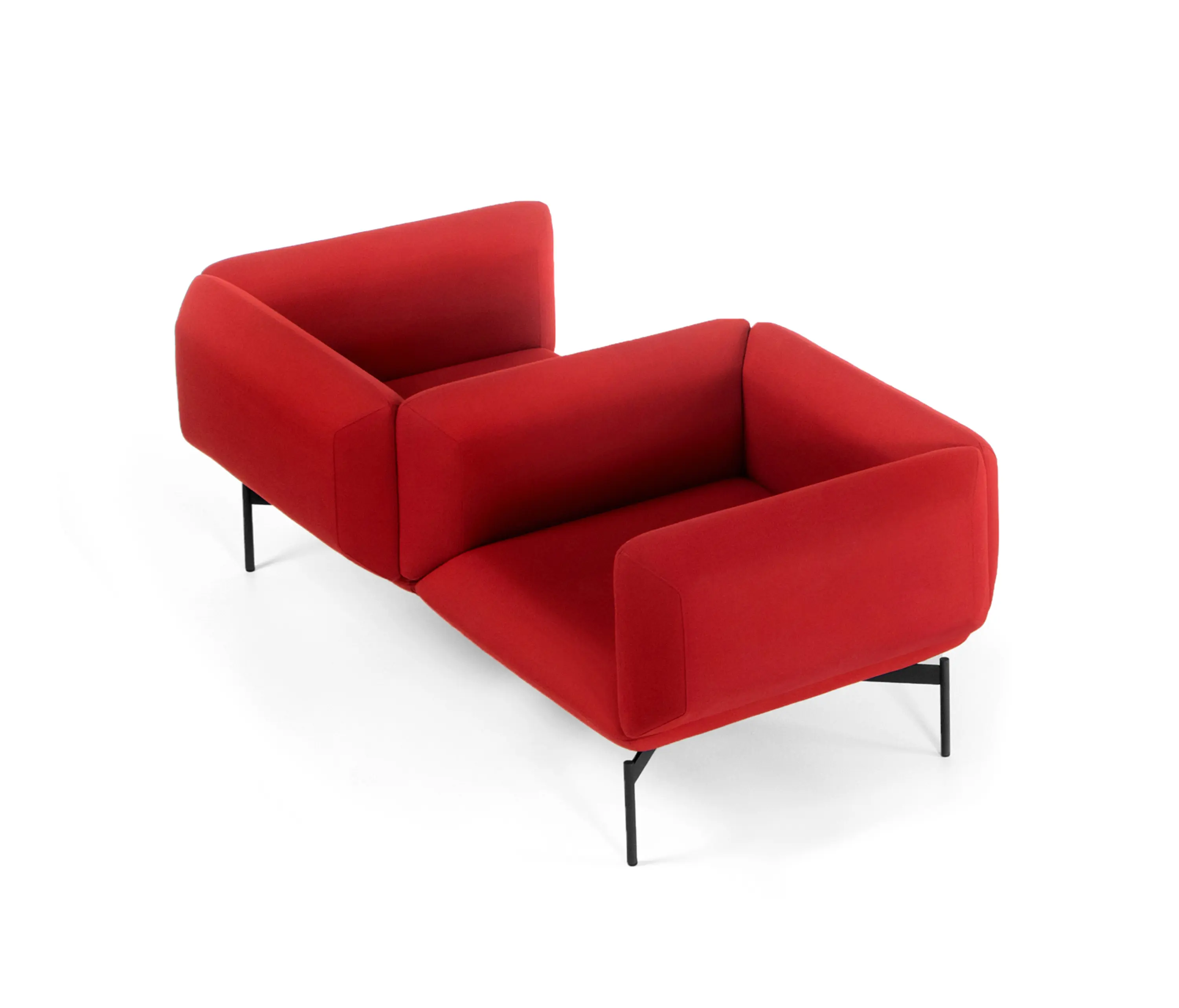
Segment is a system which solves the hierarchical principles of assembling the components of modular upholstered furniture. Segment's identity is determined by the form of its main component part, with its characteristic basic double-sided ends sloping at a 45° angle, thereby enabling the assembling of the parts in all three axes. Segment plays homage to the digits of early 7-segment digital watches, a concept that yields the possibility of putting together a variety of functional and even unconventional compositions in a space. The countless combinations for, and permutations of the base owe to the open system that is the designing of various functional situations in the interior. Segment is available as a one-seater, two-seater, 3-seater, 4-seater, 5-seater – in short, a ‘multibase’ series of segments. The combinations in a series of multiple bases will on one side be supported by metal feet, while a supporting wooden component with a high lustre finish will extend from beneath the base on the other side of the system. Its form's geometric motif is as equally compatible with a leather cover, as with richly textured fabrics, according to the dictates of the interior.
Concept
When designing the Segment, we were interested in finding a solution for the hierarchy in combining elements for modular upholstered furniture. In the case of any conventional modular sofa, there is always one element that 'dominates' and directs the system of combinations. In the case of the Segment, borders on the main element used for the seat, backrest and armrests are sloped at a 45-degree angle. This allows free combining of the system on all three axes. The main reference for this design was the seven-segment character display used on earlier digital clocks. That is also how the sofa got its name. With this concept, the user has the opportunity to compose various and even unconventional compositions in space. Countless combinations of the base and backrest form a system that is functional and open for designing diverse interior landscapes.
This product belongs to collection:

Specifications
Material
Base metal, Metal
Variants
1
You can visit the product page for these variants—just click on them!

Design files
11
Distributors
Designers

Numen/For Use
Austria
Product design group For Use was formed through collaboration of Sven Jonke, Christoph Katzler and Nikola Radeljkovic in the year 1998. Two members studied at the School of Design in Zagreb, while Katzler studied at High School for Applied Arts in Vienna. Since then the group designed furniture and objects for companies such as Cappellini, ClassiCon, Desalto, Interlubke, Magis, MDF Italia, Moroso, and Zanotta. In 1999 the group realized several important exhibition design projects and established Numen as a group name for projects realized outside of the field of industrial design. In the initial stage the group worked together with Jelenko Hercog and Toni Uroda, graphic and multimedia designers. The work was characterized by experimenting with rule-based design and radical reduction of form in the tradition of High modernism, mostly applied to total-design projects . In 2004 Jonke, Katzler and Radeljkovic started developing set design projects for various theater companies which led to a major breakthrough in 2005 with set design for Infierno in Centro Dramatico Nacional in Madrid. Since then the group designed sets in Belgrade, Berlin, Istanbul, Ljubljana, Madrid, Merida, Osijek, Rijeka, Skopje and Zagreb, mostly with directors Tomaz Pandur and Aleksandar Popovski with whom they developed a continuous cooperation. In 2005 Numen/ForUse established the first design oriented brand for quality furniture in former Yugoslavia - Element, designing visual identity and initial furniture collection. The group has since managed artistic direction and product development of the company. The group has simultaneously developed interior and exterior design projects, usually working with 3lhd and Imarea architects, the most important of which is the integral design of the waterfront in Split realized in 2007. From 2008 on Numen / For Use has been designing objects and concepts without predefined function, resulting in projects like Numen-light, Tape and NET. Besides these prominent realizations, the group has been awarded several international prizes for their work in the fields of set and industrial design.


