Share


1/27
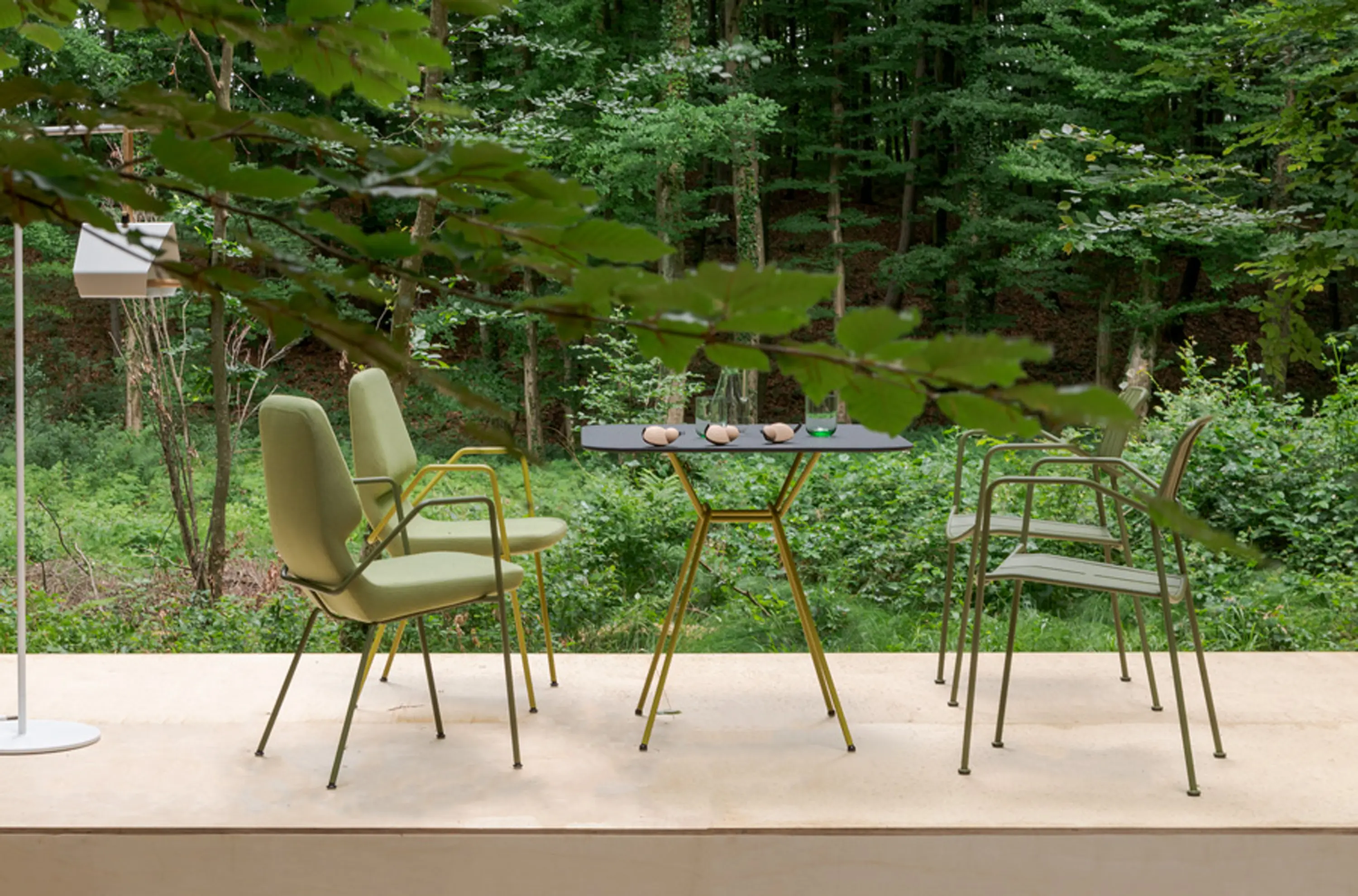


Oblique table
Help me find it
- Home/Dining tables/
Oblique table
About this product
Architonic ID: 1296540
Year of Launch: 2014
The Oblique collection is completed with creation of office and dining table. The character of the complete collection has been mostly expressed with this table. Specific geometry of the legs made of massive wood in combination with the floating table top on any dimension is simply perfect.
Concept
When designing the Oblique family of products, we wanted to ensure a quality sitting experience for the user in a real soft easy chair, but within minimal dimensions. It is these requirements that have created the recognizable profile of this set of chairs. The profile underlines two triangular prisms. They ensure the greatest thickness of the foam on the major points of support for the body when sitting: the back side of the seat and the lumbar zone of the backrest. The narrowed plane where the volume from the seat blends into the backrest improves the ergonomics, but also allows for the elasticity of the backrest. The top of the legs has a rectangular cross-section, but becomes increasingly thin towards the bottom, turning ultimately into a triangular base. This way, we have reduced the robustness of the wooden profiles of the structure and have given the design a geometric expressive and contemporary character. We have perfected the products through time, offering, in addition to the wooden leg structure, an alternative metal version that also includes an armrest. The Oblique family also comprises a larger dining table and low tables.
This product belongs to collection:

Specifications
Material
Base solid wood, Wood
Design files
11
Distributors
Designers

Numen/For Use
Austria
Product design group For Use was formed through collaboration of Sven Jonke, Christoph Katzler and Nikola Radeljkovic in the year 1998. Two members studied at the School of Design in Zagreb, while Katzler studied at High School for Applied Arts in Vienna. Since then the group designed furniture and objects for companies such as Cappellini, ClassiCon, Desalto, Interlubke, Magis, MDF Italia, Moroso, and Zanotta. In 1999 the group realized several important exhibition design projects and established Numen as a group name for projects realized outside of the field of industrial design. In the initial stage the group worked together with Jelenko Hercog and Toni Uroda, graphic and multimedia designers. The work was characterized by experimenting with rule-based design and radical reduction of form in the tradition of High modernism, mostly applied to total-design projects . In 2004 Jonke, Katzler and Radeljkovic started developing set design projects for various theater companies which led to a major breakthrough in 2005 with set design for Infierno in Centro Dramatico Nacional in Madrid. Since then the group designed sets in Belgrade, Berlin, Istanbul, Ljubljana, Madrid, Merida, Osijek, Rijeka, Skopje and Zagreb, mostly with directors Tomaz Pandur and Aleksandar Popovski with whom they developed a continuous cooperation. In 2005 Numen/ForUse established the first design oriented brand for quality furniture in former Yugoslavia - Element, designing visual identity and initial furniture collection. The group has since managed artistic direction and product development of the company. The group has simultaneously developed interior and exterior design projects, usually working with 3lhd and Imarea architects, the most important of which is the integral design of the waterfront in Split realized in 2007. From 2008 on Numen / For Use has been designing objects and concepts without predefined function, resulting in projects like Numen-light, Tape and NET. Besides these prominent realizations, the group has been awarded several international prizes for their work in the fields of set and industrial design.


