Share
1/5

KATABA table
Share
- Home/Dining tables/
KATABA table
About this product
Architonic ID: 1213943
Year of Launch: 2012
Concept
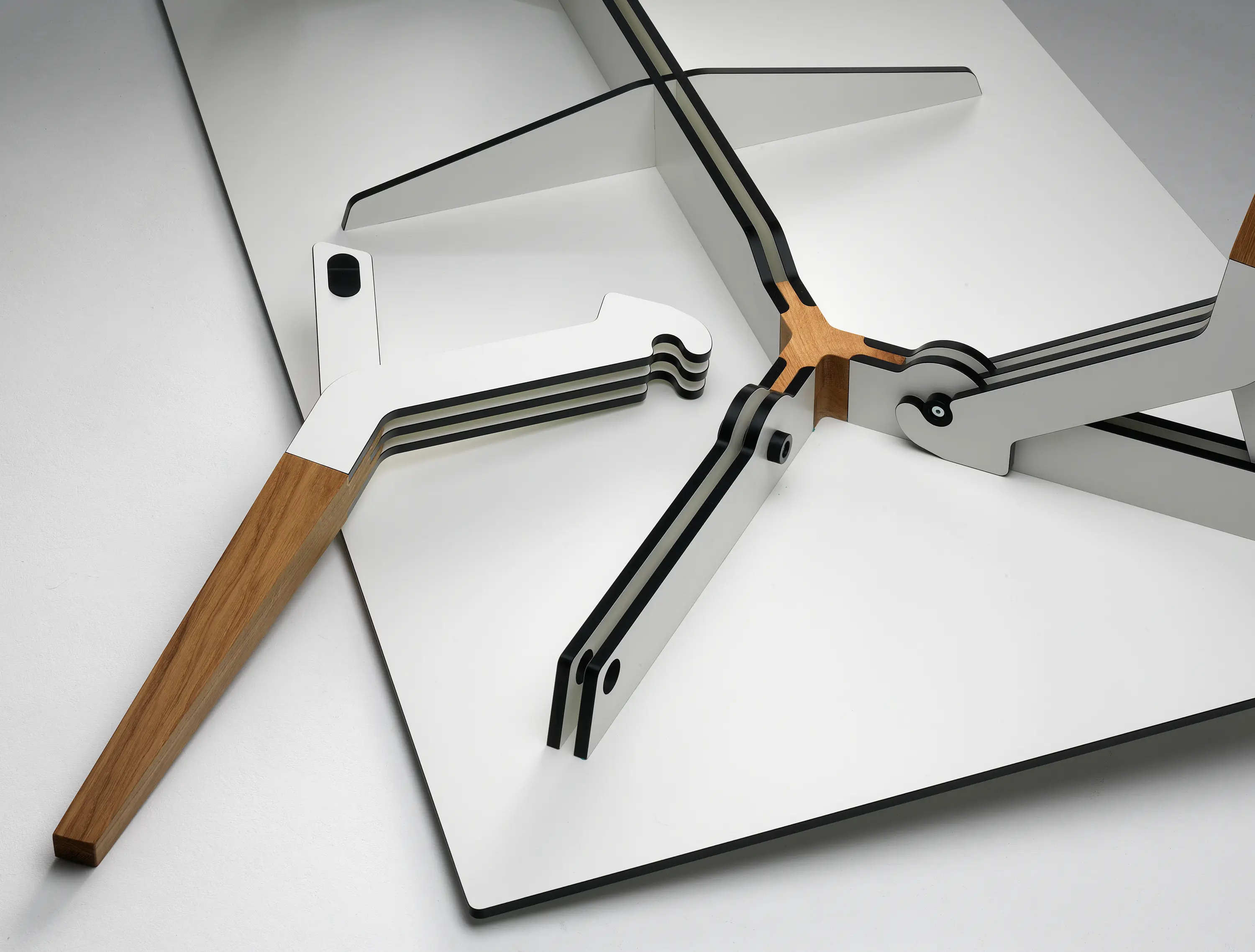
Japanese traditional crafts inspired this table. Technology and precision of manufacturing make this knock down table special.
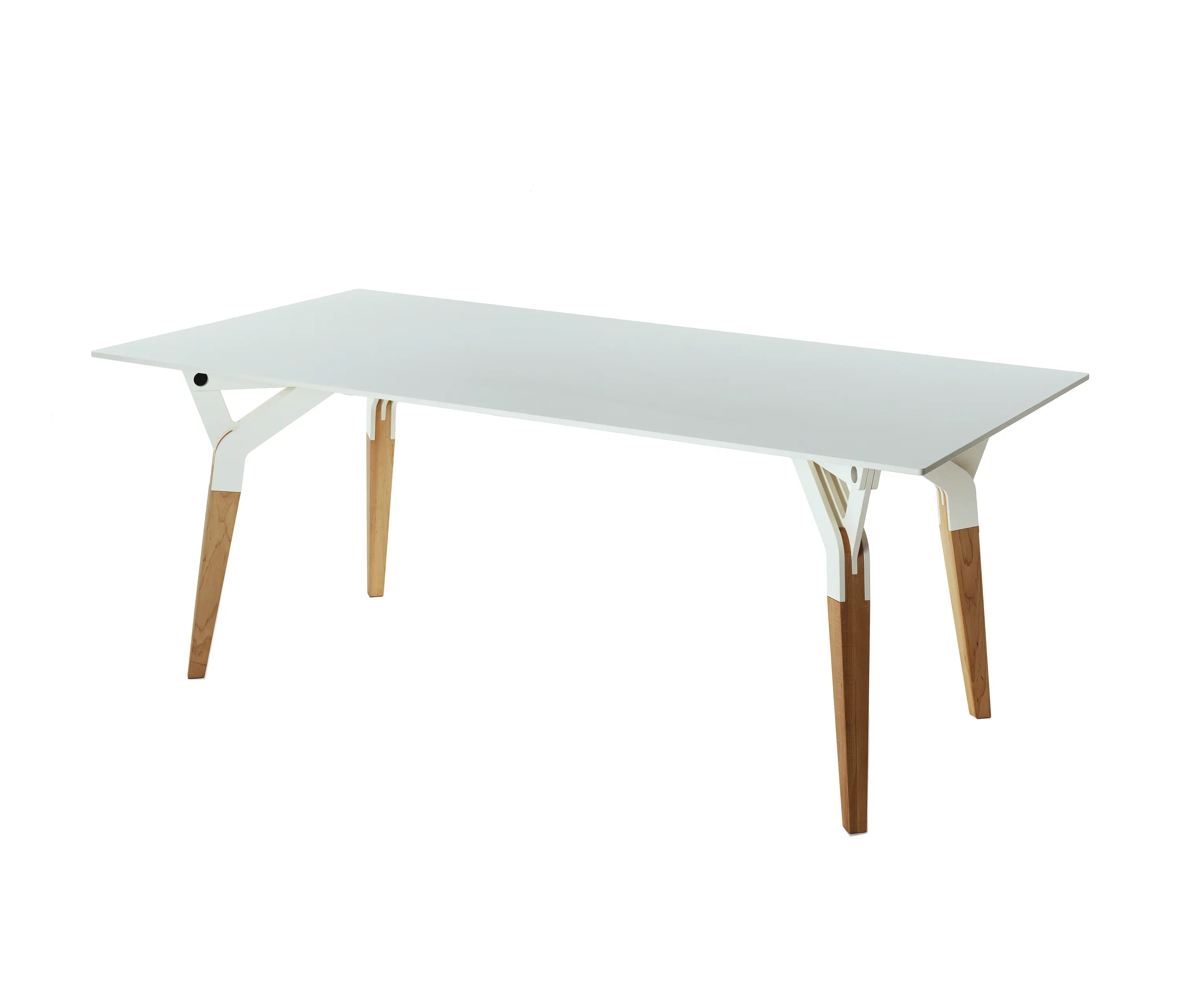
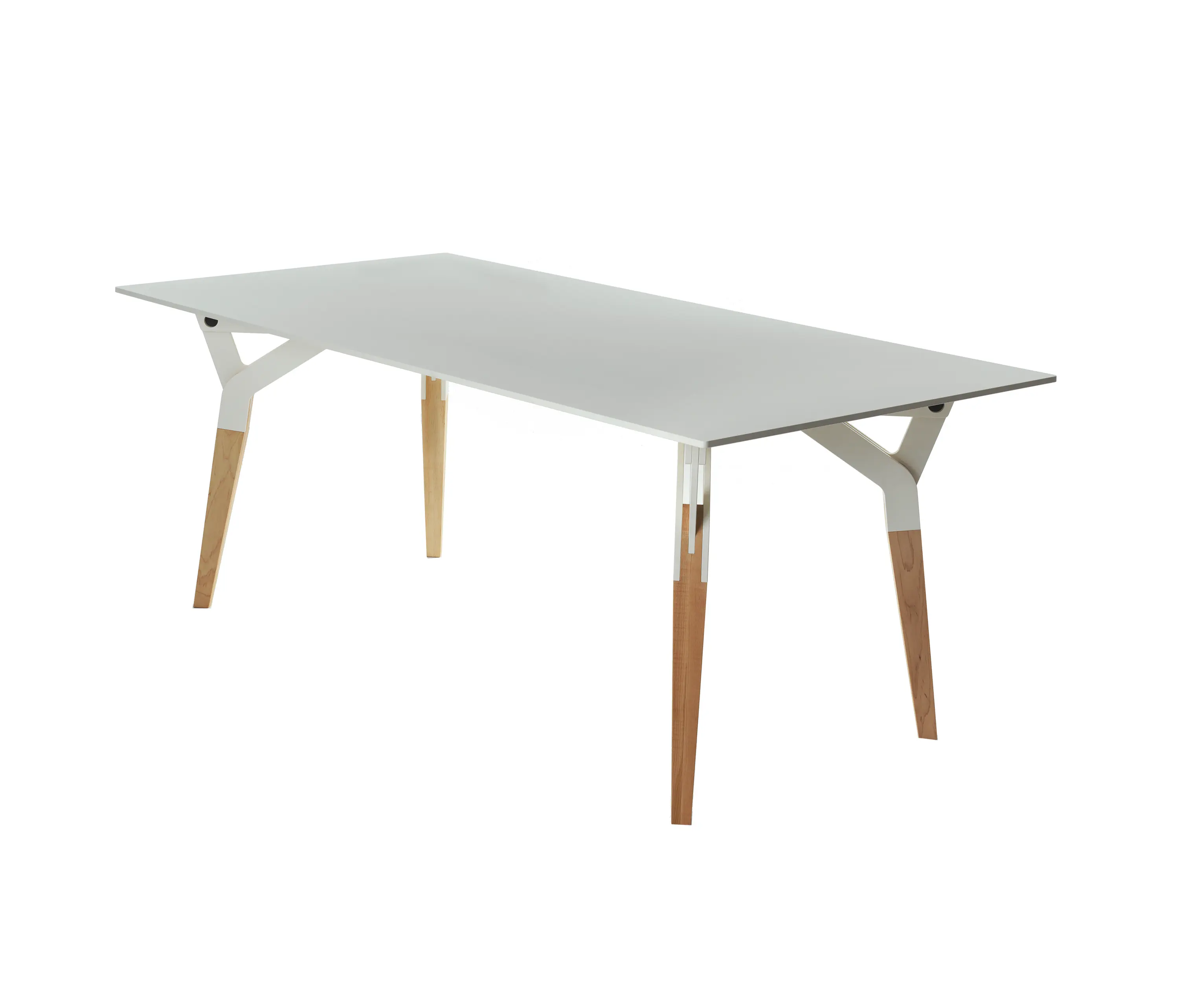
The table plate is made of indestructible massive ARPA HPL this guarantees a minimum of maintenance and a maximum of comfort. The legs are demountable in a very easy manner, which simplifies moving and transport. The KATABA table has been introduced at the Salone del Mobile, Milan in 2012.
Massive HPL (high pressure laminate) is water proof and weather resistant in combination with Teak or Bangkirai a perfect garden table is created. Special: on request the table can be produced to a lengths of up to 420cm.
Standard colors are white, grey, black or any other color of the ARPA massive HPL collection.
Standard indoor wood sorts are all European hardwoods such as Ash, Beech, Oak, Maple and Walnut.
Standard outdoor wood sorts are Teak and Bangkirai
Specifications
Material
Base solid wood, Composite material, Tabletop coated / laminated, Wood
Designers

Alexander Pelikan
Netherlands
PeLiDesign is an international design studio, based in Eindhoven, the Netherlands. They develop great marketing and branding concepts and develop extraordinary products. With their team and network of engineers and designers and marketeers, they embark on your project! Apart from serving their clients, PeLiDesign initiates design research and lectures at academies and Universities. PeLiDesign is about truth: they love to show the inner beauty of things. A product for PeLiDesign is not about mere surface: all parts of a product have to have a strong connection to the manufacturing process and a product’s beauty has to come forth of a honest use of the material it is made of. Because of that, PeLiDesign is interested in long lasting relationships with their clients. PeLiDesign was established in 2005 by Alexander Pelikan. The designer, born in Germany, lives and works after graduating from the Design Academy Eindhoven, in the Netherlands. Biography Alexander Pelikan, Product designer ‘By designing I want to explore new roads and I want to be surprised where these roads take me.’ For Alexander Pelikan, or short “PeLi” experimentation with common and new materials and techniques is crucial. Another cornerstone of his work is cooperating with craftspeople, other designers and innovative companies. In the beginning of an assignment always stands a research into the subject. Social/cultural facts play an important role as well as possibilities and (hidden) potentials of the company he is working for. While wandering these ways ideas emerge which are transformed and integrated in his works. In PeLi’s designs he invites coincidence – any detail could be of importance- and is as such carefully recorded and researched. When he is busy with an assignment or free work, he wants to dive into the technique and be able to make it himself or at least understand every single step of the creation…this is very important for PeLi: to identify with “head and hand” with the stuff he create.