Share

1/3
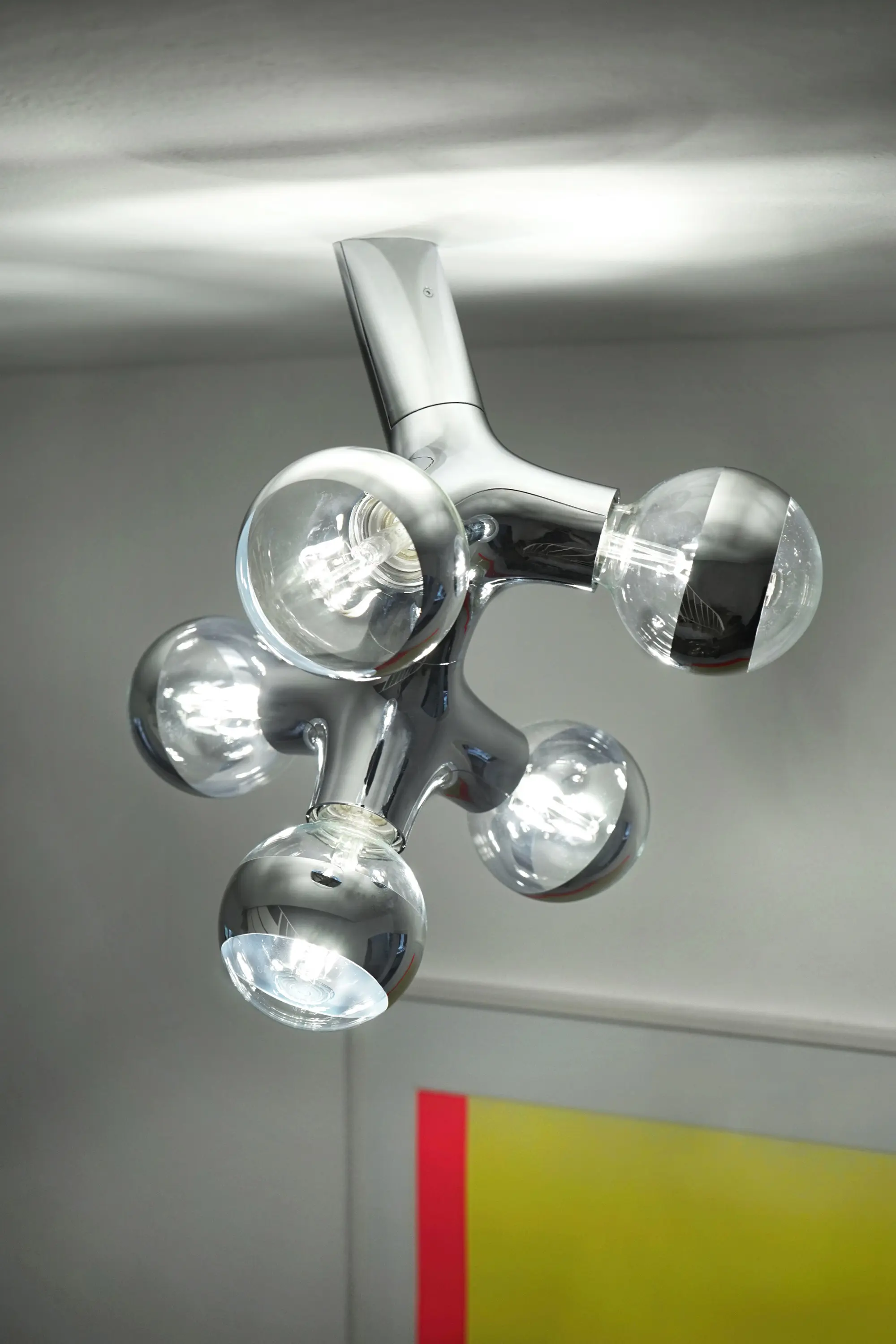

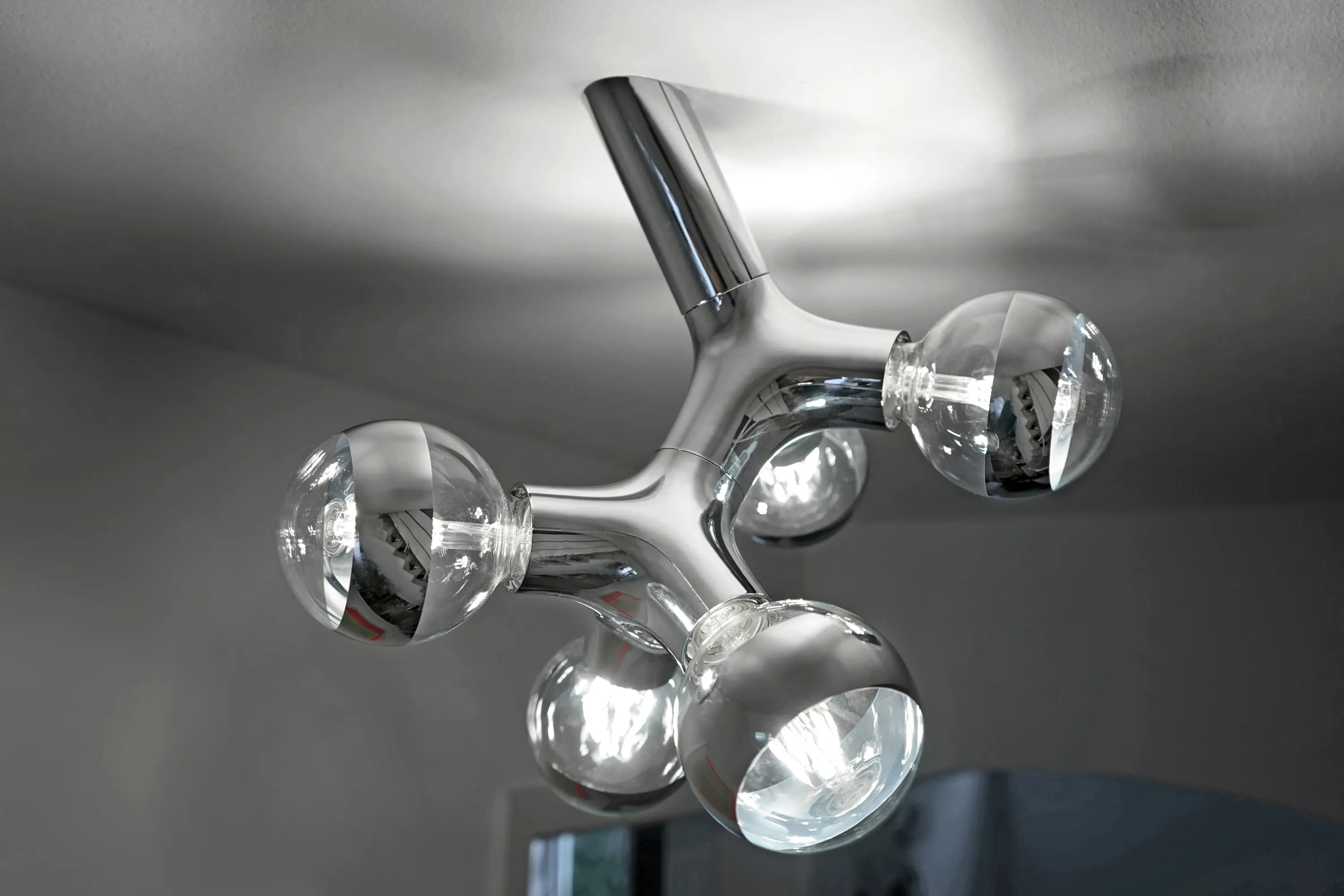
DNA wall / ceiling double
Help me find it
Share
This product is part of our reference catalogue.
Additional inquiries are reserved for Architonic partner brands.
- Home/Ceiling lights/
DNA wall / ceiling double
About this product
Architonic ID: 20010382
Year of Launch: 2018
Colour: white, black, copper, chrome,
Bulb: 5 x E27, max. 28W
ENERGY CLASS OF ILLUMINANTS:
A++,A,B,C,D,E
Concept
The successful story of our DNA start in 2006 with the variations in Chrome, white and pink. Three years ago the series is supplemented by the black one and now, DNA is available in copper. With this latest addition to the product range, next has managed to extend the scope of applications of the DNA once again. Now there’s really no reason left to not have a DNA – especially since the entire DNA family is also a winner in terms of energy conservation with its LED Globe lamps.
Like an organically growing structure, the complex form develops out of a surprisingly simple element. White, black, chrome and copper plastic modules – each with three light bulbs – can be added to each other, so the lighting object can vary in size, from a single format up to a luster. You have the choice between seven different assembled pendant versions, a table version, a wall/ceiling version or, alternatively, a customized solution according to your needs.
Material: ABS
Bulb: E27
Measurements without bulbs
You can order Globe bulbs in 25W and 40W, size 95mm or LED Globe opal/ Filament, 3.5W, size 95mm, dimmable directly by next.
Available as: Pendant light, Chandelier, Table lamp, Wall-/Ceiling lamp and customized version.
For private use or object, we compose larger configurations of DNA-modules according to your individual specifications. You can use as many modules as you want to create the wildest constellation – there are nearly no limits.
Colour: white, black, chrome, copper
Bulb: E27 Globe
This product belongs to collection:

Specifications
Material
Plastic
Variants
2
You can visit the product page for these variants—just click on them!


Design files
12
Distributors
Designers

Benjamin Hopf
Germany
Benjamin Hopf was born 1971 in Hamburg, Germany. After graduating from High School in 1990 he moved to the USA and studied Design at the Miami International University of Art & Design. In 1992 Benjamin moved back to Germany where he continued studying Industrial Design at the Polytechnic University, Munich. In 1996 he worked for a year at Siemens-Design (now Design Affairs). In 1998 he finished University with a MA in Design. While still in his final year, Benjamin co-founded the Design Studio Büro für Form together with Constantin Wortmann. The focus of the Studio was on Lighting-, Furniture-, Interior-, Industrial-, Product- and Grafic-Design. They worked for international clients like Osram, Serien Lighting, Vibia, Next, Elmar Flötotto (now Authentics), Ycami, Habitat, Kundalini, Umbra and many others. Their work has been rewarded with many international Design Awards. In 2007 Benjamin decided to leave Büro für Form to open his own Design Office Studio Benajmin Hopf. Parallel to his own studio he then established in early 2008 his own Lighting Label Formagenda, which he successfully operates till this day . With his sympathetic nature and exceptional work, Benjamin is the kind of artist who significantly contributes to Munich's reputation as a young and creative Metropolis. From Vogue to Wallpaper, his work has appeared in almost every major high-gloss magazine. Countless exhibitions around the world such as at The Victoria & Albert Museum and Harrods in London as well as the Pinakothek der Moderne in Munich, the Cooper Hewitt National Design Museum in New York or the Rocket Gallery in Tokyo show his Designs. Benjamin Hopf lives and works in Munich. Summary: 1971 born in Hamburg, Germany on May 12th 1977 School Education 1990 Highschool Graduation 1991 University: Industrial Design at Miami International University of Art & Design 1993 University: Industrial Design at Polytechnic University, Munich 1996 Freelancing at Siemens Design (now Design Affairs) 1998 Graduation from University with a MA Degree 1998 Co-founding Design Studio “Büro für Form“ together with Constantin Wortmann 2007 Founding Design Office “Studio Benjamin Hopf“ 2008 Founding Lighting Label“Formagenda“ with Oliver v. Schmarsow 2013 Taking full Ownership of Formagenda Design Awards: German Design Award ’17 German Design Award ’16 Design & Design Award ’16 Design & Design Award ’15 Interior Innovation Award ’15 German Design Award ‘08 Design Plus Award ‘08 German Design Award ‘06 IF Award ‘05 Design Plus Award ‘04 Form Award ‘03 Design Ranking German Top 100 ‘02 Form Award ‘01 Design for Europe - Best Lighting ‘00 IF-Award - Best of Category Form Award ‘00 SMI , Switzerland ‘00 Design Award Neuenkirchen ‘99 Bonaldo Design Contest ‘99 Designale ‘98 Nachlux ‘97 HEWI Innovation Award ’97
Constantin Wortmann
Germany
Nach dem Studium an der Kunstakademie in Hamburg und der Hochschule München gründete Constantin Wortmann gemeinsam mit Benjamin Hopf im Jahr 1999 das Designstudio "Büro für Form". Durch eigene Ausstellungen auf dem Salone Satellite in Mailand, in New York und in Köln zur Möbelmesse wurden die ersten Hersteller auf sie aufmerksam. Eine erfolgreiche Zusammenarbeit in den Bereichen Leuchten-, Accessoires-, Möbel-, Interior-, Produkt- und Grafik-Design begann. Entwürfe für nationale und internationale Kunden wie Serien Lighting, Vibia, next lighting, Authentics, Habitat, slide,Ycami, Kundalini, Fingermax, Koziol, Osram und andere entstehen. Nach dem Ausscheiden von Benjamin Hopf im Jahr 2017 führt Constantin Wortmann das Büro für Form alleine fort. Constantin Wortmann entwirft eine Home-Kollektion für die kanadische Firma UMBRA, Außenleuchten für Kundalini und startet seine langjährige Zusammenarbeit mit dem dänischen Hersteller Georg Jensen. Die Cobra Kollektion, angefangen mit einem einzelnen Kerzenhalter, kommt so gut an, dass viele weitere Designs für Jensen folgen. Die Leuchte "Spacewalker", entworfen im Jahr 2007 für die belgische Leuchtenfirma DARK, wird mit internationalen Designpreisen ausgezeichnet u.a. dem red dot "best of the best". Für next lighting entwirft er im 2-Jahres Takt neue, erfolgreiche Leuchtenfamilien: 2008 ALIEN, 2010 NLC, 2012 COSMO, 2014 ENTERPRISE, 2016 BLUBB. Constantin Wortmanns Arbeiten sind in zahlreichen Publikationen veröffentlicht, weltweit in Ausstellungen und Museen präsentiert und mit vielen Designpreisen prämiert. Der rote Faden, der sich durch seine Entwürfe zieht, ist die gelungene Mischung von organischen Formen und geometrischen Elementen, sowie eine Emotionalität der Produkte, gerne auch mit einem Augenzwinkern, denn Zitat Wortmann: „Produkte brauchen mehr als perfekte Funktion und Ergonomie, sie brauchen Poesie!”
Similar Products


Get directly in touch with
Get directly in touch with next
next
Contact details
Send a message
Call us
Distributors