


Contact details
Send a message
Call us
Distributors


Help me find it
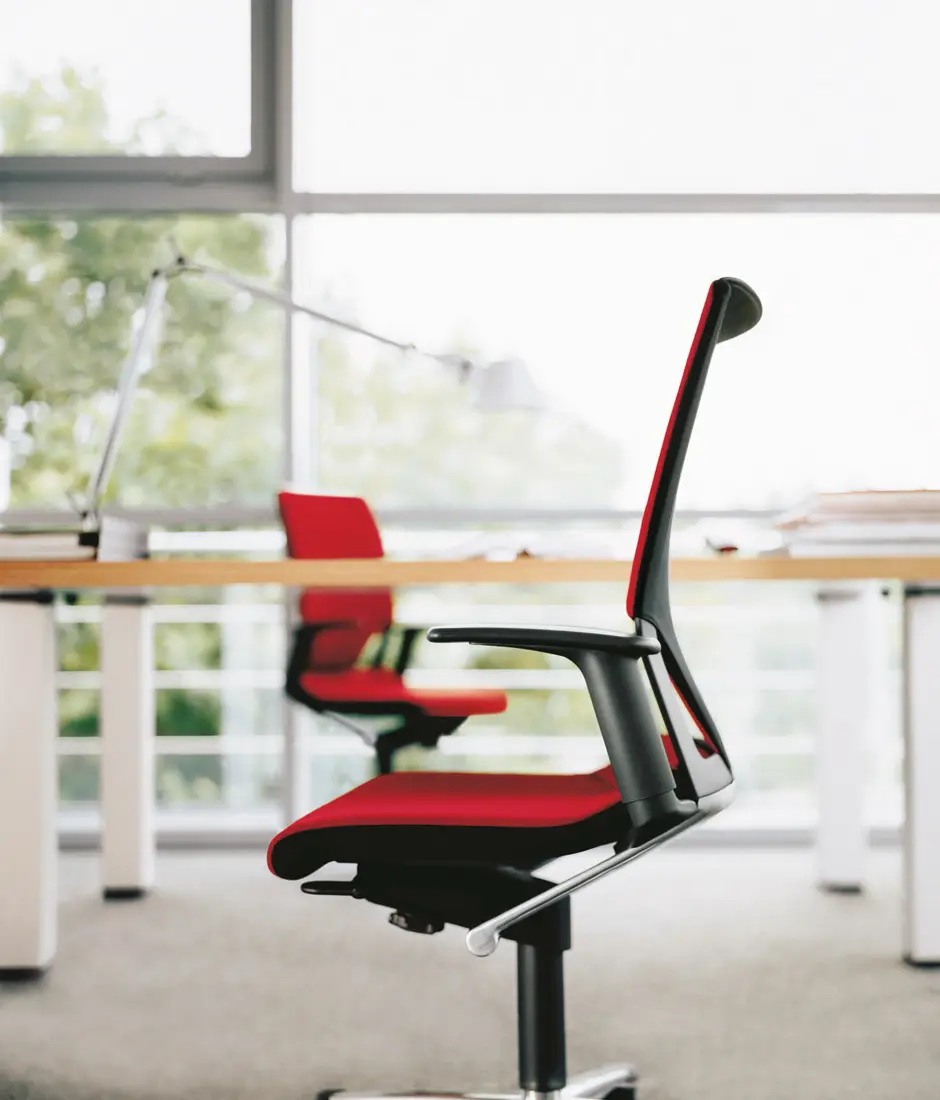
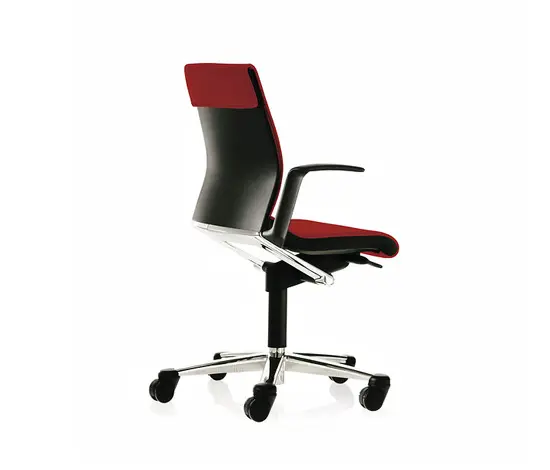
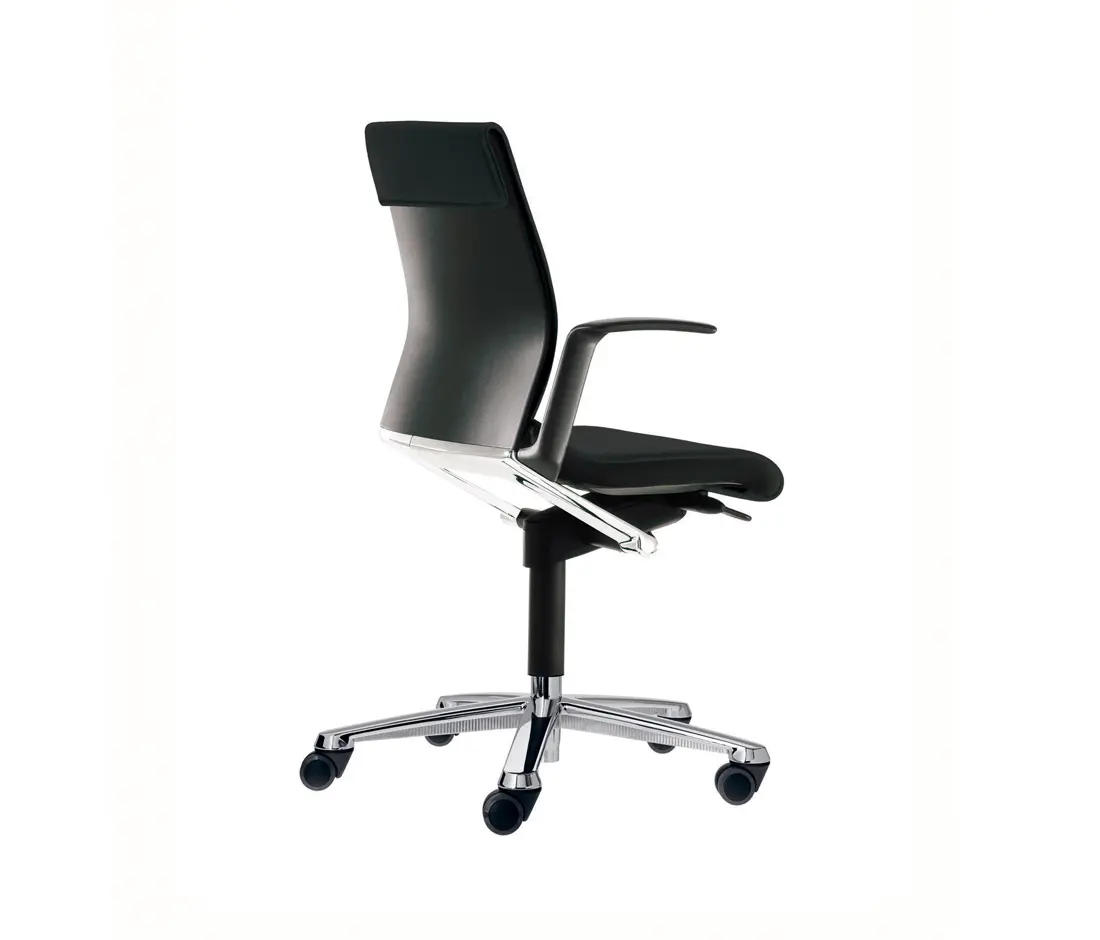
Modus Basic 263/7
Architonic ID: 1040398
SKU: 263/7
Year of Launch: 1995
Minimal materials used. Maximum transparency. Perfect adjustment. Following a maxim of simplicity, some 30 years ago designers Klaus Franck and Werner Sauer created the FS line which became a classic example of dynamic seating. Modus was the two designers’ translation of the principle to the aesthetics of the 21st century.
The flexible, fork-shaped backrest made of unbreakable, high-efficiency plastic is covered with an exchangeable, breathable high-tech fabric. Without any upholstery, the backrest adapts to the shape, posture and movement of the person sitting on it.
With its soft and rounded front edge, the breathable, upholstered seat allows the body to relax and prevents the pelvis from tilting. Because they are easy to exchange, the covers and upholstery guarantee the chair’s useful life is virtually unlimited.
The particularly comfortable and extremely compact automatic synchro-adjustment with torsion springs ensures the seat and backrest are lowered in perfect sync with your body. The stylish swivel arms, made of high-quality die-cast aluminium, are functional and design elements in equal measure.
It is no surprise that Modus has become an international benchmark for a new generation of office chairs. Much talked-about, but still one of a kind, it has remained in a class of its own till today: Dynamic seating at its best.
Dimensions:
Overall height: 910 – 1170 mm
Width: 640 mm
Depth: 610 mm
Seat height: 420 – 530 mm
This product belongs to collection:
Aluminium, Base metal, Metal

Germany
Klaus Franck, born in1932, studied at the Academy of Design in Ulm (HfG). After that, he worked at the Institut für Industrialisiertes Bauen (Institute for Industrialized Building), he was a free-lance architect, graphic designer and author; amongst other projects, he was Head of Lufthansa’s Interior Design Group and lectured at the HfG and the Fachhochschule in Hanover. From 1971 to 1985, he was Head of the Wilkhahn Design Department which was later to become an independent company under the name of wiege. After seven more years as Managing Director of wiege, he left to set up business on his own. Today he lives in Moraira, Spain, and works there as a free-lance designer. As a product designer, interior designer, art director and author, he has constantly retranslated the legacy of the HfG Ulm into a new language and had a formative influence on corporate development at Wilkhahn.
Germany
Werner Sauer, born in 1950, studied industrial design at the Folkwang Hochschule in Essen, and experimental environmental design at the Staatliche Hochschule für Bildende Künste in Brunswick. First on a free-lance basis, then employed from 1978, he started off working in the Design Department and then continued at wiege until 1993 before setting up his own design studio in Springe near Hanover. He began as a lecturer at the Fachhochschule Hildesheim/Holzminden, then advanced to Professor, then Dean in 2000, and since 2003 he has been Executive Dean. Werner Sauer is a Member of the Board of the Deutscher Werkbund Nord.
Germany
The wiege Entwicklungsgesellschaft mbH evolved from the design and development division at Wilkhahn, office furniture manufacturer. Today it is a design consultancy which operates on an international level. It not only works for Wilkhahn but also for other clients from various branches of industry and commerce. By founding the wiege Entwicklungsgesellschaft mbH, Fritz Hahne pursued an idea that was both simple and significant: on the one hand, the inhibition threshold for external designers to present their ideas to Wilkhahn was to be lowered. On the other hand, a wide field of activity outside furniture design should serve to widen horizons and give new impetus. Both became true. wiege competes productively with other designers with whom Wilkhahn works, and its field of activity includes clients from quite different branches and areas: ranging from exhibition management, home entertainment products, car manufacturers to public commissions, product design, exhibition platforms and interface design.