


Contact details
Send a message
Call us
Distributors


Help me find it
Architonic ID: 1549652
SKU: 6-593a HG 520
Year of Launch: 2007
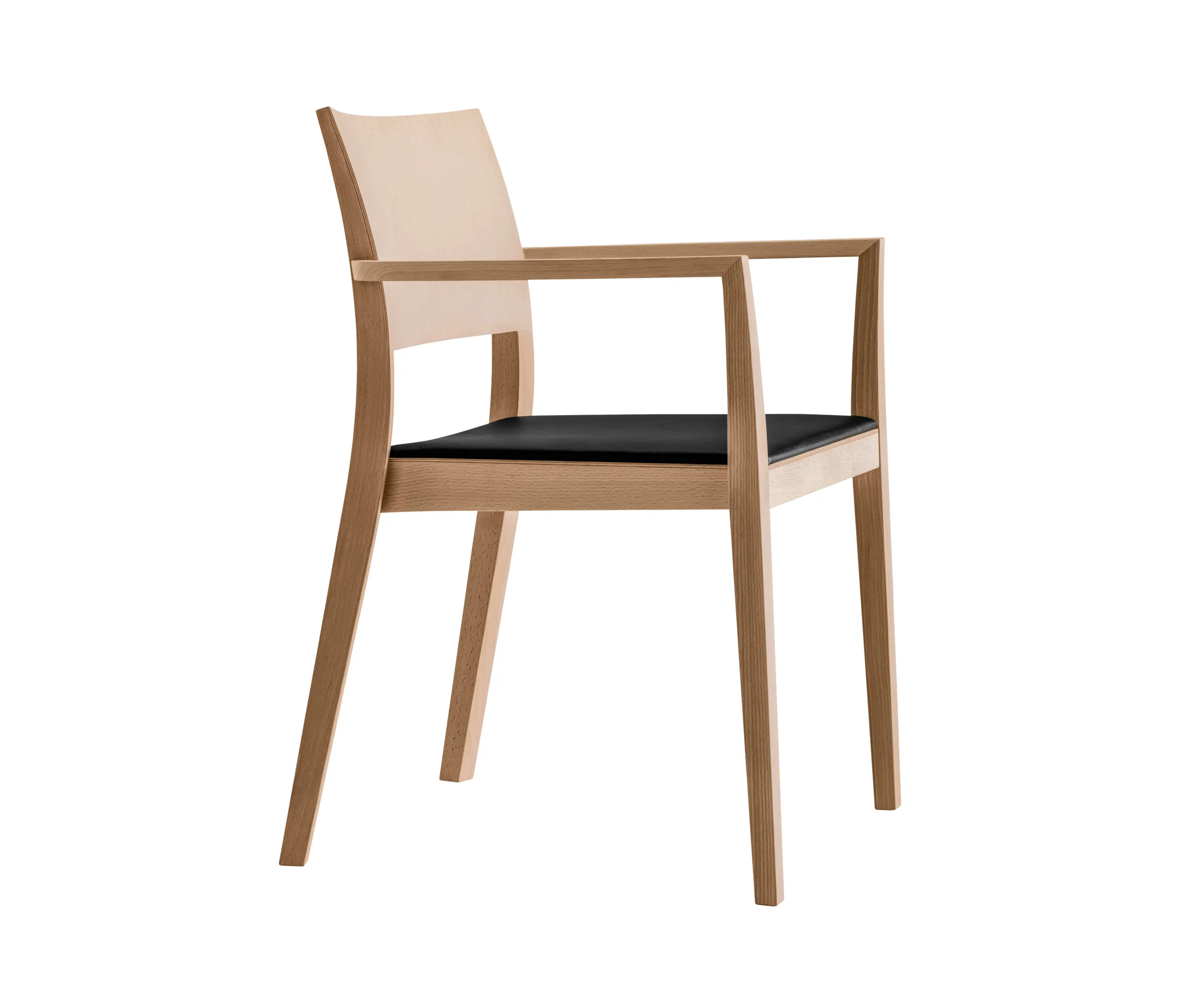
Chair, upholstered seat, moulded plywood back, legs and rear cross-brace solid bentwood, stackable, optional row connector
W59, D57, H82, SH47, ALH67
Concept
The matura solid wooden chair with its warm minimalism continues the factual language of the horgenglarus collection into the 21st century. It is the comfortable evolution of the compact, straight miro chair. The bold sweeps of backrest and rear legs give distinction to its geometry. Thanks to a variety of seat widths, depths and heights as well as materials, the matura is suited for a wide range of purposes and architectural styles. A staff canteen needs a different type of chair than a café, bistro, or fine-dining restaurant. A council chamber or boardroom makes other demands than a hotel room or a private dining room. Larger hotels, restaurants, or administrative offices often combine more than usage type in one building. matura's end-to-end design line offers a large variety of functions. The seat's comfort level varies from wooden seat or cushion to very comfortable belt upholstery.
matura has character and identity. The warm and natural appeal of its wood makes matura a beautiful contrast to modern corporate architecture. In traditional buildings, its wood links to the building's history whereas its streamlined shape references the present. matura embodies the core competency of horgenglarus' unique wood-bending techniques and impresses with its inherent solidity.
matura was showcased in 2008 on the Swiss Designers’ Saturday with an installation made from rustling leafs. matura is one of the last designs by Hannes Wettstein.
This product belongs to collection:
Base solid wood, Wood
You can visit the product page for these variants—just click on them!

Switzerland
Hannes Wettstein (1958-2008) Hannes Wettstein was one of the most influential Swiss designers. Even his career path corresponded to someone who didn’t go by the rule book: Wettstein, born in 1958 in Ascona, first completed studies in building draughtsmanship; his further training as designer and architect was autodidactic. He was as fascinated by technological developments as he was by art history and architecture and his manner of developing ideas always had a touch of alchemy or invention. He continually questioned norms, be they societal, industrial, cultural or ritual, in order to be able to reinvent, explained Wettstein. This comprehensiveness was not an attitude but a method. His openness to continually re-thinking all that defines design – daily routines, spatial organisation and the purposes of things – led him to surprisingly simple solutions that stand the test of time. Hannes Wettstein designed functional objects with such elegance and perfection that they took on their own identities, something that momentary fashions can never achieve. In spatial design he also created architypes: site-specific and sensitive overall solutions, interior designs or set designs. Highlights: 1980 Belux, Snodo 1982 Belux, Metro 1987 Baleri Italia, Juliette 1990 Baleri Italia, Caprichair 1994 Ventura, v-matic 1995 - 1998 Berlin Grand Hyatt 1997 - 2002 EST, Bikes 1999 - 2008 horgenglarus, Art Direction 2000 Lamy, Scribble 2000 Cassina, Globe 2000 Molteni, Alfa 2000 - 2008 Carl Zeiss, Optical Instruments 2002 Ventura, v-tec Alpha 2002 Bulo, Double You 2002 Dada, Nomis 2002 - 2006 Swiss Embassy, Washington D. C. 2003 Cassina, Hola 2003 Molteni, Reversi 2004 horgenglarus, Lyra 2004 - 2008 Juwelier Kurz, Zürich & Basel 2005 - 2008 SF, TV Studios 2005 Lamy, Studio 2005 Accademia, Vela 2007 Max Design, Tototo